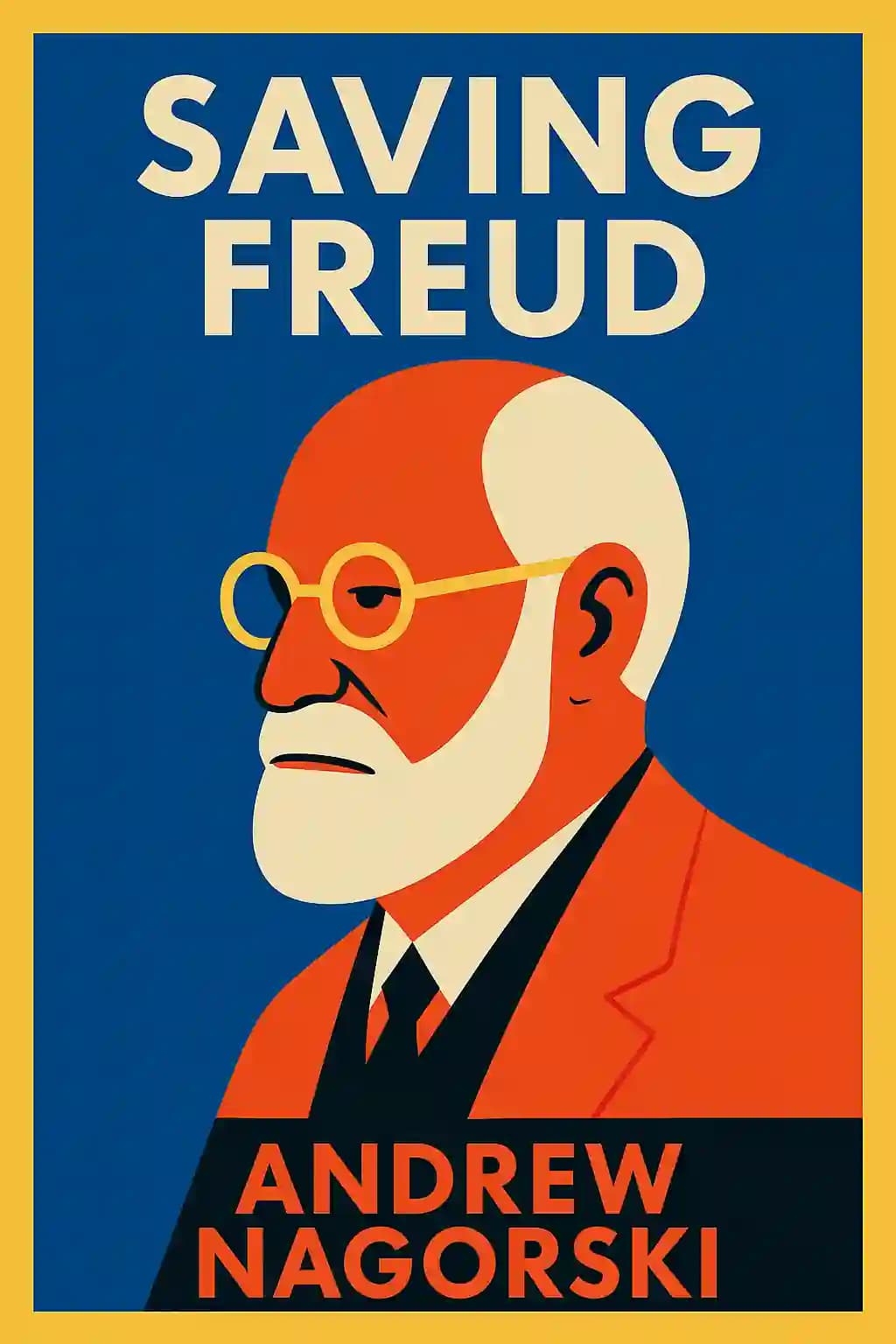
When Nazi forces invaded Vienna in 1938, Sigmund Freud faced certain death. "Saving Freud" reveals the breathtaking rescue mission orchestrated by his unlikely allies - including a Nazi bureaucrat. Kirkus Reviews called it a "riveting page-turner" that illuminates how friendship triumphed over history's darkest hour.
Andrew Nagorski, acclaimed historian and bestselling author of Saving Freud: The Rescuers Who Brought Him to Freedom, is a former Newsweek foreign correspondent with over three decades of experience reporting from Europe and Asia.
Specializing in 20th-century history, Nagorski’s work explores the psychological and geopolitical forces that shaped the Nazi era, themes central to this gripping non-fiction account of Freud’s dramatic escape from Vienna. His expertise stems from serving as Newsweek’s bureau chief in Moscow, Berlin, Warsaw, and other key cities, earning three Overseas Press Club awards for wartime reporting.
Notable works include Hitlerland (2012), a seminal study of American perspectives on Hitler’s rise, and The Nazi Hunters (2016), detailing post-war justice efforts. A frequent media commentator, Nagorski combines archival rigor with narrative flair. Hitlerland became a New York Times Editor’s Choice, translated into 15 languages.
Saving Freud chronicles the 1938 rescue of Sigmund Freud from Nazi-occupied Vienna, detailing how a coalition of allies—including his daughter Anna, Princess Marie Bonaparte, and a Welsh doctor—overcame his reluctance to flee. The book blends historical drama with psychological insight, highlighting their covert operation to secure his escape to London amid rising antisemitism.
This book appeals to history enthusiasts, psychology scholars, and readers interested in WWII narratives. It’s ideal for those seeking a gripping true story of courage and collaboration, as well as fans of Andrew Nagorski’s journalistic approach to historical non-fiction.
Yes—Nagorski’s meticulous research and immersive storytelling make it a standout. The narrative balances Freud’s personal struggles with broader geopolitical tensions, offering fresh perspectives on his final years and the unsung heroes who saved him.
Freud’s escape involved diplomatic maneuvering, bribes, and a coordinated effort by his network. Key steps included securing exit visas, negotiating with Nazi officials, and mobilizing international contacts to transport Freud and his family to London.
The rescuers included Freud’s daughter Anna Freud, who managed logistics; Princess Marie Bonaparte, who funded bribes; Dr. Max Schur, his physician; and Ernest Jones, a Welsh psychoanalyst. U.S. diplomat William Bullitt also pressured Nazi authorities.
Freud was 81, battling jaw cancer, and had undergone 33 surgeries. His physical frailty and emotional attachment to Vienna initially made him resistant to leaving, despite the Gestapo’s interrogation of Anna.
Nagorski’s decades as a Newsweek correspondent inform the book’s crisp pacing and attention to detail. His experience covering historical events lends authority to the reconstruction of dialogues and political tensions.
Anna spearheaded practical arrangements, endured Gestapo interrogation, and persuaded her father to leave. Her resolve was pivotal, as Freud trusted her judgment above others.
The book portrays Vienna’s rapid descent into Nazi control, with scenes of Jewish persecution, destroyed businesses, and Freud’s colleagues fleeing. It underscores the urgency felt by his rescuers as antisemitism escalated.
Some readers may desire deeper analysis of Freud’s psychoanalytic legacy or broader Holocaust context. However, the book’s focus on the rescue mission’s mechanics is widely praised as riveting and well-researched.
Unlike biographies centered on psychoanalysis, this book emphasizes a narrow, suspenseful episode. It complements works like Freud: A Life for Our Time by adding geopolitical intrigue to Freud’s story.
Nagorski drew on archives, Freud’s letters, and primary accounts from the rescuers’ descendants. The Library of Congress’s Manuscript Division provided key documents, including Anna Freud’s papers.
저자의 목소리로 책을 느껴보세요
지식을 흥미롭고 예시가 풍부한 인사이트로 전환
핵심 아이디어를 빠르게 캡처하여 신속하게 학습
재미있고 매력적인 방식으로 책을 즐기세요
Civilization can crumble quickly.
Humans are 'insatiable animals'.
Vienna was 'disgusting'.
He predicted it would lead to 'eleven wars'.
Saving Freud의 핵심 아이디어를 이해하기 쉬운 포인트로 분해하여 혁신적인 팀이 어떻게 창조하고, 협력하고, 성장하는지 이해합니다.
Saving Freud을 빠른 기억 단서로 압축하여 솔직함, 팀워크, 창의적 회복력의 핵심 원칙을 강조합니다.

생생한 스토리텔링을 통해 Saving Freud을 경험하고, 혁신 교훈을 기억에 남고 적용할 수 있는 순간으로 바꿉니다.
무엇이든 물어보고, 목소리를 선택하고, 진정으로 공감되는 인사이트를 함께 만들어보세요.

샌프란시스코에서 컬럼비아 대학교 동문들이 만들었습니다
"Instead of endless scrolling, I just hit play on BeFreed. It saves me so much time."
"I never knew where to start with nonfiction—BeFreed’s book lists turned into podcasts gave me a clear path."
"Perfect balance between learning and entertainment. Finished ‘Thinking, Fast and Slow’ on my commute this week."
"Crazy how much I learned while walking the dog. BeFreed = small habits → big gains."
"Reading used to feel like a chore. Now it’s just part of my lifestyle."
"Feels effortless compared to reading. I’ve finished 6 books this month already."
"BeFreed turned my guilty doomscrolling into something that feels productive and inspiring."
"BeFreed turned my commute into learning time. 20-min podcasts are perfect for finishing books I never had time for."
"BeFreed replaced my podcast queue. Imagine Spotify for books — that’s it. 🙌"
"It is great for me to learn something from the book without reading it."
"The themed book list podcasts help me connect ideas across authors—like a guided audio journey."
"Makes me feel smarter every time before going to work"
샌프란시스코에서 컬럼비아 대학교 동문들이 만들었습니다

Saving Freud 요약을 무료 PDF 또는 EPUB으로 받으세요. 인쇄하거나 오프라인에서 언제든 읽을 수 있습니다.
March 1938: Nazi boots echo through the streets of Vienna while storm troopers pound on the door of Berggasse 19. Inside, an 81-year-old man with a white beard and jaw ravaged by cancer stands in the doorway. His mere presence-this intellectual giant who dared map the dark continents of the human mind-causes the intruders to falter. They grab what cash they can and flee, but not before promising to return. This is Sigmund Freud, and he has perhaps weeks to escape a regime that burns his books and would gladly burn him too. What follows is one of history's most improbable rescue missions: a desperate race orchestrated by a Welsh doctor, a French princess descended from Napoleon, an American diplomat, and even a conflicted Nazi bureaucrat. Together, they would pull off what became known as "Operation Freud"-saving not just a man, but an entire way of understanding what it means to be human.