1장
When Innocence Meets History's Darkest Hour
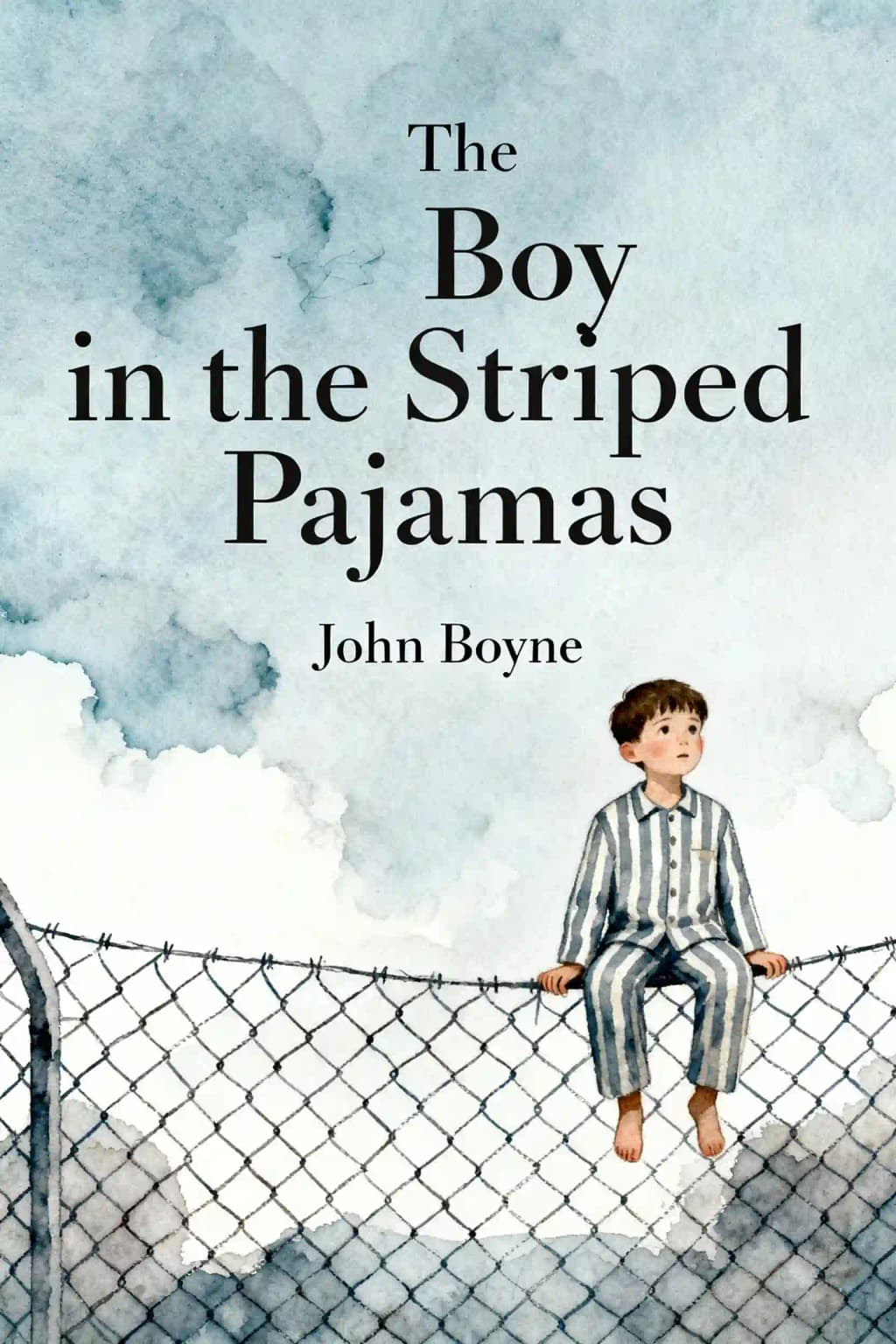
What happens when the world's most horrific events are viewed through the eyes of a child? John Boyne's haunting novel "The Boy in the Striped Pajamas" has captivated over 11 million readers worldwide since its publication in 2006, becoming a modern classic that transcends age categories. Embraced by celebrities like Oprah Winfrey and translated into over 50 languages, this deceptively simple tale follows nine-year-old Bruno as he navigates a reality he cannot comprehend. The story's power lies in its devastating simplicity-how the Holocaust, seen through a child's innocent perspective, becomes both more accessible and more heartbreaking. As Boyne himself noted in the 10th-anniversary edition, the novel explores two fundamental themes: the destruction of childhood innocence by war and what happens when children confront adult situations prematurely. This examination of history's darkest chapter continues to spark important conversations about prejudice, complicity, and the human capacity for both cruelty and connection.
2장
Uprooted from Berlin: Bruno's Reluctant Journey
Nine-year-old Bruno returns home from school one day in spring, his satchel filled with arithmetic homework and a half-finished drawing, to find Maria, the family's longtime maid, methodically packing his belongings into wooden crates. The familiar sounds of their Berlin household have been replaced by the hollow echo of footsteps and the thud of items being boxed away. His comfortable life in Berlin, the only world he's ever known, is about to be dramatically upended. His mother, usually composed and elegant, stands in his doorway with eyes red and swollen from crying, explaining that Father's job requires them to move immediately. The mysterious "Fury" - a name Bruno always found peculiar - has given Father an important promotion and assignment, and the entire family must relocate without delay.
Bruno is utterly devastated. He'll have to leave behind his "three best friends for life" - Karl, with whom he shares his comic books, Daniel, his partner in playground adventures, and Martin, who always saves him a seat at lunch. Beyond his friends, he'll lose his familiar routine at school, where he excels in history and art, and most heartbreaking of all, their magnificent five-story Berlin home with its perfect banister for sliding, which he and his sister Gretel had mastered despite their mother's constant warnings about safety. When he learns they're moving far from Berlin, he protests vehemently, his voice rising with each objection, but his mother dismisses his concerns with practiced patience, insisting he'll make new friends and find new adventures.
The contrast between their old and new homes couldn't be more stark. Their Berlin residence was spacious and elegant, with high ceilings and large windows that let in streams of sunlight. It was situated on a lively street where neighboring families knew each other by name, where local shops displayed fresh pastries in windows, vegetable stalls created rainbow-colored displays, and outdoor cafes buzzed with conversation and laughter. Children played hopscotch on the sidewalks while their parents chatted nearby. The new house, in comparison, stands isolated in a desolate landscape with no other homes in sight. It has just three floors instead of five, with small windows and dark corridors. The atmosphere feels cold and joyless, matched by the gray sky that seems permanently overhead.
"I think this was a bad idea," Bruno tells his mother repeatedly, suggesting they return to Berlin where everything made sense. She firmly replies, with a strain in her voice that Bruno had never heard before, that they must "make the best of a bad situation" as this is their home "for the foreseeable future." Feeling a mixture of anger and sadness, Bruno helps Maria unpack his belongings, arranging his books and toys in an attempt to make the strange room feel familiar. While doing so, he notices a young, serious-looking soldier leaving his parents' room, walking with rigid posture and clicking heels. Maria, her voice unusually stern, warns him to "steer clear of the soldiers," though Bruno laments there seems little else to do in this place where even the air feels different from Berlin.
His only consolation is discovering a window in his bedroom that offers a view of something in the distance - a sight that makes him feel "very cold and unsafe." This mysterious view, with its strange figures and smoke-filled sky, will soon change his understanding of the world and his place in it, forcing him to confront realities far beyond his nine-year-old comprehension.
3장
Beyond the Fence: A World of Striped Pajamas
Bruno's twelve-year-old sister Gretel-whom he considers "nothing but trouble" and "Trouble From Day One"-joins him at his bedroom window to investigate what he's discovered. What they see shocks them both: not just children, as Bruno had thought, but people of all ages-"They were everyone," as Bruno puts it-all wearing identical striped pajamas. Some walk slowly, heads bowed, while others stand in perfectly straight lines or work at tasks Bruno can't quite understand.
The view from their window presents a jarring juxtaposition: directly below spreads a beautiful garden with meticulously tended roses, daffodils, and tulips, arranged in geometric patterns. A pleasant stone pavement leads to a wooden bench positioned perfectly for afternoon contemplation. The garden represents the calculated attempt to maintain an illusion of normalcy and civility. But about twenty feet beyond this manicured sanctuary stands an enormous wire fence that extends as far as the eye can reach in both directions, its top crowned with menacing spirals of barbed wire that glint in the sunlight. Beyond the fence lies a desolate landscape - bare earth packed hard by countless feet, rows of identical low wooden huts that seem to stretch endlessly, large square buildings with small windows, and ominous smoke stacks in the distance that continuously billow dark clouds into the sky.
Gretel, who prides herself on being one of the brightest girls in her class and carries herself with the self-assured authority of an older sister, attempts to rationalize what she's seeing. She suggests it must be "the countryside" where farmers work, clinging to a comforting explanation that makes sense of the inexplicable. Bruno, despite being younger, shows remarkable perceptiveness in challenging this interpretation. He points out the conspicuous absence of any farm animals - no cows grazing, no pigs in pens, no sheep dotting the landscape. His observations reveal an innate ability to see past convenient explanations.
When Bruno later approaches his father about the people in striped pajamas, seeking clarity from the person he trusts most, his father's response reveals the cruel ideology that underlies their presence at "Out-With." His father states with chilling certainty: "They're not people at all, Bruno... at least not as we understand the term," before adding the even more disturbing qualification that Bruno has "nothing whatsoever in common with them." This dismissive explanation, delivered with the authority of a high-ranking Nazi officer, serves only to intensify Bruno's curiosity about the mysterious place his father calls "Out-With" (his childish mispronunciation of Auschwitz, which carries its own innocent irony).
The fence becomes both a physical barrier and a powerful symbol - dividing not just two physical spaces but two moral universes. On one side stands Bruno's world of relative privilege and protection, with its gardens and comfortable furnishings, while on the other lies a reality so horrific that even adults like his father must dehumanize its inhabitants to justify its existence. The fence represents the division between childhood innocence and harsh adult awareness, between willing blindness and brutal truth, between those who perpetrate atrocities and those who suffer them - a boundary that Bruno will eventually cross, driven by curiosity and compassion, with consequences that will shatter both his family's carefully maintained illusions and their lives forever.
4장
The Commandant's Son: Privilege and Ignorance
Bruno's father, the newly appointed Commandant of "Out-With," represents the cold, efficient machinery of the Nazi regime. Tall and imposing in his crisp uniform, he commands respect and fear from everyone around him. Bruno remembers when the "Fury" (his mispronunciation of Fuhrer) came to dinner at their Berlin home-a short man with dark hair and a tiny moustache who made jokes that weren't funny and rudely sat at Father's place at the head of the table.
Despite his prestigious position, Father shows little warmth toward his family. When Bruno pleads to return to Berlin, Father firmly states that "sometimes there are things we need to do in life that we don't have a choice in," describing his work as "important to our country. Important to the Fury." He reminds Bruno how he himself had learned to follow his own father's orders as a child.
Bruno's grandmother, however, sees through the prestige of her son's uniform. At their last Christmas gathering, she had stormed out after a heated argument, declaring she was "ashamed" and that seeing him in that uniform made her "want to tear the eyes from my head." She called him "a puppet on a string," criticizing what his uniform represented.
Bruno's privileged position as the Commandant's son shields him from the horrors happening just beyond his window. He receives private tutoring from Herr Liszt, who favors history and geography over Bruno's preferred subjects of reading and art. "Those things are useless to you," Herr Liszt insists, dismissing storybooks in favor of teaching about "the Fatherland" and "the great wrongs that have been done to you."
The contrast between Bruno's comfortable existence and the suffering of those in the camp highlights the willful blindness that allowed the Holocaust to happen. Even as Bruno begins to question the differences between "them" and "us," he remains protected by his father's position and his own childish understanding of the world. His innocence is both touching and troubling-a reminder of how easily humanity can look away from suffering when it's convenient to do so.
5장
A Friendship Across the Fence: Bruno and Shmuel
Bored and lonely after months at "Out-With," Bruno decides to explore along the fence that separates his home from the camp. After walking for nearly an hour, he spots something in the distance-"a dot that became a speck, then a blob, then a figure, and finally revealed itself to be a boy." The boy sits wearing striped pajamas and a cloth cap, with an armband bearing a star. He has grey skin, large caramel-colored eyes, and appears skinnier and sadder than anyone Bruno has ever seen.
They introduce themselves-Bruno the explorer and Shmuel, the boy from the other side of the fence. To their mutual amazement, they discover they share the exact same birthday: April 15, 1934. This coincidence forms an immediate bond between them, a connection that transcends the fence dividing their worlds.
Their conversations reveal stark differences in their lives. Shmuel tells Bruno about his life before the camp-living with his parents and brother Josef above his father's watch shop in Cracow, wearing armbands with stars, being forced to move to a crowded part of the city, and eventually being transported to the camp in horrible conditions. "There were hundreds of us in the train, all crammed in tight... there was hardly any air to breathe," Shmuel explains. When Bruno suggests they should have taken the other train like his family did, Shmuel insists there were no doors to get out.
Despite their different circumstances, a genuine friendship develops between the boys. Bruno visits Shmuel almost every day, sometimes bringing food (though he often eats it himself on the long walk). When Bruno asks why everyone on Shmuel's side wears the same striped pajamas, Shmuel explains they were given these clothes when they arrived, after their own clothes were taken away.
Their friendship faces a serious test when Bruno betrays Shmuel out of fear. One day, Bruno discovers Shmuel in his kitchen, brought to polish glasses for a party because of his small fingers. When Lieutenant Kotler catches Shmuel eating chicken Bruno offered him and accuses him of stealing food, Bruno-overcome with fear-denies knowing Shmuel at all. Lieutenant Kotler threatens Shmuel with punishment, and for a week afterward, Shmuel doesn't appear at their meeting spot. When he finally returns with a badly bruised face, Bruno apologizes profusely. Shmuel forgives him with a smile, and for the first time, the boys reach under the fence and shake hands-the first time they've ever touched.
This friendship across the fence represents the possibility of human connection that transcends artificial barriers of prejudice and hate. Through their innocent eyes, the absurdity of separation based on religion or ethnicity becomes clear, even as the deadly consequences of such division play out around them.
6장
The Servants' Silent Witness: Maria and Pavel
The household servants at "Out-With" offer a different perspective on the unfolding tragedy. Maria, the family's maid, and Pavel, an elderly man who works in the kitchen, move quietly through the house, bearing witness to events they cannot control.
When Bruno complains to Maria about their move, she hesitates to share her own feelings, revealing instead her personal connection to the family. Father had employed her when she was in need, arranged hospital care for her dying mother, and paid for her mother's funeral expenses. This story gives Bruno a new perspective on both his father's character and Maria herself, whom he realizes for the first time has "a life and a history all of her own" beyond just being their maid.
As Maria looks out Bruno's window toward the distant huts, her voice cracks with emotion when she begins to question how Bruno's father could be involved with what's happening at Out-With. She warns Bruno to keep his complaints to himself, fearful of the trouble his words could cause. Their conversation ends with both of them fighting back tears, highlighting the emotional toll of complicity and silence.
Pavel, an elderly man who serves the family meals, reveals a more direct connection to the camp's reality. After Bruno falls from his tire swing and cuts his knee badly, Pavel carries him to the kitchen, cleaning and bandaging the wound with gentle care. To Bruno's surprise, Pavel reveals he was once a doctor before coming to "Out-With," though he becomes evasive when Bruno asks why he's now working as a waiter instead.
When Mother returns and sees Pavel has treated Bruno's wound, she orders, "If the Commandant asks, we'll say that I cleaned Bruno up"-taking credit for something she hadn't done and revealing her fear of Father learning that a camp prisoner had touched their son.
The servants' precarious position is further illustrated during a dinner when Pavel accidentally spills wine onto Lieutenant Kotler's lap. Kotler's reaction is "both unexpected and extremely unpleasant," though the specifics aren't described. No one-not Bruno, Gretel, Mother, or even Father-intervenes, though it makes Bruno cry and Gretel grow pale.
Through Maria and Pavel, we see how ordinary people become silent witnesses to atrocity-sometimes out of fear for their own safety, sometimes out of dependency on those in power. Their small acts of kindness and moments of silent protest reveal the complex moral landscape of life under totalitarianism, where even simple human decency becomes an act of resistance.
7장
Growing Awareness: Bruno's Shifting Perspective
Nearly a year passes at "Out-With," and Bruno's perspective gradually shifts. His memories of Berlin fade, and he grows accustomed to his new home. His friendship with Shmuel provides both comfort and a window into a reality he struggles to understand.
Bruno's physical growth parallels his growing awareness. When the family briefly returns to Berlin for his grandmother's funeral, he notices he's grown taller, able to see over things he couldn't before. This physical change foreshadows his expanding understanding of the world around him.
Curious about the fence's purpose, Bruno consults Gretel, who explains it's not to keep them from going over, but to keep "them" from coming here. When Bruno asks who "they" are, Gretel explains they're Jews who must be kept separate. Bruno tests the word "Jews" and asks if they themselves are Jews. Horrified, Gretel says no, they're "the opposite," though she struggles to explain what that means or why they don't like Jews.
When Bruno and Gretel discover lice in their hair, Father shaves Bruno's head completely. Looking in the mirror, Bruno is shocked by his appearance but realizes he now looks just like Shmuel. When they meet the next day, Shmuel laughs and agrees, adding "only fatter." This physical transformation symbolizes Bruno's growing identification with those on the other side of the fence.
Bruno's questions become more pointed as time passes. He wonders why everyone on Shmuel's side wears the same striped pajamas, why they're all so skinny, and why there are no doors on their trains. Though he lacks the context to fully understand what he's witnessing, his natural empathy and curiosity lead him toward uncomfortable truths his family would prefer to ignore.
When Mother insists they return to Berlin because she "can't stand it anymore," Bruno contemplates how he would feel about leaving. Part of him remembers loving his life there, but he knows things would have changed-his friends have likely forgotten him, his grandmother is dead, and his grandfather has gone senile. Meanwhile, he's grown accustomed to "Out-With" and treasures his conversations with Shmuel. His reluctance to leave reveals how much his perspective has shifted-the place he once hated has become familiar, and the friendship he's formed across the fence has become more important than his former life.
8장
The Final Adventure: Innocence Meets Reality
When Bruno learns his family will return to Berlin within the week, he dreads telling Shmuel the news. Their impending separation coincides with Shmuel's growing distress over his father's disappearance-he went on work duty with other men and hasn't returned.
This crisis sparks what Bruno calls their "final adventure." Since Bruno's shaved head makes him resemble the camp prisoners, Shmuel suggests he could wear striped pajamas and slip under the fence to help search for Shmuel's father. Both boys are excited by this plan-Bruno anticipating exploration before returning to Berlin, and Shmuel hoping for help finding his father.
The next day, despite rainy weather, Bruno sneaks out to meet Shmuel at the fence. Shmuel provides him with striped pajamas-a top, bottoms, and cap-though Bruno notes they smell terrible. After changing and removing his boots, Bruno crawls under the fence where Shmuel lifts it, getting completely covered in mud.
The boys stand awkwardly on the same side for the first time, each wanting to hug the other but neither doing so. As they walk into the camp, Bruno is shocked by what he sees-no happy families or playing children, just sad, skinny people with shaved heads and soldiers either shouting at prisoners or laughing among themselves.
Bruno admits he doesn't like it there and wants to go home, but remembers his promise to help find Shmuel's father. They search for an hour and a half without success. As Bruno prepares to leave, soldiers suddenly surround them, forcing everyone into a march. Despite Bruno's protests about needing to get home for dinner, they're swept along with a hundred others into an airtight room.
As the door closes with a metallic sound and the room goes dark, Bruno holds Shmuel's hand tightly, having just told him, "You're my best friend, Shmuel. My best friend for life." In this final moment, the two boys-one Jewish, one the son of a Nazi commandant-find human connection in the face of humanity's greatest inhumanity.
Nothing more was ever heard of Bruno after that day. Days later, soldiers found his pile of clothes and boots near the fence. The Commandant examined the area but couldn't understand what had happened to his son-it was as if Bruno had simply vanished.
9장
The Aftermath: When Innocence Is Lost
The disappearance of Bruno shatters his family. Mother remains at "Out-With" for months hoping for news before returning to Berlin, half-expecting to find Bruno waiting at their old doorstep. Gretel goes with her and spends much time alone crying, not over her abandoned dolls or maps, but because she misses her brother terribly.
Father stays at "Out-With" another year, becoming increasingly harsh with his soldiers. A year after Bruno's disappearance, he forms a theory about what happened when he discovers the loose section of fence where Bruno's clothes had been found. Following the logical sequence of events, his legs give out, and he sits on the ground in almost the same spot where Bruno had sat every afternoon for a year.
Months later, other soldiers come and take Father away. He goes without complaint, no longer caring what happens to him. His complicity in the Holocaust has cost him his son-a personal tragedy that pales in comparison to the millions of lives lost in the camps, yet serves as a powerful metaphor for the moral bankruptcy of Nazi ideology.
The narrator concludes that this story happened a long time ago, and "nothing like that could ever happen again. Not in this day and age." This final line carries heavy irony, as readers know that genocide and ethnic cleansing have continued to plague humanity long after the Holocaust.
Through Bruno's innocent perspective, Boyne forces us to confront uncomfortable truths about human nature-our capacity for cruelty, our willingness to look away from suffering, and our ability to create artificial divisions between "us" and "them." Yet the friendship between Bruno and Shmuel also reminds us of our capacity for connection across those divisions, suggesting that perhaps the greatest hope for humanity lies in the natural empathy of children, uncorrupted by prejudice and hate.
The tragedy of "The Boy in the Striped Pajamas" is not just that Bruno dies alongside Shmuel, but that his innocence-his inability to comprehend the evil around him-represents our own collective failure to recognize and prevent atrocity. In the end, the fence that separated the boys couldn't protect either of them from humanity's darkest impulses-a warning that resonates far beyond the specific historical context of the Holocaust.