1장
Trust: The Currency of Business Success
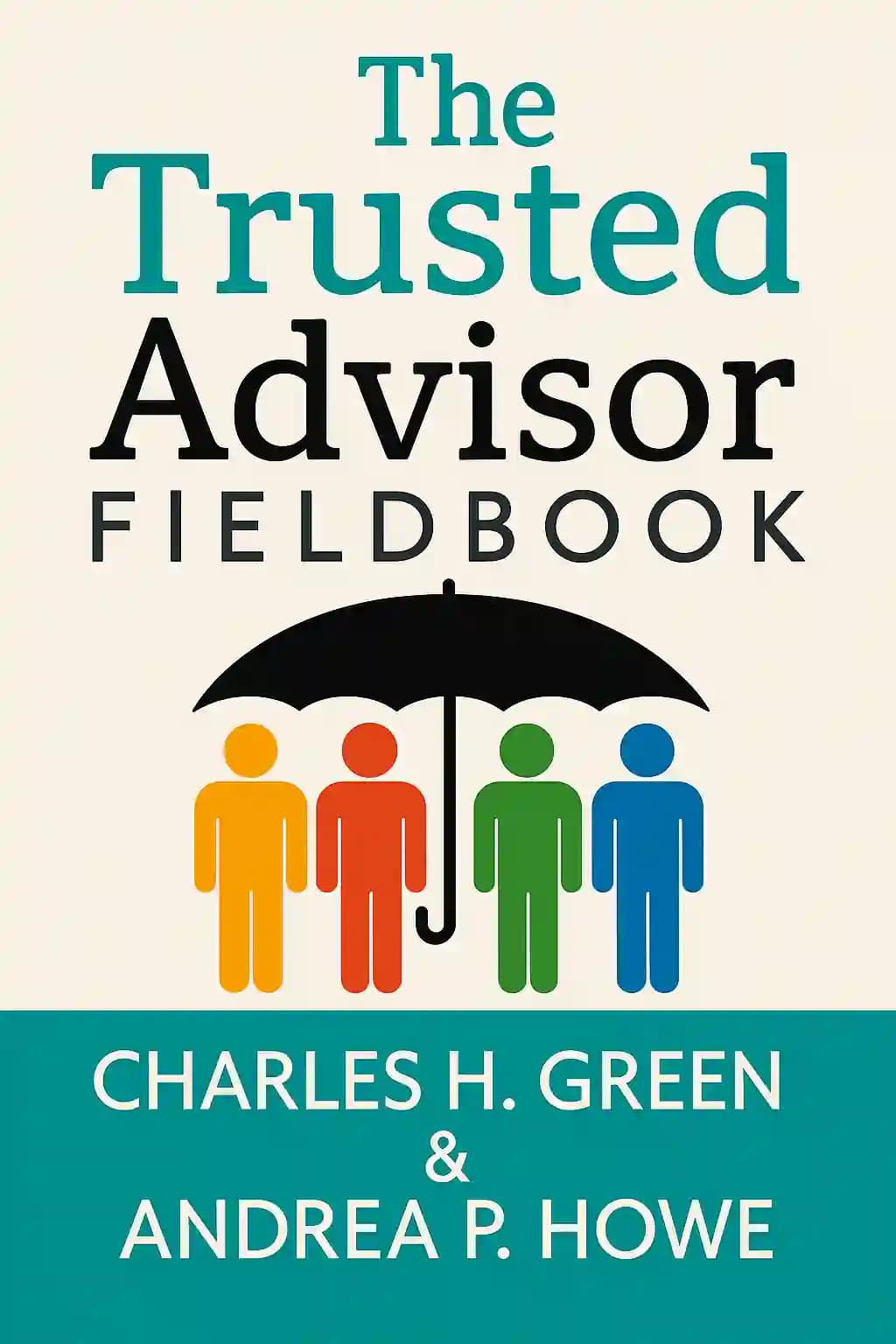
What if the most valuable business asset isn't your product knowledge, your MBA, or your technical expertise, but something far more fundamental? In a world where professionals increasingly offer similar services at similar prices, trust has emerged as the ultimate differentiator. The Trusted Advisor Fieldbook, co-authored by Charles H. Green and Andrea P. Howe, has become required reading at major consulting firms like Deloitte and PwC precisely because it addresses this critical business need. Since its publication, it has influenced countless professionals across industries, with Warren Buffett himself noting that "trust is the glue of life... it's essential to conduct business successfully." The book's practical approach to trust-building has made it particularly valuable during economic downturns, when relationships matter more than ever. As we navigate an increasingly virtual business landscape, its lessons on building trust at a distance have only grown more relevant.
2장
The Trust Paradox: Why Most Business Advice Gets It Wrong
Traditional business thinking treats trust as a nice-to-have rather than a fundamental requirement. We're taught to focus on credentials, technical expertise, and winning arguments. This conventional wisdom shows up in business school curricula, sales training programs, and countless leadership books. But this approach fundamentally misunderstands how trust actually works. Trust operates paradoxically-the best way to sell is to stop trying to sell; the best way to influence is to stop trying to influence; the best way to gain credibility is to admit what you don't know.
These paradoxes exist because trust operates at a higher level of relationship than our basic instincts for self-preservation and winning. When we rise above these instincts, we achieve better results than if we had pursued them directly. Consider the case of a financial advisor who lost a $40 million client despite having superior investment returns and deeper technical expertise. The firm that won the business didn't have better technical skills-they simply took the time to role-play the client's concerns rather than defending their own expertise. They demonstrated empathy over capability, and it made all the difference.
Trust isn't just a feeling-it's a measurable business asset with concrete components that can be understood and improved. The Trust Equation breaks trustworthiness into four distinct variables: Credibility (what you say and your expertise), Reliability (your actions and consistency), Intimacy (emotional safety and personal connection), and Self-Orientation (your focus and motivations). The first three form the numerator, while self-orientation forms the denominator. Increase the numerator or decrease the denominator, and trustworthiness rises. This mathematical model helps explain why technically brilliant professionals often struggle to build trust - they may have high credibility but their high self-orientation undermines their effectiveness.
Most professionals already excel at credibility and reliability, having spent years honing their expertise and delivery. In fact, 53% of Trust Quotient Test participants score highest in reliability, demonstrating consistent follow-through and dependability. The greatest opportunities for improvement typically lie in increasing intimacy and decreasing self-orientation-the very areas most business education ignores. For example, professionals who learn to share appropriate personal stories, admit mistakes, and show genuine curiosity about others often see dramatic improvements in their relationships and results. Similarly, those who learn to focus more on their clients' needs than their own expertise find that trust develops naturally and business follows.
Recent research shows that high-trust companies outperform low-trust ones by 286% in total return to shareholders. Yet most organizations continue to invest primarily in technical training while neglecting the fundamental skills of trust-building. This represents both a challenge and an opportunity for professionals willing to master the paradoxical nature of trust.
3장
The Five Essential Skills That Build Unshakable Trust
Trust isn't an innate trait but a set of skills that can be developed through practice. Like Aristotle suggested about excellence, trustworthiness comes from repeatedly doing the trustworthy thing until it becomes second nature. The development of trust follows predictable patterns and can be systematically improved through mastering five fundamental skills that form the bedrock of lasting relationships.
Listening transcends conventional "active listening" techniques and enters the realm of transformative engagement. It's not about strategic pausing or maintaining eye contact while waiting for your turn to speak. True empathetic listening requires full presence and genuine curiosity about the other person's perspective. When executives at companies like IBM and Microsoft implemented deep listening practices, they reported 40% better problem resolution and significantly stronger client relationships. The most powerful yet least practiced aspect of trust-building conversations is genuinely hearing what matters to the other person before offering solutions. This means suspending judgment, avoiding interruption, and resisting the urge to immediately problem-solve.
Partnering elevates relationships from transactional exchanges to genuine collaboration. Good partners maintain a collaborative mindset, work from equal status, and demonstrate flexibility in both leading and following. They balance assertiveness with cooperation, handle disagreements with grace and transparency, and share both the glory and burden of outcomes. The 1980 American Olympic hockey team exemplified this principle when they made the difficult decision to cut a highly talented player whose inconsistent effort undermined team trust. Similarly, successful business partnerships like Ben & Jerry's have thrived because the founders prioritized mutual trust over individual achievement.
Improvisation skills transform potentially damaging moments into trust-building opportunities. When faced with unexpected challenges, our instinctive fight-or-flight response can damage relationships. Successful improvisers use techniques like "Yes, and..." responses to build on others' ideas, maintain authenticity over cleverness, and respond quickly without overanalysis. Companies like Pixar use improvisation techniques in their creative process, leading to stronger team dynamics and better outcomes. These skills prove particularly valuable during crisis management, negotiations, and rapid market changes.
Risk-taking serves as the catalyst for trust development. Counter-intuitively, taking small, calculated risks early in relationships reduces the likelihood of major trust breaches later. This includes being the first to acknowledge mistakes, sharing vulnerable information appropriately, and addressing conflicts directly. Companies like Johnson & Johnson demonstrated this during the Tylenol crisis, where immediate transparency and accountability strengthened public trust. Risk-taking also means proactively reducing ambiguity, delivering difficult news promptly, and expressing authentic emotions in professional settings.
Self-knowledge forms the foundation that distinguishes truly trusted advisors from mere technical experts. This involves regular self-reflection, seeking feedback, and understanding personal triggers and blind spots. Common challenges include excessive need for approval, perfectionism, or fear of appearing unprepared. Leading organizations like Google have incorporated emotional intelligence training into their leadership development, recognizing that self-aware leaders build stronger, more trusting teams. Understanding these patterns allows professionals to leverage their strengths while developing strategies to manage limitations, ultimately creating more authentic and trustworthy relationships.
4장
Transforming Business Development Through Trust
Traditional approaches to marketing and business development often create adversarial relationships between buyers and sellers, fostering an environment of suspicion and tactical maneuvering. The trust-based approach transforms this dynamic by focusing on creating authentic relationships and being genuinely helpful rather than treating one party as doing something to another. This fundamental shift moves away from transactional interactions toward building lasting partnerships based on mutual benefit.
Trust-based marketing means prioritizing what's best for clients even when it doesn't immediately benefit you. This includes sharing ideas freely, giving away valuable samples of your expertise, and being willing to tell prospects when they don't need your services. For example, a consulting firm might provide detailed preliminary analysis at no cost, or a software company might recommend a simpler, less expensive solution that better fits the client's needs. Unlike superficial "client-centric" approaches that ultimately serve the seller, genuine customer focus builds trust through actions that demonstrate you truly put customer interests first-even walking away from business when it's not right for them. This might mean referring clients to competitors or suggesting internal solutions rather than external services.
When delivering pitches, trust-based professionals challenge conventional wisdom through several innovative approaches. Rather than following the standard format of talking about yourself for 30 minutes, make presentations interactive by building in questions, offering relevant data and asking for comments, or proposing to treat the pitch like a working session. For instance, instead of presenting a complete solution, work through the problem collaboratively during the meeting. Don't withhold ideas out of fear they might be wrong or stolen-that's self-oriented thinking. Sample selling differentiates you from competitors by demonstrating both capability and confidence. Even if your analysis isn't perfect, you'll gain credibility for taking the risk and showing genuine commitment to solving the client's problems.
For pricing discussions, transparency builds trust rather than undermining your position. Conventional wisdom says to delay price discussions until customers understand value, but this ignores two psychological realities: customers desperately want to know the price immediately, and they worry their price expectations might be unreasonable. The longer you make them wait, the more tension builds. Instead, discuss price early and make it safe for customers to have inaccurate estimates with statements like: "At the risk of raising price before discussing value, let me make sure we're in the same ballpark-I'm guessing this will be a low five-digit number." This approach reduces anxiety and allows for more productive conversations about value and solutions.
The traditional "Always Be Closing" approach typically destroys trust and future business opportunities by creating pressure and forcing decisions. Instead, trust-based selling focuses on helping buyers make appropriate decisions while moving relationships forward. Let go of the sale itself and focus on doing what's right for the buyer, understand their emotional motives and concerns, envision a positive future together to reduce anxiety, keep your personal needs for closure out of the process, and replace closing language with action-oriented questions like "What needs doing next?" or "How would you like to proceed from here?" The new mantra becomes "Always Be Collaborating" rather than "Always Be Closing," emphasizing partnership over pressure. This approach not only leads to better immediate outcomes but also builds a foundation for long-term business relationships and referrals.
5장
Managing Client Relationships When Things Get Complicated
Even with the best intentions, professional relationships face challenges. Trust-based approaches provide effective strategies for navigating difficult situations without compromising integrity. These challenges often emerge gradually, starting with minor misunderstandings that compound over time if not addressed properly.
When relationships stall without clear closure, taking action to re-engage is far better than letting relationships end without resolution. Two effective strategies can revive stalled relationships. First, directly acknowledge the communication barrier through the "Name It and Claim It" approach, preferably in real-time conversation. This might sound like, "I've noticed our communication has become less frequent lately, and I want to understand if something's concerning you." While this feels risky, it actually reduces tension by making the silence itself a topic for discussion. Second, radically change the problem statement by "upping the ante"-investing more effort to create a proposition of much greater value than originally discussed. This could involve expanding the scope of services, offering additional resources, or introducing innovative solutions that demonstrate your commitment to the relationship.
For dealing with seemingly difficult clients, the central premise is provocative: there is no such thing as a difficult partner-only relationships that aren't working well. Freedom from difficult partners lies in taking responsibility for fixing the relationship. Bad behavior typically stems from decent people experiencing stress, anxiety, or fear-not from inherent "jerkiness." For example, a client's aggressive demands might reflect pressure they're facing from their own stakeholders, or their reluctance to share information might stem from previous negative experiences. The problem statement "My client is a jerk" is ineffective because it's subjective, unverifiable, and something your client would never agree with.
Transform difficult relationships by reframing your thinking, reframing the problem, and listening masterfully. Begin by noticing your thoughts-if your problem statement starts with "He won't..." or "She doesn't...", you're stuck in blame. Let go of attachments to outcomes, winning, and being justified. Instead, cultivate curiosity about what might be driving your partner's behavior and examine your own role in the situation. Consider questions like: "What pressures might they be under that I don't see?" or "How might my communication style be contributing to this dynamic?"
When faced with untrustworthy people, your instinct may be to minimize risk through increased controls, detailed contracts, or limited engagement. However, this approach actually pulls you into the vortex of low trust, creating a self-fulfilling prophecy. The solution isn't prevention or avoidance-it's selectively taking calculated risks to build trust. For instance, sharing sensitive information first, extending trust before asking for it in return, or making commitments without demanding reciprocal guarantees. Remember, there is no trust without risk. When you blame others without confronting them, you contribute to distrust by avoiding truth-telling and relationship-building. Taking the initiative to address issues directly-through honest conversations, acknowledging mistakes, and demonstrating reliability-can transform the trust dynamic throughout your organization and create a foundation for stronger, more resilient professional relationships.
6장
Building Trust Across Distance and Difference
As business becomes increasingly global and virtual, building trust without face-to-face interaction presents unique challenges. Distance amplifies misunderstandings and makes relationship development more difficult, particularly across different time zones, cultures, and working styles. Research shows that virtual teams take three times longer to build trust compared to co-located teams, but specific practices can overcome these barriers and create strong, lasting connections.
For virtual teams, familiarity is the essential foundation for trust. While co-located teams benefit from physical proximity, frequent contact, and rich visual and auditory cues that create connection, virtual teams must strategically address both quality and quantity of interaction to compensate. Familiarity is primarily built through intimacy (feeling connected) and reliability (consistent experiences). Teams that invest in relationship-building activities during the first few weeks of formation show significantly higher performance and satisfaction levels throughout their lifecycle.
Different communication technologies serve different trust-building purposes, each with distinct advantages and limitations. Media richness (visual and auditory cues) and timeliness (immediacy of feedback) are key factors in selecting appropriate communication tools. While rich, synchronous tools like video conferencing enable real-time interaction and help convey non-verbal cues, they're often misused as one-way broadcasts rather than collaborative sessions. Written communication carries special risks-while excellent for detailed information and documentation, it struggles with emotional nuance and personal connection. Studies show that misinterpretation rates in email communication can be as high as 50% when dealing with complex or sensitive topics. The less personal your communication method, the more carefully you must craft your words to avoid misunderstandings.
Successful virtual team management combines trust principles with practical strategies. Essential practices include: making face time happen through kickoff meetings and periodic in-person gatherings, even if just annually; providing appropriate communication tools that match the team's needs and work patterns; increasing team intimacy through virtual social events and casual conversation channels; creating consistent work processes with regular meetings at times that work across time zones; establishing clear communication standards for response times and availability; setting explicit written goals and expectations that all team members can reference; avoiding over-communication that leads to information overload; making yourself available within reasonable guidelines while respecting work-life boundaries; encouraging explicit communication about thoughts, actions and feelings to prevent assumptions; and modeling trust-based communication by sharing appropriate personal details and communicating honestly about challenges and successes.
Cultural differences add another layer of complexity to virtual trust-building. Teams must actively acknowledge and adapt to different communication styles, decision-making approaches, and relationship-building preferences. Successful global virtual teams often establish team charters that explicitly address these differences and create shared norms that respect diverse perspectives while maintaining team cohesion.
7장
Creating a Culture of Trust Throughout Your Organization
Trust forms the foundation of organizational success, yet creating a trustworthy organization requires more than individual skill-building. It demands systematic approaches to embedding trust principles in how work gets done, decisions are made, and people interact daily. This includes establishing clear communication channels, transparent decision-making processes, and consistent feedback mechanisms that reinforce trustworthy behaviors at all levels.
Trust delivers both direct and indirect economic benefits, affecting both revenue generation and cost reduction. Revenue increases through more and larger sales, repeat business, referrals, faster time to market, and better decision-making. For example, trusted companies often see 2-3x higher customer retention rates and 20% faster sales cycles. Costs decrease through lower sales expenses, more sole-sourcing opportunities, reduced verification requirements, and less performance tracking. Studies show high-trust organizations spend 50% less on compliance and monitoring activities. These benefits extend to both advisors/sellers and clients/buyers, creating a virtuous cycle of mutual value creation.
Beyond financial returns, trust creates social value that enhances organizational effectiveness. High-trust environments foster collaboration across silos, enabling knowledge sharing and integrated solutions. For instance, cross-functional teams in high-trust organizations complete projects 30% faster than those in low-trust environments. They reduce workplace stress by eliminating politics and backstabbing, resulting in 74% less stress and 40% less burnout according to recent research. They improve information flow as people share challenges earlier without fear of blame, typically reducing problem resolution time by half. And they create more fulfilling work experiences by enabling authentic relationships rather than guarded interactions, leading to 50% higher employee engagement scores.
Creating a trust culture requires greater emphasis on personal change and less reliance on traditional organizational tools like roles, processes, and incentives. A high-trust organization consists of trustworthy people who appropriately trust others within an environment encouraging these behaviors. Leaders must model vulnerability, admit mistakes, and demonstrate consistent follow-through on commitments. Unlike typical change initiatives that engage self-interest, trust initiatives require stepping outside self-interest as a matter of principle, focusing on collective success over individual gain.
Sustainable trust cultures balance individual virtues with organizational values. Virtues-like honesty, empathy, and courage-represent personal characteristics that enable trustworthy behavior. Values-like transparency, collaboration, and accountability-establish shared expectations for how the organization operates. Both are necessary: virtues without organizational support lead to isolated pockets of trust, while values without individual commitment create cynical compliance rather than authentic trust. Organizations must actively reinforce both through recognition, storytelling, and consistent consequences for trust-building or trust-breaking behaviors.
Successful trust initiatives follow clear implementation principles. They start with leadership modeling trustworthy behavior rather than delegating "trust" to HR programs. They focus on specific business outcomes rather than abstract concepts, tying trust-building to measurable performance improvements. They integrate trust into existing processes rather than creating separate "trust programs," embedding trust metrics in performance reviews, project planning, and operational decisions. They measure progress using both quantitative metrics (employee turnover, customer retention, project completion rates) and qualitative feedback (engagement surveys, focus groups, exit interviews). And they recognize that building trust is a journey requiring sustained commitment rather than a quick-fix initiative, typically showing meaningful results after 18-24 months of consistent effort.
8장
Trust as a Competitive Advantage in Uncertain Times
In an increasingly uncertain business environment, trust becomes more valuable than ever. When markets are volatile, clients cling to relationships they can count on. During the 2008 financial crisis, for example, financial advisors who had built strong trust-based relationships retained significantly more clients than those who focused purely on transactions. When information flows freely, transparency becomes a requirement rather than an option - as demonstrated by how quickly corporate missteps become public knowledge in the age of social media. When technical expertise becomes commoditized, the ability to build deep relationships becomes the true differentiator.
The most successful professionals understand that trust isn't just about being nice-it's a strategic business advantage that drives measurable results. Research by Edelman shows that highly trusted companies outperform their peers by up to 5% in market value. By mastering the trust equation (Credibility + Reliability + Intimacy / Self-Orientation), developing the five essential trust skills (listening, risk-taking, agenda focus, transparency, and reliability), and applying trust principles consistently across all business interactions, you transform from a vendor into a trusted advisor.
This transformation doesn't happen overnight, but it doesn't require years either. Trust can be accelerated through deliberate practice and a commitment to living the principles in everything you do. Simple actions like following through on commitments, admitting mistakes promptly, and putting client interests first consistently build trust over time. Companies like Patagonia and REI have demonstrated how transparent business practices and genuine commitment to customer welfare create lasting competitive advantages.
The paradox is that by focusing less on immediate results and more on genuine service to others, you actually achieve better results faster. Consider how professional services firms that lead with education and insight, rather than hard selling, often win more business. Organizations that prioritize employee trust through transparent communication and fair practices typically see higher productivity and lower turnover.
As you implement these trust-based approaches, you'll likely discover what thousands of professionals before you have found: that leading with trust not only creates better business outcomes, but also more fulfilling professional relationships and a more meaningful career. Companies like Zappos and Southwest Airlines have built entire business models around trust-based cultures, proving that prioritizing relationships leads to sustainable success. Studies show that employees in high-trust organizations report 74% less stress, 106% more energy at work, and 50% higher productivity.
In the end, trust isn't just good business-it's good for business. In an era where technology and globalization have made many traditional competitive advantages obsolete, the ability to build and maintain trust becomes perhaps the most sustainable differentiator of all.