1장
The Digital Trust Revolution: Becoming a Human-Centered Influence Online
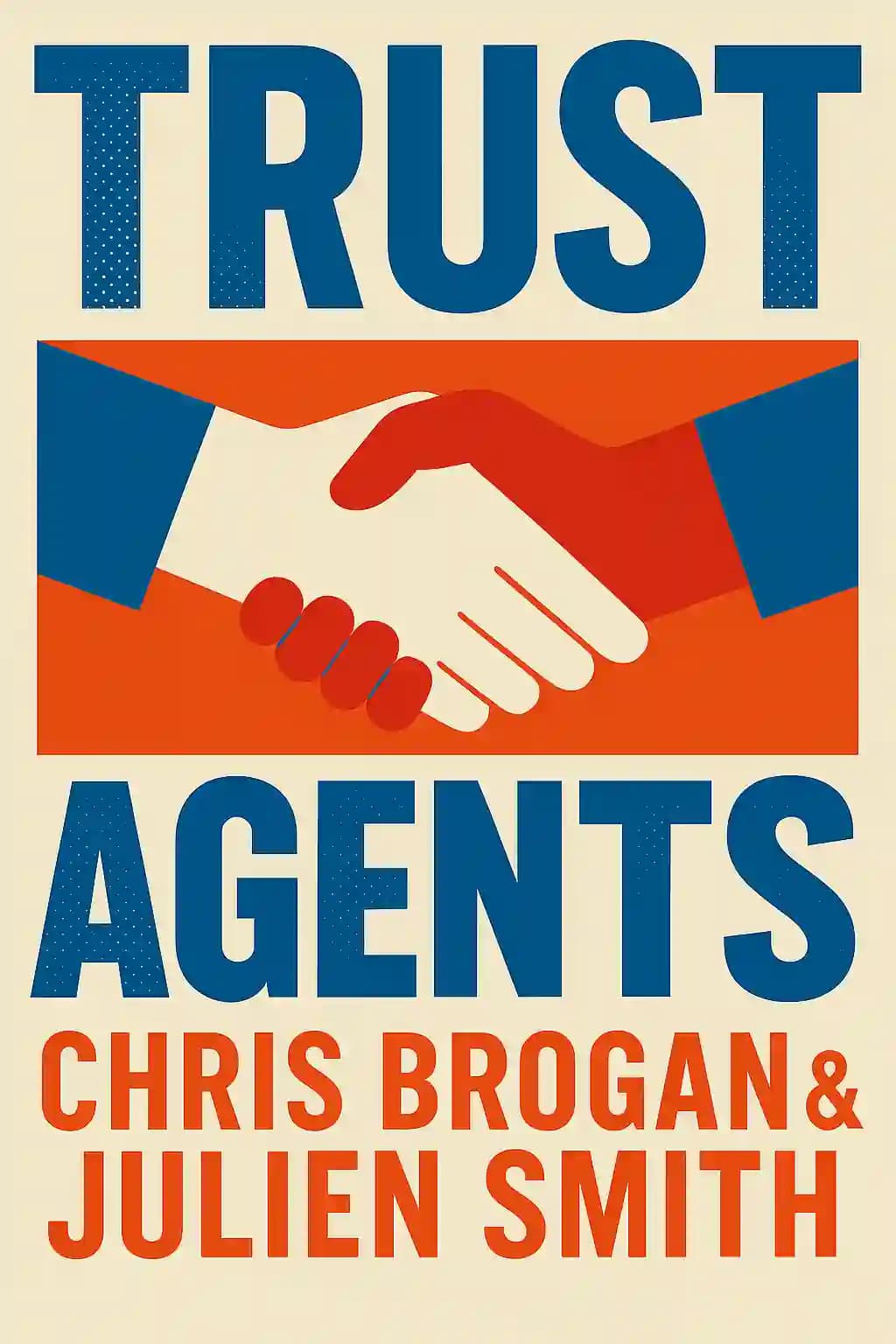
In 2009, two social media pioneers named Chris Brogan and Julien Smith published a book that would fundamentally reshape how we think about building relationships online. "Trust Agents" became a New York Times bestseller, arriving at a pivotal moment when Facebook was still primarily for college students, Twitter was in its infancy, and the iPhone had just begun transforming our digital lives. The book's premise was revolutionary yet timeless: in a world increasingly dominated by technology, the most valuable currency would be human connection and trust.
Fast forward to today, and their predictions have proven remarkably prescient. Mark Zuckerberg has testified before Congress about Facebook's influence on elections. Jeff Bezos owns The Washington Post. Streaming services have upended traditional media. Through it all, one fundamental truth has remained constant: while technology evolves rapidly, human nature doesn't. We still crave authentic connections, we still value trust, and we still prefer doing business with people we like.
What makes "Trust Agents" particularly fascinating is how it bridges two worlds-the rapidly evolving technological landscape and the unchanging principles of human psychology. The authors' insights have influenced countless digital marketers, entrepreneurs, and corporate leaders who recognized early that social media wasn't just another broadcast channel but a fundamentally different way of building relationships at scale.
2장
Making Your Own Game: Breaking Rules to Stand Out
Traditional business operates within established frameworks-journalists follow specific career paths, bands pursue record deals through conventional channels, and professionals climb corporate ladders. But trust agents recognize these systems as merely "games" with arbitrary rules that can be reimagined or bypassed entirely.
Mark Fisher exemplifies this principle perfectly. As a New York City actor who felt uncomfortable in traditional gyms, he created Mark Fisher Fitness-a place specifically designed for "misfits and weirdies." Members become "ninjas" who might exercise while wearing unicorn horns or feather boas. This unconventional approach has transformed thousands of lives while creating a thriving business that stands out dramatically from cookie-cutter fitness chains.
This concept of "gatejumping"-finding better paths while others follow established rules-has become increasingly accessible. Billie Eilish and her brother create Grammy-winning music from their childhood bedrooms. "SoundCloud rappers" become legitimate stars without label support. Radiohead's "pay-what-you-want" release of In Rainbows earned more than their previous traditionally-released album.
The web's interconnected nature makes it perfect for gatejumping. Before Tim Ferriss published "The 4-Hour Workweek," the concept of "lifestyle design" barely existed as a searchable term. By March 2007, he had positioned his blog as "experiments in lifestyle design," creating an entirely new category with himself as the standard-bearer. As Ferriss explains, "Don't be better at following guidelines-be different and call yourself such."
This approach to creating your own game follows three progressive stages that mirror how humans interact with systems:
First, we play by the rules, learning through trial and error. This requires understanding which rules actually matter versus "house rules" that can be modified. Trust agents constantly question which aspects of business can be reimagined without breaking laws or ethics. Could you work from a cafe instead of an office? Could your company improve by using social networks differently?
Next comes hacking-finding alternative uses for systems without breaking them. Like Wayne Gretzky who said, "I skate to where the puck is going to be, not where it has been," trust agents navigate systems efficiently by modifying conditions to better serve their needs. Christopher Penn demonstrated this by creating the Financial Aid Podcast in an industry where government regulations forced identical products and pricing. Unable to compete on price or outspend industry giant Sallie Mae, Penn delivered constant value through his podcast, helping families find scholarships and financial aid opportunities. This approach earned him coverage in BusinessWeek, New York Times, and Wall Street Journal-publicity he couldn't have bought.
Finally, there's programming-creating entirely new systems with your own rules. This requires experimentation, what Nassim Nicholas Taleb calls "tinkering." Try something small and finite, then larger, then complex, understanding that failures are as valuable as victories. Most people stop experimenting after childhood, developing the arrogance that they know enough. But Taleb's hedge fund Empirica succeeded by betting on its own ignorance, making small daily losses but massive gains during unpredictable catastrophes.
Being first in a new space allows you to set the rules that latecomers must follow. Early Twitter users gained thousands of followers simply by being present when others needed connections. Warren Buffett's investment philosophy captures this perfectly: "Be fearful when others are greedy, and be greedy when others are fearful."
3장
One of Us: Building Community Through Authentic Connection
Ryan Boyles of IBM and Sandy Carter of Amazon exemplify the power of being "one of us" in digital spaces. Neither leads with corporate messaging-Ryan discusses science fiction and nerdy interests while Sandy shares programmer jokes and memes about mobile devices. Because they communicate as full-fledged humans rather than corporate representatives, when they occasionally mention their companies' offerings, people actually listen.
Trust requires competence and reliability, but also leaving positive emotional impressions-something the web facilitates remarkably well. In social spaces, people often communicate more authentically than in formal settings, revealing their true selves through casual language and occasional mistakes. While this may sacrifice traditional professionalism, it builds stronger bonds.
The authors reference "The Trusted Advisor" which presents a formula for calculating business trust: T = (C x R x I)/S, where trust (T) is a function of credibility (signals showing authenticity), reliability (doing what you say you'll do), intimacy (emotional comfort level), and self-orientation (the only negative factor-focusing on yourself rather than others). While this formula was created before today's web, modern trust is heavily influenced by what others say about you, as seen in systems like Uber and Airbnb where anonymous reviews establish reliability.
Trusting strangers is a relatively recent phenomenon in human history, becoming common only in the past 200 years. Previously, trust was primarily extended to those who shared our genes and helped ensure survival. Urbanization forced us to adapt, and now we depend on strangers more than ever-riding in Uber cars, staying in Airbnb homes, and relying on reviews from people we've never met.
Status paralysis-the fear that emerges when we feel our position in a group is unstable-often prevents us from taking risks that might cause others to dislike us. This happens in countless situations: being new to a team, attending events where everyone else knows each other, or joining parent groups. Breaking through awkward silences makes you a conversation leader. To overcome status paralysis, connect with other potential outsiders, leverage your unique strengths rather than conforming, and focus on what you can control.
Creating barriers around your community-whether requiring email subscriptions, charging fees, or offering premium content-produces remarkable benefits. These walls provide protection, creating safe spaces where members feel comfortable sharing personal information. Members feel special and are more likely to defend, support, and help fellow insiders. They'll also take actions to maintain their membership, as exclusivity increases perceived value.
The benefits of being "one of us" come from genuine interactions, not calculated exchanges. When social capital is traded naturally, rewards compound organically. Jessica Berlin from Cirque du Soleil, after a friendly conference conversation, later provided VIP treatment for over 100 bloggers at the company's nightclub. Neither she nor the author sought benefits from their initial interaction-good things simply happened naturally.
The web magnifies good deeds by making all interactions public and permanent-like leaving markers on a forest trail. This digital paper trail builds credibility when others search for you. Contrast this with receiving a PR pitch from someone with no online presence or, worse, negative mentions. When you interact regularly and honestly online, building genuine relationships first, any subsequent pitches feel natural rather than forced.
Online "friends" differ significantly from those who would help move your couch. We're often "half-strangers" online, knowing some things while missing other fundamentals. Yet trust transfers differently here-we vouch for people we've never met face-to-face, based on their self-reported experiences via social networks.
4장
The Archimedes Effect: Leveraging Digital Tools for Maximum Impact
"Give me a lever long enough and a fulcrum on which to place it, and I shall move the world," said Archimedes. This principle applies perfectly to how trust agents achieve outsized results with minimal effort. Like the "lazy" programmers who are often the best because they make a little code do a lot of work, trust agents find ways to achieve powerful results with minimal input.
Leverage means using advantages from one area to help in another-utilizing resources you have easy access to that others don't. Apple leveraged its iPod dominance to launch the iPhone, creating unprecedented demand for a phone. Kevin Rose used his success with Digg to create Revision3 and later Pownce. Robert Downey Jr. leveraged his Iron Man success into subsequent roles, building momentum with each successful project.
Using the web to network may be the easiest leverage point available. By connecting with people online first, then meeting face-to-face, you create relationships that feel like reconnecting with old friends. This two-step approach-digital connection followed by in-person meetings-gives you an advantage over competitors who remain purely digital.
Google exemplifies leverage at massive scale. Starting with superior search technology, they paired this capability with advertising to build the web's best contextual ad platform. Growing from $125 billion in 2009 to $970 billion by 2020, Google demonstrates how taking one opportunity, developing it into something exceptional, and then leveraging it into new opportunities creates exponential value.
Finding time to apply the human touch to thousands in your network requires leveraging your time effectively. This might mean negotiating remote work to eliminate commute time or finding other ways to redirect hours toward more productive activities. The trust agent constantly seeks ways to save time and leverage those savings elsewhere.
Gary Vaynerchuk exemplifies building leverage through bold distinction. His formula includes: being bold about business purpose (generating $55+ million for his wine business through his web presence), being everywhere (consistent show, blog, videos, conferences), being a direct salesperson (always asking for the sale), being relentless (working early and late), and being gracious (loving his fans and promoting supporters).
The golden rule for leveraging your audience relationship: don't sell to them-be their gatekeeper instead. Like Oprah Winfrey, who gives constantly and leverages goodwill for bigger guests and giveaways, trust agents protect their audience from bad content while letting good stuff through. Building a community requires leadership, creating belonging, transparency, and empowering members-all nearly impossible if you're constantly asking them for money.
Trust agents build channels before they need them-like saving for retirement. Though most people struggle with planning for the future, establishing networks across platforms (blogs, Twitter, Facebook, email newsletters) creates different avenues to connect with different audiences. When you eventually need to promote a project or increase sales, you'll need access to these people immediately.
Social media platforms offer one-to-many communication opportunities that benefit organizations. Whether it's Lionel Menchaca addressing service issues on Dell's blog or Frank Eliason responding to customers via @comcastcares on Twitter, these approaches leverage media to achieve multiple positive outcomes simultaneously: reducing customer service calls, addressing complaints publicly, and demonstrating responsiveness.
The web's commercial potential lies in leveraging huge potential audiences with minimal distribution costs. Whether offering free blog content or "freemium" services, the key is reaching thousands efficiently. Trust agents use social recommendation engines like Reddit and Twitter to quietly spread messages through their audience instead of shouting with metaphorical megaphones.
5장
Agent Zero: Becoming the Central Node in Your Networks
Trust agents naturally become connectors across different groups, functioning as the central node that links otherwise separate networks. Being "Agent Zero" means positioning yourself at the center of networks where you can spread ideas and make valuable introductions. Unlike traditional networking, trust agents connect people without expecting immediate benefits, focusing instead on creating genuine value through relationships.
Christopher Penn shares how a Facebook connection led to a seven-figure deal with a California bank looking for a student loan provider. Jim Canterucci discusses the opportunity cost of not being connected-while we could survive without social media (just as we could have without printing presses or automobiles), we'd miss potential innovations and business opportunities.
As Agent Zero, your role is to thread together networks of previously unconnected people. Trust agents build networks reflexively by being helpful, promoting others' work, sharing their best content freely, and delivering value without expecting immediate returns. Rather than pursuing influencers, they connect with promising up-and-comers through small online interactions like commenting on blogs or helping promote causes.
Businesses increasingly value employees who can function as connectors, reaching beyond organizational boundaries to find information or build beneficial relationships. Social networks like LinkedIn provide powerful platforms for this purpose. When Chris once used LinkedIn to find suitable speaker replacements when he couldn't fulfill a speaking engagement in Los Angeles, he demonstrated two trust agent principles: using networks to solve problems and creating leverage by sharing opportunities with others.
People form networks naturally, and trust agents work to both expand their networks and strengthen connections within them. Making yourself visible online is like building a billboard on a new road-it may take time before people notice, but if that road becomes a highway, the investment pays off tremendously.
Consistency and presence are crucial for building trust. Julien's regular presence at a cafe, especially when he moved from tables to the bar, shifted staff perceptions positively. This mirrors the "Donnie Brasco" approach to infiltration-being seen regularly establishes predictable patterns that build trust over time. On the web, being helpful without overtly selling anything is key.
Emerson's advice to "leave a trail" applies perfectly to the digital world. Unlike physical spaces, the web lacks gravity and mass-if you leave no visible trace, no one will know you were there. Trust agents must create markers showing they've passed through. Companies with no web presence suffer PR problems by displaying an absence of involvement in spaces many consider home.
Attention has become our scarcest resource in an age of information overload. People work longer hours while being more distracted than ever, consuming multiple channels of infotainment simultaneously. This creates a paradox: more channels and less focus, yet businesses must monitor more channels to understand public perception.
British anthropologist Robin Dunbar identified that humans can maintain only about 150 authentic relationships-a concept Malcolm Gladwell explored through "connectors" in The Tipping Point. The authors challenge the myth that social connectivity is an innate talent, arguing instead that anyone can learn to become a connector through deliberate effort.
Just as priests in small towns serve as central connectors with deep community knowledge, trust agents can create similar gathering spaces online. These digital "churches" aren't officially designated but emerge organically through community consensus. The challenge is determining what kind of gathering place your community needs and how to attract participation.
Greg Cangialosi's approach exemplifies relationship-first business: sponsoring events, connecting genuinely, and providing value without immediate expectations. This creates not just customers but evangelists who naturally recommend his services. By becoming "one of us" across multiple networks, he positioned his email marketing platform as the default recommendation.
6장
Human Artist: Mastering the Soft Skills of Digital Interaction
The balance of power between companies and customers has fundamentally shifted. While companies dominated from the 1950s through early 2000s, today's consumers wield unprecedented choice and control. In this environment, etiquette becomes not just a "nice-to-have" but an essential business skill. The authors argue that "human is the new black"-those who understand how to navigate the human web authentically will find, retain and grow customer communities, while those unprepared face obsolescence.
The authors present their perspective as web users, explaining their short attention spans result not from stupidity but from information abundance and limited time. They describe how younger generations multitask naturally across platforms, emphasizing that capturing attention is the creator's responsibility. They warn that online audiences seek authentic, thoughtful engagement rather than repurposed business copy.
Social network "friendship" differs significantly from real friendship. Accepting a friend request merely indicates curiosity; it permits attention to activities and conversation opportunities; and marketing to new connections typically results in disconnection and possibly public criticism. They compare it to saying hello at a party-it's just the beginning, and what follows matters most.
The authors compare online etiquette to party behavior among strangers, emphasizing that every online gesture requires deliberateness due to limited social cues. They recommend four essential practices: Listen (observe community norms before participating); Ask (seek guidance after some observation); Reciprocate (return social gestures like friend requests); and Comment meaningfully (add value to conversations and acknowledge others' contributions).
Two seemingly contradictory cultures-transparency and anonymity-work together online to amplify human signals. Anonymity, a core element since the web's early days, allows people to open up about sensitive topics without fear of rejection. Meanwhile, transparency developed as users gained confidence to attach real names and faces to their experiences. Together, these cultures build understanding by revealing the breadth of people's emotions over time, creating deeper connections than might be possible offline where people often hide their true selves.
Trust agents must embrace customer service as part of their daily role. The authors recommend answering the "social phone" by monitoring platforms where customers might reach out. When complaints arise, follow the three A's: Acknowledge the issue, Apologize sincerely, and Act to resolve it. Remember that every customer can now broadcast their experiences widely through blogs, review sites, and social media.
Sharing mundane status updates like "Having wine at lunch, feeling sophisticated" builds community through shared moments. These seemingly trivial posts help followers develop a complete picture of the person behind the keyboard. Tara Hunt calls this "throwing sheep"-fun and seemingly unproductive actions that translate into deeper belonging.
Trust agents reveal personal details to be approachable, but this creates an imbalance: they share much about themselves while knowing little about their audience. This "one-way intimacy" puts them somewhat at the mercy of their tribe. The web's pull culture means trust agents can't always reciprocate attention. This creates both vulnerability and opportunity-revealing too much online can be problematic since everything is permanently searchable.
Nobody minds buying but everyone hates being sold to. Effective web selling happens through "tell, not sell." Personal websites create strong reader connections, and these readers expect authenticity. Hard selling damages these relationships. Instead, focus on what your content conveys about you as its author. Ambient effects in the sales cycle build long-term reputation better than pushing hard sells.
When asked about his social media success, Chris always answers: "Be helpful." This approach serves multiple purposes-it's a genuinely nice way to interact, a content strategy (people keep useful posts longer), a decision-making framework, and simply the right thing to do. While nobody knew it would be the fastest way to rise above the social media noise, it proved extremely effective.
7장
Building an Army: Mobilizing Communities for Collective Impact
The authors reflect on how their 2009 observations about individual digital power have evolved into world-changing movements like Arab Spring, the ALS ice bucket challenge, and social justice campaigns like #blacklivesmatter and #metoo. While one person's voice can plant the seed of change, mechanisms must exist to mobilize action.
Drawing from Napoleon Hill's concept in "Think and Grow Rich," mastermind groups have become essential strategic tools. The web enables highly motivated people to form these groups across geographical boundaries, connecting based on shared interests rather than location. Digital mastermind groups often work better than traditional ones because they're fluid, flexible, and allow collaboration between the best minds regardless of physical distance.
The web enables unprecedented collective power through asynchronous aggregation-instead of relying on one person's full effort, we can distribute small tasks among hundreds worldwide, allowing people to contribute on their own schedule while achieving greater results. Wikipedia demonstrates this perfectly, having crushed traditional encyclopedias by harnessing random amateur contributions.
The web's power extends beyond human armies to automated processes that work tirelessly in your absence. These "machine soldiers" handle repetitive tasks while humans tackle what robots can't comprehend. As technology advances, these automated systems handle increasingly complex work, replacing low-skill jobs while leaving humans to focus on genuinely human tasks.
The social web has democratized activism by requiring minimal individual effort to create massive collective impact. With a single click, we can spread messages to thousands, making online groups exponentially more powerful than offline ones. This democratization has redefined media consumption-YouTube counts billions of daily views, outpacing traditional networks, while countless blogs outrank mainstream publications.
Social tools have made spreading information effortless, like driving on concrete instead of mud. Email remains the most trusted information source online despite frequently spreading hoaxes. Meanwhile, platforms like Reddit formalize information-sharing, creating infrastructure that minimizes effort while maximizing reach.
Consumer preferences are shifting from mass production to personalized experiences-from chain restaurants to local cafes, from mass-produced beer to craft brews. People crave customization and personal connections over generic mass communications. As email overload and traditional advertising decline, social media's intimacy appeals to those seeking authentic connections and shared experiences.
Jeff Pulver, Vonage co-founder, pioneered the concept of "bringing your own dial tone"-bypassing traditional gatekeepers through technology. Where distribution once limited access to audiences, social platforms now enable direct communication with passionate supporters. With just Facebook, anyone can send text, audio, and video messages worldwide.
Any effective army understands its purpose and the implicit agreements that bind it. In web communities, these social contracts may be informal but are essential. Whether rallying people to share a YouTube video or join a larger cause, each participant must receive some benefit-recognition, the joy of helping, or a sense of belonging.
For your army to truly advance your cause, they must internalize your ideas and make them their own. Since most people view themselves as the hero of their own story, your concepts need "handles" that allow others to grasp and adapt them. Share your vision through blogs, videos, articles, and collaborative platforms. Write content that equips others with tools and strategies. Distribute free e-books.
8장
The Trust Revolution Continues: Adapting to Tomorrow's Digital Landscape
This unique moment in history presents both challenges and opportunities. With attention scarce and established business leaders faltering, the internet has leveled the playing field across media, merchandise, and communication. The web enables businesses to reveal their human side, allowing consumers to directly converse with brands both large and small.
The trust agent's skills extend far beyond online presence. Making Your Own Game helps build market advantage in any business venture. Being One of Us works in all people-facing roles from restaurant service to real estate. The Archimedes Effect teaches leverage applicable to personal finance and job negotiations. Agent Zero networking ensures you'll never lack opportunities. Human Artist skills are essential for doctors, accountants, and teachers alike. Building an Army develops leadership that helps others grow while expanding your reputation.
Trust itself isn't new, but how it flows has changed with each communication medium. Your goal as a trust agent is to master "tomorrow's radios" before others do, requiring perpetual experimentation. The web's evolution resembles how television transformed radio-and further transformations are inevitable. The principles in this book transcend specific tools and platforms.
Your perspective fundamentally shapes your actions as a trust agent. Stephen Covey's "abundance mentality" exemplifies this-seeing the world as full of opportunity rather than scarcity changes how you respond to situations. How you frame social platforms determines their utility; viewing Facebook merely as a place to reconnect with old friends limits its potential compared to seeing it as a business opportunity.
The improvisational comedy principle of "Yes, and..." provides a powerful mindset for trust agents. Rather than shutting down ideas, this approach means accepting what's presented and then building upon it. In business contexts, this transforms negative statements into opportunities. When someone says, "We're losing site traffic," responding with "Yes, and we could rebuild engagement with more human interactions" makes you part of the solution.
As we age, our social circles naturally shrink, but trust agents must actively counteract this tendency. Creating value for others is the secret to building relationships-whether through small gestures like a smile, a joke, or letting someone ahead in line. These tiny "gifts" initiate exchanges that build connection. The most crucial aspect of social trust is likability, which comes from being worthy of being liked: be kind, patient, humble, punctual, and generous.
Trust agents rise to prominence differently than traditional businesses-by elevating themselves rather than pushing others down. In an era of transparency where "there are no secrets," collaborative, constructive approaches prove more effective than harsh tactics. Taking the high road forces competitors to rise to your level rather than engaging in destructive competition.
The internet's endless stream of "best of" lists and popularity contests can distract you from meaningful goals. Metrics like page views are meaningless without conversion to desired actions-just as foot traffic in a store means nothing without purchases. Focus on creating value through your online presence rather than chasing accolades, whether your goal is business development, personal branding, or supporting nonprofits.
We're all selling something-products, services, or ourselves. Trust agents just do it better on the web than anyone else. When we first wrote this book, we focused on mindset rather than tools, knowing that mindsets like persistence lead to success while tools come and go. Seeing yourself as a salesperson changes your approach-you set goals, work harder, constantly improve your skills, and provide great service.
While trust scales more like a cafe than McDonald's, some elements can be systematized. Listening tools can be implemented across organizations, though deciding what to do with that information remains challenging. Customer service aspects scale well by maintaining humanity, valuing relationships, helping customers find success (even outside your company), and being transparent.
Trust works precisely because it takes time-humans recognize when someone genuinely pays attention versus multitasking. This personal attention creates value because it can't be scaled. While back-office functions can be systematized, front-facing interactions require focused attention. The "always on" culture requires boundaries-setting rules about when to disconnect, making certain times (like dinner) screen-free, and applying these rules to everyone in the household.
The tenth anniversary edition of Trust Agents reflects how much has changed in a decade. Organizations have learned that building trust requires more than just new platforms-it demands listening and delivering value. Companies like Citrix Online discovered that trust agents can't operate alone; they need teams. Frank Eliason at Comcast expanded from a single agent to a team of 12. The principles of trust agents have been embraced across industries, from restaurants to soap companies to hotels-all seeing dramatic business improvements by connecting with people before they need to sell anything.