1장
The Enduring Battle Between Man and Nature
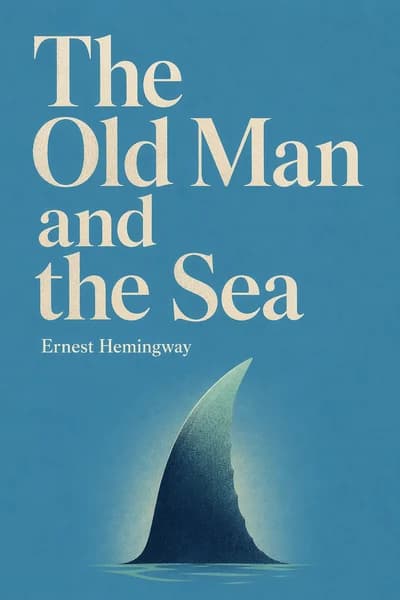
In 1952, a slim novella about an aging Cuban fisherman's epic struggle with a marlin captivated the world. Ernest Hemingway's "The Old Man and the Sea" became an instant classic, selling over five million copies of Life magazine in just two days-the fastest-selling issue in the publication's history. The tale had gestated in Hemingway's mind for nearly sixteen years before he finally wrote it in just eight weeks in 1951, calling it "the best I can write ever for all of my life." This masterpiece not only revitalized Hemingway's career but secured him the Pulitzer Prize in 1953 and contributed significantly to his Nobel Prize win the following year. The novella has been translated into more than 40 languages and remains required reading in schools worldwide. Even Fidel Castro, who met Hemingway in Cuba, called it his favorite book, praising its portrayal of the Cuban spirit. What makes this deceptively simple story of an old fisherman's defeat and triumph continue to resonate across cultures and generations nearly seventy years after its publication?
2장
A Simple Man's Extraordinary Perseverance
Santiago is no ordinary protagonist. After eighty-four days without catching a fish, this weathered Cuban fisherman has become a figure of ridicule among the other fishermen in his small village. His skin is deeply creased from years under the sun, with "blotches of the benevolent skin cancer the sun brings from its reflection on the tropic sea." His eyes, however, remain "cheerful and undefeated," reflecting his indomitable spirit.
Santiago lives in abject poverty in a small shack with minimal possessions-a bed, a table and chair, and a place to cook with charcoal. The walls are adorned with just two items: a picture of the Sacred Heart of Jesus and another of the Virgin of Cobre, Cuba's patron saint. These religious icons hint at Santiago's simple faith and the spiritual dimension of his coming struggle.
Despite his circumstances, Santiago maintains his dignity and self-respect. He keeps himself clean and his fishing gear in perfect order. "Everything about him was old except his eyes," Hemingway writes, "and they were the same color as the sea and were cheerful and undefeated." This description establishes Santiago's essential character-a man whose physical decline contrasts with his unwavering inner strength.
His relationship with Manolin, a boy he has taught to fish, reveals his gentle nature and wisdom. Though Manolin's parents have forbidden him to fish with the "unlucky" Santiago, the boy still cares for the old man, bringing him food and discussing baseball-particularly their shared hero, the great DiMaggio. Their conversations reveal Santiago's philosophy: "A man can be destroyed but not defeated." This distinction between physical destruction and spiritual defeat becomes the novella's central theme.
When Santiago sets out on the eighty-fifth day, his determination is not born of desperation but of a craftsman's pride and a warrior's courage. He rows far beyond the other fishermen, into the deep waters where the big fish swim. This physical journey mirrors his spiritual one-a solitary quest that will test the limits of his endurance and reveal the depths of his character.
3장
Into the Gulf Stream: Man Meets Marlin
As dawn breaks on the eighty-fifth day, Santiago rows his skiff far into the Gulf Stream, away from the safety of shore and the company of other fishermen. The sea is his element-he thinks of it in feminine terms, as "la mar," the way people who love her speak of her. This intimate relationship with the sea underscores Santiago's connection to the natural world. He is not merely in nature but of it, attuned to its rhythms and respectful of its power.
The early hours bring small successes-a ten-pound tuna caught for bait, the companionship of birds and flying fish. Santiago observes everything with the keen eye of an experienced fisherman, reading the signs of the sea like a text. When a small bird lands on his boat, exhausted from migration, Santiago speaks to it gently: "How old are you? Is this your first trip?" This moment of tenderness reveals his fundamental kinship with all living creatures.
The strike, when it comes, is subtle-just a slight tug on one of his lines. Santiago knows immediately that this is no ordinary fish. "He is a great fish and I must convince him," he thinks, allowing the marlin to take the bait fully before setting the hook. What follows is the beginning of an epic struggle that will last for three days and nights.
The marlin pulls the boat steadily northwest, and Santiago can only hold on, bracing the line with his back and shoulders. Hours pass, and his hands cramp painfully, but he refuses to yield. "Fish," he says, "I'll stay with you until I am dead." This is not mere stubbornness but a recognition of the contest's significance-a test of his skill, endurance, and will against a worthy opponent.
As night falls, Santiago is alone on the vast sea, tethered to an unseen fish of tremendous power. He has no way to secure the line; he must hold it with his own body. Despite his isolation and physical pain, he feels a strange companionship with the marlin: "Never have I had such a strong fish nor one who acted so strangely." This paradoxical bond between hunter and hunted forms the emotional core of what follows-a relationship of mutual respect that transcends their adversarial roles.
4장
The Brotherhood of Adversaries
By the second day of his ordeal, Santiago has still not seen the fish that pulls his skiff through the water. His hands are cut by the line, his body aches, and he has had little food or sleep. Yet he maintains not only his determination but also a growing admiration for his unseen opponent. "He is a great fish and I must convince him," Santiago thinks. "I must never let him learn his strength nor what he could do if he made his run."
When the marlin finally surfaces, Santiago is awestruck by its magnificence. Two feet longer than the skiff itself, with a sword as long as a baseball bat and a deep purple-blue color that gleams in the sunlight, the marlin is the embodiment of natural perfection. "Never have I seen a greater, or more beautiful, or a calmer or more noble thing than you, brother," Santiago says aloud. This moment transforms their relationship from one of hunter and prey to something approaching kinship.
Despite his admiration, Santiago remains committed to catching the fish. This apparent contradiction reveals a profound truth about his character-he can simultaneously love the marlin and be determined to kill it. There is no malice in his intent, only the recognition that this is his role in the natural order. "I was born to be a fisherman as the fish was born to be a fish," he reflects.
As the struggle continues, Santiago begins to identify with the marlin more deeply. He imagines what the fish must be experiencing-the pain of the hook, the confusion, the determination not to yield. "He is wonderful and strange and who knows how old he is," Santiago thinks. "Never have I had such a strong fish nor one who acted so strangely." This empathy doesn't weaken his resolve but rather ennobles his effort, transforming what might have been merely a hunt into something approaching a sacred ritual.
The old man's thoughts drift to his youth and a hand-wrestling match in Casablanca that lasted a day and a night. He had won that contest against a powerful opponent, earning the title "El Campeon," the champion. Now, decades later, he draws on that same well of strength and determination. "But I will show him what a man can do and what a man endures," he vows, speaking both to himself and to the great fish.
This brotherhood of adversaries-the old man and the marlin-represents one of Hemingway's most powerful themes: the idea that true nobility emerges only through confrontation with a worthy opponent. In this struggle, both participants are elevated, their essential natures revealed through the test of will and endurance.
5장
The Crucible of Suffering
The third day of Santiago's battle with the marlin brings him to the limits of human endurance. His hands are severely cut from the fishing line, his back is cramped from the constant tension, and he has gone without proper food or sleep for days. "I have never seen or heard of such a fish," he thinks. "But I must kill him. I am glad we do not have to try to kill the stars." This poetic thought reveals how Santiago has begun to see the marlin as something beyond an ordinary fish-a force of nature, like the stars themselves.
Hemingway's descriptions of physical suffering are unflinching yet never gratuitous. Each detail of Santiago's pain serves to illuminate his character and the magnitude of his struggle. When his left hand cramps into a claw, Santiago berates it: "What kind of a hand is that? Cramp then if you want. Make yourself into a claw. It will do you no good." This moment of talking to his own rebellious body parts illustrates both his desperation and his indomitable will.
The old man sustains himself with small rituals-eating raw tuna for strength, drinking sparingly from his water bottle, remembering prayers he had promised to say if he caught the fish. These acts provide structure in the midst of chaos and connect him to the wider human community even in his extreme isolation.
Santiago's thoughts during this ordeal reveal a complex spirituality. Though not overtly religious, he makes bargains with God and contemplates sin: "Perhaps it was a sin to kill the fish," he thinks. "But then everything is a sin." This moral questioning adds depth to what might otherwise be simply a tale of man versus nature.
As the battle reaches its climax, Santiago draws on reserves of strength he didn't know he possessed. "Pain does not matter to a man," he tells himself, a statement that seems to transcend mere bravado. In his extremity, Santiago achieves a kind of transcendence-a state where physical suffering becomes secondary to the spiritual commitment to see the contest through to its end.
When he finally harpoons the marlin after three days, the victory is bittersweet. "I am too old to club sharks to death," he thinks, foreseeing the challenges ahead. Yet there is genuine triumph in this moment-not just in conquering the fish but in discovering the depths of his own endurance. "Man is not made for defeat," Santiago reflects. "A man can be destroyed but not defeated." This distinction between physical destruction and spiritual defeat forms the philosophical heart of the novella.
Through Santiago's suffering, Hemingway explores the paradoxical idea that it is precisely in our moments of greatest physical weakness that we can discover our greatest spiritual strength-that suffering, properly endured, can be transformative rather than merely destructive.
6장
The Inevitable Tragedy
With the great marlin finally harpooned and lashed to the side of his skiff, Santiago begins the long journey home. His victory, however, is short-lived. The blood from the marlin trails in the water, and soon the first shark appears-a massive Mako with teeth "shaped like a man's fingers when they are crisped like claws." Santiago recognizes this new threat immediately: "The shark was not an accident."
This encounter marks the beginning of Santiago's second battle-not one of endurance against a noble adversary, but a desperate defense against the mindless, destructive forces of nature. The Mako takes forty pounds of the marlin's flesh before Santiago kills it with his harpoon, but in doing so, he loses his only effective weapon. "Now they have beaten me," he thinks. "I am too old to club sharks to death."
Yet Santiago refuses to surrender. When more sharks come-the scavenger shovelheads he calls galanos-he fashions a crude knife by lashing his knife to an oar and continues to fight. There is something both heroic and futile in this resistance; he knows he cannot save the marlin, yet he battles on. "Fight them," he says aloud. "I'll fight them until I die."
As night falls, the sharks return in packs. Santiago fights with everything he has-the makeshift spear, the tiller, finally just a club-but the outcome is inevitable. By morning, nothing remains of his magnificent catch but the skeleton, head, and tail. "Half-fish," he addresses the carcass, "Fish that you were. I am sorry that I went too far out. I ruined us both."
This sequence represents the novella's tragic turn-the moment when victory transforms into defeat through no fault of the protagonist's skill or courage. The sharks embody the indifferent destructiveness of nature, the entropy that eventually claims all human achievements. Unlike the marlin, which Santiago could respect as a worthy opponent, the sharks represent mindless consumption without nobility or purpose.
Yet even in this devastating loss, Santiago maintains his dignity. He refuses to blame the sharks ("They were only doing what they were made to do") or to curse his fate. Instead, he acknowledges his own role in the tragedy: "I went out too far." This acceptance without self-pity reveals the true measure of Santiago's character-his ability to face the truth of his situation without surrendering to despair.
The stripped marlin skeleton becomes a powerful symbol of the transience of achievement. All that remains of Santiago's greatest catch is "the long backbone of the great fish that was now just garbage waiting to go out with the tide." This image encapsulates the novella's bittersweet wisdom: that even our greatest triumphs are temporary, subject to time and the indifferent forces of nature.
7장
Return to Shore: Pride Amid Defeat
Santiago's return to harbor is a study in quiet dignity amid apparent defeat. Exhausted beyond measure, he struggles to carry his mast up the beach, falling several times under its weight. The parallel to Christ carrying his cross is unmistakable-a man bearing the instrument of his suffering with stubborn determination. When he finally reaches his shack, he collapses face down on his bed with his arms out straight and the palms of his hands up, another Christ-like image that suggests both sacrifice and transcendence.
Meanwhile, other fishermen gather around the skeleton tied to his boat. "I have never seen anything like this," one says, measuring the carcass at eighteen feet from nose to tail. Even in its ruined state, the marlin inspires awe. A tourist at the nearby cafe, misunderstanding what she sees, asks a waiter what it is. "Tiburon," he replies. "Eshark." This misidentification represents how Santiago's achievement will be misunderstood by the wider world-his epic struggle reduced to a simple tale of failure.
When Manolin finds Santiago the next morning, the old man's first words are: "They beat me, Manolin. They truly beat me." Yet the boy sees beyond this apparent defeat to the true victory: "He didn't beat you. Not the fish." This distinction is crucial-the marlin, Santiago's worthy opponent, did not defeat him. Their contest ended in mutual respect, even a kind of love. It was the sharks-the mindless, destructive forces of nature-that destroyed the physical evidence of his achievement.
Despite Santiago's protests that he is "not lucky anymore," Manolin insists they will fish together again: "The hell with luck. I'll bring the luck with me." This declaration marks Manolin's transition from student to partner and represents the continuity of tradition-the passing of knowledge and values from one generation to the next.
As they plan their future fishing expeditions, discussing new gear and techniques, we see that Santiago's spirit remains unbroken. His body may be battered, his prize lost, but his essential dignity and craftsman's pride remain intact. "I want to learn everything," Manolin says, acknowledging Santiago as his teacher despite what others might see as failure.
The novella ends with Santiago sleeping again, dreaming of lions playing on the beaches of Africa-the same dream he had as a young man. This return to youthful visions suggests a kind of spiritual renewal, a circle completed. Despite everything he has endured-or perhaps because of it-Santiago remains connected to the sources of vitality and wonder that have sustained him throughout his life.
8장
Dreams of Lions: The Eternal Youth of the Spirit
Throughout the novella, Santiago dreams of lions playing on the beaches of Africa-memories from his youth when he sailed on ships to the African coast. These recurring dreams form a counterpoint to the physical reality of his aging body and difficult circumstances. "He no longer dreamed of storms, nor of women, nor of great occurrences, nor of great fish, nor fights, nor contests of strength, nor of his wife. He only dreamed of places now and of the lions on the beach."
These lions represent more than simple nostalgia. They embody a primal vitality, a connection to youth and strength that persists in Santiago's spirit despite his physical decline. The lions play "like young cats in the dusk" with their tails lifted-images of power without menace, of natural grace and joy. Unlike the destructive sharks or even the noble but doomed marlin, the lions exist outside the cycle of predator and prey, hunter and hunted.
The fact that Santiago dreams of these lions both before his ordeal and after his return creates a circular structure that suggests continuity rather than defeat. Despite everything that has happened-the epic struggle, the loss of his prize, the physical suffering-Santiago's essential self remains intact, still capable of connecting with these symbols of vitality and wonder.
In the novella's final lines, Santiago sleeps face down on the newspapers in his shack, "and the boy was sitting by him watching him. The old man was dreaming about the lions." This ending resists simple categorization as either triumph or tragedy. Instead, it suggests something more nuanced-the persistence of the human spirit in the face of natural forces that will eventually overcome all physical strength.
The presence of Manolin watching over the sleeping Santiago adds another dimension to this conclusion. The boy represents the future, the continuation of Santiago's values and knowledge beyond his individual life. Their renewed partnership-"We will fish together now, for I still have much to learn"-suggests that Santiago's apparent defeat will be transformed through this relationship into a different kind of victory.
The dream of lions also connects Santiago to something larger than his immediate circumstances-to beauty, to mystery, to the parts of existence that transcend the daily struggle for survival. These dreams remind us that even in a world defined by physical contest and inevitable decline, the human imagination remains free to roam beyond immediate constraints, to connect with sources of meaning that exist outside the cycle of struggle and defeat.
9장
The Sea Gives, The Sea Takes Away
The sea functions as more than mere setting in this novella-it is a character in its own right, one with which Santiago has a complex, almost intimate relationship. He thinks of the sea as feminine-"la mar," as those who love her call her-while acknowledging that younger fishermen speak of it as "el mar," a masculine adversary to be conquered. This dual perception reflects Santiago's nuanced understanding of nature as both nurturing and destructive, generous and cruel.
"The sea is sweet and beautiful," Santiago reflects. "But she can be so cruel and it comes so suddenly." This awareness of nature's fundamental ambivalence-its capacity to sustain life and to destroy it with equal indifference-forms the philosophical backdrop against which Santiago's struggle unfolds. The sea provides his livelihood but also isolates him in his moment of greatest need. It brings him his greatest prize and then, through the sharks it harbors, takes that prize away.
Santiago's relationship with the sea exemplifies what philosopher Albert Camus called "lucid acceptance"-the ability to acknowledge the indifference of the natural world without either despair or delusion. He neither curses the sea for his misfortune nor romanticizes it as benevolent. Instead, he accepts its dual nature as part of the fundamental condition of existence.
This acceptance extends to all the creatures Santiago encounters. He respects the marlin as "brother" while still being determined to kill it. He acknowledges the sharks' destructive nature without hatred: "They were only doing what they were made to do." Even the smallest creatures-the flying fish, the birds, the turtles-are observed with attention and appreciation, each playing its role in the great web of life and death that constitutes the marine ecosystem.
Santiago's ultimate wisdom lies in his understanding that he is part of this ecosystem, not separate from or superior to it. "I am not religious," he says, yet he promises to say prayers if he catches the fish. This seemingly contradictory stance reflects his intuitive grasp of his place in the natural order-simultaneously significant as an individual consciousness and insignificant in the face of natural forces that will continue long after he is gone.
The novella's final image of the marlin's skeleton washing in the tide encapsulates this theme. What was once a magnificent living creature, then briefly Santiago's greatest prize, returns to the sea as "garbage." Yet this apparent reduction contains no bitterness-it simply acknowledges the cycle of which all living things are part. The sea gives, the sea takes away, and in this eternal rhythm, Santiago finds not despair but meaning.
10장
Hemingway's Masterpiece: Simplicity and Depth
"The Old Man and the Sea" represents Hemingway at the height of his powers, distilling his lifelong themes into a narrative of remarkable clarity and emotional resonance. The novella's apparent simplicity-its straightforward plot, limited cast of characters, and clean, unadorned prose-belies its philosophical depth and symbolic richness.
Hemingway's famous "iceberg theory" of writing is perfectly realized here. Like an iceberg, which shows only a fraction of its mass above water, the text presents a surface simplicity while suggesting vast depths of meaning beneath. When Santiago says, "A man can be destroyed but not defeated," the statement appears straightforward yet contains layers of significance that readers continue to explore decades after publication.
The novella's style exemplifies Hemingway's revolutionary approach to prose-direct, unembellished, yet precisely calibrated for maximum impact. Sentences like "Fish," he said softly, aloud, "I'll stay with you until I am dead" carry emotional weight precisely because of their restraint. This economy of expression creates a narrative voice of remarkable authority, one that can shift seamlessly between concrete physical detail and moments of almost mystical insight.
Hemingway's descriptions of physical experience-the pain in Santiago's hands, the weight of the fishing line across his shoulders, the taste of raw fish eaten for sustenance-create an immediacy that pulls readers into the old man's ordeal. Yet these visceral details are always in service to larger themes: endurance, dignity, the human relationship to nature.
The novella's structure-three days of struggle followed by a return to shore-has the elemental simplicity of classical tragedy. Santiago's journey takes him from his community into isolation and back again, transformed by his experience even as the physical evidence of that experience is lost. This circular pattern suggests both the completion of a spiritual journey and the cyclical nature of human experience.
Critics have interpreted "The Old Man and the Sea" through various lenses-as Christian allegory, existentialist parable, meditation on aging, or reflection on the creative process itself. That it sustains such diverse readings without feeling didactic or schematic is testament to its artistic achievement. Like all great literature, it presents human experience in a way that feels simultaneously specific and universal.
Perhaps most remarkably, Hemingway achieves these effects without sentimentality or false consolation. Santiago's story offers no easy triumph, no miraculous intervention, no escape from the fundamental conditions of mortality and natural law. Yet neither does it surrender to nihilism. Instead, it finds meaning in the quality of the struggle itself-in the dignity, skill, and courage with which Santiago faces his challenges.
In this balance between unflinching realism and affirmation of human value lies the novella's enduring power. "The Old Man and the Sea" acknowledges the limits of human achievement in an indifferent universe while simultaneously celebrating the nobility of the attempt. "A man can be destroyed but not defeated" is not merely Santiago's philosophy-it is Hemingway's artistic credo, realized in this deceptively simple masterpiece.