1장
A Leviathan's Soul: The Eternal Battle Between Man and Nature
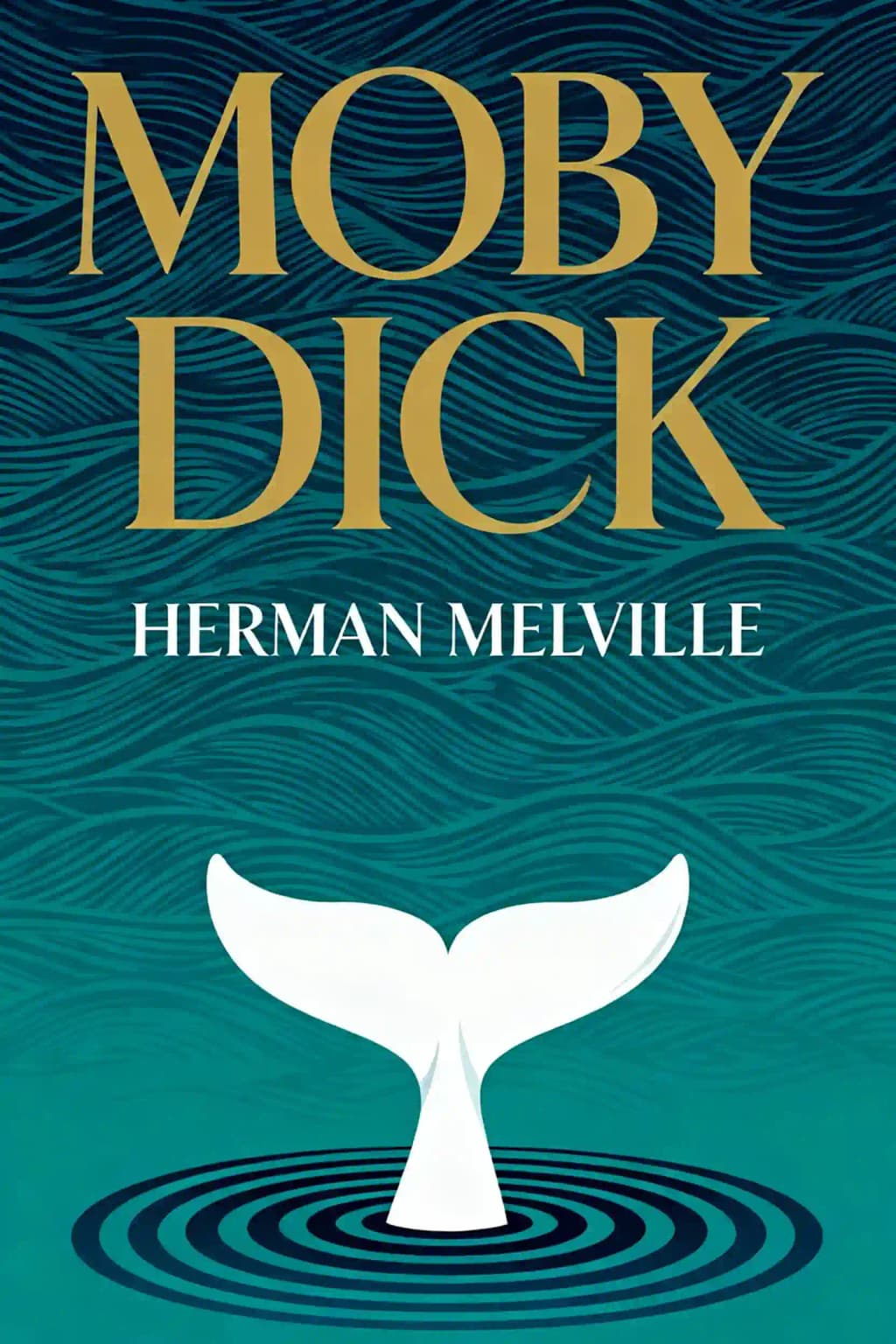
Herman Melville's "Moby-Dick" has captivated readers since 1851, though ironically, it wasn't recognized as a masterpiece until decades after the author's death. This epic tale of obsession and vengeance has become a cultural touchstone referenced everywhere from Star Trek to The Simpsons. Oprah Winfrey selected it for her book club in 2011, calling it "one of the most important books ever written." Even rock legend Led Zeppelin named their record label "White Whale Records" in homage to the novel. What makes this story of a monomaniacal captain's quest to destroy a white whale so enduring? Perhaps it's because, as Ray Bradbury once said, "Moby-Dick is the greatest novel ever written about the sea, the universe, God, and the human heart."
2장
The Pequod and Her Crew: A Microcosm of Humanity
The story begins with one of literature's most famous opening lines: "Call me Ishmael." Our narrator, seeking remedy for his depression, decides to go to sea as a common sailor on a whaling voyage. In Nantucket, he meets Queequeg, a tattooed harpooner from a distant South Sea island. Despite initial fear of this "cannibal," Ishmael forms a profound friendship with him, discovering that true connection transcends cultural differences.
Together they join the Pequod, a ship named after an extinct Native American tribe - an ominous foreshadowing of the crew's fate. The vessel itself is a remarkable creation, decorated with whale bones and teeth, "a thing of trophies" that carries the spoils of past hunts as ornaments. This ship becomes a floating world, a microcosm containing humanity's diversity and contradictions.
The crew represents a global cross-section of humanity. Captain Ahab remains hidden during the early days of the voyage, while his three mates oversee operations: the thoughtful, religious Starbuck; the perpetually cheerful Stubb; and the pugnacious Flask. The harpooneers form another tier in this floating hierarchy - Queequeg, the Pacific islander; Tashtego, a Gay Head Indian; and Daggoo, a towering African. The remaining crew consists of "Isolatoes" from various corners of the world, now "federated along one keel" despite their differences.
What makes this assembly so compelling is how each character embodies different approaches to life's fundamental questions. Starbuck represents practical morality, believing in duty and divine providence. Stubb faces danger with laughter, claiming "a laugh's the wisest, easiest answer to all that's queer." Flask sees whales merely as targets to be conquered, lacking any reverence for their majesty. Together, they create a complex social tapestry that mirrors the diversity and conflicts of human society itself.
3장
The White Whale: Symbol of the Unconquerable
Moby Dick, the great white sperm whale, transcends mere animal status to become something mythic and profound. Descriptions of this creature emphasize both his physical enormity and his seemingly supernatural qualities. His distinctive features include a wrinkled white forehead, a crooked jaw, and a body marbled with milk-white patches. But what truly distinguishes him is his apparent intelligence and malice - his calculated attacks and treacherous retreats that seem deliberately designed to destroy his pursuers.
The whale's whiteness carries special significance. As Ishmael explains in a chapter devoted to this quality, whiteness traditionally symbolizes purity, nobility, and divinity across cultures. Yet paradoxically, it can also represent terror - the blank pallor of death, the colorless void of nothingness. This duality makes Moby Dick a perfect canvas for projection, allowing each character to see in him what they most fear or desire.
For Ahab, the whale embodies all evil and malignity in the universe - a tangible target for all human rage. For Starbuck, it remains merely a dumb brute, not worth the risk of human lives. For the superstitious sailors, the whale becomes a supernatural agent of doom, possessing powers beyond mortal understanding. And for Ishmael, our thoughtful narrator, the creature represents the ultimate unknowable mystery of existence itself.
The whale's reputation grows through stories of previous encounters. Ships throughout the world's oceans report sightings and deadly clashes with this particular leviathan. The Jeroboam's crew tells of their chief mate being killed while pursuing him. The English captain of the Samuel Enderby lost an arm to the creature. These accumulated tales create an aura of inevitability around any confrontation with Moby Dick - he becomes not just a whale but a force of nature, embodying the vast, indifferent power of the natural world against which humans struggle.
What makes this portrayal so compelling is how the whale remains fundamentally unknowable. Despite all the scientific chapters on cetology and whaling practices, Moby Dick himself eludes complete understanding. Like nature itself, he can be studied but never fully comprehended or controlled.
4장
Captain Ahab: The Monomaniacal Quest
Captain Ahab emerges as one of literature's most complex and haunting characters - a figure of terrible grandeur whose obsession drives the narrative toward inevitable catastrophe. When first introduced, he appears as a "grand, ungodly, god-like man" with a mysterious scar running down his face "like a lightning rod." Having lost his leg to Moby Dick in a previous encounter, he has replaced it with one carved from a sperm whale's jawbone - a physical manifestation of his connection to the creature he hunts.
Ahab's quest transcends mere revenge. In a pivotal scene on the quarter-deck, he nails a gold doubloon to the mast and declares it the prize for whoever first sights the white whale. When questioned by Starbuck about pursuing personal vengeance at the owners' expense, Ahab delivers a philosophical response that reveals the depth of his obsession: "All visible objects, man, are but as pasteboard masks... If man will strike, strike through the mask! How can the prisoner reach outside except by thrusting through the wall?"
This moment reveals Ahab's fundamental worldview - that beneath the surface of reality lies some malevolent truth or force that has deliberately wounded him. His hunt for Moby Dick becomes an existential quest to confront whatever power controls the universe. As he later confesses, "I'd strike the sun if it insulted me." His defiance extends beyond the whale to encompass the entire cosmic order.
What makes Ahab truly tragic is that he remains aware of his own madness yet unable to escape it. In rare moments of clarity, he recognizes what he has sacrificed for his obsession - his family, his humanity, his connection to others. During a conversation with Starbuck, he momentarily longs to return home to his young wife and child, asking, "What is it, what nameless, inscrutable, unearthly thing is it... that commands me; that against all natural lovings and longings, I so keep pushing, and crowding, and jamming myself on all the time?" Yet even this self-awareness cannot break the spell of his monomania.
Ahab's power over the crew demonstrates his magnetic charisma. Though Starbuck initially objects to the hunt for Moby Dick, the rest of the crew enthusiastically joins Ahab's cause, drinking from a communal flagon to seal their unholy covenant. Even as disaster looms, they remain loyal to their captain's vision, becoming "one man, not thirty" in pursuit of the whale.
5장
The Philosophy of Whaling: Man's Relationship with Nature
Beyond its narrative power, "Moby-Dick" offers profound reflections on humanity's relationship with the natural world. The whaling industry serves as both literal setting and extended metaphor for how humans extract value from nature while simultaneously standing in awe of its power.
Ishmael provides detailed accounts of whaling practices - from the chase and capture to the processing of blubber into oil. These descriptions don't shy away from the brutal realities of the hunt. When Stubb kills his first whale, the sea turns crimson with blood while the dying creature enters its "flurry," wallowing horribly before its heart bursts. Yet alongside this violence, Ishmael notes the whale's dignity even in death, how it turns its head toward the sun in its final moments.
The economic imperatives driving whaling are never far from view. Starbuck, the practical first mate, reminds Ahab that they sail "for profit, not revenge." The ship's owners expect a return on their investment, and the crew works for shares of the proceeds rather than wages. This commercial relationship with nature - viewing whales primarily as commodities to be rendered into oil for lamps - stands in tension with moments of wonder and reverence for these magnificent creatures.
Ishmael's cetological chapters, though sometimes dismissed by readers as digressions, serve a crucial philosophical purpose. They attempt to classify and understand whales through scientific observation, yet ultimately acknowledge the limitations of human knowledge. After an extensive attempt to categorize whale species, Ishmael concludes: "This whole book is but a draught-nay, but the draught of a draught. Oh, Time, Strength, Cash, and Patience!"
This tension between knowing and not-knowing runs throughout the novel. Despite all human efforts to master nature through technology and science, the sea remains fundamentally mysterious and dangerous. As Ishmael observes while contemplating the ocean's depths: "Consider the subtleness of the sea; how its most dreaded creatures glide under water, unapparent for the most part, and treacherously hidden beneath the loveliest tints of azure."
6장
The Metaphysical Quest: Seeking Meaning in an Indifferent Universe
At its deepest level, "Moby-Dick" explores humanity's search for meaning in a universe that often seems indifferent or actively hostile to human concerns. This metaphysical quest manifests differently in each character but reaches its apotheosis in Ahab's confrontation with the white whale.
Religious themes permeate the novel, beginning with biblical names like Ishmael and Ahab. Father Mapple's sermon on Jonah establishes the conflict between divine will and human resistance that will play out in the main narrative. The preacher praises not Jonah's sin but his repentance - "not clamorous for pardon, but grateful for punishment" - creating a stark contrast with Ahab's unyielding defiance.
Different characters represent different approaches to faith. Starbuck maintains conventional Christian belief, seeing divine providence in natural events and begging Ahab to abandon his blasphemous quest. Queequeg practices his own form of worship with his wooden idol Yojo, maintaining spiritual practices from his homeland. Ahab himself develops a perverse theology of defiance, declaring himself "the Fates' lieutenant" who acts not against God but as God's unwilling agent.
The novel's philosophical richness emerges in moments of quiet contemplation amid the action. When Ishmael helps process sperm from a whale's head, the sensuous experience leads him to a vision of universal brotherhood: "I found myself unwittingly squeezing my co-laborers' hands in it, mistaking their hands for the gentle globules... Come; let us squeeze hands all round; nay, let us all squeeze ourselves into each other; let us squeeze ourselves universally into the very milk and sperm of kindness."
This vision of connection contrasts sharply with moments of existential terror, as when Pip, abandoned in the ocean after jumping from a whaleboat, encounters "the unwarped primal world" and goes mad from the experience. Having seen "God's foot upon the treadle of the loom," he returns with his mortal reason drowned while glimpsing celestial thought - a cautionary tale about the dangers of confronting ultimate reality directly.
7장
The Art of the Chase: Whaling as Epic Adventure
The novel's adventure elements remain thrilling even for modern readers. Melville crafts scenes of whale hunts with cinematic intensity, capturing both the technical precision and visceral danger of pursuing the ocean's largest predators in small wooden boats.
The first lowering for whales introduces the perilous nature of the hunt. As the boats chase a pod of sperm whales through mist and churning water, each officer commands in his distinctive style - Starbuck with intense whispers, Flask with wild shouts, and Ahab with words "best omitted here." When Starbuck's boat swamps in the ensuing chaos, the crew floats amid the wreckage until rescued, establishing the constant mortal risk whaling entails.
Later hunts build on this foundation with escalating danger and complexity. During "The Grand Armada" chapter, the Pequod's boats penetrate a vast school of whales, finding themselves in the calm "central expanse" where mothers nurse their calves. This peaceful scene transforms into chaos when a wounded whale begins thrashing, causing the entire herd to close around them in concentric circles. The crew must navigate between massive bodies to escape being crushed.
The three-day chase of Moby Dick forms the novel's climactic sequence, with each day bringing the conflict closer to its inevitable conclusion. On the first day, the whale destroys Ahab's boat but leaves him alive. On the second day, he wrecks two boats and claims Fedallah, the mysterious Parsee who had prophesied Ahab's death. On the final day, after Ahab manages to plant his harpoon in the whale's flank, Moby Dick destroys the Pequod itself, dragging Ahab down with him as the prophecy is fulfilled.
These action sequences work on multiple levels - as thrilling adventures, as demonstrations of whaling techniques, and as symbolic confrontations between human will and natural force. The physical details ground the metaphysical themes in tangible reality, creating a narrative that engages both intellect and emotion.
8장
The Craft of Storytelling: Melville's Narrative Innovations
Melville's storytelling techniques were revolutionary for his time and continue to influence literature today. The novel's structure deliberately breaks from conventional narrative expectations, incorporating multiple genres and voices into a complex whole that mirrors the vastness of its subject.
The narrator, Ishmael, begins as the central character but gradually recedes, becoming more observer than participant. This allows him to report conversations he couldn't have witnessed and describe scenes where he wasn't present - a technique that expands the narrative scope beyond what a strictly first-person account could achieve. By the final chase, Ishmael has become nearly invisible, only to reappear in the epilogue as the sole survivor.
The novel's famous digressions - chapters on cetology, whiteness, and whaling practices - create a rhythm of alternating action and contemplation. Rather than moving linearly toward a conclusion, the narrative spirals outward, accumulating associations and meanings. These encyclopedic chapters serve not merely as information but as meditation, expanding the reader's understanding of the whale both as physical creature and as symbol.
Melville employs multiple literary forms within the novel. Chapters like "Midnight, Forecastle" use dramatic script format to capture the multinational crew's voices. "The Town-Ho's Story" presents a tale within a tale, framed as Ishmael's recounting to Spanish friends in Lima. The "Etymology" and "Extracts" sections that precede Chapter 1 establish the cultural and historical context of whaling through an academic lens.
This formal variety reflects the novel's thematic concerns with perspective and knowledge. Just as no single approach can fully capture the whale's essence, no single narrative mode can express the totality of human experience. By incorporating these diverse elements, Melville creates a work that feels boundless, constantly exceeding the reader's expectations of what a novel can contain.
9장
The Sea as Character: Nature's Indifferent Power
The ocean itself emerges as a crucial presence in the novel - not merely setting but an active force that shapes human destiny. Melville portrays the sea in its multiple moods, from tranquil beauty to apocalyptic fury, always emphasizing its fundamental indifference to human concerns.
In peaceful moments, the sea appears seductive and nurturing. During "The Gilder" chapter, the ocean's tranquil beauty temporarily soothes even Ahab's tormented soul. The narrator observes how sailors in such conditions feel a "filial, confident, land-like feeling toward the sea," forgetting its dangers beneath the "golden-hued" surface. These passages capture the oceanic sublime - beauty so overwhelming it approaches the divine.
Yet this same sea transforms into an agent of destruction during storms. The typhoon chapter presents nature's unleashed power, with St. Elmo's fire creating ghostly flames at the masthead while lightning strikes around the ship. The crew interprets these phenomena according to their cultural backgrounds - Christians seeing divine warning, pagans recognizing ancestral spirits - but all acknowledge the sea's capacity for annihilation.
Melville's ocean represents more than physical danger; it embodies metaphysical mystery. As Ishmael observes: "Consider the subtleness of the sea; how its most dreaded creatures glide under water, unapparent for the most part, and treacherously hidden beneath the loveliest tints of azure... Consider all this; and then turn to this green, gentle, and most docile earth; consider them both, the sea and the land; and do you not find a strange analogy to something in yourself?"
This passage reveals the sea as mirror for the human soul - beautiful yet dangerous, known yet unknowable. The ocean's depths conceal predators just as the human psyche harbors destructive impulses beneath its civilized surface. By the novel's conclusion, when the Pequod sinks in "concentric circles" and "the great shroud of the sea rolled on as it rolled five thousand years ago," we understand the sea as both grave and eternal witness - the elemental force that will outlast all human endeavors.
10장
The Legacy of Destruction: Fate, Free Will, and Human Folly
The novel's tragic conclusion raises profound questions about fate, free will, and the consequences of human choices. Was the Pequod's destruction inevitable from the moment Ahab took command, or could different decisions have led to another outcome?
Throughout the narrative, prophecies and omens suggest predestination. Before the voyage begins, a mysterious stranger named Elijah warns Ishmael about Ahab's "shadowy" past. The Parsee Fedallah later prophesies specific details of Ahab's death that come true in unexpected ways. When the ship encounters other vessels that have faced Moby Dick - the Jeroboam with its dead chief mate, the Samuel Enderby with its one-armed captain, the Rachel searching for lost crewmen, the Delight with its shattered whaleboat - each serves as warning of what awaits the Pequod.
Yet alongside these fatalistic elements, the novel emphasizes moments of choice. Starbuck contemplates killing Ahab to save the crew but cannot bring himself to commit murder. Ahab himself experiences a moment of potential redemption during "The Symphony" chapter, briefly longing to return to his wife and child, before recommitting to his destructive course. These moments suggest that while larger forces may shape events, individual moral decisions remain significant.
The novel's most haunting aspect may be how Ahab's monomania infects the entire crew. Though initially skeptical, they gradually adopt his obsession as their own, becoming "one man, not thirty" in pursuit of the whale. Only Starbuck maintains consistent opposition, yet even he follows orders rather than taking decisive action against Ahab. This collective surrender to destructive purpose raises uncomfortable questions about human susceptibility to charismatic leadership and our capacity to recognize impending disaster.
In the final chase, as the Pequod sinks with all hands except Ishmael, we witness the culmination of this tragic trajectory. The ship's destruction comes not from random misfortune but from the logical conclusion of Ahab's quest. As he declares in his final moments: "Towards thee I roll, thou all-destroying but unconquering whale; to the last I grapple with thee; from hell's heart I stab at thee; for hate's sake I spit my last breath at thee." His defiance remains undiminished even in defeat, suggesting that the true tragedy lies not in death itself but in the refusal to accept human limitations.
11장
The Solitary Survivor: Ishmael's Witness and Rebirth
The novel concludes with a brief epilogue revealing Ishmael as the sole survivor, rescued by the Rachel "that in her retracing search after her missing children, only found another orphan." This survival carries profound symbolic weight, transforming the preceding narrative into testimony - the story exists because someone lived to tell it.
Ishmael's survival depends on Queequeg's coffin life-buoy, which "shot lengthwise from the sea" after the ship sank. This detail completes several thematic circles: the coffin Queequeg ordered during his illness, then repurposed as a sea chest when he recovered, now saves his friend's life. Death becomes the instrument of life, completing the novel's exploration of how opposites contain and create each other.
As the only witness to the Pequod's destruction, Ishmael carries the burden of memory. His narrative serves as both warning and memorial - preserving the story of Ahab's fatal quest while implicitly cautioning against similar obsession. The biblical quote that opens the epilogue - "And I only am escaped alone to tell thee" from the Book of Job - positions Ishmael as messenger bringing news of catastrophe, connecting his individual experience to ancient patterns of testimony and witness.
Ishmael's survival also represents a philosophical alternative to Ahab's approach. Throughout the novel, Ishmael demonstrates curiosity rather than certainty, wonder rather than rage, and an openness to connection with others across cultural boundaries. His friendship with Queequeg, begun in mutual fear but developing into profound bond, offers a counterpoint to Ahab's isolation. While the captain remains locked in his private war against nature, Ishmael engages with the world in all its complexity, neither denying its dangers nor surrendering to hatred of them.
In this light, the epilogue suggests not just physical survival but spiritual rebirth. Floating on Queequeg's coffin for "a whole day and night" before rescue, Ishmael undergoes a symbolic death and resurrection. The sharks that glide past him "harmlessly" seem to recognize this transformation, moving "as if with padlocks on their mouths." Having witnessed the consequences of Ahab's rage against nature, Ishmael emerges as the carrier of a different wisdom - one that acknowledges human vulnerability without surrendering to despair.