1장
When the Dead Return: A Journey Through Loneliness and Loss
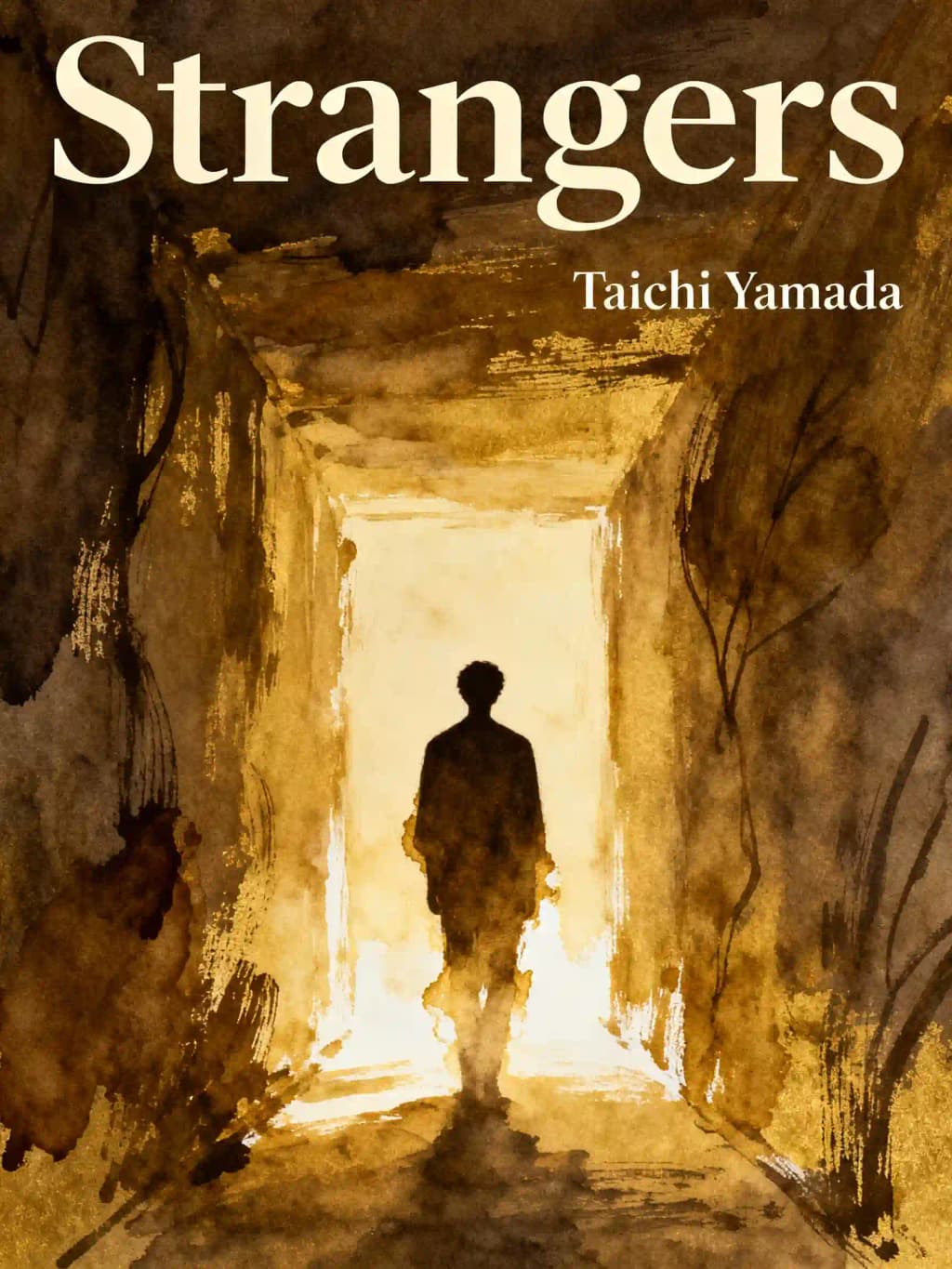
Have you ever felt so profoundly alone that the boundaries between reality and fantasy begin to blur? Taichi Yamada's haunting novel "Strangers" explores this liminal space where loneliness opens doors to the supernatural. The book has developed a cult following since its English translation in 2005, with figures like David Mitchell citing it as a profound influence. This slim Japanese ghost story brilliantly merges psychological horror with tender explorations of grief, making it a standout in contemporary Japanese literature. Though less known than works by Murakami or Ogawa in Western markets, its unforgettable portrayal of a middle-aged man's encounters with his long-dead parents continues to resonate with readers seeking stories about the lingering presence of those we've lost.
2장
The Empty Building: Setting the Stage for Supernatural Encounters
Following his divorce, forty-seven-year-old scriptwriter Harada moves into an apartment he previously used as an office. The building sits alongside Tokyo's bustling Route 8, its constant traffic noise becoming a backdrop to his newly solitary existence. After three weeks of bachelor life, he notices something unsettling-an unnatural silence permeating the building at night. One evening, looking out his window, he sees only a single pink van in the otherwise deserted parking lot, and the realization dawns that his might be the only illuminated window in the entire seven-story building.
Curiosity drives him to investigate. Taking the elevator down to the lobby, he confirms his suspicion: most units are used as offices, abandoned after business hours. Sitting alone in this concrete ghost ship, Harada feels simultaneously spooked and liberated by his isolation. The building becomes a physical manifestation of his emotional state-a hollow shell housing a single occupant, surrounded by emptiness.
This solitude is briefly interrupted when a woman in her mid-thirties enters the building, searching for keys in her purse. She passes without noticing him, taking the elevator to the third floor. This fleeting encounter-the only other sign of nighttime life in the building-plants the seed for later connections in Harada's increasingly strange existence.
The empty building serves as the perfect staging ground for what follows. Its liminal nature-neither fully residential nor commercial, neither fully occupied nor abandoned-mirrors Harada's own in-between state. Recently divorced, professionally adrift, and emotionally untethered, he exists in a borderland where the boundaries between past and present, living and dead, begin to dissolve. The building's emptiness creates a vacuum that supernatural forces will soon fill, as if the very absence of life has created space for something else to enter.
3장
Betrayal and Isolation: The Catalyst for Supernatural Encounters
Just as Harada begins adjusting to his solitary existence, his professional colleague Mamiya delivers a shocking announcement: he intends to pursue Harada's ex-wife Ayako with marriage in mind. This betrayal by a man he's worked with for nearly a decade cuts deep, especially when Mamiya frames his declaration as a courtesy. Though Mamiya claims Ayako doesn't yet know of his intentions, Harada suspects the two have already arranged everything behind his back.
The encounter leaves Harada reeling, adding another layer of abandonment to his already fragile emotional state. That same evening, his solitude is interrupted by an unexpected visitor-the woman he'd previously glimpsed in the lobby, now at his door. She introduces herself as a fellow resident, explaining they're the building's only nighttime occupants. Offering half a bottle of champagne, she makes a tentative overture of connection, admitting her own loneliness drove her to knock on his door.
But Harada, still raw from Mamiya's betrayal, rebuffs her coldly, claiming he's working on a rush job. Only after she leaves does he question his harshness, worrying she might do something rash in response to his rejection. His concern proves unnecessary when he encounters her days later carrying groceries, appearing perfectly fine.
These early interactions establish the profound isolation that will make Harada vulnerable to supernatural experiences. His divorce has already severed his primary emotional connection, and now Mamiya's betrayal has ruptured a long-standing professional relationship. When he rejects his neighbor's friendly overture, he completes his isolation, cutting himself off from the last potential human connection within his immediate environment.
What makes this isolation particularly poignant is that it's partially self-imposed. Harada acknowledges his increasingly antisocial tendencies since the divorce, noting how he makes hollow social promises he never intends to keep. Even his birthday becomes a solitary affair, buying himself a necktie he'll likely never wear-a perfect metaphor for his failed attempts at embracing independence after divorce.
This complete isolation creates the perfect conditions for what follows. Nature abhors a vacuum, and Harada's emotional void becomes a space where the supernatural can enter. His longing for connection, particularly for the unconditional love he lost when his parents died decades earlier, creates an opening through which the dead will soon return.
4장
The Birthplace Return: When Memory Becomes Manifest
On his birthday, August 4th, Harada makes an impulsive decision to visit his birthplace in Asakusa, a place he hasn't seen in over a decade. This spontaneous journey becomes the turning point in his story, the moment when the veil between past and present, living and dead, begins to thin.
Born in Asakusa in 1939 to a sushi chef father and kitchen-helper mother, Harada's childhood was marked by wartime displacement and postwar struggles. After his father returned from the Philippines in 1946, his parents sold "Vitamin Stew" in the black market before his father eventually returned to work as a sushi chef. Then tragedy struck-in January 1951, when Harada was twelve, his parents died in a hit-and-run accident in front of the International Theater.
As he wanders through present-day Asakusa, Harada deliberately avoids places connected to his childhood memories, fearing they might unleash overwhelming emotions he's suppressed since his parents' deaths. Yet something draws him into the Asakusa Variety Hall, where an extraordinary encounter awaits.
During a performance, Harada hears a voice from the audience that sounds exactly like his father's. Looking toward the source, he sees a man whose profile is the spitting image of his father at the time of his death. When their eyes meet, the man smiles and nods slightly, sending a chill through Harada's body. Despite his rational mind insisting this resemblance must be coincidental, when the man approaches saying "Whadda ya say we get outta here?" Harada rises and follows him without hesitation.
This moment marks the crossing of a threshold. Harada's return to his birthplace has somehow conjured physical manifestations of his deepest longings. The geography of memory becomes literal as his parents appear not as they would be if they had aged normally, but exactly as they were at the moment of their deaths-preserved in time like insects in amber. This preservation detail is crucial, suggesting these apparitions emerge not from the world of the living but from some other realm where time operates differently.
What makes this encounter particularly powerful is Harada's immediate, visceral recognition. Despite the decades that have passed, despite the vagueness of childhood memories, something in him instantly identifies these strangers as his parents. This recognition transcends rational thought, operating at a primal, emotional level that bypasses his intellectual defenses.
5장
The Impossible Reunion: When Ghosts Become Family
Following the man who resembles his father through nearly deserted nighttime streets, Harada finds himself unable to resist the pull of this uncanny resemblance. When they arrive at a small apartment, a woman appears who is the spitting image of his mother, who died at thirty-five. Inside their modest but tidy apartment, Harada struggles to maintain composure as he observes modern appliances that confirm these couldn't possibly be his actual parents.
Yet everything about them-their mannerisms, their way of speaking, their relationship dynamic-perfectly matches his childhood memories. The man teases his wife about her unusual hobby of collecting radio-controlled cars while Harada fights back tears and the overwhelming urge to call them "Mom" and "Dad."
When he finally leaves around eleven, they call after him not to be a stranger, treating him with the casual familiarity of true parents. Throughout the cab ride home, Harada savors every detail of the interaction, repeating their words aloud until the driver threatens to kick him out. The city lights seem unusually beautiful that night, as if the world itself has been transformed by this impossible reunion.
What makes this encounter so powerful is how it fulfills Harada's deepest emotional needs. Since his parents' deaths when he was twelve, he has never recaptured the feeling of unconditional security they provided. Even his marriage failed to provide this sense of belonging. Now, suddenly, he experiences again what it means to be someone's child-to be loved without condition, to be accepted without question.
The morning after, Harada questions whether the entire episode was real or merely a dream, though faint traces of the previous night's sweetness linger. For several days, he immerses himself in work, researching tennis clubs and pool halls for a new television series. The project provides welcome distraction, but when he returns home to find messages on his machine, he realizes with shame that his extraordinary evening with the couple who resembled his parents has been pushed from his mind in just a few short days.
This realization triggers a crucial question: "What kind of person was I, to forget something so miraculous?" This moment of self-reflection marks another turning point. Rather than dismissing the encounter as hallucination or coincidence, Harada chooses to embrace it, setting the stage for his return to Asakusa and deeper engagement with these apparitions who offer him the parental love he's been missing for decades.
6장
New Connections: Finding Intimacy in Unexpected Places
While Harada processes his supernatural encounter, another relationship begins to develop. Kei Fujino, the woman from the third floor who had previously offered him champagne, calls and visits his apartment. Their interaction quickly moves beyond small talk as Kei reveals her vulnerabilities with surprising candor. She explains that she lives alone in the building because of an ugly burn scar on her chest that had driven her from her previous apartment, where neighbors wouldn't stop questioning her single status.
Their conversation takes an unexpected turn when Kei makes a blunt sexual suggestion, then immediately regrets it. When she tries to leave, embarrassed, Harada encourages her to stay, genuinely touched by her honesty. Their physical intimacy comes with a condition-Kei insists he not see her burn scars, making him promise not to look. She compares it to ancient myths where a man's looking causes irreparable damage. Despite his reassurances, she remains adamant, and they make love with her back to him.
This relationship with Kei provides a counterpoint to Harada's supernatural encounters. While his "parents" connect him to his past, Kei represents a potential future-a new beginning after his divorce. Yet both relationships are marked by boundaries and limitations. Just as his parents exist in a liminal space between life and death, his relationship with Kei is constrained by her insistence on hiding her scars, creating a physical barrier between them even in their most intimate moments.
What makes this parallel particularly poignant is how both relationships address Harada's fundamental loneliness. His encounters with his parents fill the void left by their premature deaths, while Kei's presence alleviates his post-divorce isolation. Both relationships offer comfort and connection, yet both contain elements that make them ultimately unsustainable.
As these relationships develop simultaneously, Harada finds himself increasingly torn between past and present, between the comforting familiarity of his parents and the exciting possibility of new love with Kei. This tension becomes the central conflict driving the narrative forward, forcing Harada to eventually choose between living in the past or embracing an uncertain future.
7장
Deepening Bonds: The Pull Between Past and Present
Unable to resist the pull of his parents, Harada returns to Asakusa in daylight, carrying cookies and sake as gifts. Part of him fears the return-he knows his experience might have been an illusion born from his deep yearning for childhood security. Yet when he arrives, he finds his "mother" making homemade ice cream with a hand-cranked device. She treats him with the natural authority of a mother tending to her child, even suggesting he remove his pants to avoid wrinkles and fetching a cool washcloth to wipe his face and neck.
The interaction takes a terrifying turn when Harada asks their name, and his "mother" replies with incredulous laughter: "It's Harada, of course. What child asks his own parents their name?" This confirmation sends terror through him, forcing him to confront the supernatural nature of his experience. He flees down the stairs and through the alley, desperate to escape this impossible reality.
Despite this moment of panic, Harada cannot stay away. After a violent thunderstorm that evening, he seeks refuge in a high-rise hotel bar, watching lightning through rain-blurred windows. The prospect of returning to his empty apartment terrifies him-not because of the place itself, but because of what is happening within his own mind. He struggles to make sense of his experiences, wondering if he's suffering hallucinations born from some deep-seated childhood trauma.
When Kei visits him that evening, she immediately notices something wrong with his appearance, commenting that he looks pale and "off in another dimension." Though he deflects her concerns, their evening ends in passionate embrace, deepening their connection even as he conceals his supernatural experiences from her.
The next day, Harada completes a television script with unusual speed and efficiency-fifty-three pages the first day, sixty-eight the next, finishing the entire episode by the third afternoon. This creative surge suggests that his encounters with his parents, while disturbing, have unlocked something within him. With free time on his hands and buoyed by creative success, his thoughts return to his parents. He realizes that while the Asakusa encounters aren't normal, these warm hallucinations bring him comfort. What harm could there be in embracing them?
This rationalization leads him back to Asakusa, where he and his "father" play catch near Honganji Temple. As the ball smacks into his glove, Harada feels transformed into a twelve-year-old boy again. Back at the apartment, his "mother" has prepared edamame, tofu, and beer. His parents bicker affectionately, and Harada savors these domestic moments while still questioning if they are merely products of his imagination.
These deepening bonds with both his parents and Kei create an increasingly untenable situation. As Harada is pulled between past and present, between the dead and the living, something must eventually give way. The supernatural nature of his experiences begins to exact a physical toll, setting the stage for the novel's climactic revelations.
8장
The Cost of Communion: When the Dead Drain the Living
After meeting with the producer of his new series, Harada notices something disturbing-the producer blanches when he first sees him and nervously asks about his health, commenting that he looks pale. Though Harada laughs it off, the concern bothers him afterward. He wonders if his contact with his parents-who belong to the world of the dead-might be sapping his vital forces, as happens in folklore.
When Kei arrives at his apartment that evening, she immediately declares he looks "dreadful." Despite his protests and examining himself in the bathroom mirror where he sees nothing abnormal, she insists he appears haggard with dark bags under his eyes and hollow cheeks. After pressing him about what might be happening, he finally confesses about meeting his parents in Asakusa. Kei listens earnestly, showing genuine concern that touches him deeply, making him realize how long it has been since someone truly cared about his welfare. She makes him promise not to return to Asakusa again, convinced his deteriorating appearance is connected to his encounters with the dead.
Despite this promise, Harada can't resist seeing his parents one last time. After finishing work on his second episode outline, he sneaks out to Asakusa, feeling guilty about breaking his promise but determined to say a proper goodbye. He spends the evening with his parents watching baseball, playing cards, and sharing eel for dinner. Though he'd planned to tell them this would be his last visit, their genuine enjoyment of their time together makes him unable to broach the subject.
The physical toll of these encounters becomes increasingly evident when Harada unexpectedly meets Mamiya at a hotel the next morning. Despite Harada's friendly greeting, Mamiya appears shocked by his appearance, commenting on his significant weight loss. Though Harada tries to dismiss his concern, Mamiya's worried reaction suggests his deterioration is more severe than he realizes.
Returning to his apartment building, Harada notices even a stranger staring at his withered appearance. In the elevator, he encounters Kei, who confronts him about his overnight absence. When they reach his apartment, she desperately tries to make him see his true condition, dragging him to the bathroom mirror. For the first time, Harada glimpses his horrifying transformation-sunken eyes, hollow cheeks, ghostly pallor. The shock leaves him collapsed on the floor, utterly drained of strength.
This physical deterioration represents the central metaphorical truth of the novel: communion with the dead comes at a cost to the living. Harada's yearning for his parents, his desire to recapture the security of childhood, is literally consuming him. Each visit drains more of his life force, illustrating how an inability to let go of the past can destroy one's present and future. This physical manifestation of emotional attachment creates a visceral urgency-if Harada continues on this path, it will kill him.
9장
Final Farewells: Releasing the Ghosts of the Past
Despite Kei's protests that another visit to Asakusa could kill him, Harada insists he needs proper closure-not just for his sake, but for his parents'. He can't simply abandon them, believing they aren't intentionally harming him but that interaction between their worlds naturally drains his life force.
At a sukiyaki restaurant with his parents, his father chats playfully with their waitress, telling her about Harada's orphaned childhood and subsequent success. The mood shifts when his parents reveal they must leave soon. Despite his protests about being "fine," they insist on expressing their pride in him. To his horror, Harada watches as they begin to physically fade away before his eyes. "Thank you Mom and Dad!" he whispers desperately as they vanish completely, leaving only their untouched food and empty cushions.
This farewell scene represents the novel's emotional climax-a moment of both profound loss and necessary release. Harada's parents, recognizing the toll their presence is taking on him, choose to leave before consuming him completely. Their final words express pride in the man he's become, providing the closure he's needed since their sudden deaths decades earlier.
After this emotional goodbye, Harada returns home utterly exhausted. Kei rushes to help him in the lobby, but he repeatedly pushes her away, refusing her assistance even when he collapses at his door. He can't bring himself to accept comfort from her immediately after saying goodbye to his parents-it feels wrong to move straight from that farewell to anything with sexual connotations.
The next day, however, Harada awakens in Kei's embrace with no memory of how he got there. They spend the afternoon together, visiting her apartment for the first time-a tatami-mat room with simple furnishings that remind him of their age difference. Two large nihonga-style paintings catch his eye-both by Seison Maeda, one depicting a samurai in a coffin, another showing an autopsy of a naked woman. These morbid images foreshadow the final revelation about Kei's true nature.
That same evening, everything comes to an end when Harada confronts Kei in the hallway and discovers her true nature. She reveals that she plans to "drag him down" with her for rejecting her champagne invitation the night she committed suicide. However, she realizes she cannot take him because his heart is no longer with her. As she retreats, blood begins flowing from her chest, staining her white dress before she fades away completely.
This shocking twist reveals that Harada has been haunted not just by his parents but by another ghost-one with malevolent rather than nurturing intentions. The burn scar Kei refused to show him was actually the wound from her suicide. While his parents came to provide closure, Kei came seeking revenge for his rejection, planning to drag him into death with her.
10장
Aftermath: Finding Peace in Understanding
Harada spends twenty-two days recovering in Tokyo National Hospital, emerging with gray hair, damaged eyesight, and a frail body. Unable to continue writing the TV series, he's replaced by a younger writer. Mamiya helps him move to a new apartment near Kyodo station, and he reconnects briefly with his son Shigeki, who seems slightly more receptive now that they live apart.
Two days after leaving the hospital, Mamiya and Harada visit Asakusa together. Mamiya reveals he'd checked the location earlier and found only an empty lot-the apartment building where Harada's parents "lived" had been demolished in May, months before his visits. They place incense and chrysanthemums where the apartment would have been, honoring the memory of Harada's parents.
Mamiya shares his plans to marry Ayako early the next year, and they agree to work together again someday. He suggests they both weren't in their right minds during the supernatural encounters, preferring to deny what happened to continue normal life. Though Harada doesn't contradict him, he silently bids farewell to his parents and Kei, knowing what he experienced was real.
This final scene provides resolution while maintaining the novel's essential ambiguity. The revelation that the building had been demolished months before Harada's visits confirms the supernatural nature of his experiences, yet Mamiya's rational explanation offers an alternative interpretation-perhaps everything was hallucination, the product of a mind under extreme stress.
Harada's silent farewell suggests his own understanding transcends these binary possibilities. Whether his encounters were supernatural visitations or psychological manifestations, they served their purpose-allowing him to finally say goodbye to his parents, to receive their blessing, and to move forward with his life. Similarly, his encounter with Kei, whether ghost or projection, forced him to confront his fear of new connections after divorce.
The novel ultimately suggests that the distinction between supernatural and psychological explanations may be less important than the emotional truth these experiences revealed. Harada's journey through grief, loneliness, and eventual acceptance transcends rational categorization, speaking to the universal human experience of loss and the struggle to find meaning in its aftermath.
In this way, "Strangers" becomes not just a ghost story but a profound meditation on how we carry our dead with us-how the past continues to haunt the present until we find the courage to say goodbye while still honoring what remains.