1장
Between Two Worlds: A Haunting Tale of Love and Destiny
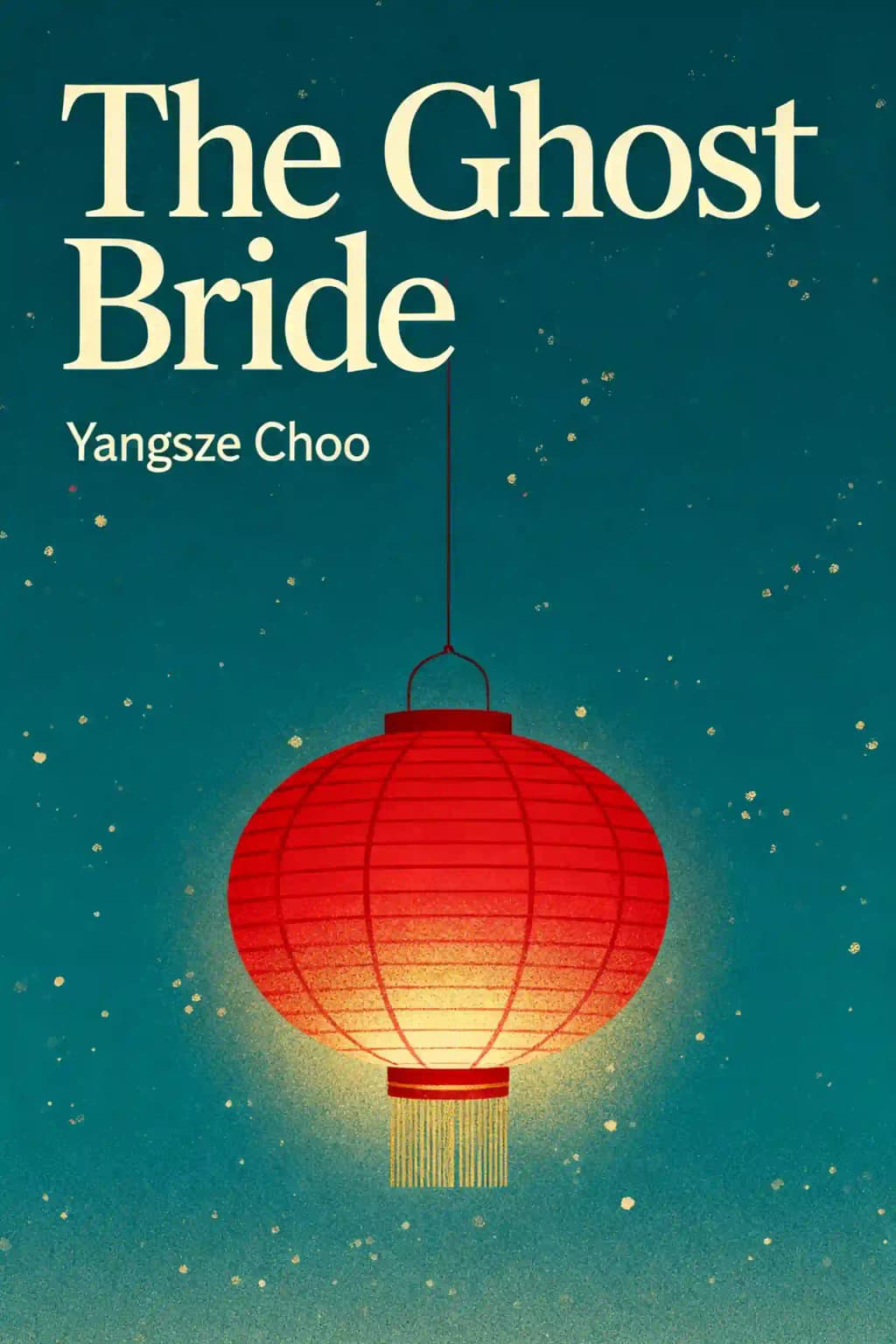
The Ghost Bride has captivated readers worldwide since its 2013 debut, becoming a New York Times bestseller and later a popular Netflix series. Yangsze Choo's enchanting novel masterfully blends historical fiction with supernatural elements, drawing on her Malaysian-Chinese heritage to create an immersive experience. Oprah Magazine praised it as "a startlingly original fantasy," while Amy Tan called it "utterly beguiling." Set in colonial Malacca during 1893, this haunting tale explores the ancient Chinese tradition of ghost marriages-where the living wed the dead-while weaving a mesmerizing narrative about a young woman caught between worlds, desires, and destinies. The novel's rich cultural tapestry and supernatural intrigue continue to resonate with readers seeking both escapism and profound insights into love, duty, and the mysteries that lie beyond death.
2장
A Proposal from Beyond the Grave
In 1893 colonial Malacca, Li Lan's life takes an unexpected turn when her father casually asks if she would consider becoming a ghost bride to the recently deceased son of the wealthy Lim family. Once a prosperous port under British rule, Malacca has fallen into graceful decline-much like Li Lan's own family fortunes. Since her mother's death when she was four, her father has retreated into opium addiction and scholarly pursuits, neglecting both business affairs and his daughter's marriage prospects.
The proposal is as shocking as it is unusual. Ghost marriages-unions between the living and dead-are rare and typically considered dreadful fates. Though her father jokes that as a widow, she would be housed and clothed in silk for life, Li Lan is horrified by the prospect. When her elderly amah (nursemaid) discovers this proposal, she initially brightens at the connection to the wealthy Lim family, only to become outraged upon learning it's for their dead son.
Despite her reluctance, Li Lan accompanies her father to the Lim mansion, where she endures Madam Lim's piercing gaze and intrusive questions about potential sweethearts. During this visit, she encounters a young man repairing a clock who engages her in surprisingly intellectual conversation about navigation and China's missed naval opportunities. Despite his apparent servant status, his knowledge impresses her, though she's acutely aware of the impropriety of their interaction.
The visit concludes strangely when Madam Lim requests Li Lan's hair ribbon, claiming difficulty sleeping. On their journey home, Amah reveals that servants say Madam Lim has been asking many questions about Li Lan's household. This leads Amah to speculate excitedly about a potential marriage proposal with the Lim nephew-a prospect Li Lan finds dubious given the wealth disparity between their families.
That night, restless in the tropical heat, Li Lan opens her shutters despite Amah's warnings about night air. In the moonlight, she reflects on her conversation with the young clockmaker and, for the first time, fully comprehends her father's neglect in arranging a marriage for her. With few prospects and facing potential spinsterhood, her future seems increasingly uncertain-a realization that will soon be overshadowed by far more supernatural concerns.
3장
Dreams and Hauntings: The Dead Come Calling
That night marks the beginning of Li Lan's supernatural ordeal. In her dreams, she wanders through the silent Lim mansion, shrouded in white fog, with the unsettling sensation of being followed. A strangely dressed young man introduces himself as Lim Tian Ching, the deceased heir, attempting to court her amid garish funeral offerings. The experience leaves her nauseated and terrified.
Though she initially dismisses the dream as anxiety, it proves to be merely the first of many. Night after night, she's pulled into Lim Tian Ching's strange world-attending empty feasts with unappetizing display food, wandering through stables of identical paper horses, and encountering eerie puppet-like servants who move with disturbing rustling sounds. Everything appears staged for some grand performance, with Lim Tian Ching's presence lurking nearby.
Li Lan tells no one about these dreams. Her father would dismiss them as childish fears, citing Confucian principles against belief in spirits. Amah would believe too readily, summoning exorcists and suggesting blood rituals. Neither approach seems helpful against her growing dread.
The toll of these nightmares becomes physical. Between nightmares and waking preoccupation, Li Lan loses weight and grows listless. Amah notices and administers various medicinal brews with limited effect. When Li Lan jokes about feeling like Lin Daiyu, the consumptive heroine from "Dream of the Red Chamber," Amah sharply rebukes her for joking about illness.
The situation escalates dramatically when Li Lan learns she had actually been promised to Tian Bai-the young man she mistook for a servant, who turns out to be the Lim nephew-before Lim Tian Ching's death complicated everything. This revelation fills her with both anguish and bitter irony. Her father, clever but lacking willpower, had good taste in choosing Tian Bai, whom she's grown to love. Now he suggests finding another suitor quickly, but his limited social circle offers little hope.
In her dreams, Lim Tian Ching grows more aggressive, describing their future ghost marriage ceremony in disturbing detail-how she'll exchange cups with his soul tablet, then join his household as his wife, with his promise that "every night we shall be together." When she defiantly refuses, he threatens to ruin her father and haunt her family. The confrontation leaves her desperately ill, with the doctor finding her qi severely depleted, as if half her vital energy had been drained.
4장
A Desperate Search for Answers
As Li Lan's supernatural predicament worsens, she turns to Amah for guidance about the afterlife. Though reluctant, Amah explains how spirits leave the body after the hundred days of mourning and pass through the ten Courts of Hell. The good souls go straight to rebirth or paradise, while sinners face various punishments-boiling in oil, climbing mountains of knives, being sawed in half by demons. "Hungry ghosts" are those who die without children or whose bones are scattered, unable to journey to the First Court-the reason for Qing Ming offerings.
Finally gathering her courage, Li Lan confesses to Amah about Lim Tian Ching haunting her. Alarmed, Amah insists they must consult a medium. They travel by rickshaw to see a famous medium near the Sam Poh Kong temple at Bukit China, an enormous Chinese cemetery with nearly twelve thousand graves-"a veritable city of the dead."
The medium-an enormously fat woman with one clouded eye-immediately recognizes Li Lan's ghostly predicament. "He wants something from you," she says of Lim Tian Ching. She provides a black powder to drink before bed, an amulet, and yellow spell papers for doors and windows. As they leave, she whispers a disturbing final instruction: "Burn hell banknotes for yourself!"
Despite the medium's remedies, Li Lan's situation deteriorates. Supernatural disturbances plague their home-a bloody stain appearing on their doorstep, spell papers fluttering without wind. In a moment of despair, Li Lan attempts to follow the medium's cryptic instruction by burning funeral offerings for herself. When Amah discovers her with a makeshift soul tablet bearing her own name, she tears it up in distress, weeping that it's terribly unlucky to burn offerings for the living.
That night, despite the medium's medicine, terrible dreams plague Li Lan. Lim Tian Ching boasts of causing the blood on their door and makes a shocking claim-he was murdered by his cousin Tian Bai, not killed by fever as everyone believes. This revelation, combined with news that Tian Bai is officially betrothed to another woman, sends Li Lan into a spiral of despair. Recklessly consuming a large dose of the medium's powder, she slips into unconsciousness, unwittingly setting herself on a journey between worlds.
5장
The Plains of the Dead: A Spirit's Journey
Li Lan awakens to find herself in a strange state-a spirit separated from her body. She watches with detachment as a doctor examines her unconscious form, declaring she's taken opium mixed with other substances. Though her life force is drastically slowed, it still circulates. Despite her desperate cries, no one can hear her except her own body, which she can influence slightly when positioned within it.
Discovering she can move freely through curtains but not walls, Li Lan explores her new spectral existence. She follows a strange, vibrating thread leading from Tian Bai's pocket watch, which takes her into the streets of Malacca. There, she encounters her first hungry ghost-a horrifying beggar with ribs protruding through leathery skin. When she gives him funeral money from her pocket, other shadowy forms begin to gather, forcing her to flee.
Her wanderings lead her to the Lim mansion, where she overhears servants gossiping about Tian Ching's mysterious death-how he had a fever but died suddenly, and how his celadon teacup went missing. Following Yan Hong (the eldest daughter of the house) throughout the day, Li Lan discovers her secretly checking a cloth-wrapped bundle-inside is what appears to be Lim Tian Ching's missing celadon teacup with a discolored rim, suggesting poison.
As Li Lan continues exploring her spectral existence, she meets other spirits, including Fan (a ghost woman who drowned after her father opposed her love for a shopkeeper) and Willem Ganesvoort (a thin, ghostly Dutchman with a crippled arm). From them, she learns crucial information about navigating the afterlife-ghosts have difficulty finding their way at corners and mirrors, but can follow threads connecting them to loved ones or objects exchanged in life.
Li Lan also discovers that Lim Tian Ching has become someone of importance in the afterlife, commanding ox-headed demons-the fearsome border officials of the underworld. She learns of the Plains of the Dead, where ghosts can enjoy offerings from their families before final judgment. With enough funeral money, one can bribe officials and delay judgment for centuries.
When Li Lan discovers ox-headed demons guarding her house, she realizes Lim Tian Ching has ordered them to find her. From their conversation, she learns a chilling fact-if she stays away from her body too long, her spirit will shrivel up and no longer fit her physical form. With the help of Old Wong, her family's cook who reveals he can see ghosts, she formulates a plan to reach the Plains of the Dead, hoping to confront Lim Tian Ching and perhaps even find her deceased mother.
6장
Revelations in the Afterworld
With Fan as her reluctant guide and riding Chendana (a wooden horse brought to life through Tian Bai's funeral offerings), Li Lan journeys to the Plains of the Dead-a barren wasteland stretching endlessly under a burning sky, though Fan perceives it as paradise. The journey stretches for hours across the desolate plain where no insects or birds live, beneath a ferocious light that eventually fades to violet.
In this ghostly version of Malacca, Li Lan searches for both the Lim mansion and her ancestral home. Where her house should be, she discovers three dwellings occupying the same space simultaneously-a grand but decaying mansion, a medium-sized sturdy home, and a crude box-like structure. From the smallest dwelling emerges an old concubine who reveals a shocking family history: she once had a secret affair with the second son of her employer's house-who later married "someone better," a daughter of the Lee family (Li Lan's mother's maiden name).
The concubine's bitterness deepened when she couldn't conceive after becoming Li Lan's grandfather's concubine. In a fit of jealousy upon learning Li Lan's mother was pregnant, she attacked her on the stairs, but fell and broke her neck. After death, she traded her youthful appearance to a demon who sent smallpox to their house, killing Li Lan's mother and grandfather. Most shocking of all, she claims Li Lan's mother now lives as "a kept woman in the Lim family mansion"-the family of her former lover, who Li Lan realizes must be Lim Teck Kiong, father of her tormentor Lim Tian Ching.
Determined to find answers, Li Lan makes her way to the Lim mansion in the Plains of the Dead. Posing as a kitchen servant, she infiltrates the household, where she meets an elderly woman who strongly resembles her Amah. This woman, Auntie Three, helps Li Lan spy on the household, where she discovers Master Awyoung (Lim Tian Ching's great-uncle) is involved in a conspiracy with "His Honor the Sixth Judge of Hell."
When Li Lan is caught stealing evidence of this conspiracy, she's imprisoned in the mansion. There, she finally confronts Lim Tian Ching, who remains fixated on marrying her. He reveals more shocking information-claiming Tian Bai had a half-Portuguese mistress in Hong Kong who bore his child, devastating Li Lan with doubt about her beloved's character.
With the help of Er Lang-a mysterious man in a bamboo hat who turns out to be a supernatural investigator-and Auntie Three (who reveals herself to be Li Lan's mother, having traded her youth to save Li Lan from smallpox), Li Lan escapes the mansion. Her mother explains that she had recognized Li Lan when she arrived at the Lim household but kept her identity secret, fearing the Third Concubine might try something worse if she knew.
7장
Return to the Living: Choices and Consequences
After a harrowing journey back through the Plains of the Dead, Li Lan discovers her body has been possessed by Fan, who is now impersonating her and preparing to marry Tian Bai. As Li Lan's spirit continues to fade, she confronts Fan but is ignored. With Old Wong's help, she seeks the medium at Sam Poh Kong temple despite the risks.
Collapsing from weakness among the tombs, Li Lan is found by Er Lang, who reveals he survived their earlier adventure and has filed a report against Master Awyoung and the Lim family. When Li Lan asks to see his true face before she fades away, he removes his hat, revealing beauty beyond belief-aristocratic eyes, sharp brows, and a fierce yet tender gaze that reveals his inhuman nobility.
Er Lang explains she can survive by taking someone's qi (life force). Too weak to fully understand, she accepts his breath over blood. His kiss is overwhelming-hot and penetrating, his breath permeating her entire being until she feels feverish and alive again. When they part, he ruefully notes she's taken fifty years of his thousand-year lifespan.
Returning home, Li Lan witnesses Fan being forcibly removed from her body by Amah's spell paper and captured by an ox-headed demon. Li Lan collapses back into her own body, finally awakening as herself again.
Being back feels strange after her spiritual journey. Though grateful for her return, Li Lan misses the freedom of the spirit world. Nothing pleases her as before, not even Tian Bai, who visits almost daily. Fan's presence lingers between them-discarded hairpins, new dresses, hidden jewelry gifts. When Li Lan confronts Tian Bai about Lim Tian Ching's accusations, he admits to loving a woman named Isabel in Hong Kong but denies there was a child.
The final revelations come during a visit to the Lim mansion, where Madam Lim seizes Li Lan's wrist, insisting she's "marrying the wrong one" and accusing Yan Hong and Tian Bai of murdering her son. In the ensuing struggle, Li Lan and Yan Hong fall into an old well. While trapped there, Yan Hong confesses she didn't mean to kill Lim Tian Ching-she had given him ma huang, a stimulant herb, intending only to make him ill, not cause a seizure.
Er Lang rescues Li Lan from the well and delivers life-changing news: by taking his qi, she's altered her lifespan-she won't age normally and will live far longer than everyone around her, perhaps seeing the next century. When she breaks down sobbing at the realization she'll never see her mother again in the afterlife, Er Lang promises, "When everyone around you has died, I shall come for you." He offers her marriage-a life with him instead of Tian Bai-though he warns it would be difficult, with a small house in strange towns, his frequent absences, and his family's certain disapproval.
8장
Crossing the Threshold: A Choice Between Worlds
In the days that follow her return to the mortal realm, Li Lan finds herself caught between two distinct marriage prospects - neither offering the conventional life she once imagined. Marrying Tian Bai represents the traditional path: security, family connections, and the comfort of remaining in the familiar Malaccan Chinese community. Yet this choice carries the weight of the Lim family's dark legacy - a household marked by generations of madness, murder, and carefully buried secrets. The prospect of living among their ancestral tablets, knowing the truth behind their wealth, fills her with unease. Following Er Lang, the mysterious spirit official, presents an entirely different future - one filled with supernatural elements and existing in the liminal spaces between worlds. This path promises adventure and the possibility of reuniting with her mother's spirit, but demands sacrifices: the likelihood of never bearing children, abandoning her place in mortal society, and embracing an existence few humans have ever experienced.
The Lim family, desperate to maintain their reputation and suppress Li Lan's knowledge of their murderous past, orchestrates various schemes to control her fate. Their initial offer to sponsor her education in England - a rare opportunity for a young woman in colonial Malacca - reveals itself as a calculated move to remove her from the scene. When this plan falters, they pivot smoothly to promoting marriage with Tian Bai, seeking to bind her to their family through more traditional means. Li Lan, having learned cunning during her time as a ghost, meets their machinations with the same practiced smile she observed in Fan, maintaining a facade of compliance while inwardly refusing to be manipulated.
As the deadline for Er Lang's proposal looms, Li Lan finds herself reflecting deeply on her transformed perspective. The truth of her heart became clear in two pivotal moments: when Er Lang's hand steadied her in the Plains of the Dead, and when she first glimpsed his true face beneath his official guise. Her experiences in the ghost world have marked her irrevocably - she's walked paths forbidden to the living, conversed with spirits, served in their ethereal households, and partaken of offerings meant for the dead. Now, the mortal world seems somehow less substantial; the mahjong parties and social calls that once represented the height of sophistication feel hollow, like shadows of true experience. Her perception has shifted, seeing both worlds simultaneously, like overlapping panes of glass that distort and transform each other.
The conventional choice - marrying Tian Bai - would offer a semblance of normalcy. She could hide her otherworldly experiences, mask her unnaturally preserved youth, and secretly await Er Lang's visits across the decades. But Li Lan recognizes this for what it would be: an act of cowardice. Despite Tian Bai's genuine kindness and good nature, their fundamental inability to truly understand each other creates an unbridgeable divide. Like the celestial river separating the legendary Cowherd and Weaving Maid, allowing them to meet only once a year, the gulf between their worlds proves too vast to cross.
When Er Lang arrives to hear her decision, Li Lan prepares to deliver her response with characteristic directness: she'll tell him she's always seen him as a monster - and that she chooses to become his bride. Having inhabited both the world of the living and the realm of the dead, she embraces her transformation and the extraordinary path before her, accepting that the ghost bride she became has forever altered who she is and who she will become.
9장
Bridging Worlds: Tradition and Transformation
The Ghost Bride masterfully weaves together historical detail, supernatural elements, and emotional depth to create a uniquely compelling narrative. Through Li Lan's journey, we explore the rich cultural tapestry of colonial Malaya - the intricate blend of Chinese traditions, Malay influences, and British colonial presence that shaped the Straits-born Chinese community of the 1890s. From the bustling streets of Malacca to the ornate ancestral homes filled with European furniture alongside traditional Chinese artifacts, the novel paints a vivid picture of a society in transition, where multiple cultures coexist and sometimes clash.
The novel illuminates fascinating cultural practices like ghost marriages, which served various purposes in Chinese society - from placating restless spirits to creating family ties between deceased persons, or giving a mistress who bore an heir the formal rank of wife. These arrangements could arise from dreams, fortune-teller recommendations, or family obligations, often involving elaborate ceremonies and continued obligations to both living and dead family members. These practices reflect the complex relationship between the living and the dead in Chinese culture, where ancestors remain an active presence in family life, requiring regular offerings, consultation, and respect. The burning of paper offerings, the preparation of spirit tablets, and the maintenance of ancestral altars all speak to a worldview where the boundary between life and death remains permeable.
Beyond its cultural explorations, the novel addresses universal themes of duty versus desire, tradition versus individual choice, and the cost of defying societal expectations. Li Lan's decision to follow Er Lang represents a radical break from the conventional path laid out for young women of her time and place - a path that would typically lead to an arranged marriage, domestic duties, and the continuation of family traditions. Yet her choice isn't simply rebellion - it's an acknowledgment that her experiences in the spirit world have fundamentally changed her, placing her between worlds in ways that make a conventional life impossible. Her transformation reflects broader social changes of the era, as traditional Chinese society encountered modern influences and young people began questioning ancestral customs.
The Ghost Bride reminds us that sometimes the most difficult journeys are the most transformative. Li Lan's supernatural ordeal forces her to confront painful truths about her family's past, her society's constraints, and her own desires and capabilities. In choosing the unknown path with Er Lang, she embraces not just love but her own transformed nature - no longer fully part of the mortal world, yet not belonging to the realm of spirits either. Her journey becomes a powerful metaphor for anyone who has ever felt caught between worlds, traditions, or identities, suggesting that sometimes the only way forward is to forge an entirely new path. The novel explores how personal growth often requires us to reconcile seemingly incompatible elements of our lives, whether they be cultural traditions, family expectations, or our own evolving sense of self.