Freud's revolutionary exploration of the unconscious mind has shaped psychology for over a century. Through dream analysis, he unlocks our deepest desires and fears. What hidden truths might your nightly visions reveal about who you truly are?
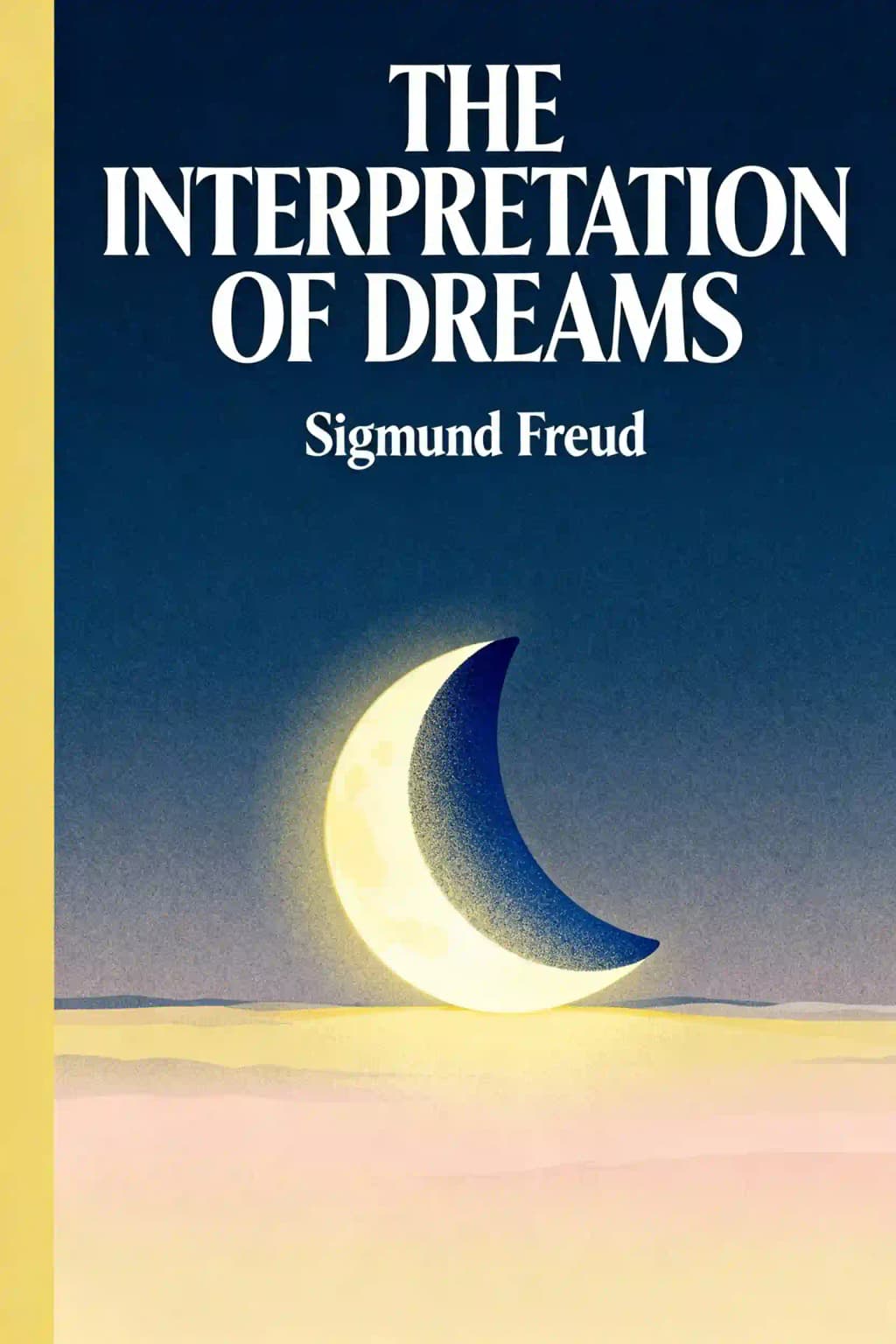
Sigmund Freud (1856–1939), the Austrian neurologist and founding father of psychoanalysis, revolutionized modern psychology with his seminal work The Interpretation of Dreams.
This groundbreaking text, blending clinical analysis and theoretical innovation, explores the unconscious mind through dream symbolism, repression, and wish-fulfillment—themes rooted in Freud’s decades of neuropathology research and clinical practice in Vienna.
A University of Vienna medical graduate and affiliated professor, Freud pioneered frameworks like the Oedipus complex and the structural model of the psyche (id, ego, superego), detailed in later works such as Civilization and Its Discontents and The Psychopathology of Everyday Life. His theories reshaped psychiatry, literature, and cultural criticism, despite controversy over his emphasis on sexuality.
Translated into over 20 languages, The Interpretation of Dreams has sold millions of copies since its 1900 publication, remaining essential reading in psychology curricula worldwide. Freud’s legacy endures as the cornerstone of psychoanalytic theory, with his methodologies influencing both therapeutic practice and modern discourse on human behavior.
Sigmund Freud’s The Interpretation of Dreams (1899) introduces his theory that dreams are unconscious wish fulfillments shaped by repressed desires. He distinguishes between manifest content (the dream’s surface narrative) and latent content (its hidden psychological meaning), arguing that analysis reveals insights into the unconscious mind. The book also explores mechanisms like condensation (compressing ideas) and displacement (masking true desires).
This book is essential for psychology students, scholars of psychoanalysis, and readers interested in dream symbolism or Freudian theory. Its blend of case studies and theoretical frameworks appeals to those exploring unconscious motivations, though some concepts may challenge casual readers due to their complexity.
Yes, as a foundational text in psychology, it revolutionized understanding of the unconscious mind. While modern dream research diverges from Freud’s theories, the book remains vital for historical context and its exploration of symbolism, repression, and mental processes. Critics note its dated sexual interpretations, but its analytical methods influenced later psychotherapy.
Key ideas include:
Freud argues dreams use symbols to disguise taboo or repressed urges (e.g., objects representing sexual themes). He interprets these symbols through free association, asserting that their meaning varies by individual context, though he acknowledges common cultural motifs.
Freud famously wrote that dream interpretation is the “royal road” to understanding unconscious drives. By analyzing dreams, he believed therapists could uncover repressed memories, unresolved conflicts, and hidden desires shaping a patient’s behavior.
Freud suggests childhood memories and traumas influence adult dreams, often resurfacing as symbolic content. He posits that early experiences shape unconscious desires, which later manifest in dreams through distorted imagery.
Critics argue Freud overemphasizes sexual symbolism and lacks empirical evidence. Modern neuroscience questions his focus on wish fulfillment, noting dreams may reflect memory processing or random brain activity. Others critique his subjective interpretation methods.
Unlike Freud’s focus on repressed desires, contemporary theories emphasize brain physiology, memory consolidation, and emotional processing during sleep. However, his work laid groundwork for exploring dreams’ psychological significance.
Freud’s “dream censorship” describes the mind’s process of distorting latent content to make repressed desires socially acceptable. This mechanism transforms taboo thoughts into symbolic, less threatening imagery within the manifest dream.
Freud’s free association technique encourages individuals to explore dream symbols and recurring themes to uncover subconscious patterns. While modern therapy integrates broader methods, his approach remains a tool for introspection into personal conflicts or desires.
Despite scientific advancements, Freud’s work persists as a cultural touchstone for discussing symbolism, unconscious motivation, and psychotherapy’s origins. Its influence spans literature, film, and clinical practice, maintaining its status in academic curricula.
저자의 목소리로 책을 느껴보세요
지식을 흥미롭고 예시가 풍부한 인사이트로 전환
핵심 아이디어를 빠르게 캡처하여 신속하게 학습
재미있고 매력적인 방식으로 책을 즐기세요
Dreams are not to be compared to the irregular sounds of an instrument that, instead of being played by a musician's hand, is struck by some external force; they are not meaningless, they are not absurd; on the contrary, they are psychical phenomena of complete validity—fulfilments of wishes; they can be inserted into the chain of intelligible waking mental acts; they are constructed by a complicated activity of the mind.
The dream-work is not only under the necessity of condensing, on account of the wealth of material and the comparative poverty of the means of expression at its disposal, but it must also provide for representing the dream-thoughts in a form accessible to perception, and it is above all in the interest of this latter requirement that it effects displacements.
A dream is a (disguised) fulfillment of a (suppressed, repressed) wish.
Dreams are not the meaningless neural firings that many scientists of Freud's time believed them to be.
The Interpretation of Dreams의 핵심 아이디어를 이해하기 쉬운 포인트로 분해하여 혁신적인 팀이 어떻게 창조하고, 협력하고, 성장하는지 이해합니다.
The Interpretation of Dreams을 빠른 기억 단서로 압축하여 솔직함, 팀워크, 창의적 회복력의 핵심 원칙을 강조합니다.

생생한 스토리텔링을 통해 The Interpretation of Dreams을 경험하고, 혁신 교훈을 기억에 남고 적용할 수 있는 순간으로 바꿉니다.
무엇이든 물어보고, 목소리를 선택하고, 진정으로 공감되는 인사이트를 함께 만들어보세요.

샌프란시스코에서 컬럼비아 대학교 동문들이 만들었습니다
"Instead of endless scrolling, I just hit play on BeFreed. It saves me so much time."
"I never knew where to start with nonfiction—BeFreed’s book lists turned into podcasts gave me a clear path."
"Perfect balance between learning and entertainment. Finished ‘Thinking, Fast and Slow’ on my commute this week."
"Crazy how much I learned while walking the dog. BeFreed = small habits → big gains."
"Reading used to feel like a chore. Now it’s just part of my lifestyle."
"Feels effortless compared to reading. I’ve finished 6 books this month already."
"BeFreed turned my guilty doomscrolling into something that feels productive and inspiring."
"BeFreed turned my commute into learning time. 20-min podcasts are perfect for finishing books I never had time for."
"BeFreed replaced my podcast queue. Imagine Spotify for books — that’s it. 🙌"
"It is great for me to learn something from the book without reading it."
"The themed book list podcasts help me connect ideas across authors—like a guided audio journey."
"Makes me feel smarter every time before going to work"
샌프란시스코에서 컬럼비아 대학교 동문들이 만들었습니다

The Interpretation of Dreams 요약을 무료 PDF 또는 EPUB으로 받으세요. 인쇄하거나 오프라인에서 언제든 읽을 수 있습니다.
Dreams have fascinated humanity since ancient times, appearing in religious texts, inspiring artists, and perplexing scientists. But it wasn't until Sigmund Freud published "The Interpretation of Dreams" in 1899 that we gained a revolutionary framework for understanding these nightly visions. Despite initially poor sales, this work eventually transformed psychology and permeated culture so thoroughly that concepts like "Freudian slips" and "dream symbolism" became everyday language. Freud's central thesis was deceptively simple yet profound: every dream represents the fulfillment of a wish. This seemingly counterintuitive idea-how could nightmares fulfill wishes?-opened a window into the human mind unlike any before. Dreams, Freud argued, aren't random neural firings but sophisticated psychological structures with specific meanings waiting to be decoded. They operate as a bridge between our conscious and unconscious minds, revealing desires we've hidden even from ourselves. When we sleep, the vigilant censorship that normally keeps these wishes at bay relaxes, allowing them to emerge in disguised form. This disguise explains why dreams often seem bizarre or nonsensical-they're speaking a different language altogether, one that requires interpretation rather than literal understanding.