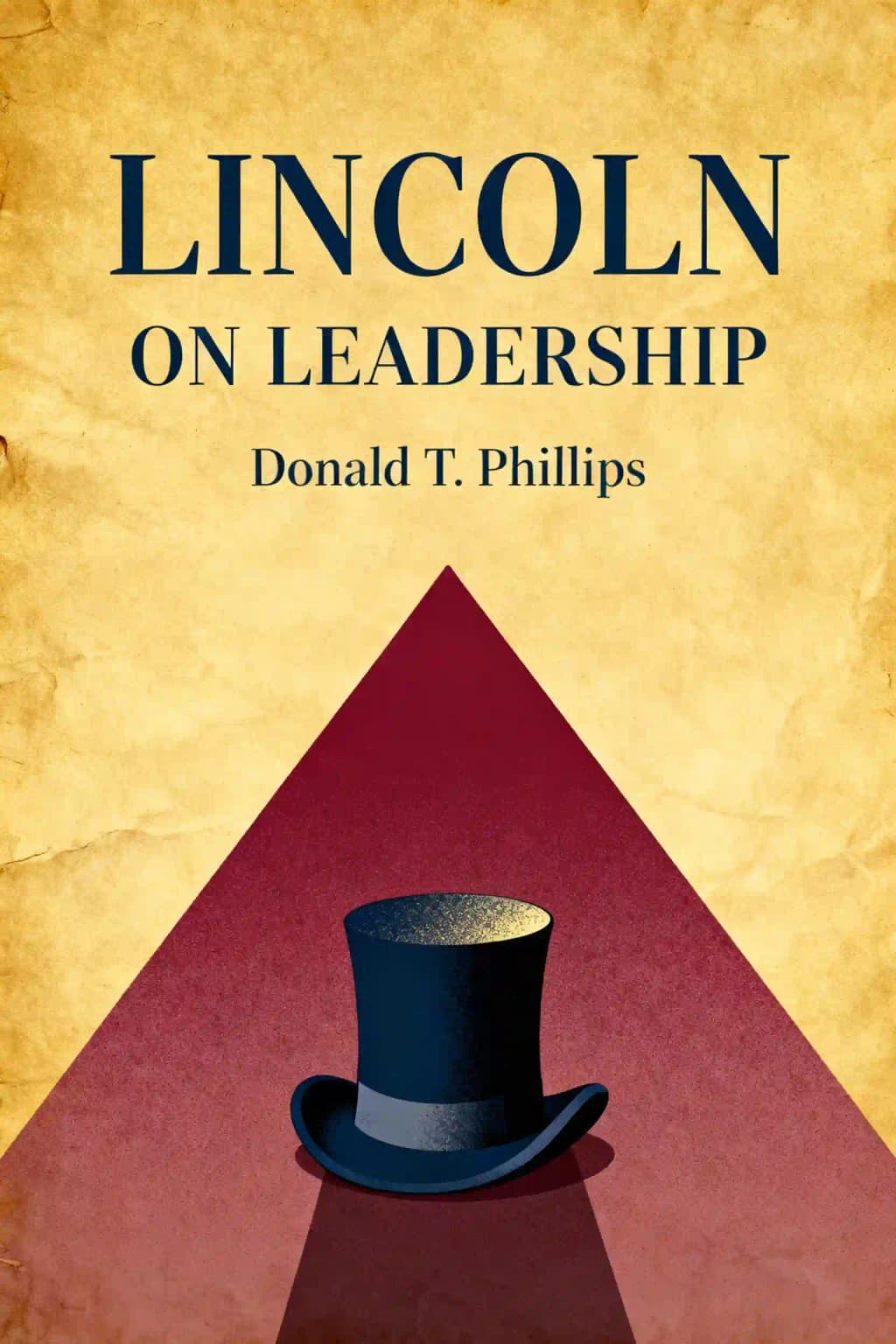
Discover how Lincoln's leadership transformed a nation in crisis. Business titans and military leaders still apply his people-first approach, proving great leadership transcends time. What unexpected strategy did Honest Abe use that Lee Iacocca later echoed to save Chrysler?
Donald T. Phillips, bestselling author of Lincoln on Leadership: Executive Strategies for Tough Times, is a renowned leadership historian and nonfiction writer specializing in extracting timeless lessons from iconic figures.
Born in Kansas in 1952, Phillips merges rigorous historical analysis with actionable leadership principles, an approach honed through his celebrated trilogy on American leadership—Lincoln on Leadership, The Founding Fathers on Leadership, and Martin Luther King, Jr., on Leadership. His works, spanning genres from biography to business strategy, dissect leadership themes through the lens of historical crises and triumphs.
Phillips has collaborated with high-profile leaders like ESPN CEO George Bodenheimer, basketball legend Mike Krzyzewski, and baseball Hall of Famer Cal Ripken Jr., amplifying his insights for modern audiences. Praised for translating complex historical narratives into accessible guidance, Lincoln on Leadership remains a cornerstone in executive education programs and military leadership curricula. The book’s enduring relevance is underscored by its adoption in corporate training modules and academic courses worldwide, solidifying Phillips’ reputation as a bridge between past and present leadership paradigms.
Explore his related works Martin Luther King, Jr., on Leadership and The Clinton Charisma for further insights into his methodical, research-driven style.
Lincoln on Leadership analyzes Abraham Lincoln’s leadership strategies during the Civil War, offering actionable lessons for modern leaders. The book explores Lincoln’s focus on empathy, persuasion, and decentralization of power, organized into three sections: People (relationship-building), Character (integrity and adaptability), and Endeavor (decisive action). Key tactics include “Management by Wandering Around” and conflict resolution through compromise.
This book is ideal for executives, managers, and aspiring leaders seeking timeless strategies for team-building and crisis management. History enthusiasts and public service professionals will also appreciate its blend of historical narrative and practical leadership frameworks. Phillips’ insights apply to corporate, nonprofit, and governmental contexts.
Yes, it’s widely praised for translating Lincoln’s historical leadership into modern practices. Readers gain actionable advice on communication, decision-making, and ethical governance, supported by vivid Civil War-era examples. Critics note its occasional oversimplification but commend its accessibility and relevance.
The book advocates for empathetic leadership, decentralized decision-making, and open communication—key traits in today’s collaborative workplaces. For example, Lincoln’s practice of seeking input before deciding aligns with modern “servant leadership” models. His conflict-resolution tactics are applicable to hybrid teams and organizational restructuring.
Some historians argue the book oversimplifies Lincoln’s complexities and downplays political pressures he faced. Others note limited diversity in historical sources. Despite this, it remains a seminal work for its practical framing of leadership ethics.
Phillips’ expertise in profiling historical leaders (e.g., Founding Fathers, Martin Luther King Jr.) informs his structured analysis of Lincoln. His corporate consulting experience ensures lessons are tailored for organizational effectiveness, blending academic rigor with actionable steps.
Unlike theoretical guides, it uses historical case studies to illustrate principles, similar to Doris Kearns Goodwin’s Leadership in Turbulent Times. It avoids self-help jargon, focusing instead on Lincoln’s tangible strategies—making it a hybrid of biography and leadership manual.
Lincoln’s handling of the Civil War highlights proactive communication, delegation to competent leaders (like Ulysses S. Grant), and maintaining morale during setbacks. Phillips stresses the “consult together, decide alone” framework for balancing input with accountability.
Lincoln’s refusal to seek revenge on Confederate leaders and his commitment to emancipation underscore ethics-driven decisions. Phillips ties this to modern CSR (corporate social responsibility) and stakeholder trust-building, advocating for transparency in difficult choices.
In an era of remote work and rapid organizational change, Lincoln’s emphasis on adaptability, empathy, and decentralized authority resonates. His lessons on uniting divided teams align with contemporary DEI (diversity, equity, inclusion) initiatives and global crisis management.
저자의 목소리로 책을 느껴보세요
지식을 흥미롭고 예시가 풍부한 인사이트로 전환
핵심 아이디어를 빠르게 캡처하여 신속하게 학습
재미있고 매력적인 방식으로 책을 즐기세요
"Be good to one another."
"I am humble Abraham Lincoln."
"We cannot retreat from it without disgrace and great loss."
"the most oppressive of all Kingly oppressions."
"Every effect must have its cause.
Lincoln on Leadership의 핵심 아이디어를 이해하기 쉬운 포인트로 분해하여 혁신적인 팀이 어떻게 창조하고, 협력하고, 성장하는지 이해합니다.
Lincoln on Leadership을 빠른 기억 단서로 압축하여 솔직함, 팀워크, 창의적 회복력의 핵심 원칙을 강조합니다.

생생한 스토리텔링을 통해 Lincoln on Leadership을 경험하고, 혁신 교훈을 기억에 남고 적용할 수 있는 순간으로 바꿉니다.
무엇이든 물어보고, 목소리를 선택하고, 진정으로 공감되는 인사이트를 함께 만들어보세요.

샌프란시스코에서 컬럼비아 대학교 동문들이 만들었습니다
"Instead of endless scrolling, I just hit play on BeFreed. It saves me so much time."
"I never knew where to start with nonfiction—BeFreed’s book lists turned into podcasts gave me a clear path."
"Perfect balance between learning and entertainment. Finished ‘Thinking, Fast and Slow’ on my commute this week."
"Crazy how much I learned while walking the dog. BeFreed = small habits → big gains."
"Reading used to feel like a chore. Now it’s just part of my lifestyle."
"Feels effortless compared to reading. I’ve finished 6 books this month already."
"BeFreed turned my guilty doomscrolling into something that feels productive and inspiring."
"BeFreed turned my commute into learning time. 20-min podcasts are perfect for finishing books I never had time for."
"BeFreed replaced my podcast queue. Imagine Spotify for books — that’s it. 🙌"
"It is great for me to learn something from the book without reading it."
"The themed book list podcasts help me connect ideas across authors—like a guided audio journey."
"Makes me feel smarter every time before going to work"
샌프란시스코에서 컬럼비아 대학교 동문들이 만들었습니다

Lincoln on Leadership 요약을 무료 PDF 또는 EPUB으로 받으세요. 인쇄하거나 오프라인에서 언제든 읽을 수 있습니다.
In the spring of 1865, Abraham Lincoln stood at the White House window, gazing at a transformed nation. Four years earlier, he had entered office facing seven seceded states and a country on the brink of dissolution. Now, as victory approached, his thoughts turned to reconciliation: "With malice toward none, with charity for all." What made this self-educated man America's most revered leader? Lincoln's genius wasn't just in preserving the Union through military might, but in how he led - through personal connection, moral clarity, and balancing opposing forces. His leadership wasn't theoretical - it was forged in America's deadliest conflict, where his decisions determined whether the nation would survive. Nearly 160 years later, his principles remain so powerful that Harvard Business School requires his study, and CEOs consistently name him as the historical figure they'd most want to meet.