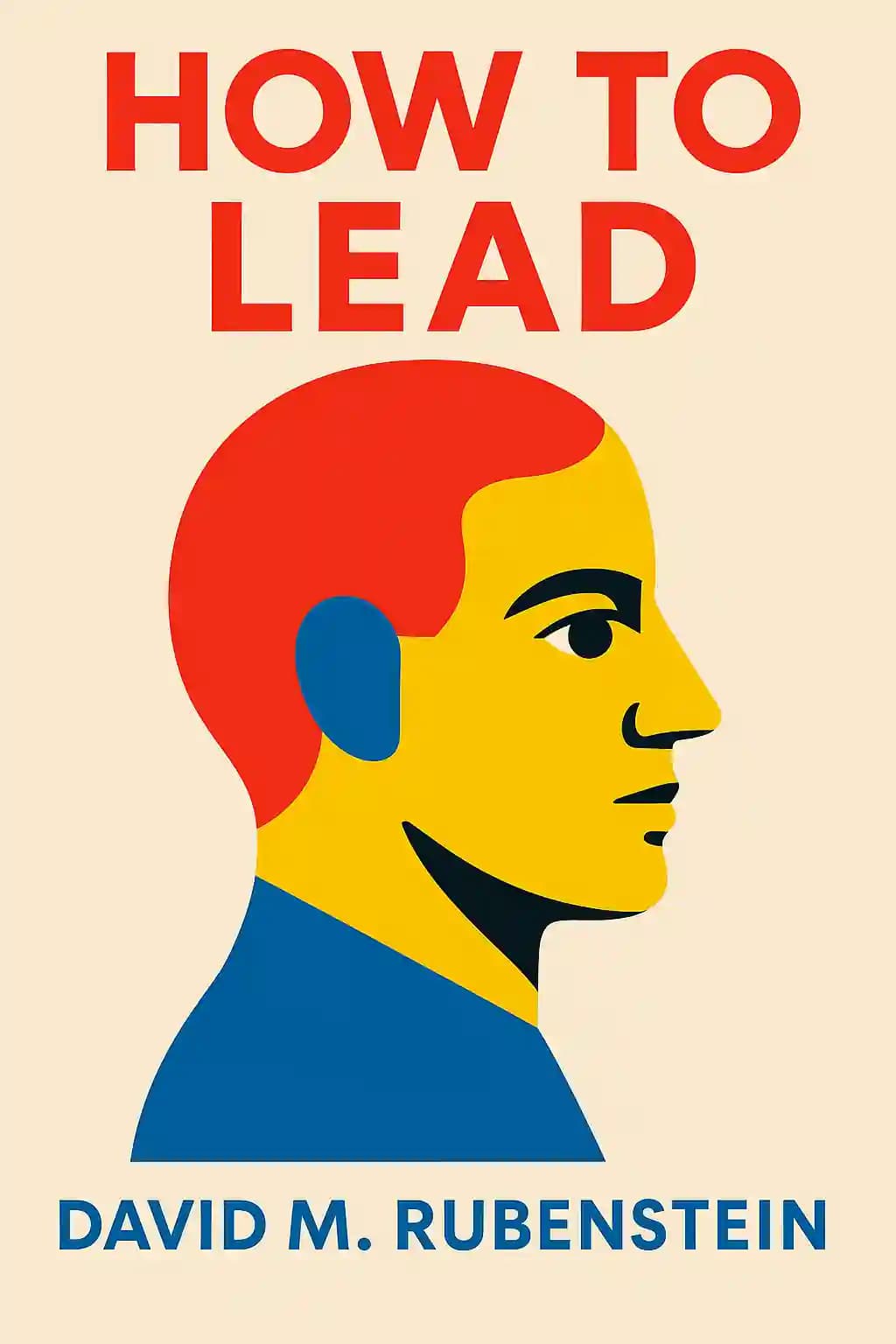
In "How to Lead," Carlyle Group co-founder David Rubenstein distills wisdom from Bill Gates, Oprah Winfrey, and Jeff Bezos. What leadership secret unites these titans? Discover why Indra Nooyi wrote to employees' parents and how Bezos makes decisions with heart, not just analysis.
David M. Rubenstein, New York Times bestselling author of How to Lead: Wisdom from the World’s Greatest CEOs, Founders, and Game Changers, is a titan of private equity and philanthropic leadership. As co-founder and co-chairman of The Carlyle Group, Rubenstein distilled decades of executive experience into this business leadership manifesto, featuring interviews with Warren Buffett, Bill Gates, and other icons. His expertise spans finance, governance, and historical analysis, echoed in related works like The American Experiment and The American Story—both exploring leadership through pivotal U.S. historical figures.
Rubenstein hosts Bloomberg TV’s The David Rubenstein Show: Peer-to-Peer Conversations and PBS’s History with David Rubenstein, platforms where he dissects leadership strategies with global influencers.
A dedicated patriot, he chairs the Kennedy Center and National Gallery of Art while driving historic preservation through transformative donations to landmarks like the Washington Monument. His philanthropic leadership earned the Carnegie Medal of Philanthropy and MoMA’s David Rockefeller Award. How to Lead debuted as a New York Times bestseller, cementing Rubenstein’s status as a bridge between corporate mastery and civic stewardship.
How to Lead by David M. Rubenstein distills leadership insights from interviews with influential figures across business, politics, sports, and philanthropy. The book categorizes leaders into visionaries, builders, transformers, commanders, decision-makers, and masters, emphasizing that leadership styles vary but share core principles like vision, collaboration, and adaptability. Rubenstein highlights practical lessons from icons like Bill Gates, Oprah Winfrey, and Jack Nicklaus to illustrate diverse paths to effective leadership.
This book is ideal for aspiring leaders, executives, and professionals seeking actionable advice from real-world success stories. It’s also valuable for students of leadership theory, as Rubenstein bridges practical insights with broader themes like resilience and decision-making. Those interested in biographical anecdotes from high achievers will find it particularly engaging.
Yes—Rubenstein’s firsthand interviews provide unique access to leadership philosophies of globally recognized figures. The book’s structured approach (vision, strategy, execution) and diverse case studies make it a actionable resource. However, readers seeking theoretical frameworks may find its anecdotal focus less rigorous.
Key principles include:
Notable quotes include:
Unlike theoretical guides, How to Lead uses firsthand interviews to showcase real-world strategies. While books like Atomic Habits focus on personal routines, Rubenstein emphasizes collective vision and decision-making. It complements classics like Good to Great by adding contemporary examples from diverse fields.
Critics note repetitive interview questions, which limit deeper exploration of leadership theories. Some chapters prioritize anecdotal lessons over structured frameworks, which may frustrate readers seeking step-by-step systems.
The book offers actionable advice for navigating challenges like team management and decision-making. For example, Rubenstein’s emphasis on hiring for passion and proven accomplishment helps readers build high-performing teams. Stories from leaders like Mike Krzyzewski (“be part of a team”) provide relatable career guidance.
Vision is central—Rubenstein argues leaders must articulate a compelling direction, as John F. Kennedy did with the moon mission. Case studies show how vision drives innovation (e.g., Microsoft’s software revolution) and unites teams during uncertainty.
Rubenstein defines leadership as a learnable skill combining vision, persistence, and the ability to inspire others. He stresses that leaders “take people places they wouldn’t go alone” by cultivating trust and clarity. His interviews underscore that leadership is less about authority and more about empowering others.
The book’s focus on adaptability and crisis management remains critical in fast-changing industries. Lessons from leaders like Ken Griffin on decentralized decision-making align with modern workplace trends like remote collaboration. Its emphasis on ethical leadership also resonates amid growing demand for corporate accountability.
Rubenstein highlights how leaders like Jack Nicklaus turned setbacks into comebacks through self-belief. The book advocates viewing failure as a learning tool, with examples from business and sports illustrating resilience. Ken Griffin’s focus on “profitable growth” despite economic shifts underscores pragmatic perseverance.
저자의 목소리로 책을 느껴보세요
지식을 흥미롭고 예시가 풍부한 인사이트로 전환
핵심 아이디어를 빠르게 캡처하여 신속하게 학습
재미있고 매력적인 방식으로 책을 즐기세요
Victory has a hundred fathers.
That quarter was baked three years ago.
A computer on every desk and in every home.
Let the Internet grow around us.
HOW TO LEAD의 핵심 아이디어를 이해하기 쉬운 포인트로 분해하여 혁신적인 팀이 어떻게 창조하고, 협력하고, 성장하는지 이해합니다.
HOW TO LEAD을 빠른 기억 단서로 압축하여 솔직함, 팀워크, 창의적 회복력의 핵심 원칙을 강조합니다.

생생한 스토리텔링을 통해 HOW TO LEAD을 경험하고, 혁신 교훈을 기억에 남고 적용할 수 있는 순간으로 바꿉니다.
무엇이든 물어보고, 목소리를 선택하고, 진정으로 공감되는 인사이트를 함께 만들어보세요.

샌프란시스코에서 컬럼비아 대학교 동문들이 만들었습니다
"Instead of endless scrolling, I just hit play on BeFreed. It saves me so much time."
"I never knew where to start with nonfiction—BeFreed’s book lists turned into podcasts gave me a clear path."
"Perfect balance between learning and entertainment. Finished ‘Thinking, Fast and Slow’ on my commute this week."
"Crazy how much I learned while walking the dog. BeFreed = small habits → big gains."
"Reading used to feel like a chore. Now it’s just part of my lifestyle."
"Feels effortless compared to reading. I’ve finished 6 books this month already."
"BeFreed turned my guilty doomscrolling into something that feels productive and inspiring."
"BeFreed turned my commute into learning time. 20-min podcasts are perfect for finishing books I never had time for."
"BeFreed replaced my podcast queue. Imagine Spotify for books — that’s it. 🙌"
"It is great for me to learn something from the book without reading it."
"The themed book list podcasts help me connect ideas across authors—like a guided audio journey."
"Makes me feel smarter every time before going to work"
샌프란시스코에서 컬럼비아 대학교 동문들이 만들었습니다

HOW TO LEAD 요약을 무료 PDF 또는 EPUB으로 받으세요. 인쇄하거나 오프라인에서 언제든 읽을 수 있습니다.
What makes a truly exceptional leader? In "How to Lead," David Rubenstein takes us on an extraordinary journey through conversations with thirty remarkable individuals who've shaped our world. These aren't just theoretical discussions-they're Warren Buffett revealing investment philosophy over breakfast, Oprah explaining how listening transformed her career, and Jeff Bezos sharing the decision-making framework that built Amazon. Through these intimate dialogues, we discover that true leadership often emerges not from early success but from life's setbacks that forge resilience and perspective. Rubenstein himself exemplifies this journey-at thirty-seven, he abandoned a successful legal career to launch Washington DC's first private equity firm despite having "no Wall Street experience, no money, and no clear business plan." That bold move eventually created The Carlyle Group, now managing over $370 billion in assets. What can we learn from these leadership journeys that might transform our own approach to challenges and opportunities?