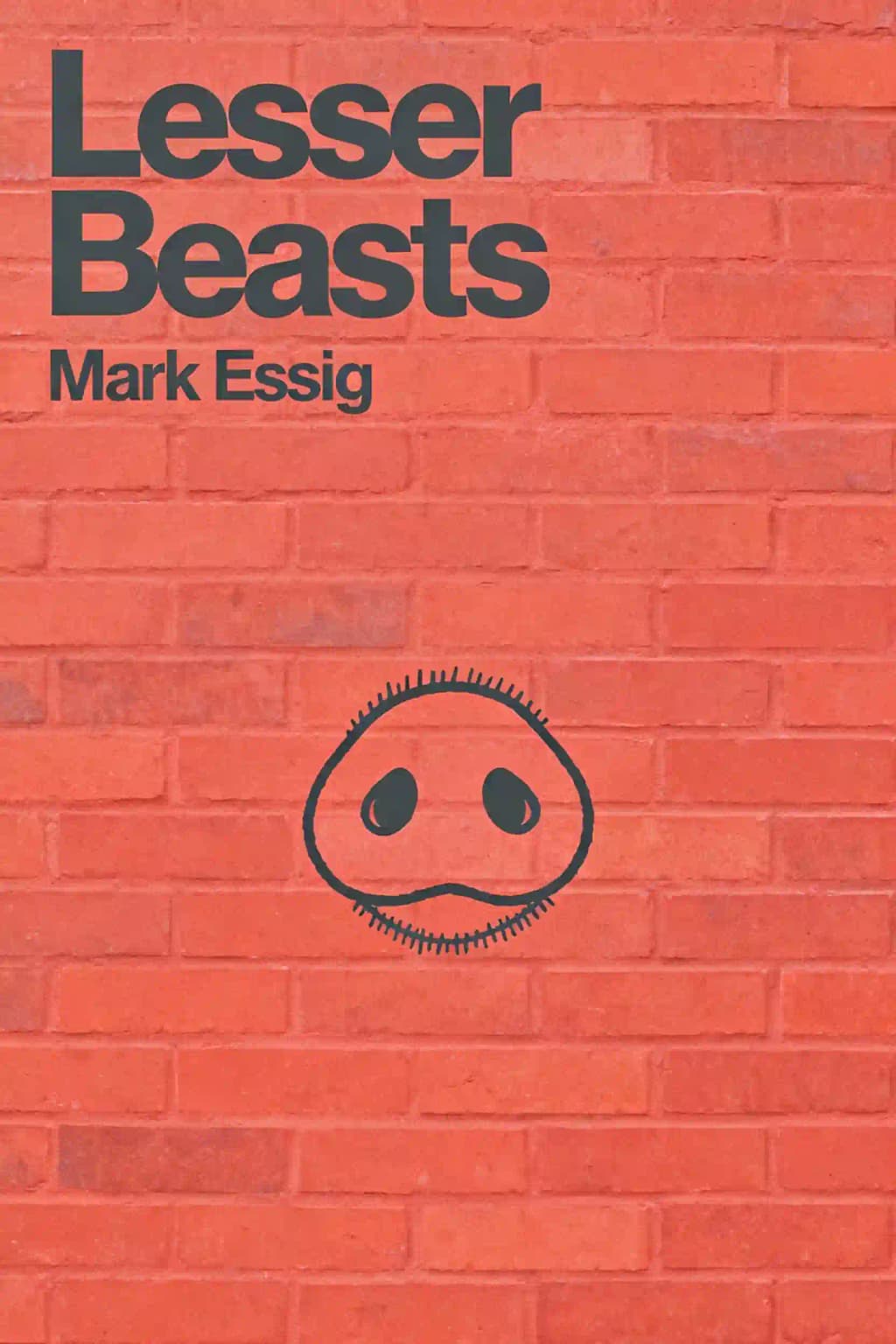
Lesser Beasts
A Snout-to-Tail History of the Humble Pig
Lesser Beasts 개요
From Neolithic villages to modern farms, "Lesser Beasts" reveals how pigs - our biological doppelgangers - shaped human history. Did you know a 10-million-year-old pig tooth was once mistaken for a human fossil? Essig's snout-to-tail journey challenges our relationship with these misunderstood animals.
Lesser Beasts의 핵심 주제
- porcine domestication
- human-animal evolution
- food history
- cultural dietary taboos
- sustainable agriculture
Lesser Beasts의 명언
Pigs became living recycling systems, transforming human waste into valuable protein.
The pig's urban habits eventually led to its cultural devaluation.
Pigs remained important primarily to common people and those on society's margins.
The pig is impure because it makes the streets stink.
Pigs remained primarily food animals rather than work partners.
Lesser Beasts의 등장인물
- Mark EssigAuthor and historian of the book
- Henry Fairfield OsbornPaleontologist who studied pig dental structures
저자 소개
Lesser Beasts의 저자 소개
Mark Essig, author of Lesser Beasts: A Snout-to-Tail History of the Humble Pig, is an award-winning historian and journalist renowned for blending rigorous research with engaging storytelling. His expertise in uncovering overlooked cultural and historical narratives shines in this exploration of humanity’s complex relationship with pigs, spanning 10,000 years of domestication, symbolism, and culinary tradition. A Cornell University Ph.D. graduate, Essig has taught history and journalism at institutions like Cornell and Warren Wilson College, grounding his work in academic rigor.
He has contributed op-eds and reviews to the New York Times, Washington Post, and Los Angeles Times, establishing himself as a trusted voice in historical and food-writing circles. His debut book, Edison & the Electric Chair—named one of Discover Magazine’s top 20 science books of 2003—showcases his knack for dissecting technological and ethical turning points.
Lesser Beasts has been praised as “marvelous” (The Times of London) and “splendid” (The Guardian), cementing Essig’s reputation as a historian who transforms niche subjects into universal stories. Based in Asheville, North Carolina, he continues to write on food systems, environmental ethics, and cultural history.
Lesser Beasts 요약 다운로드
Lesser Beasts 요약을 무료 PDF 또는 EPUB으로 받으세요. 인쇄하거나 오프라인에서 언제든 읽을 수 있습니다.
이 책에 대한 FAQ
Lesser Beasts by Mark Essig explores the 10,000-year relationship between humans and pigs, tracing their role as both vital food sources and culturally maligned animals. The book challenges stereotypes about pigs’ “filthiness,” examining their contributions to ancient empires, colonial economies, and modern industrial farming while addressing ethical concerns like antibiotic overuse and environmental impacts of mass pork production.
This book is ideal for history enthusiasts, foodies, and anthropologists interested in how pigs shaped human civilization. Farmers and animal welfare advocates will also find insights into the evolution of hog farming, from Neolithic domestication to today’s factory systems.
Yes, Essig’s engaging blend of cultural history and ethical inquiry makes Lesser Beasts a standout. It balances witty anecdotes—like pigs’ role in medieval feasts—with critical analysis of modern meat production, offering a fresh perspective on an often-overlooked animal.
Key themes include the pig’s dual reputation as a symbol of abundance and disgust, its unmatched adaptability across civilizations, and the moral contradictions of industrial pork production. Essig also highlights how religious taboos (e.g., Jewish and Islamic pork bans) shaped global trade.
As a historian with a Cornell Ph.D., Essig combines rigorous research with accessible storytelling. His prior work on Edison & the Electric Chair reflects his knack for linking technical subjects to broader cultural narratives, a skill evident in his analysis of pork’s societal impact.
Essig critiques factory farming’s reliance on antibiotics, inhumane living conditions, and environmental degradation. He argues that cheap pork hides steep costs: antibiotic-resistant bacteria, polluted waterways, and ethical compromises in animal treatment.
Like Salt or Cod, Essig’s book uses a single subject to unpack human history but stands out by focusing on an animal central to both sustenance and stigma. It diverges by emphasizing ethical dilemmas absent in purely commodity-focused works.
The book spans from pig domestication in Neolithic villages to their role in Roman feasts, medieval Europe, and colonial America. Essig also details 20th-century innovations like concentrated animal feeding operations (CAFOs).
Essig analyzes pork’s taboo status in Judaism and Islam, linking it to pigs’ scavenging habits and cultural associations with disease. He contrasts this with Christianity’s embrace of pork, which fueled Europe’s economic reliance on swine.
Pigs were essential to settlers’ survival, providing cheap, durable meat. Their ability to forage reduced labor needs, but loose herds damaged Native American crops, exacerbating tensions. By the 1800s, pork became a profitable export, shaping Southern agriculture.
While not a cookbook, it highlights historical preparations, like Roman garum (fermented fish sauce) used to flavor pork and Native American cooking pits. Essig also critiques modern processed meats like SPAM as symbols of industrialized diets.
The book concludes by urging readers to reconsider pigs’ value beyond food. Essig advocates for sustainable farming practices and ethical treatment, framing pigs as intelligent animals deserving respect—not just commodities.