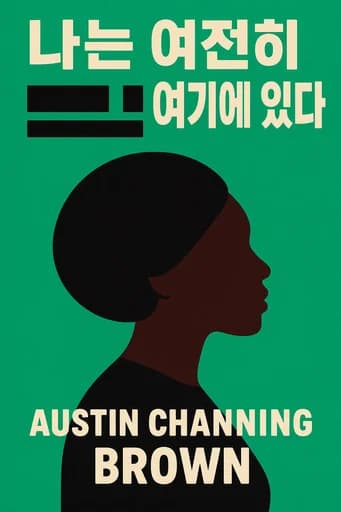
Austin Channing Brown's memoir confronts America's racial divide with unflinching honesty. Selected by Reese Witherspoon's book club, this bestseller surged during 2020's racial justice awakening. "It broke me open," one reviewer confessed - revealing uncomfortable truths about diversity in white institutions.
Austin Channing Brown is the New York Times bestselling author of I’m Still Here: Black Dignity in a World Made for Whiteness and a leading voice on racial justice and systemic inequity in America. Blending memoir with social critique, her work explores themes of Black identity, resilience, and empowerment within structures designed to marginalize.
Brown holds a Master’s in Social Justice from Marygrove College and has spent over a decade in nonprofit leadership addressing housing insecurity and youth advocacy. Her transformative workshops and keynotes—featured at universities, corporations, and global forums—combine storytelling, humor, and incisive analysis to dismantle white supremacist frameworks.
She expanded her impact with I’m Still Here: Loving Myself in a World Not Made for Me, a young readers’ edition, and contributed to the anthology You Are Your Best Thing (co-edited by Tarana Burke and Brené Brown). Recognized by Reese Witherspoon’s Book Club and featured in The Hollywood Reporter and NPR, her writing has shaped national conversations on anti-racism.
Brown’s forthcoming book, Full of Myself: Notes on Black Womanhood, releases in 2025. Honored with a Key to the City of Toledo and an honorary doctorate from Oakland University, her work remains essential reading for educators, activists, and organizations committed to equity.
I'm Still Here is a memoir exploring systemic racism through Austin Channing Brown's lived experiences as a Black woman navigating predominantly white spaces. It critiques white supremacy’s ingrained societal structures while affirming Black dignity, blending personal stories with calls for racial justice. The book gained prominence as a New York Times bestseller after the 2020 George Floyd protests.
This book is essential for readers seeking to understand anti-Black racism’s psychological and systemic impacts. It resonates with Black women seeking validation of their experiences and white audiences committed to dismantling bias. Brown’s candid storytelling appeals to faith communities, educators, and workplace leaders addressing racial equity.
Yes. Praised for its unflinching honesty, I'm Still Here offers a transformative perspective on racial injustice. While some critics note its intense focus on personal narrative, the book is widely lauded for illuminating unconscious biases and fostering empathy. It remains a pivotal resource for discussions on race.
Key themes include the erasure of Black identity in white-dominated spaces, the emotional toll of systemic racism, and the pursuit of dignity amid oppression. Brown critiques performative allyship, emphasizing action over symbolism. The book also explores reconciling faith with racial justice.
Brown dissects how white supremacy embeds itself in everyday interactions, institutions, and language. She challenges white readers to confront complicity in racist systems rather than seeking absolution. The book underscores that dismantling racism requires sustained effort, not superficial gestures.
Brown describes the “ritual of fear” as white society’s tendency to prioritize comfort over racial accountability. This includes deflecting criticism, centering white guilt, and avoiding hard conversations. She argues this cycle perpetuates harm and stifles progress toward justice.
Brown advises organizations to clarify their motivations for diversity efforts, define terms like “antiracism,” and establish accountability structures. She emphasizes centering Black voices without tokenizing them and warns against relying on marginalized individuals to lead systemic change alone.
The book challenges white feminism’s failure to address racial inequities, highlighting how it often prioritizes gender solidarity over intersectionality. Brown recounts instances where white women weaponized tears or fragility to avoid accountability, exacerbating harm against Black women.
Some readers argue the book’s focus on personal experience lacks broader structural analysis. A minority of reviews called its tone “narcissistic,” though others countered that centering Black women’s voices is the book’s intentional strength.
Written before the 2020 Black Lives Matter resurgence, the book’s insights remain urgent. It provides context for understanding systemic racism’s endurance and aligns with demands for tangible policy changes, not just symbolic gestures.
Notable quotes include:
These lines underscore systemic complicity and the need for active resistance.
Unlike academic texts, Brown’s memoir prioritizes emotional truth over data, offering a raw, personal lens. It complements works like Between the World and Me by focusing on Black womanhood and faith’s role in justice movements.
Its direct critique of white fragility and Christian complicity in racism sparks debate. Some readers reject its framing of whiteness as an oppressive construct, while others view it as a necessary provocation for growth.
저자의 목소리로 책을 느껴보세요
지식을 흥미롭고 예시가 풍부한 인사이트로 전환
핵심 아이디어를 빠르게 캡처하여 신속하게 학습
재미있고 매력적인 방식으로 책을 즐기세요
America doesn't love diversity.
Blackness isn't monolithic.
"Ain't no friends here".
Doing nothing is no longer an option for me.
Whiteness constantly polices Blackness.
I'm still here의 핵심 아이디어를 이해하기 쉬운 포인트로 분해하여 혁신적인 팀이 어떻게 창조하고, 협력하고, 성장하는지 이해합니다.
I'm still here을 빠른 기억 단서로 압축하여 솔직함, 팀워크, 창의적 회복력의 핵심 원칙을 강조합니다.

생생한 스토리텔링을 통해 I'm still here을 경험하고, 혁신 교훈을 기억에 남고 적용할 수 있는 순간으로 바꿉니다.
무엇이든 물어보고, 목소리를 선택하고, 진정으로 공감되는 인사이트를 함께 만들어보세요.

샌프란시스코에서 컬럼비아 대학교 동문들이 만들었습니다
"Instead of endless scrolling, I just hit play on BeFreed. It saves me so much time."
"I never knew where to start with nonfiction—BeFreed’s book lists turned into podcasts gave me a clear path."
"Perfect balance between learning and entertainment. Finished ‘Thinking, Fast and Slow’ on my commute this week."
"Crazy how much I learned while walking the dog. BeFreed = small habits → big gains."
"Reading used to feel like a chore. Now it’s just part of my lifestyle."
"Feels effortless compared to reading. I’ve finished 6 books this month already."
"BeFreed turned my guilty doomscrolling into something that feels productive and inspiring."
"BeFreed turned my commute into learning time. 20-min podcasts are perfect for finishing books I never had time for."
"BeFreed replaced my podcast queue. Imagine Spotify for books — that’s it. 🙌"
"It is great for me to learn something from the book without reading it."
"The themed book list podcasts help me connect ideas across authors—like a guided audio journey."
"Makes me feel smarter every time before going to work"
샌프란시스코에서 컬럼비아 대학교 동문들이 만들었습니다

I'm still here 요약을 무료 PDF 또는 EPUB으로 받으세요. 인쇄하거나 오프라인에서 언제든 읽을 수 있습니다.
What does it mean when your parents give you a white man's name as an insurance policy? Austin. A strategic choice designed to bypass the trash can, to land my resume on the desk instead of the floor. My parents understood America's unspoken rules: Black names get discarded, white names get interviews. But no amount of strategic naming prepares you for that moment when you walk through the door and watch the interviewer's face change. The quick glance back at the resume. The mental recalculation. The polite smile masking the thought: "Are we sure she'll be a good fit?" In progressive spaces, they'd overcompensate, gushing about their "wonderful mistake," but the script remained predictable. Promises of safety if racism occurred. Microaggressions about hair or speech patterns. And when reported, the familiar refrain: you misunderstood, you're being too sensitive, maybe try being more patient. This isn't a story about condemning white people-it's about rejecting the foundational assumption that white is right, that white is normal, that everything else is deviation. What emerges instead is something more radical: the possibility of another way, a world beyond the suffocating logic of racial oppression.