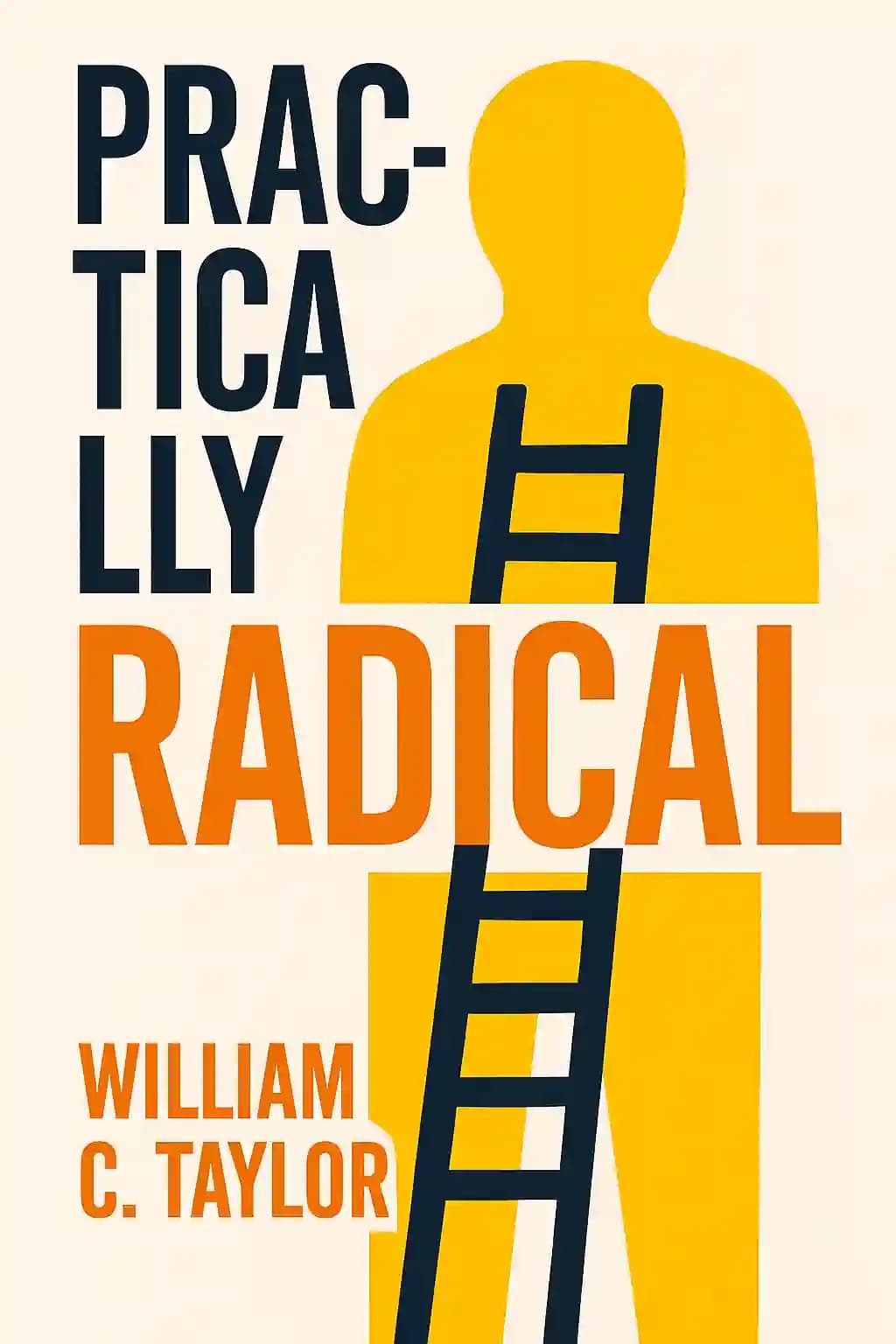
Practically Radical
Not-So-Crazy Ways to Transform Your Company, Shake up Your Industry, and Challenge Yourself
Overview of Practically Radical
In "Practically Radical," William C. Taylor reveals how to transform companies through "vuja de" thinking - seeing familiar situations with fresh eyes. Endorsed by Arianna Huffington as "the most powerful change manual you'll ever read," it teaches Henry Ford's secret: find breakthrough ideas in unexpected places.

Key Themes in Practically Radical
- cross-industry innovation
- organizational transformation
- crisis management strategy
- vuja de mindset
- challenging conventional wisdom
Quotes from Practically Radical
The lone cowboy is dead.
The real risk isn't 'sinking the boat' but 'missing the boat'.
Our job is to build Interpol to the point that it becomes for law enforcement what Google and Yahoo have become in everyday life.
Characters in Practically Radical
- William C. TaylorAuthor and business innovation expert
- Dean EssermanProvidence Police Chief and reformer
- John KotterHarvard professor and change management expert
- Russel WrightDesigner of American Modern dinnerware
- Robert BrusteinTheater icon and production director
About the Author
About the Author of Practically Radical
William C. Taylor, author of Practically Radical: Not-So-Crazy Ways to Transform Your Company, Shake Up Your Industry, and Challenge Yourself, is a groundbreaking business strategist and co-founder of Fast Company magazine, renowned for reshaping modern leadership practices.
A Princeton and MIT graduate, Taylor combines academic rigor with real-world insights from his roles as editor of the Harvard Business Review and adjunct professor at Babson College. His work focuses on challenging conventional business wisdom, emphasizing innovation through unexpected solutions in traditional industries.
Taylor’s earlier bestseller, Mavericks at Work—praised by The Economist as “a pivotal work in the tradition of In Search of Excellence”—established his reputation for identifying visionary leaders. His ideas have influenced organizations ranging from startups to Fortune 500 companies, with Practically Radical debuting as a New York Times and Wall Street Journal bestseller.
Over 500,000 copies of his books have sold worldwide, cementing his status as a trusted voice in transformative business strategy.
Download Summary of Practically Radical
Get the Practically Radical summary as a free PDF or EPUB. Print it or read offline anytime.
FAQs About This Book
Practically Radical explores actionable strategies for transforming organizations through sustainable, small-scale changes. William C. Taylor argues that radical innovation stems from simplicity, focus, and redefining market competition rather than overtaking rivals. The book draws on case studies across industries like healthcare, automotive, and finance, offering frameworks for leaders to drive renewal while balancing humility and ambition.
This book targets business leaders, entrepreneurs, and managers seeking pragmatic approaches to organizational change. It’s particularly valuable for those navigating industry disruptions or aiming to foster innovation without losing operational focus. Professionals in traditional sectors (e.g., banking, healthcare) will find insights on modernizing legacy systems.
Yes—the book blends real-world examples with actionable advice, making it a practical guide for leaders. Its emphasis on incremental yet impactful changes resonates in fast-evolving industries. Critics praise its balance of conceptual thinking and hands-on strategies, though some note a reliance on anecdotal evidence.
Key concepts include:
- The Power of Small: Sustainable change starts with modest, scalable initiatives.
- Redefining Competition: Outperform rivals by reshaping market rules, not just beating them.
- Humility + Ambition: Effective leaders balance bold vision with openness to unconventional ideas.
Taylor advocates for “practical radicalism”—leveraging existing resources to drive systemic change. He highlights companies like Ford, which drew inspiration from slaughterhouse assembly lines to revolutionize manufacturing. The book stresses simplicity in design and clarity in purpose as pillars of innovation.
Examples span banking (USAA), healthcare (Mayo Clinic), automotive (Ford), and software. These illustrate how diverse sectors can apply shared principles like customer-centric focus and operational agility.
Unlike generic leadership guides, Taylor emphasizes industry-specific adaptability. The book avoids one-size-fits-all solutions, instead providing frameworks tailored to organizational context. Contrasts with Atomic Habits by linking systemic change to cultural reinvention, not just individual habits.
Taylor highlights humble ambition—combining bold goals with willingness to learn from outliers. Leaders are urged to prioritize customer needs over internal hierarchies and embrace “outsider” perspectives to challenge industry norms.
Some reviewers note a reliance on corporate success stories without addressing failure analysis. Others argue its focus on incremental change may undervalue disruptive innovation in rapidly shifting markets.
Taylor argues complexity stifles progress, citing examples like streamlined customer service at USAA. The book advises cutting redundant processes and aligning teams around 1–2 core objectives to enhance scalability.
- “Don’t use crisis as an excuse to downsize your dreams”: Encourages sustained ambition during turbulence.
- “The best leaders are the most insatiable learners”: Stresses curiosity as a leadership cornerstone.
Its emphasis on adaptability and customer-centric innovation aligns with AI-driven market shifts and remote work trends. The case studies on legacy industries offer blueprints for modernizing traditional sectors amid digital transformation.





