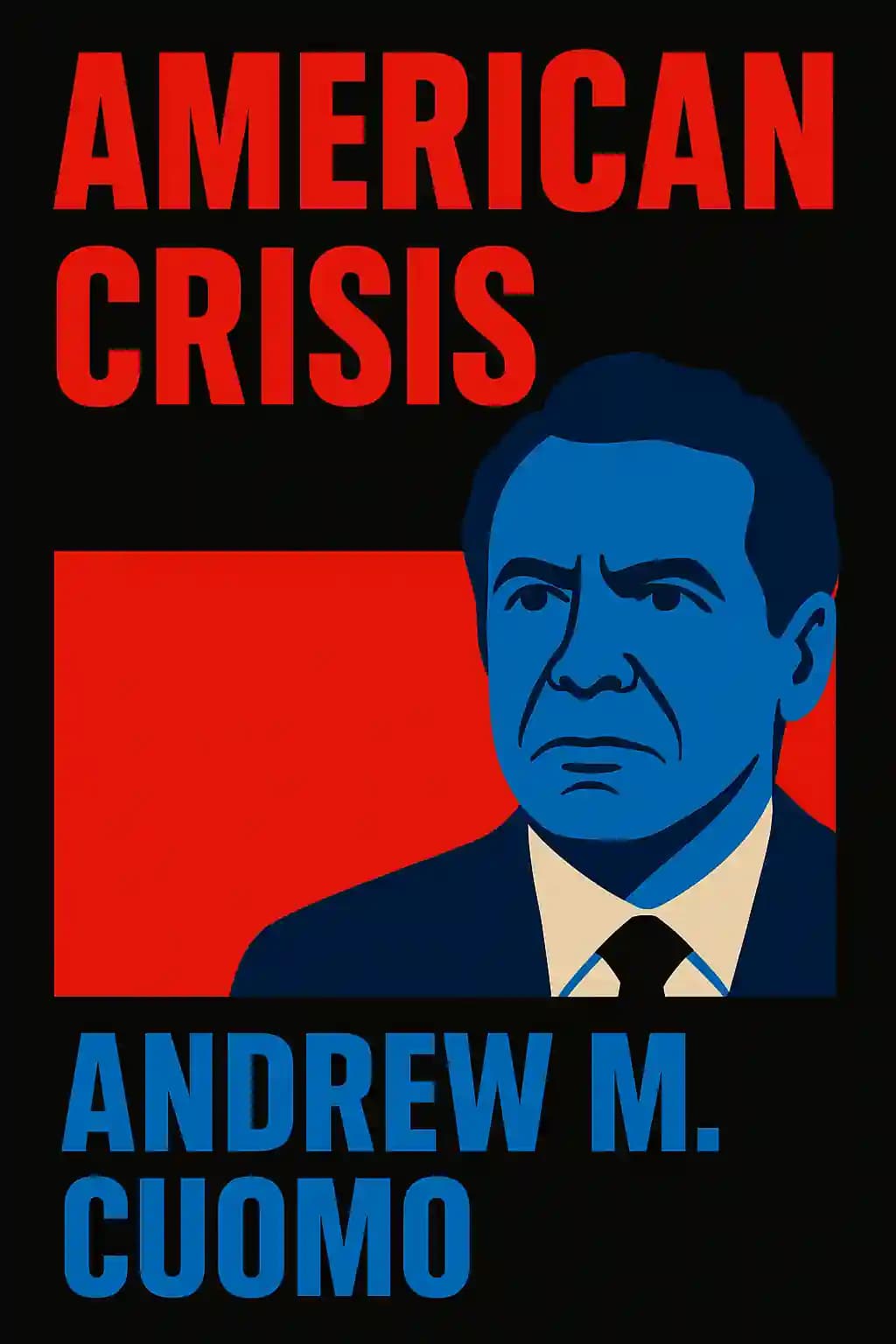
In "American Crisis," NY Governor Cuomo delivers a riveting, bestselling account of leadership during COVID-19's darkest hours. How did his controversial decisions shape America's pandemic response? The Washington Post called it "an impressive road map" for facing unprecedented national emergencies.
Andrew M. Cuomo, former New York governor and political leader, chronicles his pandemic leadership journey in American Crisis, a gripping memoir blending governance insights with crisis management strategies.
As New York’s 56th governor (2011–2021), Cuomo shaped progressive policies including marriage equality, statewide $15 minimum wage, and landmark gun safety reforms while overseeing transformative infrastructure projects like the Mario M. Cuomo Bridge.
His career spans public service roles as U.S. Housing Secretary under President Clinton and New York attorney general, rooted in a legacy of advocacy inherited from his father, Governor Mario Cuomo.
Cuomo’s daily COVID-19 briefings during 2020 earned an International Emmy Special Award for their clarity under pressure. His earlier memoir, All Things Possible, details his rise through politics and resilience amid challenges. American Crisis draws from his 11-year governorship to offer candid lessons on leadership during unprecedented upheavals.
American Crisis chronicles Andrew Cuomo’s leadership as New York’s governor during the COVID-19 pandemic, detailing strategies like statewide lockdowns, mobilizing healthcare resources, and confronting federal missteps. The book blends personal reflections, crisis-management insights, and a call for unified governance, emphasizing data-driven decisions and transparent communication.
This book is ideal for readers interested in political leadership, public health management, or pandemic-era policy. It offers value to policymakers, historians, and those seeking lessons on crisis response. Cuomo’s candid account also appeals to audiences analyzing governmental coordination during emergencies.
Yes, for its firsthand perspective on navigating unprecedented public health challenges. Cuomo’s blend of personal anecdotes, policy critiques, and leadership frameworks provides a compelling case study in crisis management. Critics note its partisan undertones but praise its actionable insights for future emergencies.
Cuomo highlights transparency, data-driven decision-making, and emotional resilience. Key lessons include unifying fragmented systems, prioritizing scientific facts over politics, and maintaining public trust through daily briefings. The book stresses adaptability, such as repurposing prisons to produce hand sanitizer during shortages.
Cuomo critiques federal leadership for lacking coordination, detailing clashes over resource allocation and pandemic messaging. He recounts Trump’s demand for “gratitude” from governors and the administration’s failure to implement a unified national strategy.
Critics argue Cuomo glosses over controversies, including New York’s nursing home policies and ethical concerns about prison labor for sanitizer production. Some view the memoir as self-congratulatory, though it avoids overt partisan rhetoric compared to other political memoirs.
Unlike memoirs focused on White House dynamics, Cuomo’s book centers on state-level execution, offering granular details on testing protocols, hospital capacity, and public communication. It contrasts with federal-centric accounts by emphasizing local governance’s role in crises.
Cuomo references “the New York Tough” mantra, symbolizing resilience, and shares emotional anecdotes, like a bus driver’s death from COVID-19. His father’s advice—“Never lie, because you can’t remember the lie”—underscores the book’s theme of honesty in leadership.
The book acknowledges disparities in healthcare access and economic impacts, advocating for policies protecting vulnerable communities. However, it sidesteps deeper critiques of systemic inequities exacerbated by lockdowns.
Yes, Cuomo outlines a “game plan” for future pandemics, stressing pre-established supply chains, interstate collaboration, and public transparency. His focus on flattening the curve through early action remains a blueprint for mitigating health crises.
Cuomo reflects on familial bonds, including his brother Chris Cuomo’s COVID-19 battle and lessons from his father, former Governor Mario Cuomo. He also shares lighter moments, like fishing trips and his dog Captain’s role in relieving stress.
The book grapples with trade-offs between public safety and economic survival, admitting tough choices like prioritizing ventilators for younger patients. Cuomo leaves readers to judge decisions like using prison labor, framing them as necessary evils in a crisis.
저자의 목소리로 책을 느껴보세요
지식을 흥미롭고 예시가 풍부한 인사이트로 전환
핵심 아이디어를 빠르게 캡처하여 신속하게 학습
재미있고 매력적인 방식으로 책을 즐기세요
I don't suffer fools, and am admittedly controlling.
Ventilators became my all-consuming obsession.
The mounting evidence made it clear that we were increasingly on our own.
COVID had invaded America primarily through European travelers.
American Crisis의 핵심 아이디어를 이해하기 쉬운 포인트로 분해하여 혁신적인 팀이 어떻게 창조하고, 협력하고, 성장하는지 이해합니다.
American Crisis을 빠른 기억 단서로 압축하여 솔직함, 팀워크, 창의적 회복력의 핵심 원칙을 강조합니다.

생생한 스토리텔링을 통해 American Crisis을 경험하고, 혁신 교훈을 기억에 남고 적용할 수 있는 순간으로 바꿉니다.
무엇이든 물어보고, 목소리를 선택하고, 진정으로 공감되는 인사이트를 함께 만들어보세요.

샌프란시스코에서 컬럼비아 대학교 동문들이 만들었습니다
"Instead of endless scrolling, I just hit play on BeFreed. It saves me so much time."
"I never knew where to start with nonfiction—BeFreed’s book lists turned into podcasts gave me a clear path."
"Perfect balance between learning and entertainment. Finished ‘Thinking, Fast and Slow’ on my commute this week."
"Crazy how much I learned while walking the dog. BeFreed = small habits → big gains."
"Reading used to feel like a chore. Now it’s just part of my lifestyle."
"Feels effortless compared to reading. I’ve finished 6 books this month already."
"BeFreed turned my guilty doomscrolling into something that feels productive and inspiring."
"BeFreed turned my commute into learning time. 20-min podcasts are perfect for finishing books I never had time for."
"BeFreed replaced my podcast queue. Imagine Spotify for books — that’s it. 🙌"
"It is great for me to learn something from the book without reading it."
"The themed book list podcasts help me connect ideas across authors—like a guided audio journey."
"Makes me feel smarter every time before going to work"
샌프란시스코에서 컬럼비아 대학교 동문들이 만들었습니다

American Crisis 요약을 무료 PDF 또는 EPUB으로 받으세요. 인쇄하거나 오프라인에서 언제든 읽을 수 있습니다.
Picture a Sunday evening in early March 2020. Your phone rings with news that will reshape millions of lives. For Governor Andrew Cuomo, that call announced New York's first confirmed COVID-19 case-and the beginning of a battle that would test every assumption about leadership, government, and what Americans could accomplish together. Within days, the federal response crumbled. Testing bottlenecked through a single CDC lab producing faulty results. The administration's focus remained fixed on Asia while the real threat silently circulated from Europe through JFK and Newark airports. This wasn't just a policy failure-it was America's Pearl Harbor moment, an intelligence catastrophe that would ultimately claim ten times more American lives than that infamous 1941 attack. New York stood alone at the epicenter, forced to build an entire pandemic response system from scratch while the nation watched. When crisis strikes, people don't need sugar-coating-they need honesty. Cuomo's daily briefings became appointment viewing not through political theater but through relentless factual transparency. The challenge was communicating terrifying data while maintaining public confidence. His daughter Mariah captured it perfectly: "Don't tell me to relax; tell me why I should be relaxed." New Yorkers are famously skeptical-nothing feels real until it happens in their backyard. That changed with New Rochelle, where lawyer Lawrence Garbuz became "patient zero," unknowingly spreading the virus through a Bat Mitzvah, a funeral, his law office, and public transportation before anyone understood what was happening. If COVID could explode in suburban New Rochelle, nowhere was safe. The briefings evolved into something unprecedented: government officials presenting complex epidemiological data that ordinary citizens actually wanted to watch, building a relationship between leadership and community that would prove essential for survival.