1장
The Making of a President: How Polio Transformed FDR
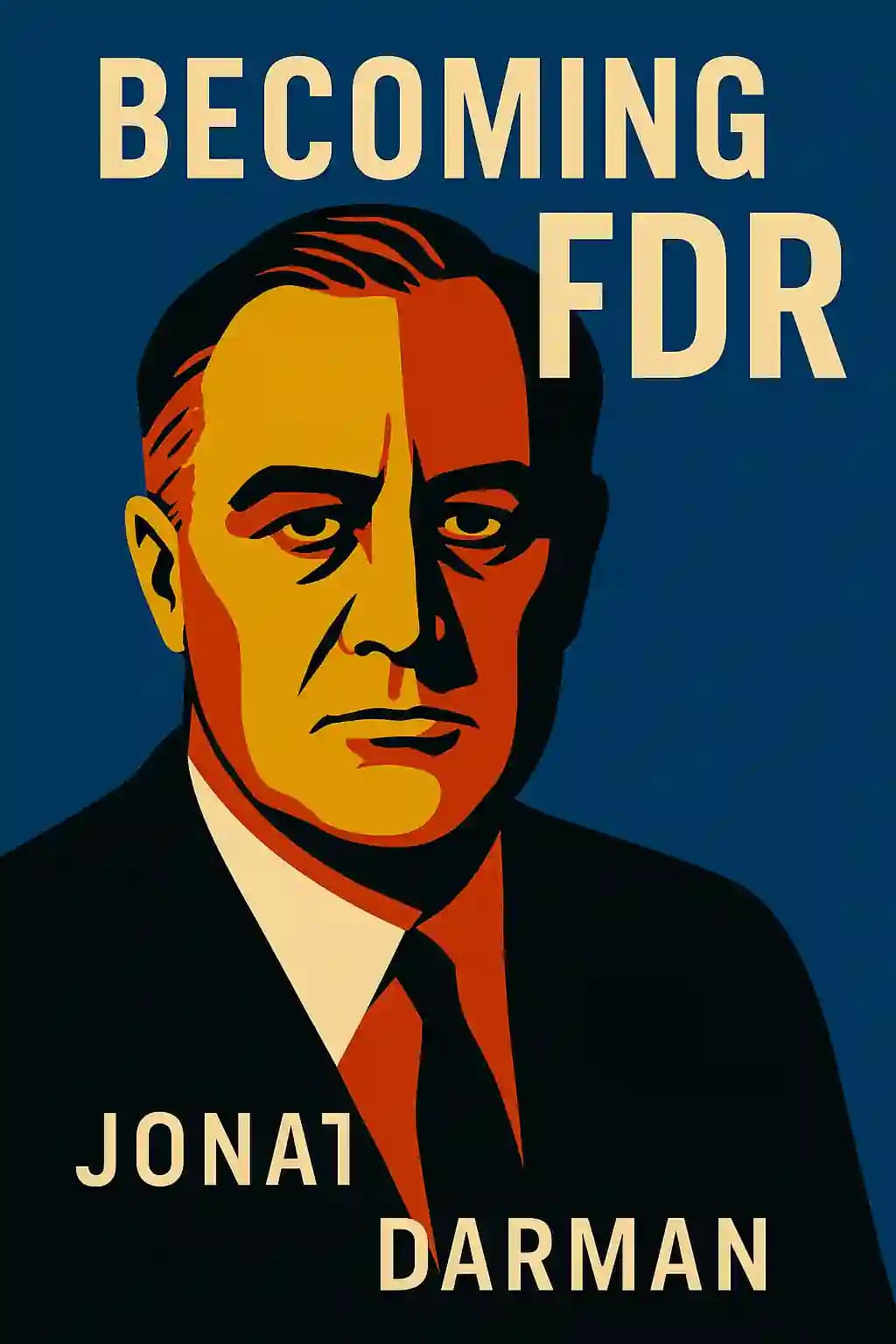
Franklin Roosevelt's name is synonymous with American resilience. His fireside chats guided a nation through economic collapse and world war. Yet before becoming the leader who proclaimed "the only thing we have to fear is fear itself," Roosevelt faced his own profound battle with fear when polio struck him at age 39. Jonathan Darman's "Becoming FDR" reveals how this privileged politician's encounter with paralysis forged the compassionate, determined leader who would revolutionize American governance.
The book has become required reading in political science programs nationwide and counts Barack Obama and Doris Kearns Goodwin among its admirers. Roosevelt's transformation resonates particularly today, as we navigate our own national crises. His journey from entitled aristocrat to empathetic president offers a masterclass in how personal suffering can cultivate extraordinary leadership-provided one has the courage to embrace transformation rather than denial.
2장
The Privileged Son: Roosevelt's Early Life and Character
Franklin Delano Roosevelt entered the world on January 30, 1882, at Springwood, the family estate in Hyde Park, New York. From his earliest days, he was treated as exceptional. His mother Sara, who nearly died giving birth to her only child, created a childhood where Franklin was regarded with what servants called "supreme wonderfulness." The household revolved around his happiness, with few explicit rules but one overwhelming expectation: Franklin must always be pleasant and agreeable.
This conditioning developed his remarkable emotional intelligence. He learned to carefully read others' reactions, ensuring he remained delightful in their eyes. His isolated existence-with no siblings near his age and few suitable playmates-made his parents' approval all the more crucial. His lifelong desire to please and be judged wonderful stemmed from these formative years in the Hudson Valley, where the Roosevelts had established themselves as aristocracy since the early 19th century.
Franklin's privileged upbringing continued at Groton, the exclusive boarding school where headmaster Endicott Peabody preached noblesse oblige-the responsibility of the privileged to help others. At Harvard, Franklin proved more successful socially than academically, becoming secretary of the Crimson newspaper while earning unremarkable grades. His ambition was clear: he would follow the path of his fifth cousin Theodore Roosevelt, whom he deliberately emulated in manner and career trajectory.
By his early thirties, Franklin had methodically checked off the first steps of this path: service in the New York legislature, followed by appointment as Assistant Secretary of the Navy under President Wilson. He had married his distant cousin Eleanor, a shy but intelligent young woman whose own childhood had been marked by profound loss and abandonment. Their marriage produced six children, though one died in infancy, and Franklin proved more playful than present as a father, leaving the disciplinary aspects of parenting to Eleanor and his mother Sara.
Franklin's pre-polio personality combined charm with a certain shallowness. Frances Perkins, who would later serve in his cabinet, observed that he "had a streak of vanity and insincerity" and "didn't really like people very much." His political positions often seemed calculated rather than principled. When nominated as the Democratic vice-presidential candidate in 1920, he campaigned energetically but superficially, offering pleasant platitudes about "progress" without deeply considering what progress meant.
3장
The Crisis: Polio Strikes at Campobello
The trajectory of Roosevelt's carefully plotted life changed forever in August 1921. After a perfect day of sailing, picnicking, and swimming with his children at their summer home on Campobello Island, Franklin went to bed complaining of back pain. By the next morning, he couldn't control his legs. Within days, he had lost all function below the waist, experiencing excruciating pain that felt like "someone was hammering nails into the bone."
The family's remote location on Campobello Island, without electricity or modern medical facilities, compounded the crisis. Initial diagnoses were incorrect, with an elderly doctor mistaking polio for a blood clot in the spinal cord and recommending massage therapy-which would later prove dangerously inappropriate for polio. Eleanor nursed Franklin round the clock, catching rare moments of sleep in a chair at his bedside.
When specialists finally arrived and confirmed infantile paralysis (polio), the Roosevelts faced a devastating reality. At 39, Franklin-once athletic and vigorous-would likely never walk independently again. For a man whose political future depended on projecting strength and vitality, the diagnosis threatened everything he had worked toward.
The Roosevelt family and their inner circle immediately formed what biographer Hugh Gallagher called a "conspiracy of silence" around Franklin's condition. When he was transported from Campobello, reporters were directed to the main dock while Franklin was smuggled to another landing and lifted through a train window. Press releases mentioned only that he was "seriously ill" or had "caught a heavy cold," with no mention of paralysis.
This pattern of concealment would continue throughout Roosevelt's career. Though he never denied having had polio, he and his staff carefully managed public perceptions, avoiding photographs showing his wheelchair or braces, and creating the impression that his recovery was more complete than it actually was.
4장
Transformation Through Suffering: The Rehabilitation Years
The years following Roosevelt's diagnosis revealed a depth of character previously untested. His uncle Frederic Delano advised him that while doctors could help, "the constructive work of getting well depends largely on your own character... Marvelous cures have been effected by men I know, in consumption, paralysis, etc. by the will and determination of the patient."
Franklin embraced this philosophy, throwing himself into rehabilitation with extraordinary discipline. Though doctors warned his family that recovery would take years rather than months, Franklin maintained remarkable optimism. He worked tirelessly at physical therapy, attempting to strengthen his remaining functional muscles while adapting to life with paralysis.
His political advisor Louis Howe, a rumpled, chain-smoking newspaperman who had attached his career to Roosevelt's, abandoned his own plans to remain with Franklin during recovery. When Sara Roosevelt expressed belief that her son's political career was finished, Louis boldly told her: "I expect him to be president of the United States." When he shared this vision with Franklin, outlining a long path of recovery with the presidency as the ultimate goal, Franklin simply asked, "Well, when do we begin?"
The rehabilitation period forced Roosevelt into an unfamiliar state: stillness. For perhaps the first time in his life, he had nothing to do but think. As Louis later observed, Franklin "began to see the other fellow's point of view... Lying there, he grew bigger by the day." This enforced reflection developed a depth of character and empathy previously absent.
Swimming became Franklin's revelation. In water, he discovered weightless freedom that contrasted sharply with his earthbound limitations. "The water put me where I am," he declared. "The water has to bring me back!" This duality-working toward future recovery while embracing present possibilities-became his guiding philosophy, what he called "the hope of glory and the means of grace."
5장
Warm Springs: Finding Purpose Through Helping Others
In 1924, Franklin discovered the warm mineral waters of Meriwether Springs in rural Georgia, a discovery that would transform both his life and the lives of countless polio survivors. Swimming in the 88-degree mineral-rich waters produced noticeable improvement in his muscle function, particularly in his upper body strength and torso control. Convinced of the waters' therapeutic properties for polio patients, he meticulously documented his progress and consulted with medical experts to understand the scientific basis for his improvement.
In 1926, using nearly two-thirds of his personal fortune-approximately $195,000-he purchased the dilapidated resort and transformed it into the Warm Springs Foundation, a pioneering rehabilitation center for polio patients. This investment represented not just financial commitment but a profound shift in his life's purpose, moving from political ambition to humanitarian service.
At Warm Springs, Franklin applied his encyclopedic knowledge of polio treatment, focusing on practical action rather than theory. Swimming became the centerpiece of every patient's day, with carefully structured sessions incorporating specific exercises developed through trial and error. This proved transformative for patients who previously had limited access to pools due to mobility issues and social stigma. The buoyancy of water allowed them to move freely, often for the first time since their diagnosis.
He personally oversaw the resort's redesign, creating an environment that prioritized independence and dignity. Cottages were connected with wheelchair-accessible walkways-revolutionary for the 1920s-and local "push boys" were hired not just as assistants but as companions who helped integrate patients into the broader community. The dining hall was redesigned with special tables accommodating wheelchairs, and therapeutic equipment was modified based on patient feedback.
Most importantly, Franklin created an environment of hope and determination. Everything was oriented toward progress, with staff maintaining detailed records of each patient's improvements. They established a graduated system of mobility goals, from wheelchair to braces to canes to independent walking, celebrating each milestone along the way. The constant renovation and construction projects served as visible reminders that improvement was always possible, no matter how small.
For Fred Botts, who had been paralyzed since the 1916 epidemic, learning about Warm Springs from a newspaper article sparked immediate hope after "eight long years" in a wheelchair with minimal medical guidance or support. His experience reflected that of many patients who arrived feeling isolated and defeated, only to discover a vibrant community that understood their challenges intimately and celebrated their smallest victories. The social atmosphere was as therapeutic as the waters themselves, with patients forming lasting friendships and support networks.
Through Warm Springs, Franklin discovered a different kind of service than his previous political ambitions-"service when no one was watching, service for its own sake." Though the waters didn't restore his legs as he'd initially hoped, they awakened something perhaps more valuable: "awareness of other people's pain, and awareness of his own ability to ease it." This transformation would profoundly influence his later approach to public service and social policy, establishing a model of rehabilitation that emphasized dignity, community, and hope alongside medical treatment.
6장
Eleanor's Transformation: Finding Her Voice
While Franklin focused on his physical recovery, Eleanor Roosevelt underwent her own remarkable transformation. The shy, insecure woman who had once described herself as "just a wife and mother" discovered her own capabilities and voice during Franklin's illness.
The crisis had come at a particularly vulnerable time in their marriage. In 1918, Eleanor had discovered love letters revealing Franklin's affair with her social secretary, Lucy Mercer. Though Franklin ended the relationship when Eleanor offered divorce (recognizing that divorce would end his political ambitions), their marriage was fundamentally altered. They would remain partners in public life, but Eleanor made it clear their marriage would now be "publicly together but privately apart."
This new arrangement, combined with Franklin's disability, created space for Eleanor to develop independently. She joined the League of Women Voters, developed public speaking skills under Louis Howe's tutelage, and built a network of female friends and mentors including Nancy Cook, Marion Dickerman, and Esther Lape. Through these connections, she discovered the intellectual stimulation and female companionship reminiscent of her formative days at Allenswood school in England.
By 1928, Eleanor had become a formidable political force in her own right. She wrote for women's magazines, developed innovative strategies to reach female voters, and caused a national stir with a blunt Redbook article declaring women's suffrage a failure because women needed to organize independently with their own leaders who could "talk in terms of 'business' with the men leaders."
The gloomy portraits of Eleanor from earlier years gave way to images showing piercing eyes "touched by fire and hungry for life," reminiscent of her Uncle Theodore. She had discovered not just her voice but her purpose, advocating for labor rights, women's issues, and eventually civil rights with a passion that sometimes put her at odds with Franklin's more cautious political calculations.
7장
The Return to Politics: New York Governor
In 1928, Franklin Roosevelt confronted a crucial crossroads when New York Democrats, led by presidential hopeful Al Smith, intensified their pressure for him to run for governor. Smith, the first Catholic presidential nominee of a major party, strategically needed Roosevelt's Protestant, upper-class background to appeal to upstate voters and secure New York's vital electoral votes. Franklin's initial reluctance stemmed from his dedication to his rehabilitation at Warm Springs, Georgia, where he had established a therapeutic center and was making remarkable progress in his personal battle against polio's effects.
The political drama reached its peak at the Rochester Democratic convention. Franklin orchestrated an elaborate avoidance strategy, even arranging a countryside picnic with his family while Smith frantically attempted to contact him through multiple channels. Louis Howe, Roosevelt's trusted advisor, helped manage this delicate dance of availability and absence. When Eleanor finally reached Franklin with Smith's desperate plea, he carefully weighed his options, knowing that accepting would mean sacrificing his intensive rehabilitation schedule.
The subsequent campaign demanded unprecedented physical endurance and careful stage management. Roosevelt's team developed innovative techniques to mask his disability, including specially designed leg braces, strategic positioning of podiums, and carefully choreographed movements from car to stage. Sam Rosenman, a close aide, marveled at Franklin's extraordinary composure, noting that "He never got ruffled," even during potentially embarrassing moments when being carried to speaking platforms. His daughter Anna recalled a particularly challenging incident when her father had to be lowered onto a stage via fire escape in Albany. Despite his shirt being "drenched in sweat" from the physical strain, Roosevelt maintained his characteristic warm smile and engaging presence.
The election results proved historic. While Herbert Hoover achieved a decisive victory over Al Smith in the presidential race, Roosevelt secured the New York governorship by a narrow margin of 25,000 votes - a stunning political resurrection that immediately sparked discussions about higher office. During his post-election recuperation trip to Warm Springs, supporters already anticipated his future, greeting him with handmade signs declaring "ROOSEVELT IN 1932."
As governor, Roosevelt underwent a profound transformation in his political philosophy. His personal struggle with disability had deepened his empathy and understanding of human suffering. He developed a governing philosophy centered on the belief that government should actively help restore people's dignity by creating opportunities for meaningful work and contribution. His speaking style evolved from the somewhat artificial charm of his early career to a more authentic, empathetic approach. Frances Perkins, who would later serve in his cabinet, noted this evolution, observing that his pre-paralysis personality had shown "a streak of vanity and insincerity," but his battle with polio had instilled genuine humility - what she called "the first and greatest of the virtues." This transformation would prove crucial in shaping his future approach to the presidency and his response to the Great Depression.
8장
The Path to the Presidency: Overcoming Obstacles
Roosevelt's path to the 1932 Democratic nomination faced significant obstacles. His former mentor Al Smith, feeling abandoned and disrespected, had grown increasingly resentful and entered the race specifically to block Franklin's nomination. Media mogul William Randolph Hearst emerged as another powerful opponent, denouncing Franklin as an internationalist and "disciple of Woodrow Wilson" who would entangle America in European affairs.
Critics like Walter Lippmann dismissed Roosevelt as "a pleasant man who, without any important qualifications for the office, would very much like to be President." To counter this perception, Samuel Rosenman assembled the "Brains Trust" of academic advisers to add policy substance to the campaign.
The 1932 Democratic Convention in Chicago became a dramatic test of Roosevelt's political organization. Through three ballots, Franklin maintained a commanding lead but couldn't reach the two-thirds threshold required for nomination. The breakthrough came when William Randolph Hearst, influenced by Joseph Kennedy's early morning phone call, instructed the California delegation to switch their support from John Nance Garner to Roosevelt, finally securing the nomination.
Breaking tradition, Roosevelt flew to Chicago to accept his nomination in person rather than waiting weeks for formal notification. This bold move signaled that unlike Hoover, he would act swiftly, while also dispelling doubts about his physical capabilities. In his acceptance speech, he introduced his famous phrase: "I pledge you, I pledge myself to a new deal for the American people."
The general election campaign against Herbert Hoover unfolded against the backdrop of deepening economic crisis. When violence erupted in Washington after Hoover ordered troops to disperse World War I veterans demanding bonus payments, the contrast between Hoover's harsh response and Roosevelt's message of compassion became stark. By election day, Roosevelt won in a landslide, carrying all but six states.
9장
The Transformation Complete: FDR's Leadership Philosophy
On March 4, 1933, Franklin Roosevelt took the oath of office with his hand firmly pressed on the family Bible to support his weight. Despite the physical strain of standing, his voice remained unwavering as he pledged to serve "to the best of my ability" and delivered his historic inaugural address declaring that "the only thing we have to fear is fear itself." The symbolism of his physical stance - refusing a wheelchair or visible support - reflected the strength and resolve he aimed to project to a nation in crisis.
Within his first hundred days, Roosevelt fulfilled his promise of "action, and action now" by sending fifteen major pieces of legislation through Congress. These included the Emergency Banking Act, which restored public confidence in the banking system by implementing strict federal oversight and deposit insurance. The Tennessee Valley Authority brought electricity and economic development to one of the nation's poorest regions, while the Civilian Conservation Corps put 250,000 young men to work in its first three months, eventually employing over 3 million Americans in conservation projects.
The principles that guided Roosevelt's approach to the Depression had been forged during his seven-year journey of recovery from polio. From rehabilitation at Warm Springs, he learned that planning, patience, and timing were essential skills for meeting great challenges. His experience with water therapy taught him the importance of measuring incremental progress to maintain motivation - celebrating small victories like moving a muscle fraction by fraction. Most importantly, his own struggle with disability gave him profound empathy for Americans facing hardship, teaching him that recovery required both practical assistance and restoration of hope.
Frances Perkins, his Secretary of Labor and close confidante, observed that Roosevelt's remarkable ability to connect with millions of Americans through the radio as though sitting in their parlors came directly from "the horror of his illness." This hard-won empathy shaped landmark policies like the Works Progress Administration, which restored dignity through work rather than mere handouts. The WPA employed over 8.5 million Americans, building 650,000 miles of roads, 125,000 public buildings, and creating thousands of artworks that still grace public spaces today.
Though Roosevelt rarely spoke directly of his polio experience during his presidency, its influence permeated every aspect of his leadership style and policy approach. His first fireside chat during the banking crisis demonstrated his understanding that enforced inactivity without explanation breeds panic-something he'd learned lying helpless after his initial diagnosis. He explained complex banking issues in simple terms, just as his doctors had helped him understand his own condition, and provided clear steps forward, much like his own rehabilitation protocol. This combination of empathy, clear communication, and actionable plans became the hallmark of his presidential leadership.
10장
Legacy of Transformation: The Roosevelt Partnership
Perhaps the greatest legacy of Roosevelt's illness was the remarkable partnership he and Eleanor brought to the White House. Though their marriage remained unconventional-with Eleanor pursuing her own passions, particularly civil rights, while Franklin maintained close relationships with other women including his secretary Missy LeHand-they developed profound mutual respect.
Eleanor increasingly recognized Franklin's dedication to creating a more just world, writing to him: "Dearest honey, I want you to know that I feel this should be a happy day because you have done much for many people... Just go on thinking of others & not of yourself & I think an undreamed of future may lie ahead for the masses of people not only here but everywhere."
Roosevelt's polio made him a great leader but not a saint. His lifelong avoidance of unpleasant confrontations combined with his talent for deception. Congressional leaders often left meetings believing he agreed with them, only to discover later he had merely nodded to indicate he heard them, not that he concurred. By his later presidency, many in Washington considered him untrustworthy despite his charm.
Yet these deceptions proved essential to his success, particularly in navigating pre-World War II foreign policy. Though he recognized America would likely need to join the fight against the Axis powers, he understood the public's isolationist tendencies. Rather than directly challenging this sentiment, he accommodated it while gradually preparing the nation.
In November 1941, just weeks before Pearl Harbor would thrust America into war, Roosevelt visited Warm Springs for a delayed Thanksgiving celebration with patients and staff. In an unscripted speech, he spoke candidly about the looming conflict while expressing faith in America's future. Before departing, each patient received a warm handshake from their president, who had shown them through his own example that adversity could be transformed into extraordinary strength.
As patient George McLaurine had written, "Mr. Roosevelt came up from the blow of infantile paralysis to heights he might never have reached as an able-bodied man. That is the inspiration which feeds the spirit of Warm Springs." This transformation-from privileged aristocrat to empathetic leader who could "find hope in the darkness and how to share it with the world"-remains Roosevelt's most profound legacy.