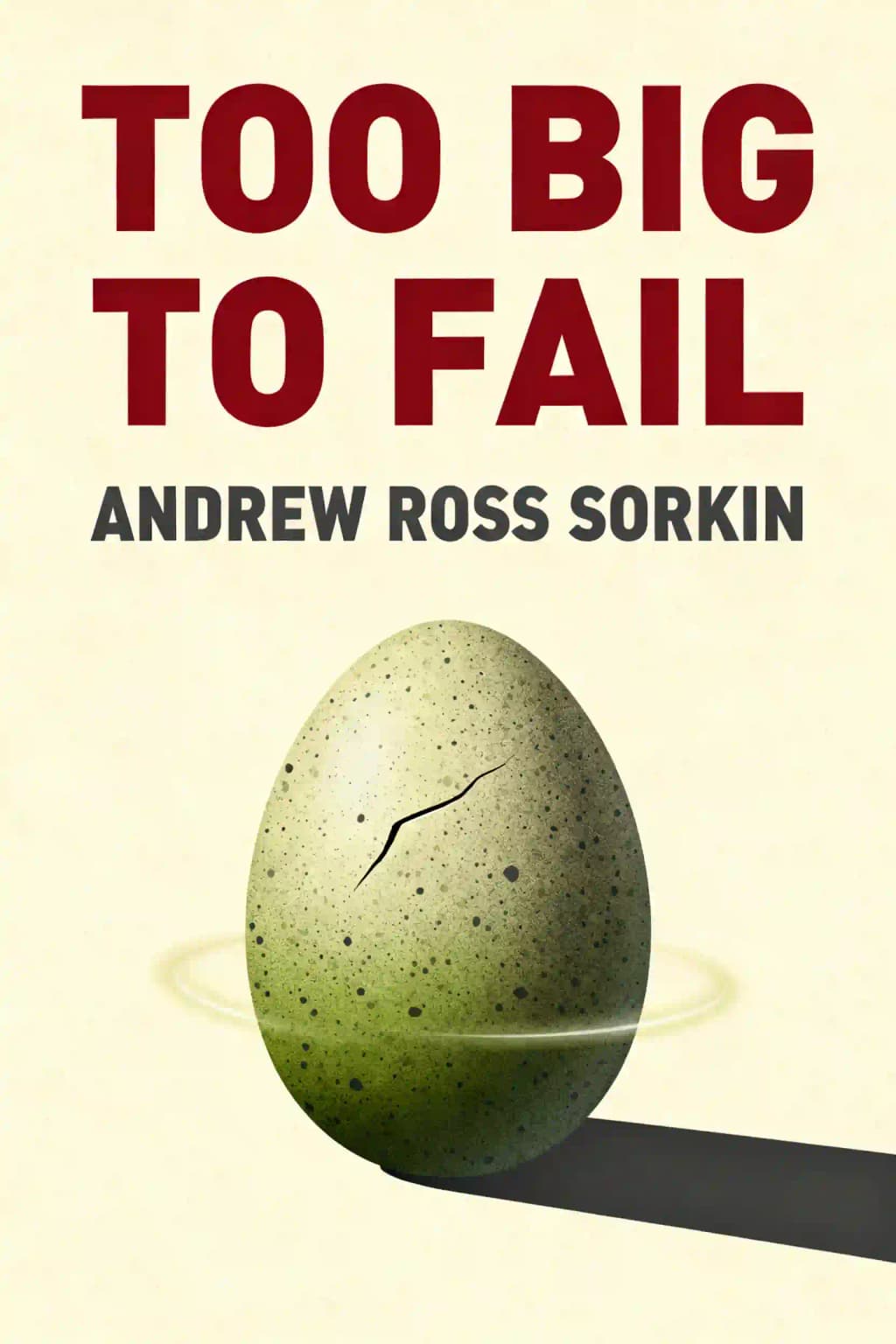
When Wall Street teetered on collapse, Sorkin's masterful thriller captured the 2008 financial crisis with unprecedented insider access. Tom Wolfe called it "the book of the crisis" - a narrative so gripping it makes "Liar's Poker look like a children's book."
Andrew Ross Sorkin, bestselling author of Too Big to Fail: How Wall Street and Washington Fought to Save the Financial System — and Themselves, is an award-winning financial journalist and authority on economic crises. As a New York Times columnist, CNBC’s Squawk Box co-anchor, and founder of the influential DealBook newsletter, Sorkin leverages decades of firsthand Wall Street reporting to dissect high-stakes financial collapses.
His nonfiction work blends investigative rigor with narrative-driven analysis of the 2008 crisis, informed by exclusive access to policymakers and banking executives during pivotal bailout negotiations.
A 2010 Gerald Loeb Award winner and Emmy-nominated producer for HBO’s Too Big to Fail adaptation, Sorkin extends his expertise into television as co-creator of Showtime’s finance-driven drama Billions. His incisive interviews with global leaders like Elon Musk and Hillary Clinton have earned him an Emmy for Outstanding Live Interview.
The book spent over six months on The New York Times bestseller list and remains a definitive account of modern financial history, recommended by policymakers and industry leaders worldwide.
Too Big to Fail chronicles the 2008 financial crisis, detailing the collapse of Lehman Brothers and the U.S. government’s frantic efforts to stabilize Wall Street. Through insider accounts of CEOs like Dick Fuld and regulators like Hank Paulson, it exposes unchecked greed, regulatory failures, and systemic risks in “too big to fail” institutions.
This book is essential for finance professionals, economics students, and general readers interested in real-time crisis management. Its blend of narrative drama and financial analysis offers insights into corporate hubris, government intervention, and the human decisions behind historical events.
Yes—it’s hailed as the definitive account of the 2008 crisis, praised for its meticulous research and access to key players. The book’s cinematic pacing and揭露 of boardroom dramas make complex financial concepts accessible, while its lessons on risk and regulation remain timely.
Sorkin attributes the crisis to reckless risk-taking by banks (e.g., subprime mortgages), regulatory complacency, and a culture of hubris. The collapse of Lehman Brothers and AIG’s near-failure exposed systemic vulnerabilities, forcing unprecedented government bailouts to avert global economic collapse.
The book dissects Lehman Brothers’ bankruptcy, AIG’s liquidity crunch, and the creation of the $700B TARP program. It highlights frantic negotiations, such as Bank of America’s aborted Lehman acquisition and Jamie Dimon’s role in stabilizing JPMorgan Chase.
Sorkin reconstructs closed-door meetings, phone calls, and personal conflicts among Wall Street CEOs and regulators. By spotlighting figures like Hank Paulson’s sleepless nights and Dick Fuld’s defiance, he reveals the emotional toll of high-stakes decision-making.
Some argue the book focuses too narrowly on elite perspectives, overlooking broader socioeconomic impacts. Critics also note its limited analysis of long-term regulatory solutions beyond crisis-era firefighting.
While The Big Short (Michael Lewis) explains crisis mechanics through outsider investors, Sorkin’s book offers an insider view of Wall Street and Washington power brokers. Both works complement each other for a full picture of the meltdown.
Key figures include Lehman CEO Dick Fuld, Treasury Secretary Hank Paulson, JPMorgan’s Jamie Dimon, and AIG’s Joseph Cassano. Their decisions and conflicts drive the narrative, illustrating how individual actions amplified systemic collapse.
The book implicitly advocates for stronger regulatory frameworks, reduced reliance on bailouts, and corporate accountability. However, it emphasizes that human behavior and political inertia remain persistent challenges.
Its lessons on “too big to fail” institutions resonate amid modern debates about banking consolidation, cryptocurrency risks, and AI-driven market disruptions. The book serves as a cautionary tale for policymakers and investors navigating complex financial systems.
저자의 목소리로 책을 느껴보세요
지식을 흥미롭고 예시가 풍부한 인사이트로 전환
핵심 아이디어를 빠르게 캡처하여 신속하게 학습
재미있고 매력적인 방식으로 책을 즐기세요
Every day is a battle. You have to kill the enemy.
That makes me want to vomit!
We're gonna get killed on this, aren't we?
He's twelve years old!
Eat shit and die!
Too big to fail의 핵심 아이디어를 이해하기 쉬운 포인트로 분해하여 혁신적인 팀이 어떻게 창조하고, 협력하고, 성장하는지 이해합니다.
Too big to fail을 빠른 기억 단서로 압축하여 솔직함, 팀워크, 창의적 회복력의 핵심 원칙을 강조합니다.

생생한 스토리텔링을 통해 Too big to fail을 경험하고, 혁신 교훈을 기억에 남고 적용할 수 있는 순간으로 바꿉니다.
무엇이든 물어보고, 목소리를 선택하고, 진정으로 공감되는 인사이트를 함께 만들어보세요.

샌프란시스코에서 컬럼비아 대학교 동문들이 만들었습니다
"Instead of endless scrolling, I just hit play on BeFreed. It saves me so much time."
"I never knew where to start with nonfiction—BeFreed’s book lists turned into podcasts gave me a clear path."
"Perfect balance between learning and entertainment. Finished ‘Thinking, Fast and Slow’ on my commute this week."
"Crazy how much I learned while walking the dog. BeFreed = small habits → big gains."
"Reading used to feel like a chore. Now it’s just part of my lifestyle."
"Feels effortless compared to reading. I’ve finished 6 books this month already."
"BeFreed turned my guilty doomscrolling into something that feels productive and inspiring."
"BeFreed turned my commute into learning time. 20-min podcasts are perfect for finishing books I never had time for."
"BeFreed replaced my podcast queue. Imagine Spotify for books — that’s it. 🙌"
"It is great for me to learn something from the book without reading it."
"The themed book list podcasts help me connect ideas across authors—like a guided audio journey."
"Makes me feel smarter every time before going to work"
샌프란시스코에서 컬럼비아 대학교 동문들이 만들었습니다

Too big to fail 요약을 무료 PDF 또는 EPUB으로 받으세요. 인쇄하거나 오프라인에서 언제든 읽을 수 있습니다.
"You are about to experience the most unbelievable week in America ever," Jamie Dimon warned his JP Morgan Chase team one autumn morning in 2008. Within days, century-old institutions would vanish, the government would seize control of the world's largest insurance company, and the entire financial system would teeter on collapse. This wasn't just another market correction-it was financial Armageddon. The interconnected house of cards built over decades through deregulation, excessive leverage, and financial innovation had finally begun to collapse, threatening not just Wall Street bonuses but the entire global economy. What began as a subprime mortgage crisis had metastasized into something far more dangerous, exposing how thoroughly intertwined our financial institutions had become. When one domino fell, it threatened to take down the entire system.
