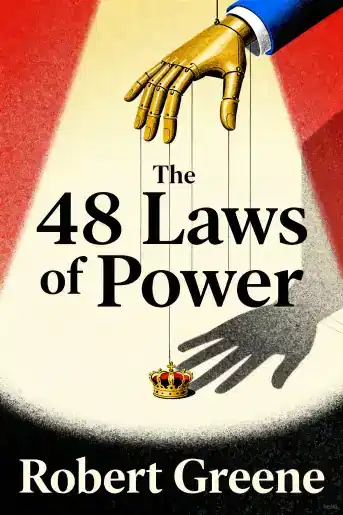
Overview of The 48 laws of power
Discover the Machiavellian playbook that's shaped boardrooms, politics, and pop culture. "The 48 Laws of Power" - endorsed by Ryan Holiday and studied by celebrities worldwide - reveals timeless strategies for dominance that are as controversial as they are effective. Your guide to mastering life's power games.
- Never outshine superiors to secure favor and avoid insecurity triggers.
- Cultivate loyal allies from former enemies rather than trusting friends.
- Mask true goals with decoy objectives to control negotiations.
- Protect reputation fiercely—perception shapes power more than reality.
- Master scarcity tactics to become indispensable in professional ecosystems.
- Deploy selective honesty as a Trojan horse for long-term manipulation.
- Let rivals exhaust resources while you conserve strategic energy.
- Mirror opponents' tactics to destabilize their psychological advantage.
- Frame brutal power grabs as necessary societal improvements.
- Engineer controlled crises to justify sweeping authority expansion.
- Alternate unpredictability patterns to keep adversaries perpetually off-balance.
- Neutralize enemies completely—half-measures breed vengeful comebacks.
About the Author of The 48 laws of power
Robert Greene is the bestselling author of The 48 Laws of Power and a renowned expert on strategy, power dynamics, and human behavior. Born in Los Angeles in 1959, Greene studied classical studies at the University of Wisconsin–Madison, a foundation that informed his analytical approach to dissecting historical figures and timeless social tactics.
His works, including The Art of Seduction, The 33 Strategies of War, and Mastery, blend historical analysis with practical insights, establishing him as a leading voice in self-help and strategic thinking. Co-authored with rapper 50 Cent, The 50th Law further cemented his influence across diverse audiences, from entrepreneurs to cultural icons.
Greene’s books, translated into over 30 languages, distill lessons from military leaders, philosophers, and influential figures, offering readers tools for personal and professional dominance. The 48 Laws of Power alone has sold millions of copies worldwide and remains a staple in business and political circles, praised for its unflinching examination of manipulation and control. His work is frequently cited by celebrities, CEOs, and thought leaders, underscoring its enduring relevance in understanding ambition and human nature.
FAQs About The 48 laws of power
What is The 48 Laws of Power by Robert Greene about?
The 48 Laws of Power examines historical and psychological strategies for gaining and maintaining influence, derived from 3,000 years of case studies. The book outlines 48 principles—like “Never Outshine the Master” and “Crush Your Enemy Totally”—that teach readers to navigate power dynamics through deception, strategy, and social maneuvering.
Who should read The 48 Laws of Power?
This book suits professionals, leaders, and students of strategy seeking to understand power structures in business, politics, or social settings. Critics argue it promotes manipulation, but Greene frames it as a guide to recognizing power tactics used by others.
Is The 48 Laws of Power worth reading?
With over 1.2 million copies sold, it’s a seminal work on strategy, though polarizing. While some praise its historical insights, others criticize its amoral tone. Readers should approach it as a study of power dynamics, not a literal playbook.
What are the most famous laws from The 48 Laws of Power?
- Law 1: Never outshine the master (avoid threatening superiors)
- Law 15: Crush your enemy totally
- Law 29: Plan through the end (anticipate all outcomes)
How does The 48 Laws of Power apply to modern careers?
The laws advise strategic networking, avoiding overconfidence, and timing actions carefully. For example, Law 23 (Focus Your Efforts) emphasizes prioritizing high-impact tasks, while Law 35 (Master Timing) aligns with career pivots during industry shifts.
What are common criticisms of The 48 Laws of Power?
Critics argue the book glorifies manipulation and unethical behavior. Greene counters that it exposes how power operates, helping readers defend against exploitation. Some laws, like Law 2 (Distrust Friends, Use Enemies), are seen as overly cynical.
How does The 48 Laws of Power compare to Robert Greene’s other books?
Unlike The Art of Seduction (focused on interpersonal influence) or Mastery (skill development), this book emphasizes overt and covert power tactics. However, all Greene’s works share historical case studies and strategic frameworks.
What are key quotes from The 48 Laws of Power?
- “Never outshine the master”: Avoid threatening superiors
- “Isolate your victim”: Control environments to dominate
- “Plan to the end”: Anticipate every outcome
Why is The 48 Laws of Power still relevant in 2025?
Its principles adapt to modern contexts like corporate politics, social media influence, and leadership. For example, Law 48 (Be Unpredictable) aligns with countering AI-driven predictability in decision-making.
How can The 48 Laws of Power improve negotiation skills?
Laws like Law 6 (Court Attention) and Law 43 (Win Hearts and Minds) teach strategic communication and emotional appeal. These tactics help negotiators balance logic and persuasion.
Are there ethical ways to apply The 48 Laws of Power?
Greene suggests using the laws defensively—like Law 19 (Know Your Enemy)—to anticipate rivals’ moves. Ethical applications include strategic transparency (Law 46) and fostering loyalty without manipulation.
What books pair well with The 48 Laws of Power?
- The Prince by Machiavelli (classic power strategy)
- Influence by Robert Cialdini (psychology of persuasion)
- Atomic Habits by James Clear (complementing tactical discipline with incremental growth)
Feel the book through the author's voice
Turn knowledge into engaging, example-rich insights
Capture key ideas in a flash for fast learning
Enjoy the book in a fun and engaging way
Key Themes in The 48 laws of power
Quotes from The 48 laws of power
Pose as a friend, work as a spy.
So much depends on reputation—guard it with your life.
Win through your actions, never through argument.
Get others to do the work for you, but always take the credit.
Characters in The 48 laws of power
Quick Summary Mode - Read or listen to The 48 laws of power Summary in 9 Minutes

Break down key ideas from The 48 laws of power into bite-sized takeaways to understand how innovative teams create, collaborate, and grow.

Flash Card Mode - Top 11 Insights from The 48 laws of power in a Nutshell

Distill The 48 laws of power into rapid-fire memory cues that highlight key principles of candor, teamwork, and creative resilience.

Fun Mode - The 48 laws of power Lessons Told Through 24-Min Stories

Experience The 48 laws of power through vivid storytelling that turns innovation lessons into moments you'll remember and apply.
Personalize Mode - Read or listen to The 48 laws of power Summary in 0 Minutes

Ask anything, pick the voice, and co-create insights that truly resonate with you.

From Columbia University alumni built in San Francisco
"Instead of endless scrolling, I just hit play on BeFreed. It saves me so much time."


"I never knew where to start with nonfiction—BeFreed’s book lists turned into podcasts gave me a clear path."


"Perfect balance between learning and entertainment. Finished ‘Thinking, Fast and Slow’ on my commute this week."
"Crazy how much I learned while walking the dog. BeFreed = small habits → big gains."
"Reading used to feel like a chore. Now it’s just part of my lifestyle."

"Feels effortless compared to reading. I’ve finished 6 books this month already."
"BeFreed turned my guilty doomscrolling into something that feels productive and inspiring."

"BeFreed turned my commute into learning time. 20-min podcasts are perfect for finishing books I never had time for."
"BeFreed replaced my podcast queue. Imagine Spotify for books — that’s it. 🙌"

"It is great for me to learn something from the book without reading it."
"The themed book list podcasts help me connect ideas across authors—like a guided audio journey."
"Makes me feel smarter every time before going to work"
From Columbia University alumni built in San Francisco
"Instead of endless scrolling, I just hit play on BeFreed. It saves me so much time."
"I never knew where to start with nonfiction—BeFreed’s book lists turned into podcasts gave me a clear path."
"Perfect balance between learning and entertainment. Finished ‘Thinking, Fast and Slow’ on my commute this week."
"Crazy how much I learned while walking the dog. BeFreed = small habits → big gains."
"Reading used to feel like a chore. Now it’s just part of my lifestyle."
"Feels effortless compared to reading. I’ve finished 6 books this month already."
"BeFreed turned my guilty doomscrolling into something that feels productive and inspiring."
"BeFreed turned my commute into learning time. 20-min podcasts are perfect for finishing books I never had time for."
"BeFreed replaced my podcast queue. Imagine Spotify for books — that’s it. 🙌"
"It is great for me to learn something from the book without reading it."
"The themed book list podcasts help me connect ideas across authors—like a guided audio journey."
"Makes me feel smarter every time before going to work"
"Instead of endless scrolling, I just hit play on BeFreed. It saves me so much time."
"I never knew where to start with nonfiction—BeFreed’s book lists turned into podcasts gave me a clear path."
"Perfect balance between learning and entertainment. Finished ‘Thinking, Fast and Slow’ on my commute this week."
"Crazy how much I learned while walking the dog. BeFreed = small habits → big gains."
"Reading used to feel like a chore. Now it’s just part of my lifestyle."
"Feels effortless compared to reading. I’ve finished 6 books this month already."
"BeFreed turned my guilty doomscrolling into something that feels productive and inspiring."
"BeFreed turned my commute into learning time. 20-min podcasts are perfect for finishing books I never had time for."
"BeFreed replaced my podcast queue. Imagine Spotify for books — that’s it. 🙌"
"It is great for me to learn something from the book without reading it."
"The themed book list podcasts help me connect ideas across authors—like a guided audio journey."
"Makes me feel smarter every time before going to work"
"Instead of endless scrolling, I just hit play on BeFreed. It saves me so much time."
"I never knew where to start with nonfiction—BeFreed’s book lists turned into podcasts gave me a clear path."
"Perfect balance between learning and entertainment. Finished ‘Thinking, Fast and Slow’ on my commute this week."
"Crazy how much I learned while walking the dog. BeFreed = small habits → big gains."
"Reading used to feel like a chore. Now it’s just part of my lifestyle."
"Feels effortless compared to reading. I’ve finished 6 books this month already."
"BeFreed turned my guilty doomscrolling into something that feels productive and inspiring."
"BeFreed turned my commute into learning time. 20-min podcasts are perfect for finishing books I never had time for."
"BeFreed replaced my podcast queue. Imagine Spotify for books — that’s it. 🙌"
"It is great for me to learn something from the book without reading it."
"The themed book list podcasts help me connect ideas across authors—like a guided audio journey."
"Makes me feel smarter every time before going to work"

Get the The 48 laws of power summary as a free PDF or EPUB. Print it or read offline anytime.