Overview of Livewired
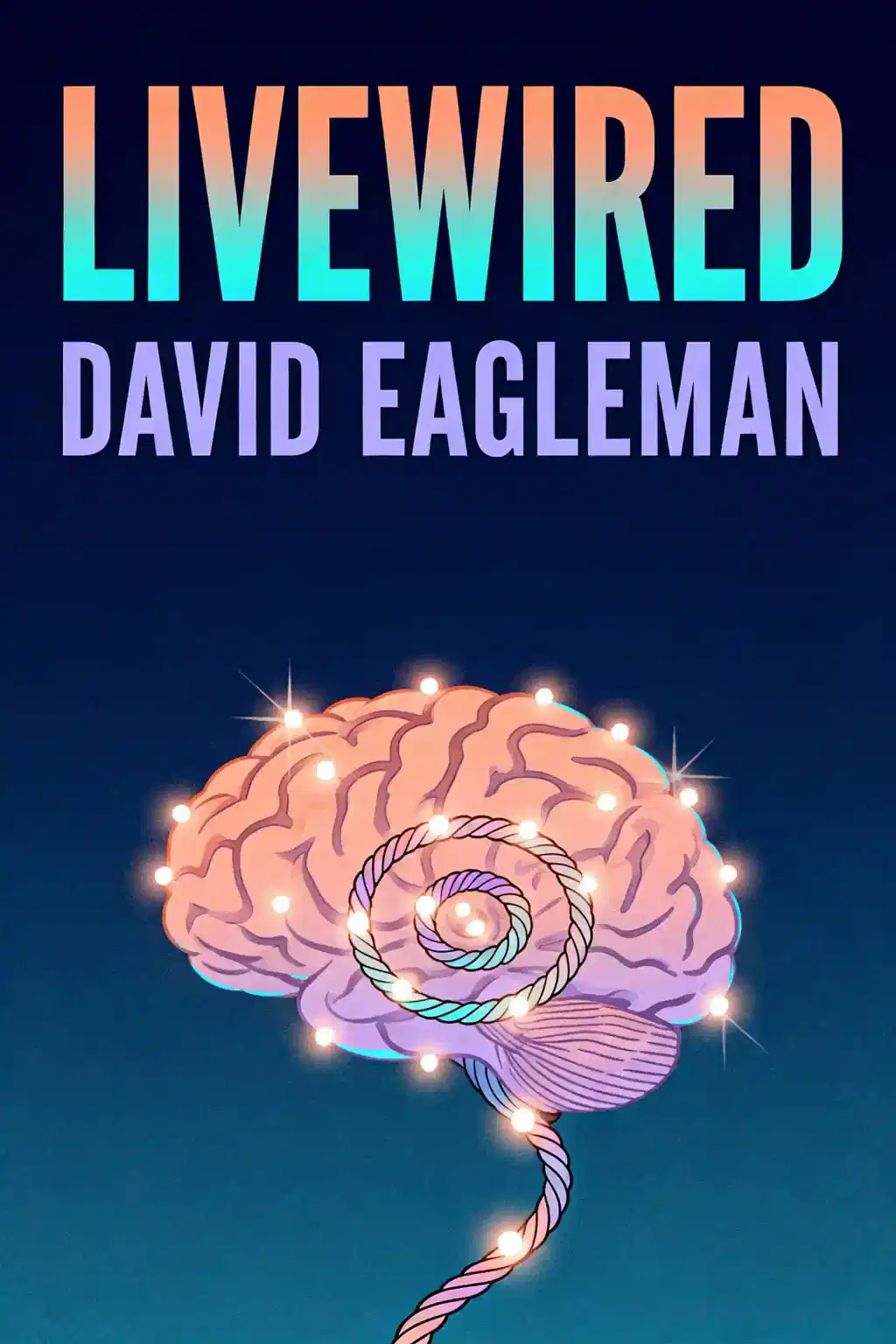
Dive into the remarkable plasticity of your brain with "Livewired," where neuroscientist David Eagleman reveals how our minds constantly rewire themselves. When a child with half his brain removed relearns speech, you'll question everything you thought you knew about human potential.
- The brain’s livewired adaptability lets it rewire itself based on sensory input and experience
- Neuroplasticity thrives on neural Darwinism: active neurons survive while unused connections fade
- Sensory substitution proves the brain can repurpose regions for new inputs like sound-to-touch
- Dreaming maintains visual cortex activity to prevent takeover by other senses during sleep
- Brains optimize via “survival of the busiest” – neural real estate goes to frequent tasks
- Early childhood brains are unfinished generalists but become specialized through environmental interaction
- Wearable neurotech leverages livewiring principles to create new sensory channels for hearing or balance
- Synesthesia reveals how cross-wired senses shape unique perception and cognitive processing
- Time perception warps under stress as the brain prioritizes memory consolidation over real-time accuracy
- Blindness triggers visual cortex repurposing for enhanced hearing and touch within weeks
- Neurolaw redefines criminal responsibility through brain plasticity’s role in behavior modification
- Your identity emerges from neural patterns constantly reshaped by culture, relationships, and sensory input
About the Author of Livewired
David Eagleman, neuroscientist and internationally bestselling author of Livewired, is a leading expert in brain plasticity and sensory perception. A Stanford University professor and Guggenheim Fellow, Eagleman explores how the brain dynamically rewires itself in this groundbreaking work, drawing from decades of research on time perception, synesthesia, and neural adaptation. His authority stems from 120+ academic publications, directorship of Stanford’s Center for Science and Law, and presentations in the Emmy-nominated PBS series The Brain.
Eagleman’s acclaimed titles like Incognito: The Secret Lives of the Brain and The Runaway Species (co-authored with Anthony Brandt) establish his knack for translating complex neuroscience into accessible insights. His literary fiction work Sum, translated into 32 languages and adapted into operas, showcases his multidisciplinary reach. As founder of Neosensory and host of the Inner Cosmos podcast, he bridges science and real-world applications.
Livewired reflects Eagleman’s signature blend of rigorous research and engaging storytelling, cementing his status as a pioneer in neuroplasticity. The book has been featured on NPR, TED Talks, and Brene Brown’s Unlocking Us, reaching global audiences as a New York Times bestseller.
FAQs About Livewired
What is Livewired by David Eagleman about?
Livewired explores the brain’s remarkable adaptability, arguing it’s not hardwired but dynamically reshaped by experience. David Eagleman details how neural circuits reorganize through sensory substitution, dreaming, and neurotech, offering insights into synesthesia, memory, and wearable devices that augment human senses. The book merges decades of neuroscience research with bold hypotheses, such as why dreaming evolved alongside Earth’s day-night cycle.
Who should read Livewired by David Eagleman?
This book suits neuroscience enthusiasts, educators, technologists, and anyone curious about brain plasticity. It’s particularly relevant for professionals in AI, healthcare, or education seeking to understand neuroplasticity’s applications. Readers interested in accessible yet deep scientific narratives will appreciate Eagleman’s blend of research and storytelling.
Is Livewired by David Eagleman worth reading?
Yes—Livewired is praised for making complex neuroscience accessible, blending cutting-edge research with real-world examples. Critics highlight its relevance to neurotech innovation and its engaging exploration of how brains constantly remodel themselves. It’s ideal for readers seeking actionable insights into adaptability and human potential.
What are the main concepts in Livewired?
Key ideas include:
- Brain plasticity: Neurons rewire based on experience.
- Sensory substitution: Devices like Neosensory’s wristbands convert sound into tactile signals.
- Dreaming’s purpose: A hypothesis linking REM sleep to combating sensory deprivation.
- Livewiring vs. hardwiring: Brains adapt dynamically, unlike static computers.
What is “brain livewiring” according to Livewired?
Livewiring refers to the brain’s ability to reconfigure itself in real-time, optimizing function through interaction with the environment. Eagleman contrasts this with traditional “hardware” or “software” metaphors, emphasizing biological adaptability that enables learning, recovery from injury, and sensory augmentation.
How does Livewired explain the brain’s adaptability?
Eagleman uses a Darwinian framework: neurons compete for resources, with active connections strengthening and unused ones pruning. Examples include blindness sharpening hearing and cochlear implants retraining auditory processing. This “neural Darwinism” underpins lifelong learning.
What role does dreaming play in Livewired’s thesis?
Eagleman proposes dreaming evolved to simulate sensory input during prolonged darkness, preventing neural atrophy. This nightly “defragmentation” maintains brain flexibility, ensuring readiness for diverse daytime stimuli.
Can the brain adapt to entirely new senses, per Livewired?
Yes—Eagleman’s work with Neosensory demonstrates devices can translate novel data (e.g., stock market trends) into tactile or visual signals the brain learns to interpret. This “sensory addition” reveals livewiring’s potential to expand human perception.
What are key takeaways from Livewired?
- Lifelong adaptability: Brains remodel at any age.
- Environment shapes identity: “There is no you without the external.”
- Neurotech frontier: Wearables could unlock new sensory dimensions.
What are notable quotes from Livewired?
- “The brain is an organ that converts sparks in the dark into the euphonious picture show of your world”: Highlights perception as an active construction.
- “Thanks to livewiring, each of us is the world”: Emphasizes how environments mold cognition.
How does Livewired differ from other neuroscience books?
Eagleman focuses on practical implications—like neurotech—rather than abstract theory. His accessible style contrasts with academic texts, using anecdotes (e.g., synesthetes tasting words) to illustrate complex concepts.
Are there criticisms of Livewired?
Some argue Eagleman’s speculative ideas (e.g., dreaming’s evolutionary role) lack conclusive evidence. However, most praise the book for bridging neuroscience and everyday life, offering a visionary yet grounded perspective.
How is Livewired relevant to understanding AI development?
Eagleman’s “liveware” concept challenges AI’s static algorithms, arguing future systems should emulate neural adaptability. This parallels debates in AI ethics and neuromorphic computing.
Feel the book through the author's voice
Turn knowledge into engaging, example-rich insights
Capture key ideas in a flash for fast learning
Enjoy the book in a fun and engaging way
Key Themes in Livewired
Quotes from Livewired
Brains aren't fully pre-programmed but shape themselves through interaction with the world.
Our surroundings matter as much as our genetics.
Brains never reach an endpoint-they continue remodeling throughout life.
The brain operates as a dynamic, flowing system.
The brain sacrifices initial completeness for unprecedented adaptability.
Characters in Livewired
Quick Summary Mode - Read or listen to Livewired Summary in 8 Minutes

Break down key ideas from Livewired into bite-sized takeaways to understand how innovative teams create, collaborate, and grow.

Flash Card Mode - Top 7 Insights from Livewired in a Nutshell

Distill Livewired into rapid-fire memory cues that highlight key principles of candor, teamwork, and creative resilience.

Fun Mode - Livewired Lessons Told Through 23-Min Stories

Experience Livewired through vivid storytelling that turns innovation lessons into moments you'll remember and apply.
Personalize Mode - Read or listen to Livewired Summary in 0 Minutes

Ask anything, pick the voice, and co-create insights that truly resonate with you.

From Columbia University alumni built in San Francisco
"Instead of endless scrolling, I just hit play on BeFreed. It saves me so much time."


"I never knew where to start with nonfiction—BeFreed’s book lists turned into podcasts gave me a clear path."


"Perfect balance between learning and entertainment. Finished ‘Thinking, Fast and Slow’ on my commute this week."
"Crazy how much I learned while walking the dog. BeFreed = small habits → big gains."
"Reading used to feel like a chore. Now it’s just part of my lifestyle."

"Feels effortless compared to reading. I’ve finished 6 books this month already."
"BeFreed turned my guilty doomscrolling into something that feels productive and inspiring."

"BeFreed turned my commute into learning time. 20-min podcasts are perfect for finishing books I never had time for."
"BeFreed replaced my podcast queue. Imagine Spotify for books — that’s it. 🙌"

"It is great for me to learn something from the book without reading it."
"The themed book list podcasts help me connect ideas across authors—like a guided audio journey."
"Makes me feel smarter every time before going to work"
From Columbia University alumni built in San Francisco
"Instead of endless scrolling, I just hit play on BeFreed. It saves me so much time."
"I never knew where to start with nonfiction—BeFreed’s book lists turned into podcasts gave me a clear path."
"Perfect balance between learning and entertainment. Finished ‘Thinking, Fast and Slow’ on my commute this week."
"Crazy how much I learned while walking the dog. BeFreed = small habits → big gains."
"Reading used to feel like a chore. Now it’s just part of my lifestyle."
"Feels effortless compared to reading. I’ve finished 6 books this month already."
"BeFreed turned my guilty doomscrolling into something that feels productive and inspiring."
"BeFreed turned my commute into learning time. 20-min podcasts are perfect for finishing books I never had time for."
"BeFreed replaced my podcast queue. Imagine Spotify for books — that’s it. 🙌"
"It is great for me to learn something from the book without reading it."
"The themed book list podcasts help me connect ideas across authors—like a guided audio journey."
"Makes me feel smarter every time before going to work"
"Instead of endless scrolling, I just hit play on BeFreed. It saves me so much time."
"I never knew where to start with nonfiction—BeFreed’s book lists turned into podcasts gave me a clear path."
"Perfect balance between learning and entertainment. Finished ‘Thinking, Fast and Slow’ on my commute this week."
"Crazy how much I learned while walking the dog. BeFreed = small habits → big gains."
"Reading used to feel like a chore. Now it’s just part of my lifestyle."
"Feels effortless compared to reading. I’ve finished 6 books this month already."
"BeFreed turned my guilty doomscrolling into something that feels productive and inspiring."
"BeFreed turned my commute into learning time. 20-min podcasts are perfect for finishing books I never had time for."
"BeFreed replaced my podcast queue. Imagine Spotify for books — that’s it. 🙌"
"It is great for me to learn something from the book without reading it."
"The themed book list podcasts help me connect ideas across authors—like a guided audio journey."
"Makes me feel smarter every time before going to work"
"Instead of endless scrolling, I just hit play on BeFreed. It saves me so much time."
"I never knew where to start with nonfiction—BeFreed’s book lists turned into podcasts gave me a clear path."
"Perfect balance between learning and entertainment. Finished ‘Thinking, Fast and Slow’ on my commute this week."
"Crazy how much I learned while walking the dog. BeFreed = small habits → big gains."
"Reading used to feel like a chore. Now it’s just part of my lifestyle."
"Feels effortless compared to reading. I’ve finished 6 books this month already."
"BeFreed turned my guilty doomscrolling into something that feels productive and inspiring."
"BeFreed turned my commute into learning time. 20-min podcasts are perfect for finishing books I never had time for."
"BeFreed replaced my podcast queue. Imagine Spotify for books — that’s it. 🙌"
"It is great for me to learn something from the book without reading it."
"The themed book list podcasts help me connect ideas across authors—like a guided audio journey."
"Makes me feel smarter every time before going to work"

Get the Livewired summary as a free PDF or EPUB. Print it or read offline anytime.