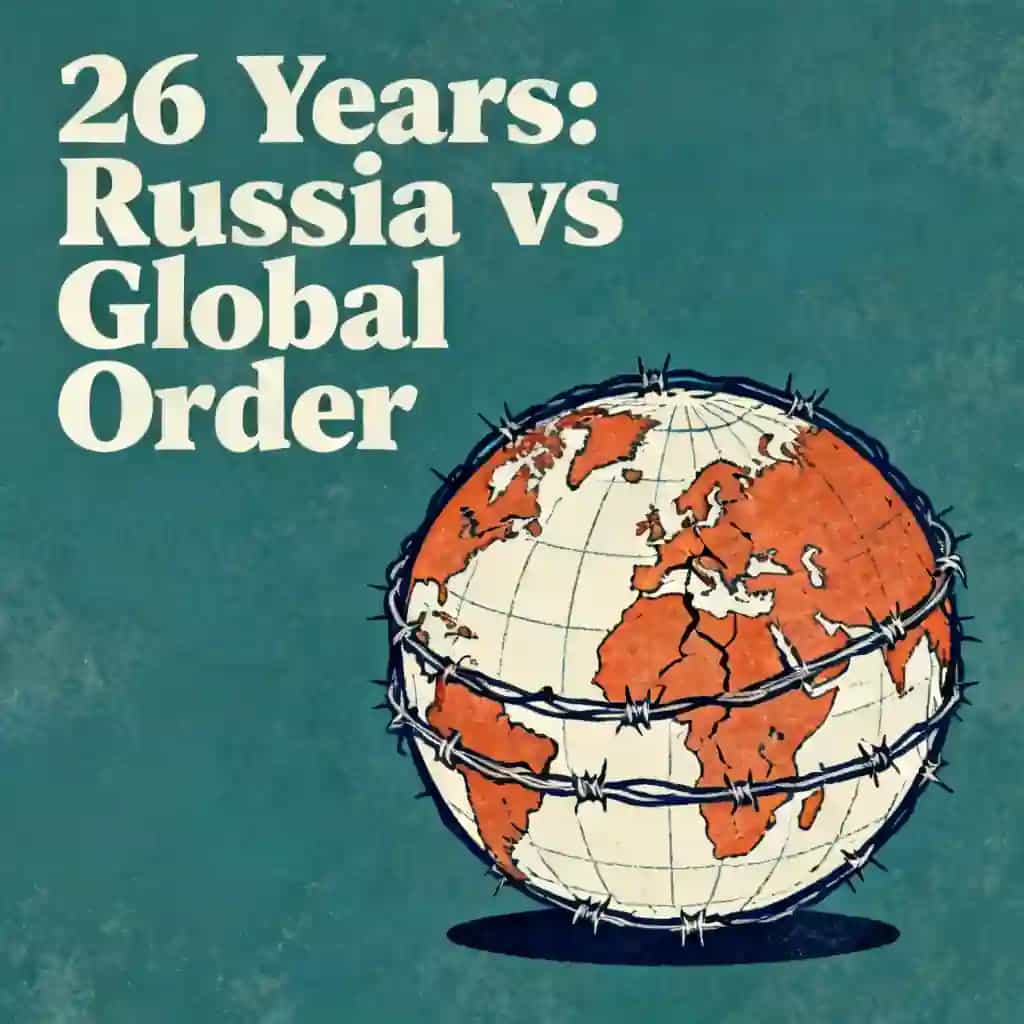
Overview of Putinism
Veteran historian Walter Laqueur dismantles Western misconceptions about Putin's Russia, revealing it's not a Cold War revival but something uniquely dangerous. How might understanding Russia's Orthodox roots and "manifest destiny" ideology prevent the next global conflict?
- Putinism blends Orthodox tradition, anti-Westernism, and imperial nostalgia to reshape Russian identity.
- Russia's post-Soviet trajectory prioritizes Eurasian manifest destiny over Western liberal democracy.
- NATO expansion and color revolutions fueled Putin's entrenched distrust of Western intentions.
- Crimea's annexation revealed Putin's strategy of using nationalism to consolidate domestic power.
- Russian exceptionalism frames geopolitical conflicts as civilizational struggles against Western decadence.
- Putinism revives Stalin-era statism while avoiding full Soviet-style ideological rigidity.
- Russia's energy wealth enabled assertive foreign policy without economic modernization.
- Traditional values campaigns mask Putinism's reliance on controlled opposition and media suppression.
- The "Russian Idea" trilogy—faith, empire, siege mentality—drives Putin's enduring popularity.
- Western sanctions strengthened Putin's narrative of Russia as besieged global underdog.
- Putinism exploits historical grievances to justify expansionism in former Soviet territories.
- Laqueur warns against dismissing Russia as Cold War relic amid renewed Great Power ambitions.
About the Author of Putinism
Walter Ze’ev Laqueur (1921–2018) was a renowned historian and political commentator whose book Putinism: Russia and Its Future with the West examines the ideological roots and global implications of Russia’s post-Soviet political trajectory. A leading authority on European and Russian history, Laqueur drew on decades of scholarly work, including his directorship of London’s Institute of Contemporary History and editorship of the Journal of Contemporary History. His expertise in Soviet-era geopolitics and terrorism studies—pioneered in works like A History of Zionism and The Last Days of Europe—informed his incisive analysis of Vladimir Putin’s consolidation of power.
Laqueur’s career spanned academia, journalism, and think-tank leadership, with faculty positions at Georgetown, Harvard, and Brandeis University. His 30+ books on topics from Cold War diplomacy to modern extremism established him as a preeminent voice in 20th-century political history. Putinism builds on his earlier explorations of authoritarianism, offering a stark assessment of Russia’s resurgence as a global disruptor. Translated into 15 languages, Laqueur’s works remain essential reading for understanding geopolitical shifts.
FAQs About Putinism
What is Putinism: Russia and Its Future with the West about?
Walter Laqueur’s Putinism analyzes Russia’s ideological shift under Vladimir Putin, emphasizing three pillars: Orthodox Church influence, Eurasian "manifest destiny," and fear of foreign threats. The book argues Russia’s post-Soviet policies reflect pre-1917 cultural roots rather than Soviet-style communism, warning against dismissive Cold War comparisons. Laqueur contends Western misreading of Russian motivations risks underestimating its geopolitical ambitions.
Who should read Putinism: Russia and Its Future with the West?
This book suits policymakers, historians, and readers interested in Russian-Western relations. It offers depth for those analyzing Putin’s leadership, ideological drivers of Russian foreign policy, or the cultural-historical context behind events like Ukraine’s annexation. Students of geopolitics will value Laqueur’s critique of Western assumptions about Russia’s democratic potential.
Is Putinism: Russia and Its Future with the West worth reading?
Yes, for its timely analysis of Russia’s resurgence as a global challenger. Laqueur’s decades-long expertise provides nuanced insights into Putin’s popularity and the cultural forces shaping anti-Western sentiment. The book’s historical grounding in pre-revolutionary traditions offers a fresh lens for understanding modern conflicts.
What are the key concepts of Putinism according to Walter Laqueur?
Laqueur identifies three pillars:
- Orthodox Church influence: Shapes moral and national identity.
- Eurasian destiny: Fuels expansionist narratives akin to 19th-century imperialism.
- Fear of foreign enemies: Justifies authoritarianism and militarization.
These elements, he argues, resonate more with 1904 Russia than 1954 Soviet policies.
How does Laqueur differentiate Putinism from Cold War-era communism?
Putinism rejects Marxist ideology but retains authoritarian governance. Unlike Soviet leaders, Putin leverages nationalism, traditionalism, and historical grievances rather than promoting global revolution. Laqueur notes Russia’s elite now romanticizes tsarist-era power, not Leninism.
What is Walter Laqueur’s view of Vladimir Putin’s leadership?
Laqueur portrays Putin as a pragmatic leader reflecting popular will, not a lone autocrat. Putinism thrives because it aligns with widespread Russian desires for stability, national pride, and resistance to Western liberalism. However, this symbiotic relationship risks aggressive foreign policies to maintain domestic legitimacy.
How does the book critique Western perceptions of Russia?
Laqueur warns that dismissing Russia as a declining power ignores its capacity to destabilize global order. He critiques assumptions that economic sanctions or democratic values will curb Kremlin ambitions, emphasizing Russia’s self-image as a besieged civilizational fortress.
What historical parallels does Putinism draw to explain Russia’s current trajectory?
The book links modern Russia to pre-1917 ideologies, particularly 19th-century pan-Slavism and anti-Western conservatism. Laqueur argues post-Soviet chaos revived older traditions of centralized authority and territorial ambition, making democratic reforms unlikely without cultural shifts.
What key quotes or phrases define the book’s arguments?
- “Russia has given up attempts to become part of the West” – Highlights cultural divergence.
- “Putinism is approved by the majority as long as it delivers stability” – Explains the leader-populace dynamic.
- “The victory of the Reds [Bolsheviks] was a disaster” – Reflects modern elite disdain for Soviet legacy.
How does Putinism address the Ukraine conflict?
Laqueur frames Ukraine as a case study of Russia’s revanchist strategy, driven by fears of NATO expansion and a belief in historical claims to Eurasian territories. He suggests Ukraine’s crisis stemmed from Western failure to grasp Russia’s non-negotiable red lines.
How does this book compare to other analyses of Putin’s Russia?
Unlike journalistic accounts focused on Kremlin intrigue, Putinism emphasizes deep cultural drivers. It complements works like The New Tsar by exploring ideology rather than personal biography. Laqueur’s focus on pre-Soviet roots offers a unique counterpoint to Cold War analogies.
What criticisms does Laqueur’s analysis face?
Some scholars argue Laqueur overstates cultural determinism, underestimating economic factors and Putin’s personal agency. Others note the book’s 2015 publication predates newer challenges like cyber warfare, though its ideological framework remains relevant.
Feel the book through the author's voice
Turn knowledge into engaging, example-rich insights
Capture key ideas in a flash for fast learning
Enjoy the book in a fun and engaging way
Key Themes in Putinism
Quotes from Putinism
Marxism-Leninism was 'a religion of hatred' with no scientific basis.
The Afghan war represented a 'bleeding wound' that Gorbachev resolved to heal.
The secret service had become 'the new nobility,' motivated by duty and patriotism.
The KGB indoctrinated them as Russia's elite—'the sword and shield'.
The church leadership was thoroughly infiltrated by state security.
Characters in Putinism
Quick Summary Mode - Read or listen to Putinism Summary in 11 Minutes

Break down key ideas from Putinism into bite-sized takeaways to understand how innovative teams create, collaborate, and grow.

Flash Card Mode - Top 10 Insights from Putinism in a Nutshell

Distill Putinism into rapid-fire memory cues that highlight key principles of candor, teamwork, and creative resilience.

Fun Mode - Putinism Lessons Told Through 25-Min Stories

Experience Putinism through vivid storytelling that turns innovation lessons into moments you'll remember and apply.
Personalize Mode - Read or listen to Putinism Summary in 0 Minutes

Ask anything, pick the voice, and co-create insights that truly resonate with you.

From Columbia University alumni built in San Francisco
"Instead of endless scrolling, I just hit play on BeFreed. It saves me so much time."


"I never knew where to start with nonfiction—BeFreed’s book lists turned into podcasts gave me a clear path."


"Perfect balance between learning and entertainment. Finished ‘Thinking, Fast and Slow’ on my commute this week."
"Crazy how much I learned while walking the dog. BeFreed = small habits → big gains."
"Reading used to feel like a chore. Now it’s just part of my lifestyle."

"Feels effortless compared to reading. I’ve finished 6 books this month already."
"BeFreed turned my guilty doomscrolling into something that feels productive and inspiring."

"BeFreed turned my commute into learning time. 20-min podcasts are perfect for finishing books I never had time for."
"BeFreed replaced my podcast queue. Imagine Spotify for books — that’s it. 🙌"

"It is great for me to learn something from the book without reading it."
"The themed book list podcasts help me connect ideas across authors—like a guided audio journey."
"Makes me feel smarter every time before going to work"
From Columbia University alumni built in San Francisco
"Instead of endless scrolling, I just hit play on BeFreed. It saves me so much time."
"I never knew where to start with nonfiction—BeFreed’s book lists turned into podcasts gave me a clear path."
"Perfect balance between learning and entertainment. Finished ‘Thinking, Fast and Slow’ on my commute this week."
"Crazy how much I learned while walking the dog. BeFreed = small habits → big gains."
"Reading used to feel like a chore. Now it’s just part of my lifestyle."
"Feels effortless compared to reading. I’ve finished 6 books this month already."
"BeFreed turned my guilty doomscrolling into something that feels productive and inspiring."
"BeFreed turned my commute into learning time. 20-min podcasts are perfect for finishing books I never had time for."
"BeFreed replaced my podcast queue. Imagine Spotify for books — that’s it. 🙌"
"It is great for me to learn something from the book without reading it."
"The themed book list podcasts help me connect ideas across authors—like a guided audio journey."
"Makes me feel smarter every time before going to work"
"Instead of endless scrolling, I just hit play on BeFreed. It saves me so much time."
"I never knew where to start with nonfiction—BeFreed’s book lists turned into podcasts gave me a clear path."
"Perfect balance between learning and entertainment. Finished ‘Thinking, Fast and Slow’ on my commute this week."
"Crazy how much I learned while walking the dog. BeFreed = small habits → big gains."
"Reading used to feel like a chore. Now it’s just part of my lifestyle."
"Feels effortless compared to reading. I’ve finished 6 books this month already."
"BeFreed turned my guilty doomscrolling into something that feels productive and inspiring."
"BeFreed turned my commute into learning time. 20-min podcasts are perfect for finishing books I never had time for."
"BeFreed replaced my podcast queue. Imagine Spotify for books — that’s it. 🙌"
"It is great for me to learn something from the book without reading it."
"The themed book list podcasts help me connect ideas across authors—like a guided audio journey."
"Makes me feel smarter every time before going to work"
"Instead of endless scrolling, I just hit play on BeFreed. It saves me so much time."
"I never knew where to start with nonfiction—BeFreed’s book lists turned into podcasts gave me a clear path."
"Perfect balance between learning and entertainment. Finished ‘Thinking, Fast and Slow’ on my commute this week."
"Crazy how much I learned while walking the dog. BeFreed = small habits → big gains."
"Reading used to feel like a chore. Now it’s just part of my lifestyle."
"Feels effortless compared to reading. I’ve finished 6 books this month already."
"BeFreed turned my guilty doomscrolling into something that feels productive and inspiring."
"BeFreed turned my commute into learning time. 20-min podcasts are perfect for finishing books I never had time for."
"BeFreed replaced my podcast queue. Imagine Spotify for books — that’s it. 🙌"
"It is great for me to learn something from the book without reading it."
"The themed book list podcasts help me connect ideas across authors—like a guided audio journey."
"Makes me feel smarter every time before going to work"

Get the Putinism summary as a free PDF or EPUB. Print it or read offline anytime.