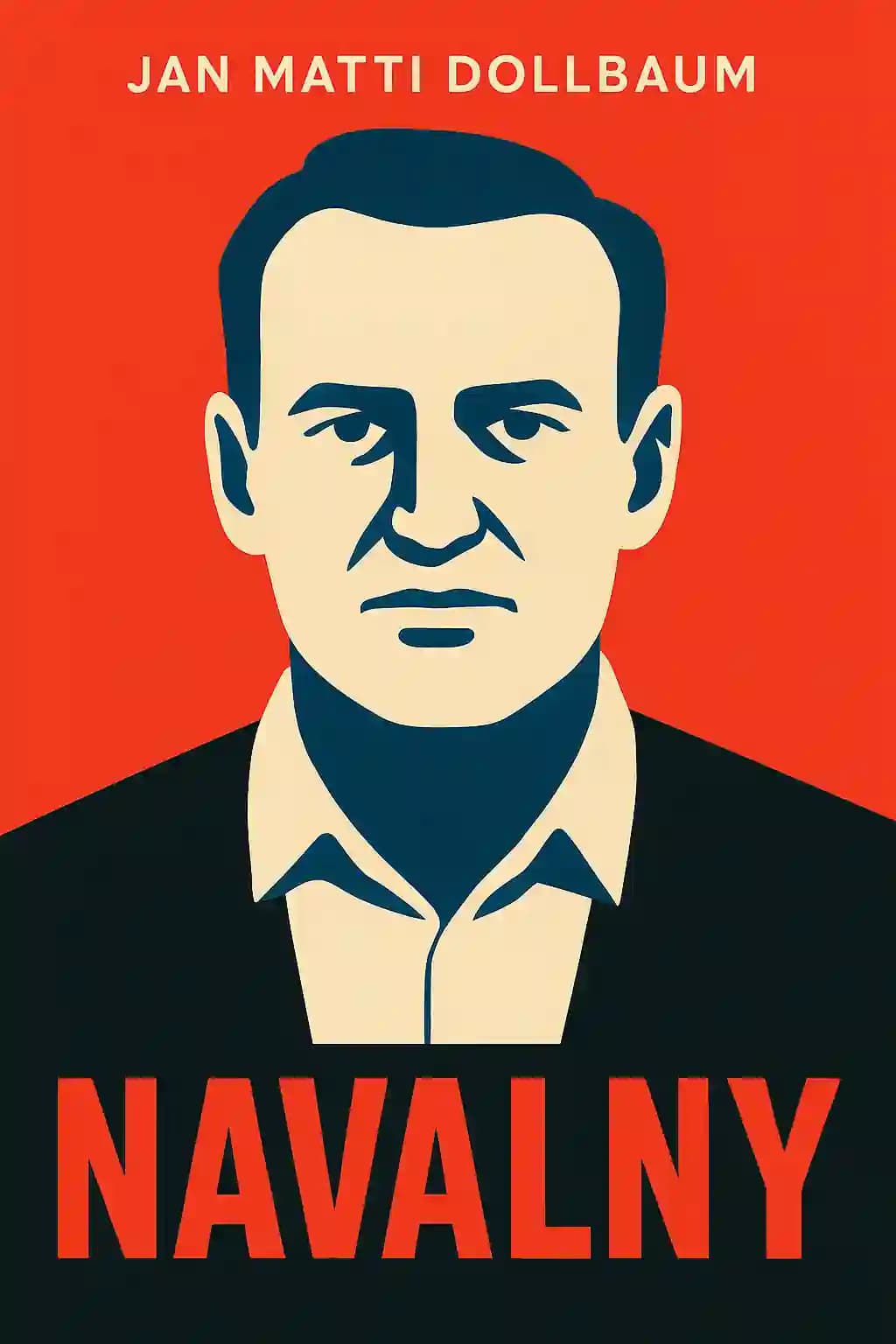
Inside Putin's Russia, one man dared challenge absolute power. Endorsed by Dr. Fiona Hill as "essential" reading, this riveting account reveals why Navalny - branded hero, traitor, and nationalist - became the Kremlin's worst nightmare and possibly Russia's democratic future.
Feel the book through the author's voice
Turn knowledge into engaging, example-rich insights
Capture key ideas in a flash for fast learning
Enjoy the book in a fun and engaging way
Break down key ideas from Navalny into bite-sized takeaways to understand how innovative teams create, collaborate, and grow.
Distill Navalny into rapid-fire memory cues that highlight Pixar’s principles of candor, teamwork, and creative resilience.

Experience Navalny through vivid storytelling that turns Pixar’s innovation lessons into moments you’ll remember and apply.
Ask anything, pick the voice, and co-create insights that truly resonate with you.

From Columbia University alumni built in San Francisco

Get the Navalny summary as a free PDF or EPUB. Print it or read offline anytime.
On August 20, 2020, a commercial flight made an emergency landing in Omsk, Siberia. Onboard, a passenger was screaming in agony, writhing in pain from what would later be confirmed as Novichok poisoning-the same military-grade nerve agent used in the Skripal attack. That passenger was Alexei Navalny, and his survival would become one of the most extraordinary stories of political defiance in modern history. Five months later, fully aware that prison awaited him, Navalny boarded a plane back to Moscow. Why would anyone willingly return to a country that had just tried to kill them? The answer reveals not just one man's courage, but the anatomy of how a single individual can challenge an entire authoritarian system. From a lawyer's blog to investigations viewed by over 100 million people, from courtroom battles to organizing nationwide protests, Navalny has become something the Kremlin never anticipated: a threat it cannot ignore and cannot eliminate without making him more powerful. Nothing about Navalny's early life suggested he would become Russia's most prominent dissident. Born in 1976 to a Soviet Army officer and an accountant, he grew up in a family that embodied Russia's contradictions-his father served the military while his grandmother "passionately hated Lenin," and the family secretly listened to Voice of America broadcasts. When the Soviet Union collapsed in 1991, fifteen-year-old Navalny mainly remembered the endless queues and the hypocrisy of communist officials who secretly envied Western lifestyles. Unlike the romantic revolutionaries of previous generations, Navalny came of age during Russia's chaotic 1990s transition to capitalism, witnessing both the promise of freedom and the devastating social costs of "shock therapy" reforms. By his late twenties, he was earning $4,000-5,000 monthly as a lawyer and investor, firmly part of Russia's emerging middle class. He could have continued this comfortable existence, but something shifted. Perhaps it was witnessing the 2003 parliamentary elections, where liberal parties were systematically excluded. Perhaps it was seeing corruption devour Russia's oil wealth while ordinary citizens struggled. What's certain is that Navalny developed a directness rare in Russian political culture-"what he says is what he thinks"-a quality that would become both his greatest strength and his most dangerous liability.