Overview of I can multiply.
In a world obsessed with certainty, Alan Watts' 1951 classic reveals why embracing insecurity leads to authentic peace. Endorsed by Deepak Chopra as "the perfect guide for a course correction in life," this Eastern-influenced masterpiece asks: what if anxiety stems from chasing tomorrow's security?
- Embracing uncertainty as the path to true inner peace
- The illusion of ego: How selfhood creates suffering
- Animal self vs thinking self: Key to presence in Watts’ philosophy
- Non-duality in The Wisdom of Insecurity: You are the universe
- Why resisting change amplifies life’s inherent insecurity
- Alan Watts’ critique of Western religion’s separation myth
- Organism-environment: Inseparable reality beyond the skin-encapsulated ego
- Letting go of control to flow with life’s impermanence
- How goal-oriented living robs joy of the present moment
- The Great Security Hunt paradox: Control breeds chaos
- Why seeking security increases anxiety according to Alan Watts
- Why true spirituality embraces science and mysticism equally
About the Author of I can multiply.
Alan Wilson Watts (1915–1973), the British-American philosopher and bestselling author of The Wisdom of Insecurity, was a pioneering interpreter of Eastern spirituality for Western audiences. Known for blending Zen Buddhism, Taoism, and Hindu philosophy into accessible prose, Watts’ work explores themes of existential anxiety, the illusion of control, and embracing life’s inherent uncertainty—ideas central to this 1951 philosophical classic. A former Anglican priest turned scholar, he co-founded the American Academy of Asian Studies and wrote over 25 influential books, including The Way of Zen and Psychotherapy East and West, which remain foundational texts in comparative religion.
Watts’ lectures at UC Berkeley and KPFA radio broadcasts catalyzed the 1960s counterculture movement, with his posthumous YouTube talks surpassing 500 million views. The Wisdom of Insecurity has been translated into 18 languages and endorsed by Deepak Chopra, who contributed to its 2011 reissue. His exploration of consciousness and non-duality continues to shape modern mindfulness practices, with The Way of Zen consistently ranking among history’s top 20 philosophy bestsellers.
FAQs About I can multiply.
What is The Wisdom of Insecurity by Alan Watts about?
The Wisdom of Insecurity explores the paradox that pursuing security intensifies anxiety, arguing true peace comes from embracing life’s impermanence. Alan Watts blends Eastern philosophies like Zen Buddhism with Western thought, challenging readers to abandon future-focused control and live fully in the present. Key themes include rejecting materialism, accepting change, and finding freedom in uncertainty.
Who should read The Wisdom of Insecurity?
This book suits seekers of existential clarity, fans of Zen philosophy, and those grappling with modern anxiety. Watts’ insights resonate with readers disillusioned by materialism or rigid belief systems, offering a framework to confront instability mindfully. It’s particularly relevant for individuals navigating career shifts, personal loss, or spiritual exploration.
What are the main ideas in The Wisdom of Insecurity?
- Embracing uncertainty: Resistance to life’s flux causes suffering; acceptance liberates.
- The illusion of control: Security-seeking traps us in a “Great Security Hunt” instead of living authentically.
- Present-moment focus: Happiness arises from immersing in the “here and now” rather than past regrets or future fears.
How does Alan Watts explain the concept of "living in the now"?
Watts compares savoring the present to enjoying melting ice cream without lamenting its impermanence. He argues that overplanning or ruminating fractures consciousness, while mindfulness—fully experiencing each moment—dissolves anxiety. This aligns with Zen principles of non-attachment and direct engagement with reality.
What critiques exist about The Wisdom of Insecurity?
Some critics argue Watts oversimplifies Eastern philosophies for Western audiences, risking cultural dilution. Others note his dismissal of structured spirituality may leave practical seekers adrift. The book’s abstract metaphors, while poetic, occasionally lack actionable steps for applying its ideals.
How does The Wisdom of Insecurity address modern anxiety?
Watts identifies anxiety as stemming from society’s obsession with progress and control. By rejecting the myth of permanence—in relationships, careers, or health—readers can reframe instability as natural. This perspective predates contemporary mindfulness movements but aligns with cognitive-behavioral approaches to anxiety.
What iconic quotes from The Wisdom of Insecurity are highlighted?
- On control: “The more we try to live in the world of words, the more we feel isolated and alone.”
- On presence: “Tomorrow and plans for tomorrow can have no significance at all unless you are in full contact with the reality of the present.”
- On self-acceptance: “We are living in a culture entirely hypnotized by the illusion of time.”
How does The Wisdom of Insecurity compare to other Alan Watts books?
Unlike The Way of Zen’s scholarly tone, this book is more accessible, targeting everyday existential struggles. It shares themes with The Book: On the Taboo Against Knowing Who You Are but focuses specifically on anxiety and temporal fixation. Fans of Eckhart Tolle’s The Power of Now will find parallel ideas here.
Why is The Wisdom of Insecurity relevant in 2025?
Amid AI disruption and climate uncertainty, Watts’ critique of control resonates deeply. The book’s emphasis on adaptability over rigid planning aligns with modern remote work cultures and mental health frameworks. Its anti-consumerist message also counters today’s “hustle culture” fatigue.
How can The Wisdom of Insecurity help with career changes?
Watts’ rejection of linear success metrics encourages viewing career shifts as natural growth phases. By releasing attachment to titles or stability, readers can approach transitions with curiosity rather than fear. This mindset aids those pivoting industries or embracing gig economy fluidity.
What metaphors does Alan Watts use in the book?
- The “Great Security Hunt”: A futile chase akin to “trying to catch a slippery fish with bare hands”.
- Life as a river: Reality flows ceaselessly; grasping for control is like “holding water in your palms”.
- Melting ice cream: A metaphor for savoring transient joys without resistance.
How does The Wisdom of Insecurity blend Eastern and Western philosophy?
Watts bridges Zen’s non-duality with Western existentialism, critiquing materialism through Buddhist detachment while addressing Christian guilt cycles. He reinterprets concepts like “sin” as resistance to change, creating a cross-cultural dialogue on human suffering.
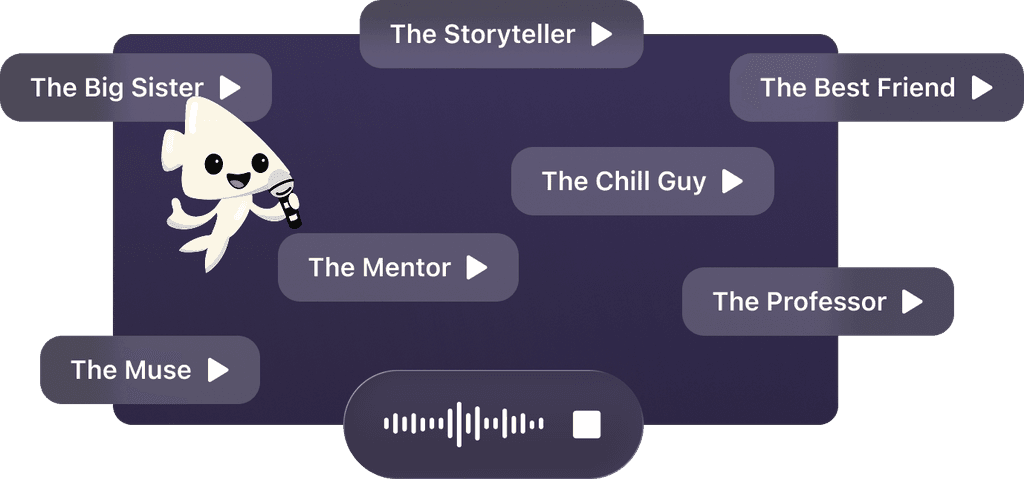
Feel the book through the author's voice
Turn knowledge into engaging, example-rich insights
Capture key ideas in a flash for fast learning
Enjoy the book in a fun and engaging way
Characters in I can multiply.
- Alan WattsAuthor and philosopher exploring the present
- Russell BrandPublic figure influenced by Watts's work
- Son of ManBiblical figure used to exemplify insecurity
Key Themes in I can multiply.
- paradox of security
- present moment awareness
- psychology of anxiety
- limitations of language
- eastern mystical traditions
Quotes from I can multiply.
Tomorrow and plans for tomorrow can have no significance at all unless you are in full contact with the reality of the present.
We find the "vision of God" by giving up belief in the idea of God.
Many "successful" people spend life earning an earning rather than a living, preparing to live rather than living.
We've confused intelligibility with fixity, setting ourselves the impossible task of making permanence from flux.
The source of evil lies not in the physical organism but in the dissociated brain or "will."
Explore Your Way of Learning
 Quick Summary Mode
Read or listen to I can multiply. Summary in 9 Minutes
Break down key ideas from I can multiply. into bite-sized takeaways to understand how innovative teams create, collaborate, and grow.

 Fun Mode
I can multiply. Lessons Told Through 20-Min Stories
Experience I can multiply. through vivid storytelling that turns innovation lessons into moments you'll remember and apply.
 Personalize Mode
Experience I can multiply. in your own learning style
Ask anything, choose your learning style, and co-create insights that truly resonate with you.
From Columbia University alumni built in San Francisco
"Instead of endless scrolling, I just hit play on BeFreed. It saves me so much time."


"I never knew where to start with nonfiction—BeFreed’s book lists turned into podcasts gave me a clear path."


"Perfect balance between learning and entertainment. Finished ‘Thinking, Fast and Slow’ on my commute this week."
"Crazy how much I learned while walking the dog. BeFreed = small habits → big gains."
"Reading used to feel like a chore. Now it’s just part of my lifestyle."

"Feels effortless compared to reading. I’ve finished 6 books this month already."
"BeFreed turned my guilty doomscrolling into something that feels productive and inspiring."

"BeFreed turned my commute into learning time. 20-min podcasts are perfect for finishing books I never had time for."
"BeFreed replaced my podcast queue. Imagine Spotify for books — that’s it. 🙌"

"It is great for me to learn something from the book without reading it."
"The themed book list podcasts help me connect ideas across authors—like a guided audio journey."
"Makes me feel smarter every time before going to work"
From Columbia University alumni built in San Francisco
"Instead of endless scrolling, I just hit play on BeFreed. It saves me so much time."
"I never knew where to start with nonfiction—BeFreed’s book lists turned into podcasts gave me a clear path."
"Perfect balance between learning and entertainment. Finished ‘Thinking, Fast and Slow’ on my commute this week."
"Crazy how much I learned while walking the dog. BeFreed = small habits → big gains."
"Reading used to feel like a chore. Now it’s just part of my lifestyle."
"Feels effortless compared to reading. I’ve finished 6 books this month already."
"BeFreed turned my guilty doomscrolling into something that feels productive and inspiring."
"BeFreed turned my commute into learning time. 20-min podcasts are perfect for finishing books I never had time for."
"BeFreed replaced my podcast queue. Imagine Spotify for books — that’s it. 🙌"
"It is great for me to learn something from the book without reading it."
"The themed book list podcasts help me connect ideas across authors—like a guided audio journey."
"Makes me feel smarter every time before going to work"
"Instead of endless scrolling, I just hit play on BeFreed. It saves me so much time."
"I never knew where to start with nonfiction—BeFreed’s book lists turned into podcasts gave me a clear path."
"Perfect balance between learning and entertainment. Finished ‘Thinking, Fast and Slow’ on my commute this week."
"Crazy how much I learned while walking the dog. BeFreed = small habits → big gains."
"Reading used to feel like a chore. Now it’s just part of my lifestyle."
"Feels effortless compared to reading. I’ve finished 6 books this month already."
"BeFreed turned my guilty doomscrolling into something that feels productive and inspiring."
"BeFreed turned my commute into learning time. 20-min podcasts are perfect for finishing books I never had time for."
"BeFreed replaced my podcast queue. Imagine Spotify for books — that’s it. 🙌"
"It is great for me to learn something from the book without reading it."
"The themed book list podcasts help me connect ideas across authors—like a guided audio journey."
"Makes me feel smarter every time before going to work"
"Instead of endless scrolling, I just hit play on BeFreed. It saves me so much time."
"I never knew where to start with nonfiction—BeFreed’s book lists turned into podcasts gave me a clear path."
"Perfect balance between learning and entertainment. Finished ‘Thinking, Fast and Slow’ on my commute this week."
"Crazy how much I learned while walking the dog. BeFreed = small habits → big gains."
"Reading used to feel like a chore. Now it’s just part of my lifestyle."
"Feels effortless compared to reading. I’ve finished 6 books this month already."
"BeFreed turned my guilty doomscrolling into something that feels productive and inspiring."
"BeFreed turned my commute into learning time. 20-min podcasts are perfect for finishing books I never had time for."
"BeFreed replaced my podcast queue. Imagine Spotify for books — that’s it. 🙌"
"It is great for me to learn something from the book without reading it."
"The themed book list podcasts help me connect ideas across authors—like a guided audio journey."
"Makes me feel smarter every time before going to work"

Download Summary of I can multiply.
Get the I can multiply. summary as a free PDF or EPUB. Print it or read offline anytime.