1장
The Future Is Here: Navigating Our Rapidly Changing World
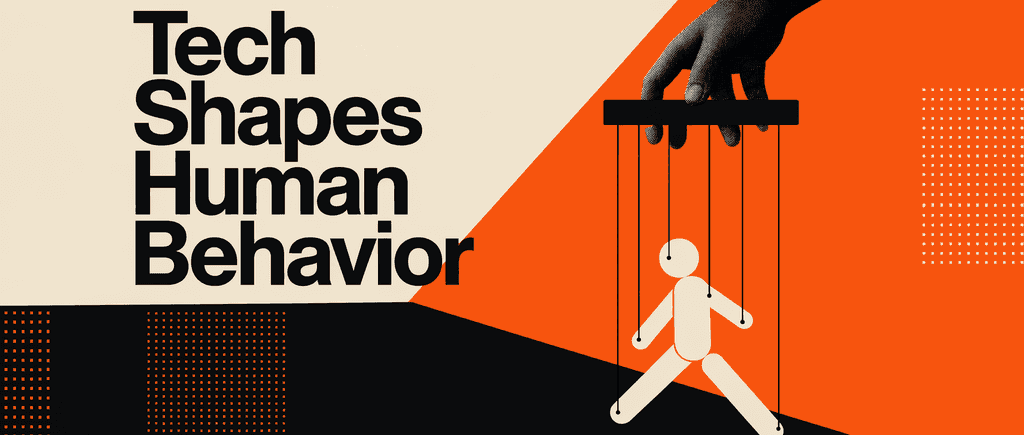
In a world where algorithms may soon know you better than you know yourself, Yuval Noah Harari's "21 Lessons for the 21st Century" arrives as a crucial compass. This intellectual tour de force has captivated millions worldwide, including tech titans like Bill Gates and Mark Zuckerberg, who cite it as required reading for understanding our rapidly evolving future. Since its 2018 publication, this work has become a cultural touchstone, translated into over 50 languages and consistently appearing on bestseller lists across continents. What makes this book particularly compelling is Harari's uncanny ability to identify the most pressing challenges of our time-from technological disruption to political polarization-with both scholarly depth and accessible clarity. Unlike his previous works that looked backward (Sapiens) or far forward (Homo Deus), this book tackles the immediate present with urgent relevance. As artificial intelligence advances and liberal democracy faces unprecedented challenges, Harari's insights feel less like predictions and more like essential preparation for a future that's already arriving.
2장
The Technological Revolution: AI, Jobs, and Human Obsolescence
The convergence of biotechnology and information technology is reshaping our world at an unprecedented pace. While previous technological revolutions primarily transformed the physical realm, today's innovations are poised to fundamentally alter human bodies and minds. Politicians and voters struggle to comprehend technologies like AI and blockchain, while traditional political systems designed for the industrial era appear increasingly obsolete.
Consider autonomous vehicles-not just a technological novelty, but a harbinger of massive economic disruption. By 2050, millions of truck drivers, taxi operators, and delivery personnel could find themselves without livelihoods. Unlike past technological shifts that eliminated certain jobs while creating others, the AI revolution threatens something far more profound: the potential irrelevance of vast segments of humanity.
The historical pattern of technological adaptation is breaking down. During the Industrial Revolution, humans moved from physical labor to cognitive work as machines took over manual tasks. But what happens when AI masters cognitive domains too? AlphaZero, which taught itself chess in just four hours before defeating the world's best chess programs, demonstrates how machines can now surpass humans even in creative problem-solving. The unique human advantages of emotional intelligence and pattern recognition-once thought to be our exclusive domain-are increasingly being replicated by algorithms.
What makes this shift particularly troubling is the inherent advantages machines possess: instantaneous connectivity, seamless updates, and freedom from human biases and limitations. A human doctor must individually learn new treatments, while an AI network can instantly update all connected systems worldwide. The question isn't whether machines will replace humans in certain fields, but how society will adapt when millions suddenly find themselves without economic purpose.
3장
The Crisis of Liberal Democracy in the Age of Algorithms
Liberalism-the dominant ideology of our era-faces an existential crisis. Since the end of the Cold War, liberal democracy appeared triumphant, with its package of individual freedoms, human rights, and free markets spreading globally. Yet post-2008, disillusionment has grown. Walls are returning, resistance to immigration is rising, and nationalist sentiments are resurging worldwide.
The core challenge to liberalism comes not from competing ideologies but from within its own philosophical foundations. Liberalism places supreme value on human choice and free will-the idea that your feelings and desires should guide your decisions. But what happens when algorithms understand your feelings better than you do? When Facebook can predict your romantic preferences or Amazon knows what you'll want to buy before you do, the very notion of autonomous choice begins to crumble.
This technological challenge strikes at liberalism's heart. If free will is revealed as merely a biochemical algorithm that can be calculated and manipulated, what becomes of human liberty? The drama of decision-making-the cornerstone of liberal democracy and free markets-loses its meaning when algorithms consistently make better choices than humans.
Consider the ethical dilemmas facing self-driving cars. When a collision is inevitable, should the car prioritize its passengers or pedestrians? Unlike humans who make split-second, emotional decisions, algorithms will follow pre-programmed ethical guidelines. While imperfect, these algorithmic decisions may ultimately prove more ethical and consistent than human reactions clouded by fear and self-preservation.
As algorithms increasingly make better decisions than humans across domains, from healthcare to finance, the liberal story that sanctifies human feelings and choices becomes harder to sustain. We're entering an era where authority may shift from human hearts to computer servers, challenging the very foundation of our political and economic systems.
4장
The Specter of Digital Dictatorship
The true danger of artificial intelligence isn't that it will rebel against humanity, but that it will follow human orders with perfect efficiency. Unlike human soldiers who might question immoral commands, AI systems will execute exactly what they're programmed to do. This unwavering obedience could either prevent atrocities or enable unprecedented oppression, depending on who controls the technology.
Imagine a North Korean-style dictatorship armed with biometric sensors that can detect not just your actions but your emotions. Every frown, accelerated heartbeat, or micro-expression could be monitored and analyzed. Such surveillance would make traditional totalitarianism look primitive by comparison. The Soviet KGB needed human agents to follow dissidents; tomorrow's regimes could deploy ubiquitous sensors and algorithms to monitor everyone continuously.
This threat isn't science fiction. China's social credit system already combines facial recognition with big data analysis to rate citizens' behavior. As these technologies advance, the potential for digital dictatorship grows more concrete. Algorithms that understand human emotions better than humans themselves could manipulate people with unprecedented precision, creating propaganda tailored to individual psychological profiles.
The most alarming aspect is how this might permanently entrench authoritarian regimes. Historically, dictatorships collapsed partly because humans are complex and unpredictable. But AI-powered surveillance could eliminate this uncertainty, allowing dictators to predict and prevent resistance before it materializes. Democracy requires privacy and free thought-both endangered by technologies that can monitor and influence our most intimate thoughts and feelings.
5장
Wealth, Data, and the New Class Divide
Throughout history, inequality originated from property ownership-land in agricultural societies, factories in industrial ones. Today, data is becoming the most valuable asset, potentially creating unprecedented economic disparities. While globalization has lifted millions from extreme poverty, wealth concentration has accelerated, with the eight richest people now owning as much as the poorest half of humanity.
The AI revolution threatens to exacerbate this divide. Those who control the algorithms-a tiny techno-elite-may accumulate extraordinary wealth and power, while masses of people become economically irrelevant. This isn't just about income inequality but potentially about a biological divide. As biotechnology advances, the wealthy might enhance themselves and their children with genetic engineering, superior health, and extended lifespans, creating what amounts to different biological castes.
Who owns the data that powers these systems? Currently, a few corporations like Google, Amazon, and Facebook harvest vast amounts of data from billions of users. This data isn't just a commodity but the key to future power and capability. As algorithms become more sophisticated, those who control the data will increasingly control life itself.
The question of data ownership isn't merely academic-it's about who will own the future. Will data be nationalized as a public resource? Will it remain in corporate hands? Or will individuals somehow retain control over their personal information? These questions will shape the economic and social landscape of coming decades, determining whether we create a more equitable world or one divided between data-rich elites and everyone else.
6장
Community, Identity, and the Human Body in the Digital Age
Despite Silicon Valley's efforts to rebuild human communities through social networks, something essential is missing in our digital connections. Facebook's mission to "bring the world closer together" faces fundamental limitations because humans are physical beings who need embodied relationships. We evolved for intimate, face-to-face communities where we could see, touch, and smell each other-experiences that digital platforms cannot replicate.
The disconnect between our evolutionary needs and modern technology creates profound disorientation. We have more "friends" than ever but feel increasingly isolated. Our bodies remain in the physical world while our attention drifts to digital realms, creating a split existence that contributes to rising rates of depression and anxiety.
This tension between physical reality and digital abstraction extends to our cultural identities. Humans naturally organize themselves into "us" versus "them" groupings, but the boundaries between these groups have become increasingly blurred in our interconnected world. Despite claims of distinct civilizations clashing, we actually live in a single global civilization with shared economic, political, and scientific frameworks.
Consider the modern Olympics-all nations participate under the same rules, using the same sports and measurements, organized by national teams that reflect our common understanding of political organization. This would have been inconceivable a thousand years ago when different civilizations operated under entirely different paradigms. Today, despite surface differences, countries worldwide share fundamental assumptions about economics, politics, and science.
Yet nationalism remains powerful precisely because it offers a sense of embodied community in an increasingly abstract world. People crave belonging to tangible groups with shared rituals and territories. The challenge is reconciling these local identities with the global cooperation needed to address existential threats like climate change, nuclear war, and technological disruption-problems that transcend national boundaries and require coordinated global action.
7장
Religion in the Modern World: From Technical Solutions to Identity Markers
Throughout history, religions provided comprehensive frameworks for understanding the world and organizing society. Today, their role has fundamentally changed. For technical problems like agriculture, medicine, or engineering, science has largely replaced religion as the source of solutions. Few farmers pray for rain when they can install irrigation systems; even in deeply religious societies, people turn to doctors rather than priests when seriously ill.
For policy problems like economic management, modern religions mostly repackage contemporary theories rather than offering unique alternatives. Despite claims of distinct "Islamic economics" or "Jewish economics," these approaches typically adapt modern economic frameworks with religious terminology. The Iranian economy functions with the same basic mechanisms as secular economies, just with Islamic branding.
Where religion remains powerful is in defining identities-the boundaries between communities and the stories that give people a sense of belonging. In Japan, state Shinto was deliberately constructed in the 19th century to preserve national identity while adopting Western technology and economics. The invention worked brilliantly, allowing Japan to modernize while maintaining cultural cohesion.
Today, religions increasingly function as handmaidens to nationalism rather than universal moral frameworks. In countries from Russia to India, religious symbols and narratives are deployed to strengthen national identity and justify political projects. This represents a profound shift from religions' historical claims to universal truth. Rather than transcending national boundaries, many religious movements now reinforce them, blessing particular states rather than challenging the very concept of divided humanity.
This transformation of religion into an identity marker rather than a source of universal values makes it poorly equipped to address global challenges that require cooperation across identity boundaries. Climate change, technological disruption, and nuclear proliferation demand responses that transcend the tribal identities that religions increasingly reinforce.
8장
Immigration: The Four Critical Debates Shaping Our Future
Immigration has become one of the most divisive issues of our time, particularly in Europe where the influx of migrants from Africa and the Middle East has triggered profound questions about European identity and values. The debate can be understood as a complex negotiation with four distinct dimensions.
First, there's the question of admission-who gets in? Proponents of immigration argue that wealthy nations have a moral obligation to accept both refugees fleeing persecution and economic migrants seeking better lives. They suggest legalizing immigration would eliminate dangerous underground markets. Opponents counter that nations have no obligation to accept immigrants and should be able to select who enters based on cultural compatibility and security concerns.
Second comes the matter of assimilation-what's expected of immigrants once they arrive? Must they adopt the liberal values of their new home, even if they come from more conservative societies? Immigration advocates point to Europe's internal diversity, arguing that tolerance of differences should suffice. Critics worry that without deeper assimilation, immigrants may bring intolerant attitudes that undermine the very openness that made immigration possible.
The third debate concerns the timeline for full integration-how quickly should immigrants become equal citizens? Supporters of immigration favor rapid integration with full rights. Skeptics prefer longer probationary periods, noting that throughout history, immigrant groups typically integrated over generations, not immediately.
Finally, there's the question of mutual compliance-are both sides fulfilling their part of the bargain? Critics claim many immigrants fail to assimilate adequately, maintaining intolerant worldviews incompatible with their host societies. Defenders argue that host societies often don't honor their commitments to immigrants who have assimilated, perpetuating discrimination despite integration efforts.
These debates are complicated by the shift from biological racism to cultural differentiation. While biological racism has been discredited scientifically, cultural differences remain real and sometimes create genuine conflicts. The challenge is acknowledging these differences without falling into the same prejudices that characterized racism, recognizing that cultures vary without ranking them hierarchically.
9장
Terrorism: The Strategy of Fear and Overreaction
Terrorism wields influence far beyond its actual destructive capacity by exploiting our psychological vulnerabilities. Despite causing far fewer deaths than mundane threats like traffic accidents or diabetes, terrorism captures global attention and provokes political chaos because it deliberately targets our sense of security.
Consider the numbers: in Europe, terrorists kill fewer than 150 people annually, while air pollution kills nearly 450,000. In the United States, you're more likely to die from a falling piece of furniture than a terrorist attack. Yet terrorism dominates headlines and shapes elections while these greater killers receive comparatively little attention.
This disproportionate impact stems from terrorism's theatrical nature. Terrorists don't have the military strength to defeat their enemies directly, so they stage spectacular attacks designed to provoke overreactions. Like a weak poker player bluffing to force a reshuffle of the cards, terrorists use minimal violence to trigger maximum disruption, hoping the chaos will somehow benefit their cause.
Modern states are particularly vulnerable to this strategy because they've built their legitimacy on promises of domestic peace. In medieval times, violence was commonplace, and rulers made no pretense of eliminating it. Today's governments claim to maintain perfect security, making any breach-no matter how small-seem like a catastrophic failure.
The most effective response to terrorism is maintaining perspective and refusing to be manipulated by fear. When societies overreact to terrorist provocations-curtailing civil liberties, demonizing minorities, or launching costly military interventions-they often cause more harm than the terrorists themselves could have inflicted. The true danger isn't the relatively small number of terrorist attacks but our disproportionate, self-destructive responses to them.
10장
War in the 21st Century: The Declining Logic of Conquest
Despite ongoing conflicts, we live in one of the most peaceful eras in human history. Major powers rarely go to war with each other anymore, not primarily because humans have become more peaceful, but because war has become less profitable. Throughout history, conquest was a viable economic strategy-empires like Rome, Britain, and Japan grew rich by conquering and exploiting territories. Today, that logic has largely collapsed.
The shift in economic fundamentals explains this change. Wealth in the 21st century resides primarily in human capital, technology, and organizational know-how rather than physical resources. You can't conquer Silicon Valley and expect to capture its wealth-the engineers would flee, leaving you with empty buildings. China's economic miracle happened without military conquest, demonstrating that trade and development generate more prosperity than territorial expansion.
Russia's annexation of Crimea represents a rare exception that proves the rule. While Russia secured a strategic naval base, the economic costs of international sanctions far outweighed any material gains. Even this limited land grab proved difficult to digest, highlighting the challenges of modern conquest.
Nuclear weapons further diminish the appeal of great power warfare by raising the stakes to existential levels. When conflict between nuclear powers risks mutual annihilation, even "winning" becomes meaningless. This nuclear deterrence, combined with the declining economic logic of conquest, has created what some scholars call the "Long Peace"-a historically unprecedented period where major powers avoid direct military confrontation.
However, human folly means peace is never guaranteed. History shows that countries sometimes launch self-destructive wars based on irrational calculations or ideological fervor. The Axis powers in World War II understood they were unlikely to defeat the combined resources of the United States, Soviet Union, and British Empire, yet they gambled on war anyway. Similar miscalculations remain possible today, especially as new technologies and changing power dynamics create strategic uncertainty.
11장
Humility: Recognizing Our Place in the Cosmic Story
People across cultures tend to view themselves as the center of the world, placing their own narratives at history's heart. Greeks champion their philosophical heritage, Chinese and Indians assert their ancient innovations, Muslims center history around Islam, and many Jews see their history as uniquely pivotal. Such egocentric perspectives overlook the universal nature of human achievements and the interconnectedness of cultural development.
This tendency toward cultural narcissism distorts our understanding of history and ethics. Take the common claim that monotheism originated with Judaism and elevated human morality. In reality, the first clear instance of monotheism appears in Egypt with Pharaoh Akhenaten, and monotheism often bred intolerance rather than moral advancement. Polytheistic societies typically accepted diverse beliefs and rarely fought religious wars, while monotheistic faiths frequently persecuted dissenters and waged bloody campaigns to impose their singular truth.
Similarly, Jewish contributions to modern science flourished only after Jews integrated into Western secular institutions, not because of inherent qualities in Judaism itself. Prior to the 1800s, Jewish influence on science was negligible, advancing only as Jews adopted Enlightenment values and moved away from traditional religious constraints.
True humility requires recognizing that no single culture or tradition holds a monopoly on wisdom or achievement. Human progress has always been a collective enterprise, with innovations and ethical insights emerging across civilizations. The ethical systems of Stone Age tribes, Aboriginal Australians, and ancient Sumerians all developed sophisticated moral codes independent of later religious frameworks.
This perspective doesn't diminish any culture's achievements but places them within a broader human context. Acknowledging our shared humanity and the distributed nature of human progress helps us move beyond parochial identities toward more inclusive understanding. In a world facing global challenges that transcend cultural boundaries, such humility isn't just intellectually honest-it's practically essential.
12장
Finding Meaning in a Post-Truth World
We live in an era often characterized as "post-truth," where misinformation flourishes and competing narratives clash. Yet this isn't entirely new-humans have always been a "post-truth species," using stories and myths to organize societies. From ancient religions to modern nationalism, fictional narratives have enabled large-scale cooperation by creating shared identities and purposes.
The power of these stories lies not in their factual accuracy but in their ability to unite people. Repeated enough times, even complete fabrications can become accepted truths. Soviet propaganda demonstrated this by rewriting history to suit political needs, while modern branding by companies like Coca-Cola relies on repetition to shape perceptions. Despite potential harm from such deceptions, they remain crucial in societal organization because truth alone often fails to unify effectively.
How then do we navigate this landscape of competing narratives? First, by acknowledging that not all information sources are equally reliable. Critical evaluation of sources, investment in quality journalism, and engagement with scientific literature provide better access to reality. Scientists should share findings widely through engaging mediums like science fiction, which both educates and shapes public perceptions on crucial issues.
Beyond external sources, finding meaning requires looking inward. Throughout history, humans have sought meaning through stories that assign roles in larger cosmic narratives. From the Bhagavad Gita to The Lion King, these stories situate individuals within ongoing dramas, offering fixed identities and purposes. Yet these narratives often neglect broader contexts and impose limiting roles.
Buddhism offers a radical alternative, denying both cosmic narratives and the supposed inner drama of human meaning-making. It emphasizes that nothing has an enduring essence, change is constant, and complete satisfaction is unattainable. Liberation comes from realizing that life has no inherent meaning; tranquility lies in disengaging from fictional constructs and narratives.
This doesn't mean abandoning all stories but maintaining multiple, flexible identities rather than committing to a single narrative. Just as ancient Egyptians diversified their deities, people today benefit from juggling several contradictory stories and identities, adapting as circumstances change. This flexibility provides resilience against the inevitable collapse of any single narrative framework.
13장
Meditation: The Science of Self-Observation
In a world increasingly dominated by algorithms that claim to know us better than we know ourselves, self-knowledge becomes not just a philosophical pursuit but a practical necessity. Meditation, particularly Vipassana, offers a systematic method for observing the mind and body without the distortion of narratives or theories.
The scientific study of consciousness faces a unique challenge: the stark contrast between the tangible brain and intangible mind. Despite technological advances like brain scanners that reveal neural activity, accessing subjective experiences remains elusive. Unlike anthropologists who can directly interact with the cultures they study, consciousness researchers often lack methods for systematic self-observation.
Vipassana meditation, with roots in ancient India, provides such a method. Rather than relying on external narratives or theories, it emphasizes direct observation of bodily sensations and mental processes. This approach doesn't require belief in any particular story or ideology-it's a practical technique for experiencing reality as it is, moment by moment.
The scientific community often studies meditation from the outside by observing practitioners, but this approach misses critical insights that come only from experiential engagement. Investigating both the brain (through neuroscience) and mind (through meditation) might lead to a more comprehensive understanding, like excavating a tunnel from both ends.
This exploration requires dedication comparable to that of anthropologists who spend years living in foreign cultures or astronauts training for space missions. The stakes are high: without developing our capacity for self-awareness, we risk surrendering our autonomy to algorithms that analyze our behavior patterns without understanding our subjective experience.
By practicing meditation, we can develop the clarity to see through the stories that society and our own minds construct. This doesn't mean rejecting all narratives but gaining the freedom to engage with them consciously rather than being unconsciously driven by them. In a world of accelerating change and information overload, such clarity may be our most valuable resource.
14장
Education for an Unpredictable Future
With rapid technological changes dismantling old narratives and career paths, education must fundamentally transform. The industrial model of education-standardized curriculum, rote memorization, and preparation for stable careers-no longer serves a world where jobs and required skills change constantly. As our ability to predict which specific knowledge will remain relevant fades, teaching adaptability becomes crucial.
Future education should emphasize four key areas: critical thinking, communication, collaboration, and creativity-skills that help navigate unpredictable environments. Emotional intelligence will likely remain valuable even as AI masters technical domains, making the development of psychological resilience and interpersonal skills essential components of education.
The challenge isn't just what to teach but how to teach it. Students need to learn how to learn, developing the ability to discard outdated knowledge and acquire new skills throughout their lives. Rather than memorizing facts that can be instantly accessed online, education should focus on making sense of the overwhelming information available and developing comprehensive worldviews that integrate knowledge across domains.
This educational transformation must happen quickly. Children entering school today will graduate into a world fundamentally different from the present one. They'll likely change careers multiple times, use technologies that don't yet exist, and face social and environmental challenges we're only beginning to understand. Preparing them requires moving from a past-focused educational model to one oriented toward an uncertain future.
The most valuable skill may be the ability to let go of familiar narratives when they no longer serve reality. As algorithms increasingly shape our world, understanding their functioning and limitations becomes as fundamental as reading and writing were in previous eras. Education must equip students not just with knowledge but with the mental flexibility to thrive amid constant change and the wisdom to maintain their humanity in an increasingly automated world.