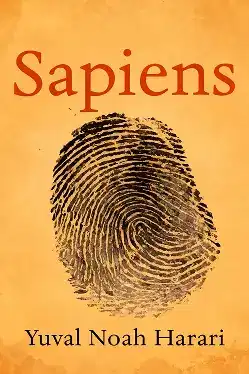
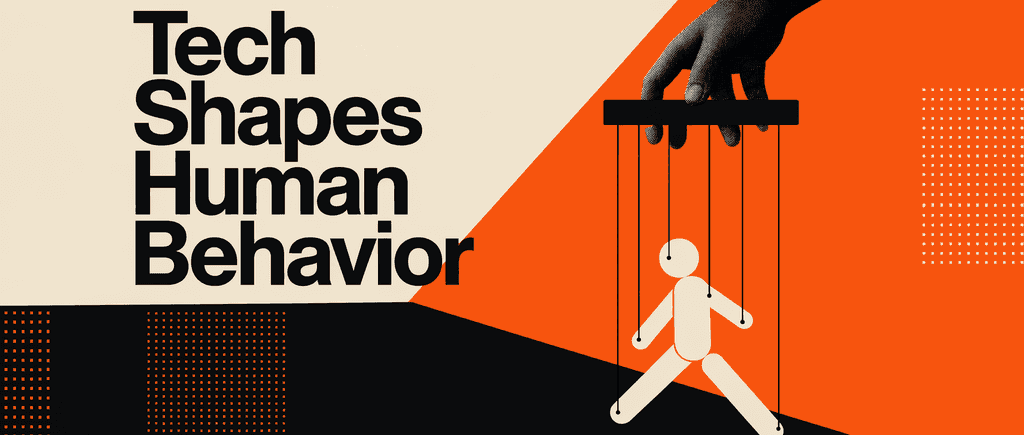
1장
From Famine to Feast: Humanity's Changing Challenges
At the dawn of the third millennium, humanity has achieved something remarkable: the age-old scourges of famine, plague, and war - once considered inevitable aspects of human existence - have become manageable challenges. This transformation represents one of the most significant shifts in human history. For thousands of years, these calamities were accepted as unavoidable features of life, divine punishments beyond human control. Today, they've been largely tamed.
Consider famine. Throughout most of history, hunger was humanity's constant companion. In 17th century France, up to 15% of the population starved to death during particularly harsh years. China's history is similarly marked by devastating famines that killed millions. Yet today, despite ongoing challenges with malnutrition in some regions, actual death from starvation has become rare and newsworthy rather than commonplace. When famine does occur, it's typically the result of political factors rather than natural disasters or agricultural limitations.
The change has been so dramatic that many societies now face the opposite problem: obesity. In 2014, more than 2.1 billion people were overweight, compared to 850 million who were undernourished. In fact, more people die today from eating too much than from eating too little. This remarkable reversal speaks volumes about our species' newfound ability to control its food supply.
What does this shift mean for us? As we've conquered these ancient enemies, we've created space to pursue new ambitions. Rather than merely surviving, we're increasingly focused on thriving - extending life, increasing happiness, and even reimagining what it means to be human. The question becomes: what will we do with this unprecedented power? What new challenges will we set for ourselves now that survival is largely secured?
2장
Invisible Armies: The Conquest of Disease and War
For millennia, infectious diseases were humanity's most feared enemies. The Black Death wiped out nearly a third of Europe's population in the 14th century. Smallpox, measles, and tuberculosis claimed countless lives. When Europeans arrived in the Americas, diseases they carried decimated indigenous populations who lacked immunity.
Yet today, despite alarming headlines about new pathogens, we've gained the upper hand in this ancient battle. The eradication of smallpox stands as one of humanity's greatest achievements - a disease that killed hundreds of millions throughout history now exists only in laboratory samples. While new threats like AIDS emerged, our scientific response has been remarkably swift. HIV went from an unknown entity to a well-understood virus with effective treatments in just a few decades.
This isn't to say the war against disease is over. Antibiotic resistance poses serious concerns, and new pathogens will certainly emerge. But the relationship has fundamentally changed - we now approach disease as a technical problem to be solved rather than an inevitable fate to be endured.
Similarly, war - that seemingly permanent feature of human civilization - has receded in ways our ancestors would find difficult to believe. The statistics are striking: in ancient agricultural societies, human violence caused about 15% of all deaths. During the 20th century, despite two world wars, that figure dropped to 5%. In the early 21st century, it's about 1%.
Why this dramatic decline? The nuclear age made great power conflicts potentially suicidal. Economic globalization transformed international relations - it's now often more profitable to trade with neighbors than to conquer them. Knowledge has replaced territory as the primary source of wealth. A country can be small in land area but economically mighty through innovation and technology.
Even terrorism, despite dominating headlines, claims far fewer lives than traffic accidents or suicide. Our perception of danger often doesn't align with statistical reality. The most significant threats we face today are largely self-inflicted - climate change, resource depletion, and technological risks of our own creation.
What's remarkable isn't that these challenges persist in some form, but that we've transformed them from inevitable tragedies into manageable problems. This shift represents a profound change in the human condition and opens the door to new possibilities - and new responsibilities.
3장
The New Human Agenda: Immortality, Happiness, Divinity
Having largely conquered famine, disease, and war, what mountains will humanity climb next? The answer is emerging with striking clarity: we're setting our sights on immortality, happiness, and godlike powers. These ambitions would have seemed blasphemous to our ancestors, but they're increasingly framed as technical challenges rather than forbidden fruit.
The quest for immortality - or at least radical life extension - has moved from the realm of fantasy to serious scientific pursuit. Google's investment in Calico, a company explicitly focused on "solving death," represents this new paradigm. Ray Kurzweil, Google's director of engineering, openly states his ambition to live long enough to live forever. Billionaires like Peter Thiel fund research into radical life extension.
This approach fundamentally reframes death not as a metaphysical inevitability but as a technical problem - a series of mechanical failures that could theoretically be prevented or reversed. Scientists speak of addressing the "seven deadly sins" of cellular aging: cell loss, chromosome mutations, mitochondrial mutations, cellular junk, protein cross-links, immune system decline, and hormonal imbalances.
Imagine a world where people routinely live to 150 or beyond. How would this transform society? Would political leaders hold power for decades rather than years? Would marriage "until death do us part" become an unbearable sentence? Would universities need to reinvent education for careers spanning a century? Would environmental sustainability become even more urgent with longer-lived populations?
While immortality remains elusive, the pursuit of happiness has become our second great project. Where philosophers once debated whether happiness was even an appropriate goal, modern societies increasingly measure their success by it. Nations now track "Gross National Happiness" alongside GDP. The right to pursue happiness has subtly shifted toward an expectation of happiness itself.
Yet despite material abundance unprecedented in human history, happiness levels haven't risen accordingly. We seem to hit a "glass ceiling" of satisfaction, suggesting that our evolutionary programming isn't designed for constant contentment. This has led to a growing biochemical approach to happiness - using pharmaceuticals, genetic engineering, and direct brain stimulation to overcome our biological limitations.
The third and most ambitious project is the pursuit of divinity - not by worshipping gods but by becoming godlike ourselves. Through biotechnology, cybernetics, and artificial intelligence, we're developing powers once attributed only to deities: creating life, engineering minds, conquering death, and manipulating the physical world at fundamental levels.
These pursuits aren't merely academic. They're driven by powerful economic incentives and the human desire to overcome limitations. The modern economy requires constant growth and innovation, pushing us to explore ever more radical technologies. Whether we're prepared for the consequences or not, these three projects - immortality, happiness, and divinity - are increasingly defining our species' trajectory.
4장
The Paradox of Knowledge: Understanding Our Unpredictable Future
There's a fascinating paradox at the heart of our technological progress: as our knowledge grows, our ability to predict the future seems to diminish rather than improve. In previous centuries, people had a clearer sense of what the world might look like a few decades ahead. Today, despite unprecedented scientific understanding, we find ourselves increasingly uncertain about what lies even a few years in the future.
This paradox stems from the accelerating pace of change. Knowledge doesn't just help us understand the world - it transforms it, creating new realities we couldn't have imagined. The smartphone in your pocket would have seemed like science fiction just 30 years ago. The internet has reshaped society in ways that weren't predicted even by its creators.
History offers valuable perspective on this uncertainty. Consider something as seemingly natural as suburban lawns. These carefully maintained grass carpets aren't natural at all but cultural artifacts with specific historical origins. They began as status symbols for European nobility, who could afford to waste productive land on ornamental grass. The practice spread to middle-class homes as a display of prosperity and conformity. What seems "natural" to us is often just an accident of history that could have developed differently.
This historical awareness is liberating because it reveals that many aspects of our current reality aren't inevitable or "natural" but contingent products of particular choices and circumstances. This means we have more freedom to reimagine the future than we might assume.
As we pursue our new agenda of immortality, happiness, and divinity, we should recognize that these goals themselves reflect particular historical circumstances and values. The humanist worldview that places supreme value on human experience and choice isn't a universal truth but a relatively recent development in human thought.
The scientific revolution, combined with economic systems demanding constant growth, has created unprecedented technological power. But power without wisdom can be dangerous. Our ability to manipulate genes, create artificial intelligence, and transform the environment is racing ahead of our understanding of the consequences.
This is why studying history matters so deeply - not because it allows us to predict the future with certainty, but because it helps us understand the contingency of our present moment and the range of possible futures we might create. As Harari notes, "History isn't a single narrative but a series of choices between alternative paths." Understanding this gives us both humility about our predictions and responsibility for our choices.
5장
Organisms as Algorithms: The Computational View of Life
One of the most profound scientific insights of our time is that living organisms, including humans, can be understood as biochemical algorithms. This isn't just a metaphor - it's increasingly how biologists make sense of life itself. From this perspective, emotions like fear, love, and desire aren't mysterious spiritual forces but computational processes shaped by evolution to solve survival problems.
When a gazelle spots a lion and flees, it's running a sophisticated algorithm: "If predator detected, then activate escape response." This algorithm was refined over millions of years because it worked - gazelles with effective fear responses survived to reproduce. The same applies to human emotions. When you feel love toward your child, you're experiencing an algorithm that evolved to ensure parental care. When you crave sugar, you're running code that once helped your ancestors find rare, calorie-dense foods.
This computational view of life has revolutionary implications. If organisms are algorithms, then artificial intelligence might eventually replicate or surpass biological intelligence. Already, self-driving cars can navigate complex environments without experiencing fear or excitement. They perform millions of calculations to avoid collisions, but they don't "feel" anything in the process.
This raises profound questions about consciousness. If algorithms can perform complex behaviors without subjective experience, what exactly is consciousness for? Why did evolution produce creatures that not only process information but feel something while doing so?
The scientific consensus is expanding to recognize that humans aren't alone in having conscious experiences. The 2012 Cambridge Declaration on Consciousness, signed by leading neuroscientists, acknowledged that many non-human animals possess consciousness and self-awareness. Experiments with chimpanzees, elephants, and even some birds show they recognize themselves in mirrors - suggesting they have a sense of self.
Consider Santino, a chimpanzee at a Swedish zoo who collected rocks before the zoo opened, hiding them in strategic locations to throw at visitors later. This required planning, self-control, and imagining future scenarios - mental capabilities once thought uniquely human.
Even rats show remarkable emotional complexity. In laboratory experiments, rats will free trapped companions even when there's no reward for doing so. They'll even share chocolate - a favorite treat - with other rats who haven't had any. These behaviors suggest empathy and social bonds that go beyond simple algorithmic responses.
This computational understanding of life doesn't reduce its wonder - if anything, it expands it by helping us recognize the complex inner lives of other creatures. It also raises profound questions about artificial intelligence. If consciousness emerged from biological algorithms shaped by evolution, might it also emerge from silicon-based algorithms shaped by human design? And if so, what moral status would such artificial minds deserve?
6장
The Web of Meaning: How Stories Shape Reality
Humans don't just process information - we create meaning through shared stories. This ability to collectively believe in fictional entities like nations, corporations, and human rights has allowed us to cooperate on an unprecedented scale. These aren't just useful fictions; they're intersubjective realities that exist because enough people believe in them and act accordingly.
Money provides a perfect example. A dollar bill has value not because of its physical properties but because of a shared belief system. If people stopped believing in its value, it would become just a piece of paper. Yet this "fiction" enables complex economic coordination among billions of people who never meet face-to-face.
The same applies to legal entities like corporations. Apple Inc. isn't a physical object you can touch - it's a legal fiction that exists in the shared imagination of humans. If everyone stopped believing in it, Apple would cease to exist even if its buildings and products remained.
This capacity to create and believe in shared fictions is uniquely human. Other animals can imagine things that exist (like a banana) or don't exist (like a monster). But only humans can imagine and believe in things that exist solely because of collective belief - like human rights, nations, or gods.
Throughout history, different fictions have organized human societies. Ancient Egyptians built massive pyramids because they believed pharaohs were living gods. Medieval Europeans built cathedrals because they believed in salvation through Christ. Today, we build skyscrapers and shopping malls because we believe in capitalism and consumerism.
Writing dramatically enhanced this capacity by allowing fictions to spread beyond face-to-face communication. Bureaucracies - from ancient Egypt to modern governments - use written documents to shape reality. When a bureaucracy declares something on paper, it often becomes "real" regardless of physical facts. If your birth certificate says you were born on January 1st, that becomes your official birthday even if you were actually born on December 31st.
Sacred texts represent the ultimate example of this phenomenon. Religious scriptures have organized human societies for millennia, not because they accurately describe physical reality but because they create powerful shared meanings that coordinate human behavior.
This doesn't mean these fictions are false in a simple sense. They're "true" in that they genuinely shape human behavior and society. The United States exists not as a physical entity but as a powerful intersubjective reality that organizes the actions of millions of people.
Understanding this web of meaning helps us see that many aspects of our reality aren't natural or inevitable but contingent products of particular stories. This insight gives us both freedom and responsibility - freedom to question existing stories and responsibility to consider what new stories we might create.
7장
The Strange Couple: Science and Religion in Modern Life
Science and religion are often portrayed as enemies locked in eternal conflict. The reality is far more complex and interesting. Rather than simple opposition, these systems have formed a strange partnership that shapes the modern world in unexpected ways.
First, we need to understand what religion actually is. It's not merely belief in gods or supernatural forces. Rather, religion is any system of human norms and values founded on belief in a superhuman order - rules that humans didn't invent but are believed to originate from some higher authority. By this definition, many modern ideologies like communism or liberalism function as religions even without supernatural elements.
The scientific revolution didn't simply replace religion with rational inquiry. Instead, it created a new kind of deal: science would provide power through technological advancement, while religion (broadly defined) would provide meaning and moral guidance. Science answers "how" questions but remains silent on "why" questions and moral imperatives. It can tell us how to build a nuclear bomb but not whether we should use it.
This division of labor created the modern world. Science fueled unprecedented technological progress, while various ideologies - from traditional religions to humanism - provided the moral frameworks for using that power. The partnership worked because early modern science had limited ambitions. It didn't claim to answer questions of meaning or purpose.
The alliance between science and religion was further strengthened by the economic system of capitalism. Modern capitalism depends on the belief in future growth - that tomorrow will be better than today. This faith in progress became a quasi-religious belief that united scientific advancement with economic development.
Consider how banks function: they lend more money than they actually possess because they believe economic growth will generate returns. This system would collapse without faith in future growth. Science provides the technological innovations that fuel growth, while capitalist ideology provides the belief that such growth is both possible and desirable.
This strange partnership has delivered remarkable results. Life expectancy has doubled, food production has soared, and many diseases have been conquered. Yet it has also created new challenges. The relentless pursuit of growth threatens ecological stability. The power of technology raises profound ethical questions about genetic engineering, artificial intelligence, and surveillance.
Moreover, recent scientific discoveries are beginning to challenge fundamental religious assumptions, including those of secular humanism. Neuroscience questions the existence of free will and the unified self. Artificial intelligence challenges the uniqueness of human consciousness. Genetic engineering raises the possibility of redesigning humanity itself.
As science begins to encroach on questions of meaning and purpose, the old division of labor between science and religion becomes increasingly unstable. We're entering a new phase where scientific knowledge doesn't just provide tools but potentially reshapes our understanding of what it means to be human.
8장
The Humanist Revolution: Experience as the Source of Meaning
When Friedrich Nietzsche declared "God is dead" in the late 19th century, many feared that without divine authority, human civilization would collapse into nihilism and immorality. Yet something remarkable happened instead: humanism emerged as a powerful new source of meaning and ethics.
Humanism inverted the traditional religious formula. Instead of deriving meaning from above (divine commandments), it located meaning from within human experience itself. According to humanism, the ultimate source of authority isn't God's word but human feelings and desires. What makes something good or bad, beautiful or ugly, desirable or repulsive is how it affects human experience.
This revolutionary idea transformed every aspect of society. In politics, it gave rise to democracy based on the principle that "the voter knows best." In economics, it created consumer capitalism where "the customer is always right." In aesthetics, it suggested that "beauty is in the eye of the beholder." In ethics, it promoted the idea that "if it feels good, do it." And in education, it emphasized "think for yourself" rather than memorizing ancient wisdom.
The humanist revolution succeeded because it offered a compelling alternative to traditional religion. It didn't leave humans in an existential void but provided a new source of meaning grounded in everyday experience. It transformed the modern world by placing human feelings at the center of ethics, politics, and art.
However, humanism didn't remain a unified movement. It split into three main branches with different interpretations of human experience:
Liberal humanism emphasizes individual freedom and personal feelings. It sees the individual as a unique being with an inner voice that should be heeded above all else. From this perspective, the greatest good is allowing each person to express their authentic self with minimal interference.
Socialist humanism focuses on collective human experience. It argues that individualism ignores how social conditions shape feelings and opportunities. From this view, the greatest good comes from creating equality and solidarity among all humans.
Evolutionary humanism, exemplified by Nazism, takes a darker view. It suggests that human experience isn't equal - some experiences are superior to others based on their contribution to evolutionary progress. This branch embraces conflict as necessary for advancement.
These competing versions of humanism fought the bloodiest ideological wars in history during the 20th century. Liberal democracy, fascism, and communism - all humanist ideologies in different ways - battled for global dominance. By the early 21st century, liberal humanism appeared to have triumphed, with its emphasis on human rights, democracy, and free markets spreading worldwide.
Yet this triumph may be temporary. Liberal humanism faces growing challenges from both external forces (like religious fundamentalism) and internal contradictions (like balancing individual rights against collective welfare). Most significantly, scientific discoveries are undermining its core assumptions about human nature and free will.
The humanist revolution transformed how we understand meaning and authority. By placing human experience at the center of value, it created a world where individual choice and feeling became paramount. But as we'll see, this human-centered worldview is now facing unprecedented challenges from the very scientific progress it helped unleash.
9장
The Great Decoupling: How Technology Challenges Humanism
Liberal humanism has dominated the world for decades, but it now faces an existential challenge from the very technologies it helped create. Three critical developments are undermining its foundational assumptions: humans may become economically and militarily useless; the system may still need humans collectively while individuals lose their authority; and a small elite may evolve into a different species altogether.
First, consider economic obsolescence. Throughout history, humans were essential for both physical and cognitive labor. But artificial intelligence is rapidly catching up to human capabilities across domains. Self-driving vehicles threaten millions of transportation jobs. Legal AI can review documents faster and more accurately than human lawyers. Medical algorithms increasingly match or exceed doctors in diagnostic accuracy.
The standard response is that technology has always created more jobs than it destroyed. When agriculture mechanized, people moved to factories. When manufacturing automated, people shifted to services. But this time may be different because AI can potentially perform both physical and cognitive tasks across virtually all domains.
Even creative and emotional work isn't safe. Algorithms already compose music, write news articles, and create art. They can analyze emotional responses and adapt accordingly. What happens when most humans have nothing economically valuable to offer? The liberal assumption that each individual has irreplaceable value faces a profound challenge.
Second, even if humans remain collectively important, individuals may lose authority over their own lives. Liberal politics and economics assume individuals know themselves best - that your feelings and choices should guide your life. But big data and biometric sensors increasingly know you better than you know yourself.
Consider how algorithms already predict your preferences, health risks, and behaviors. Amazon knows what you'll buy before you do. Facebook algorithms understand your political leanings and personality traits. Health apps track biological markers you're not even aware of. As these systems improve, they may understand your desires and needs better than your conscious mind does.
When algorithms consistently make better decisions than you do - about your career, relationships, and health - the liberal emphasis on individual choice becomes questionable. Why let humans make important decisions when algorithms demonstrably make better ones? Democracy itself might seem inefficient compared to algorithmic governance.
Third, biotechnology may create unprecedented inequality by splitting humanity into biological castes. Throughout history, elites enjoyed social and economic advantages but remained biologically identical to everyone else. Now, genetic engineering, neural implants, and human-machine interfaces could create a biological upper class with enhanced capabilities.
Imagine wealthy individuals with genetically engineered immune systems, enhanced cognitive abilities, and extended lifespans. They would literally become a different kind of human, while those without access to these technologies remain limited by biology. This would shatter the humanist belief in the fundamental equality of all humans.
These developments create what Harari calls "the great decoupling" - the separation of intelligence from consciousness. For millennia, the only way to get intelligence was to evolve consciousness in biological organisms. But now we're developing intelligent systems without consciousness, while potentially enhancing consciousness through biotechnology. This decoupling challenges our entire understanding of what humans are and what gives us value.
10장
The Ocean of Consciousness: Navigating the Unknown Future
As we face these unprecedented challenges to our understanding of humanity, we're like explorers venturing into an uncharted ocean of consciousness. Our current maps - the religious, philosophical, and scientific frameworks we've relied on - may prove inadequate for the territory ahead.
Human perception is remarkably limited. We see only a tiny fraction of the electromagnetic spectrum. Our hearing captures a narrow range of sound waves. Our sense of smell is primitive compared to many animals. Yet from this limited sensory data, we construct elaborate models of reality and believe we comprehend the universe.
This perceptual limitation extends to our understanding of consciousness itself. Despite remarkable advances in neuroscience, we still don't understand how physical brain processes create subjective experience - how arrangements of neurons generate the feeling of love, the color red, or the taste of chocolate. This "hard problem of consciousness" remains one of science's greatest mysteries.
As we develop increasingly sophisticated artificial intelligence, this mystery takes on practical significance. If we don't understand our own consciousness, how can we recognize or create it in other forms? How will we know if or when an AI system becomes conscious? What moral status would such a being deserve?
The emerging "religion of data" suggests that biological algorithms (humans) will increasingly defer to digital algorithms that process information more efficiently. This shift is already visible in how we outsource memory to smartphones, navigation to GPS, and decision-making to recommendation systems. As these systems become more sophisticated, they may form a kind of "internet of all things" where information flows continuously between biological and technological components.
In this new landscape, power may shift from individual humans to networked systems that coordinate information across multiple platforms. Traditional concepts of human autonomy and privacy could become obsolete as the boundaries between self and network blur. We may need entirely new ethical frameworks to navigate this territory.
History offers some perspective on these transformations. Throughout human existence, we've constantly reinvented ourselves through new technologies and ideas. The agricultural revolution fundamentally changed human society and self-understanding. The scientific revolution did the same. The current technological revolution represents another such transformation.
The difference now is the pace and scope of change. Previous revolutions unfolded over centuries or millennia. The current transformation is happening within decades. Previous changes affected how humans lived but didn't alter human biology itself. The current revolution potentially changes what it means to be human at a biological level.
As we navigate this ocean of consciousness, three principles might guide us: humility about what we know, openness to new forms of experience and intelligence, and concern for the well-being of all conscious entities - human, animal, or artificial.
The future remains unwritten. The technologies we're developing could lead to dystopian scenarios of control and inequality, or they could open new frontiers of flourishing and understanding. The difference will depend not just on the technologies themselves but on the wisdom and values we bring to their development and use.
11장
From Homo Sapiens to Homo Deus: The Path to Divinity?
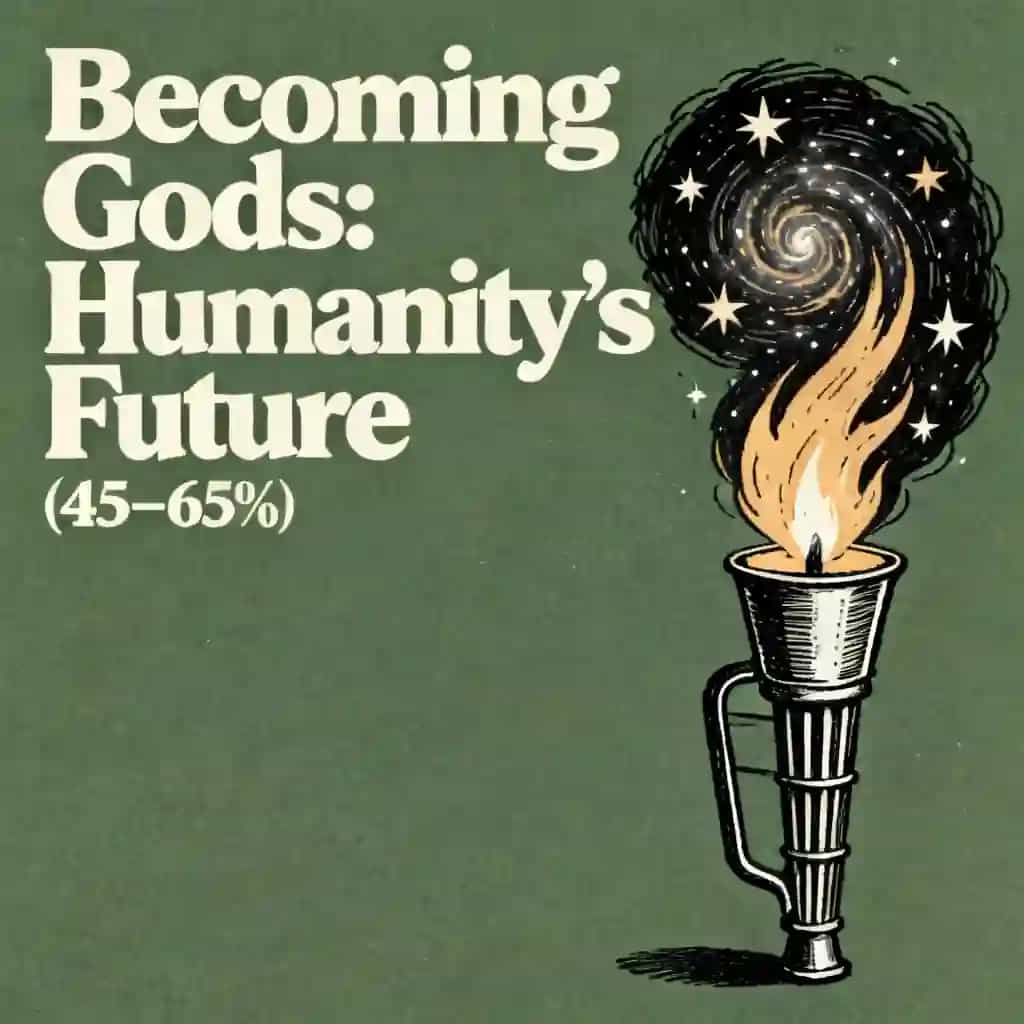
Throughout history, humans have imagined gods with powers like immortality, happiness, and the ability to create and destroy. Now, for the first time, these powers are coming within our technological reach. The transition from Homo sapiens (wise human) to Homo deus (divine human) represents the culmination of our species' long journey.
This transformation isn't happening through prayer or mystical revelation but through concrete technologies: genetic engineering to overcome biological limitations, neural interfaces to enhance cognitive capabilities, and artificial intelligence to extend our reach beyond biological constraints.
The path to this new state will likely follow three overlapping stages. First, biological engineering will allow us to modify our genetic code, potentially eliminating diseases, extending lifespans, and enhancing physical and cognitive capabilities. CRISPR and other gene-editing technologies are already making this possible.
Second, cyborg engineering will integrate non-organic components into human bodies. This has already begun with pacemakers, cochlear implants, and prosthetic limbs. Future neural interfaces might connect brains directly to computers, creating humans with unprecedented capabilities and potentially allowing consciousness to exist across multiple platforms simultaneously.
Third, the creation of non-organic beings might eventually lead to entirely new forms of intelligence and consciousness. These digital minds could exist without biological limitations, potentially spreading beyond Earth to colonize the galaxy.
This transformation isn't happening in a dramatic moment of rupture but gradually through thousands of incremental improvements. Each enhancement seems reasonable in isolation - who would oppose curing genetic diseases or helping the paralyzed walk? Yet collectively, they're leading toward a fundamental reimagining of humanity.
The economic forces driving this transformation are powerful. Modern capitalism requires constant growth and innovation. Technologies that extend life, enhance capabilities, and create new industries represent enormous market opportunities. The alliance between scientific curiosity, economic incentives, and human desire for self-improvement creates nearly irresistible momentum.
Yet this path raises profound questions. If we succeed in creating beings with godlike powers, what will happen to those left behind? Will enhanced humans still consider themselves part of the same species as unenhanced humans? What happens to concepts like human rights when humans themselves become increasingly diverse in their capabilities and needs?
Moreover, these technologies may undermine the very values that created them. Liberal democracy assumes all humans have roughly equal capabilities and inherent dignity. What happens to this assumption when some humans are dramatically enhanced while others remain limited by biology? The technologies born from humanist values may ultimately challenge those values at their foundation.
The transition from Homo sapiens to Homo deus isn't inevitable in any particular form. We still have choices about which technologies to develop, how to regulate them, and how to distribute their benefits. These choices will shape not just our future capabilities but our future values and social structures.
As we stand at this threshold, we might remember that traditional gods were defined not just by their powers but by their wisdom and compassion. If we aspire to godlike powers, we would do well to cultivate these qualities as well. The greatest challenge of becoming Homo deus may not be developing the necessary technologies but ensuring we have the wisdom to use them well.




![[1248ff85-bb76-4fed-9440-4141ea2972ec:c0000] You are not crazy. Many critiques of Harari are weak beca… p1-1](/_next/image?url=https%3A%2F%2Fd1y2du6z1jfm9e.cloudfront.net%2Fassets%2Fpodcast%2Fpurple.png&w=1024&q=50)
![[1248ff85-bb76-4fed-9440-4141ea2972ec:c0001] You are not crazy. Many critiques of Harari are weak beca… p1-1](/_next/image?url=https%3A%2F%2Fd1y2du6z1jfm9e.cloudfront.net%2Fassets%2Fpodcast%2Fyellow.png&w=1024&q=50)