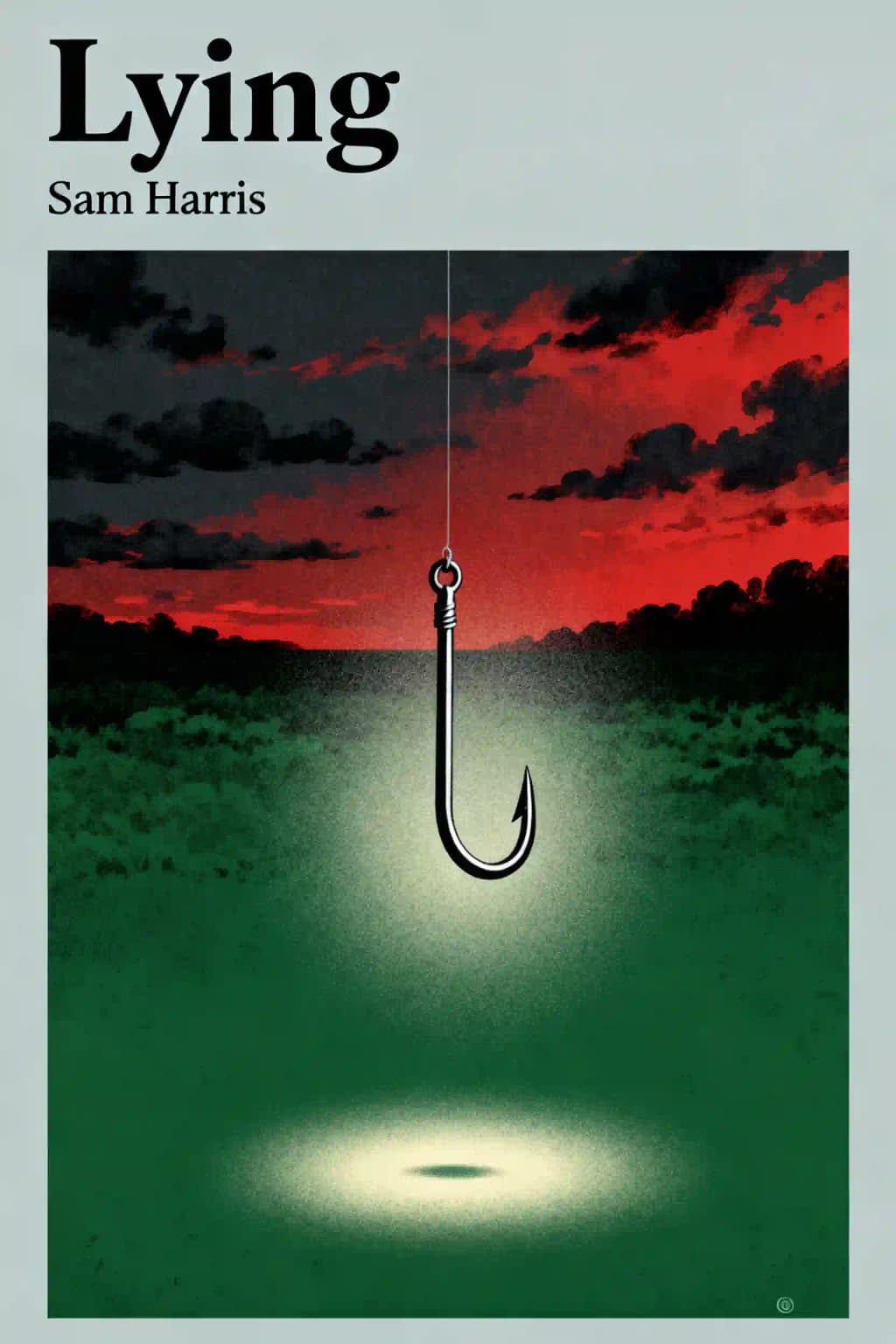
Lying
Overview of Lying
In "Lying," Sam Harris delivers a radical challenge: what if even white lies corrode our integrity? Endorsed by Tim Ferriss as "the most thought-provoking read of the year," this concise manifesto reveals why honesty - however uncomfortable - might be our most undervalued superpower.

Key Themes in Lying
- radical honesty
- ethical communication
- white lie consequences
- moral philosophy
- authentic relationships
Quotes from Lying
Lying is, almost by definition, a refusal to cooperate with others.
The problem with lying—for those who choose to indulge in it—is that it requires you to keep track of your lies.
What would happen if you simply stopped lying?
Honest people become rare and precious refuges of reliability and authenticity.
Honesty brings dysfunction to the surface.
Characters in Lying
- Sam HarrisAuthor and philosopher who advocates for honesty
- SitaA friend of the author used as a case study
About the Author
About the Author of Lying
Sam Harris, neuroscientist, philosopher, and bestselling author of Lying, is a leading voice in secular ethics and rational inquiry. He is a founding figure of the New Atheism movement alongside Richard Dawkins and Christopher Hitchens.
Harris brings his expertise in neuroscience (PhD, UCLA) and philosophy to explore truth-telling as a moral imperative. His works, including The End of Faith—winner of the PEN/Martha Albrand Award—and Waking Up: A Guide to Spirituality Without Religion, bridge science, philosophy, and practical wisdom.
Harris hosts the Making Sense podcast, ranked among Apple’s top philosophy shows, and created the meditation app Waking Up, used by over 1 million subscribers. A frequent commentator on ethics and consciousness, his books have been translated into more than 20 languages, with The End of Faith spending 33 weeks on The New York Times bestseller list.
Download Summary of Lying
Get the Lying summary as a free PDF or EPUB. Print it or read offline anytime.
FAQs About This Book
Lying by Sam Harris argues that truthfulness forms the bedrock of ethical relationships and societal trust. The book challenges readers to abandon even "white lies" by demonstrating how dishonesty erodes personal integrity and social cohesion. Harris examines scenarios from everyday interactions to high-stakes conflicts, advocating for pragmatic honesty as a path to simpler, more authentic living.
This book is ideal for ethics enthusiasts, communication professionals, and anyone seeking to improve personal relationships through radical honesty. Leaders, educators, and those navigating complex social dynamics will find actionable insights into fostering trust and transparency.
Yes—the book’s concise, thought-provoking analysis (endorsed by Neil deGrasse Tyson and Tim Ferriss) offers timeless principles for reducing conflict and improving decision-making. Its 26-page format delivers high-impact ideas without fluff, making it a quick yet transformative read.
Harris aims to dismantle justifications for deception by exposing its hidden costs. He contends that lying—even with good intentions—creates mental burdens, damages trust, and perpetuates systemic dishonesty. The essay encourages readers to embrace uncomfortable truths for long-term societal benefit.
- White lies: Often more harmful than helpful, fostering misunderstandings.
- Blunt honesty vs. compassion: Harris advocates tactful truth-telling over evasion.
- Trust erosion: Lies fracture relationships and institutional credibility.
- Ethical dilemmas: Examines extreme scenarios like lying to protect others.
Harris argues that white lies—like falsely complimenting a gift—subtly degrade trust and deny others agency. He suggests alternatives like, “I’m touched you thought of me, but this isn’t my style,” which preserve honesty while acknowledging the giver’s effort.
- “To lie is to erect a boundary between the truth and others’ perceptions of us”
- “Lying is almost by definition a refusal to cooperate with others”
- “The more consequential the beliefs…the more consequential the lie”
The book advises:
- Decline invitations truthfully instead of fabricating excuses.
- Give constructive feedback rather than insincere praise.
- Avoid lying about preferences in relationships to prevent resentment.
Some argue Harris’s stance is impractical in extreme cases (e.g., protecting someone from danger) or socially awkward (e.g., surprise parties). Critics note his endorsement of evasive non-answers still risks misinterpretation.
Unlike broader ethics books, Lying focuses specifically on deception’s ripple effects. It complements Radical Candor (workplace honesty) and The Righteous Mind (moral psychology) but offers a more actionable, personal framework.
In an era of misinformation and AI-generated content, Harris’s case for vigilance against self-deception and “small” lies provides critical tools for maintaining authenticity in digital and personal interactions.
Harris references classics like Othello and Anna Karenina to show how lies catalyze tragedy. These analogies reinforce his argument that dishonesty—even well-intentioned—distorts reality and breeds conflict.
As a neuroscientist and philosopher, Harris combines empirical research on trust mechanisms with ethical reasoning. His prior work on free will and morality grounds the book’s interdisciplinary approach.





