第1章
The Walking Dead of Customer Service: How to Create an Unstoppable Army
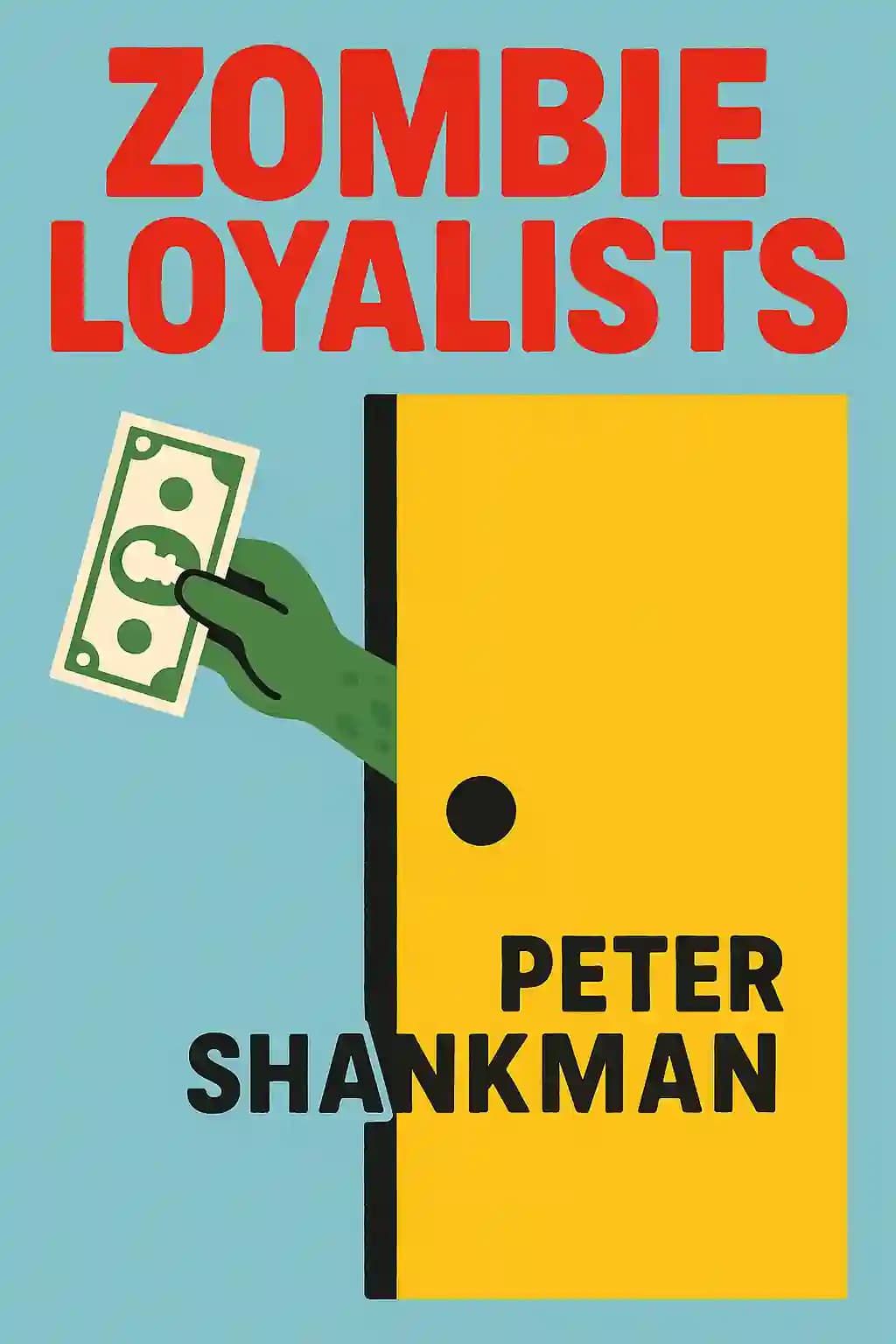
What if you could create customers so loyal they'd practically eat your competitors alive? In Peter Shankman's "Zombie Loyalists," he reveals how businesses can transform ordinary customers into passionate advocates who market your business better than you ever could. This isn't just another customer service book-it's a survival guide for the modern business landscape where one viral complaint can devastate your reputation overnight. The book has become required reading at companies like Zappos and Ritz-Carlton, with Tony Hsieh calling it "the ultimate playbook for creating customers who will never leave you." Even more impressive, the strategies have been implemented by over 1,000 companies worldwide, with an average reported increase in customer retention of 23% within the first year of adoption. The zombie metaphor might seem playful, but the results are deadly serious for your bottom line.
第2章
The Loyalty Gap: Why Most Businesses Fail Their Customers
The disconnect between how businesses perceive their customer service and how customers actually experience it is staggering. A remarkable 80% of companies believe they deliver "superior" customer service, while only 8% of their customers agree. This perception gap explains why so many businesses struggle to create loyal customers despite their best intentions.
Most companies view customer service as a department rather than a company-wide mission. They implement short-term "projects" to improve service metrics without fundamentally changing their culture. But creating Zombie Loyalists-customers so passionate about your business that they actively recruit others-requires a total commitment from every level of the organization.
Poor internal communication creates another major barrier. When departments operate in silos, customer issues get trapped in bureaucratic quicksand. I once witnessed a restaurant chain where addressing customer complaints required multiple emails between departments and legal approval-a process that could take days or weeks. In today's world of instant gratification, customers expect immediate solutions.
Companies also fail when they don't empower employees to make decisions. As a teenager working at a frozen yogurt shop, I took initiative to polish the tarnished brass poles outside, thinking shiny poles might attract more customers. The franchise owner's response? "I don't pay you to think. Get back behind the counter." This attitude kills employee initiative and ultimately drives away customers.
Perhaps most damaging are rigid corporate policies designed to protect the company rather than serve customers. Banks epitomize this problem-most people think their bank is terrible but don't switch because they believe all banks are equally awful. I once tried to deposit a check with my well-behaved Labradoodle on a leash. The manager insisted I remove the dog or leave, suggesting I tie him up outside on a busy Manhattan street. When I refused, they called security. Meanwhile, across the street at Commerce Bank (now TD Bank), managers welcomed dogs with belly rubs and branded biscuits. I immediately moved all my accounts there, and since 2002, they've made significantly more money from me than my former bank ever would have.
The good news? Customer service standards are so abysmal that even slightly above-average service can create loyal customers. When a gas station attendant in New Jersey proactively cleaned my windows while pumping gas, I was so shocked I tipped her-something that would have been standard service decades ago. This creates an enormous opportunity for businesses willing to exceed the low bar set by their competitors.
第3章
Creating a Breeding Ground for Fierce Customer Loyalty
Building an army of Zombie Loyalists starts with your employees. Companies must value their employees before employees can properly value customers. When employees feel appreciated, they naturally extend that same care to customers.
Open-door policies and managers who actively engage with employees create happier, more productive workplaces. At AOL's newsroom in the 1990s, my boss Dean Wheeler maintained a genuinely open door, allowing us to address problems before they escalated. This trust-based approach prevented small issues from becoming costly problems.
Conversely, micromanagement kills both employee morale and customer experience. Michelle, who now runs two successful independent garden centers, describes her nightmare experience working for a micromanager who constantly critiqued even simple tasks like stacking planting pots. Despite being called the "best employee," Michelle found the environment unbearable. Worse, the micromanagement directly affected customers, with the boss interrupting sales to check if Michelle was performing satisfactorily. Regular customers eventually stopped shopping there because of the uncomfortable atmosphere.
Companies that breed Zombie Loyalists understand that employee happiness translates directly to customer happiness. Thule Inc. encourages outdoor activities with daily lunch bike rides, on-site mountain bike trails, yoga classes, and exercise facilities. These inexpensive perks keep employees healthy and passionate about the company. When employees connect what they do outside work with their company, they become fans who speak highly of what they love.
Showing employees the impact of their work creates meaning and motivation. At HARO (Help a Reporter Out), we regularly read emails from users whose businesses were saved through media exposure gained via our service. One bakery owner featured in a national newspaper received orders from around the world, saving her business and employees' jobs. By highlighting these success stories at weekly team lunches, employees understood their value and became motivated to work harder.
Meaningful perks don't always require significant financial investment. At Vocus, management sponsored a competitive swing dancer's competition after learning about her hobby. Similarly, an engineering firm allowed a skydiving employee to use their multimillion-dollar 3-D imaging computer to improve his wing-suit flying. This not only delighted him but led to him spending more time at work and finding new applications for clients.
Employee loyalty mirrors the dog-owner relationship-when you show unwavering support, they'll protect your interests fiercely. Companies must defend employees when they're in the right, even if it means losing a customer. I once "fired" a client whose CEO made inappropriate advances toward my employee. That employee, now at a Fortune 50 bank, later hired me to keynote her company's sales conference.
Creating a culture where failure is accepted as part of growth also breeds innovation and loyalty. I carry a napkin in my wallet with "Fail Often!" written on it as a reminder that failure isn't weakness-it's educational. The legendary IBM CEO Tom Watson Jr. once told an executive who lost $10 million on a failed venture: "Fire you? Hell, I spent $10 million educating you. I just want to be sure you learned the right lessons."
Finally, businesses must embrace change or risk extinction. Companies that failed to adapt-Kodak, Polaroid, BlackBerry, Gateway-once dominated their industries but couldn't evolve with changing customer needs. Every employee must understand the entire business, regardless of their specific role. One large company requires non-call center employees to spend a day every six months shadowing call center workers. A national pizza chain makes senior executives take orders, make pizzas, and deliver them three days annually.
第4章
Infecting Your First Customer: The Birth of a Zombie Loyalist
With your corporate culture optimized, it's time to create your first Zombie Loyalist customer. Most customers expect to be treated poorly in service situations, leaving neutral at best or unhappy at worst. This low bar creates tremendous opportunity for businesses willing to exceed expectations.
Creating Zombie Loyalists starts with underpromising and overdelivering. When a mechanic promises an oil change in 15 minutes but takes 27, customers notice and become frustrated. By setting realistic expectations (or even padding estimates slightly), businesses can create pleasant surprises when service is completed early.
Even the simplest interactions can create loyal customers. Elizabeth, a San Francisco writer, bypasses six closer bodegas to visit one two blocks in the opposite direction because the counter guy dances with her and notices her preferences. When he saw she stopped drinking alcohol, he started stocking more V-8 and lemonade without being asked. These personal touches transform a routine transaction into a relationship worth going out of your way for.
Car dealerships face inherent customer suspicion, making Zombie Loyalist creation particularly challenging. When Melissa brought her Honda in with a broken window during financial hardship, the repair manager recognized her loyalty history and fixed it free of charge. Her gratitude manifested as thank-you gifts, guaranteed future purchases, and numerous referrals that generated significant business. The crucial element was employee empowerment-the manager could make this decision on the spot.
Simple observation and empathy can create instant Zombie Loyalists. When Ilana and her fiance visited Greek Corner in Boca Raton looking visibly upset, the owner-whom they'd never met-noticed their expressions and declared no one could be sad in his restaurant. He brought complimentary ouzo shots and applied a 10% "bad day discount" to their bill. This unexpected gesture transformed occasional diners into twice-monthly regulars who consistently bring friends.
Being nice matters not just for the person you're helping, but for everyone watching. Lindsey Wolko witnessed exceptional service at Wegmans supermarket when an employee noticed an elderly woman struggling to find products. Without being asked, the employee put down his stock, introduced himself, and became her personal guide through the store. He even rang her up at a closed register and ensured she got home safely. Witnessing this care made Lindsey "a customer for life."
Small, unexpected gestures often make the biggest difference. When Laura Stocker had a new car radio installed at Creative Car Tunes, she discovered the installer had taken the extra minute to write down her previous radio presets and program them into her new radio. This small touch transformed an ordinary transaction into a delightful experience.
Passion for your products creates authentic connections with customers. When David Mayer brought his wife Holly to Ancient Wonders to learn Magic: The Gathering, the passionate staff sat her down, taught her to play, discovered her style, and got her hooked. Holly then convinced her sisters-in-law to play, bringing the entire family to Ancient Wonders. Despite moving away, David still waits for his twice-yearly trips back to Oregon to stock up at the store.
Even in digital interactions, personal touches matter enormously. MovingWorlds.org transformed the typical automated follow-up process by having employee Mark Horoszowski personally email Megan when she hadn't completed registration. He included his Skype number, offered to schedule a meeting, and even asked about her unusual email address. This personal touch impressed Megan enough to complete her registration and share the story.
第5章
Building Your Zombie Army: From One Loyal Customer to Many
Napoleon Bonaparte knew that leadership transforms an army's fighting spirit. This section explores how to strengthen and grow your initial Zombie Loyalist forces through small moves that make huge differences.
Stuart Tracte's experience with Bose demonstrates perfect Zombie Loyalist breeding. Despite buying his headphones from Best Buy, when they broke, Bose replaced them without question while Best Buy refused. When his headphones failed, frayed, or were damaged through normal use, Bose consistently replaced them without hesitation. This no-questions-asked policy transformed Stuart into a vocal evangelist who actively converts others to the brand.
Morton's Steakhouse creates "personalized wow" moments that cost almost nothing but deliver tremendous results. When making reservations, they ask if you're celebrating anything special, then customize your menu with personalized birthday or anniversary wishes. These small touches make customers feel like celebrities, compelling them to share their experiences and return repeatedly. I've personally brought over 200 different people to Morton's without any financial relationship with the restaurant-purely because their exceptional service turned me into a Zombie Loyalist.
Two Tiffany stories demonstrate how exceptional service creates lifelong Zombie Loyalists. In 1980, 21-year-old Meg Coldwells was denied a charge account at Tiffany. Outraged, she wrote directly to Walter Hoving, Tiffany's chairman. Within a week, she received a personal seven-word response: "Dear Ms. Eigo, Will open. God bless," signed by Hoving himself. Nearly 40 years later, Meg still has this letter and shares her story constantly.
When Kevin Kuhn's friend wrote to Maker's Mark about a billboard they'd spotted in New York City, the company responded a month later with a framed copy of the ad, a handwritten note, and an invitation to visit the distillery. Though Maker's Mark isn't Kevin's favorite bourbon, he still keeps a bottle at home to support the company and has told the story hundreds of times.
After Hurricane Sandy devastated Joe Maida's mother's three-generation family home in Monmouth Beach, New Jersey, he hired RSC Contracting to handle repairs. Beyond doing excellent work, RSC owner Rob Crotzer secretly documented the entire seven-month renovation process with photographs. When Joe's mother hosted a celebration after moving back in, RSC presented her with a beautiful engraved photo album showing the before, during, and after phases of the rebuild. This unexpected gesture transformed Joe from a satisfied customer into a Zombie Loyalist who considers RSC not just contractors but friends.
When baristas at a Raleigh, North Carolina Starbucks started providing complimentary ice water for Beverly Brown's running club that meets at 5:30 a.m. on Thursdays, Beverly immediately shared photos on social media and tagged all her runner friends. This simple gesture-costing only a few ice cubes-has likely generated significant additional business.
When Nancy Dibert and her husband booked a couple's massage at the newly-opened Envy Spa and Salon to celebrate the 25th anniversary of their first date, the receptionist noted the special occasion. Upon arrival, they were stunned to be greeted with a chocolate chip cookie cake iced with "Happy 1st Date Anniversary!" This $15 gesture so impressed them that they've exclusively used Envy for all their family's spa and salon needs for six years-even after moving an hour away. They've spent over $20,000 there and referred numerous friends.
When publicist Harlan Friedman discovered he needed a tuxedo for an awards gala with just one hour to spare, Victor Talbots came to his rescue. While Men's Warehouse flatly refused to help, Victor Talbots kept their tailor late, helped Harlan into a perfect tux in just 22 minutes, complete with a nip of Scotch and plenty of laughs. The experience transformed Harlan into a fierce Zombie Loyalist who shared his story with 1,000 industry influencers that very night.
第6章
The Power of Sharing: How Zombie Loyalists Spread Your Message
In our hyper-connected world, people share everything-from feet on planes to traffic jams to restaurant meals. Smart businesses understand that customers' natural tendency to share can be harnessed when they're given exceptional experiences worth talking about.
Passionate customers naturally share more about brands they love, but when a business goes above and beyond, that sharing multiplies. When Jennifer Roark Long checked into Trump International Hotel in Chicago with her children, the hotel delivered milk and cookies within minutes, prompting her to share photos online. Her network, likely filled with other parents, saw this gesture. As our online networks evolve to predict our preferences, these genuine shares become even more valuable than traditional advertising.
Small gestures often create the biggest impact on customer loyalty. Many businesses resist "surprise and delight" tactics, seeing them as giving away profits with no return. But consider Amy Nowacoski, founder of "Fat Girls Can Run," who once mentioned she liked LARABAR energy bars. The company sent her a package with new flavors and a thank-you note. For the cost of six energy bars and minimal shipping, LARABAR created a passionate advocate who not only shares photos and writes blog posts about them, but actively converts others.
When businesses create delightful moments without expectation, customers naturally share their experiences. At Red Robin, a manager comped a pregnant woman's meal, writing "mom 2 bee good luc" on the receipt. The family shared the photo online, which spread to Reddit, ABC News, and numerous other outlets. You can't script every scenario, but empowering employees to use their judgment when opportunities arise creates powerful, shareable moments.
Today's customers need validation and ways to share that validation with others. The Twisted Root Burger Company in Texas empowers employees to give random discounts for whatever they deem appropriate, often with humorous notes like "best butt" compliments on receipts. These shareable moments spread online, turning customers into advocates.
Despite social media turning us into oversharers, it has also revived good manners-especially the art of thanks. While many social media books obsess over "interaction" and "engagement," the real opportunity lies in encouraging sharing from existing customers who are close to becoming Zombie Loyalists. Even small businesses without massive monitoring systems can respond to customer praise. When someone tweets about an "amazing meal" at your restaurant, a simple reply offering a free drink on their next visit can transform them into a lifelong advocate.
While service businesses tend to get more shares because they offer tangible products like pizza or hotel stays, non-service industries can create equally powerful Zombie Loyalists. DPR Construction exemplifies this by not just posting about their work but sharing content worth reposting. They've succeeded by humanizing construction, generating significant engagement despite being in a traditionally non-social industry.
When running HARO, I invested heavily in branded shirts, hats, sweatshirts and stickers to thank users who engaged with us. We encouraged people to send photos wearing our merchandise in interesting locations, featuring the best ones prominently. By treating swag as prizes rather than self-promotion, we created Zombie Loyalists who proudly displayed our logo worldwide-even on a NASA astronaut's helmet.
The American Express Black Card's legendary exclusivity inspired Dunkin' Donuts to create their own invitation-only black loyalty card. When Carla Caccavale Reynolds received one with $50 preloaded as recognition for being a "very best guest," she was delighted by its exclusivity. Unlike standard reloadable cards, you can't buy this one-you must be "chosen." Carla now buys more coffee for others than ever before, exclusively from Dunkin', and enjoys showing off her rare card.
第7章
When Zombies Attack: Recovering Lost Loyalists
When a loyal customer becomes dissatisfied, it's a code red emergency. A scorned Zombie Loyalist can take all their infected followers elsewhere, with devastating effects. Winning them back is critical for business survival.
In 2004, as a loyal Continental Airlines customer, I discovered a $500 fee each way to use miles for upgrading to first class on a London trip. Outraged at how they treated "best travelers," I emailed president Larry Kellner directly. To my shock, he personally called back, explained the situation regarding new fare classes, and waived the upgrade fees. This two-minute conversation transformed my frustration into renewed loyalty. Ten years later, I'm still with United and would rather connect through three cities than take another airline-all from a two-minute phone call.
Farnoosh Brock used a Patagonia bag religiously for ten years until it ripped. Despite being out of warranty, Patagonia fixed it for free. When it ripped again two years later, she hesitantly called customer service. Not only did they take the 12-year-old bag back, but when it couldn't be fixed, they gave her a non-expiring $160 gift card. This exceptional service transformed Farnoosh into a lifetime Zombie Loyalist.
Conversely, Steve Hultquist, a technology journalist and early Jawbone adopter, sent his Jawbone 2 headset for repair. When it returned, it came without the charger or accessories. Despite multiple calls, Jawbone refused to replace the $2 charger, insisting he purchase a new one. This rigid adherence to policy cost them a valuable customer who had previously recommended their products to many friends. Steve switched to BlueAnt headsets and now actively recommends against Jawbone products.
Melinda Masse frequented an Italian restaurant near her home multiple times weekly. Three consecutive times, she ordered a specific dessert, was told it was available, then informed at pickup time that it wasn't. Each time, the manager promised to "make it up to you next time" instead of offering immediate compensation. After the third occurrence, Melinda stopped patronizing the restaurant. The cardinal sin: letting an unhappy zombie leave without a clear plan to make her happy again.
When Michael, a loyal six-year customer of a Los Angeles commuter bus service, noticed declining service with frequent delays and no-shows, he spotted the district manager on the bus and shared his frustrations. The manager listened, took notes, and promised to investigate. Two days later, Michael found a new driver and the manager personally welcoming him back. The previous driver had been removed for retraining after disregarding procedures. The manager even gave Michael his personal mobile number with a promise to drive him personally if the bus was ever more than five minutes late. Three years later, Michael remains a loyal customer.
Peggy Jo Shaw had been with Sun Trust Bank since the early 1980s when it was called Crestar. After a computer upgrade erroneously changed her account type to one with numerous fees, she spent days trying to resolve the issue and even wrote to the CEO without response. Customer service repeatedly told her the fee-free account she'd previously had was no longer available. Feeling betrayed, Peggy moved not just her account but her children's college funds, savings, and mortgage to another bank-taking three generations of loyal customers with her.
Dennis Napier was a devoted Saturday night takeout customer at O'Hara's restaurant near Boston. After noticing recurring errors in his orders and mentioning them to management without improvement, Dennis finally gave up on the restaurant. Three months later, a bartender texted him about "changes" and asked for one final chance. When Dennis returned, the owner personally greeted him, thanked him for identifying a weakness in their takeout process, and refused payment. A year later, Dennis remains a loyal customer, spending around $40 weekly ($2,000+ annually) and enthusiastically recommending the restaurant.
第8章
Keeping Your Zombie Army Engaged and Growing
This section explores strategies to prevent Zombie Loyalists from becoming bored and disengaged. Since humans naturally seek novelty when bored, businesses must introduce unexpected moments of delight to maintain loyalty.
When Barry Diller joined struggling Paramount Pictures in the late 1970s, he implemented a simple but powerful practice: spending thirty minutes every morning calling ten random contacts just to say hello. These calls were never sales pitches-just friendly check-ins about family and life. The result? When Hollywood players needed something done, Diller was top-of-mind because he'd called them within the past few months. Under his leadership, Paramount transformed into one of Hollywood's top studios.
Rent the Runway created a Zombie Loyalist when customer Randi Milner returned a dress with the note "fiance just broke up with me." Beyond simply refunding her money, the company sent her flowers on Valentine's Day with a note reading "Happy It's His Loss Day!" This unexpected kindness guaranteed her lifetime loyalty and armed her with a story she eagerly shares.
Kim McMahon's snow removal person unexpectedly checked on her after learning she'd lost her husband. He offered to remove trees from her yard himself and later connected her with a trusted contractor for driveway work, who gave her a "friend discount." This kindness turned Kim into an enthusiastic advocate for both businesses.
Companies create loyal customers through personalized gestures around life events. When Dave Donahue had a baby, Uber sent a branded onesie. Starwood sent my newborn daughter a onesie too. Richard Branson featured his friend Ty's baby on Virgin Atlantic's blog as "Our Youngest Virgin Atlantic Member!" These simple acknowledgments of personal milestones transform regular customers into passionate brand advocates.
Brandon Steiner eliminated the dedicated customer service department at Steiner Sports, instead making every employee responsible for customer satisfaction. He believes "customer service is everything," especially in the age of social media where complaints can reach millions instantly. His simple rule: "treat your customer as you would treat your mother."
The chapter offers practical examples for various businesses: flower shops sending surprise arrangements to inactive customers, restaurants placing water bowls for pets outside, airlines offering free drinks to stressed travelers, and dry cleaners posting offers of free suit cleaning for unemployed people with job interviews. These small gestures-like the Ritz-Carlton leaving a new tube of toothpaste when they noticed mine was running low-cost almost nothing but create passionate brand advocates.
第9章
The Future Belongs to Zombie Loyalists
As we look ahead, the future economy will run on trusted networks, with entry achieved through customer relevance. While sites like Yelp currently dominate reviews, they're becoming obsolete-why trust strangers when your own network can guide you?
Within five years, every company will advertise in the same places, competing for the same customers, with minimal product differentiation. What will set businesses apart? Customer service. How each customer feels after an interaction will determine a company's fate.
Your network will automatically track your interactions and sentiment toward businesses. No more manually writing reviews-your frequency of visits, social media comments, and overall engagement will automatically determine a business's position in your network. The most relevant rise to the top.
When friends search for recommendations, they'll see places you frequent and enjoy. And if none of your direct connections has experience with something (like a trip to Fiji), the network will find trusted recommendations through friends of friends. This is already happening with geographical targeting on platforms like Facebook.
For businesses, this means advertising and PR will take a backseat to personal recommendation-which will become even more powerful than it is now. A billboard might catch my attention briefly, but knowing "my stylish assistant Meagan shopped there and loved it" will be the strongest call to action possible.
To survive, businesses must know their customers before they walk in the door. Top restaurants like Eleven Madison Park already Google and Facebook guests before arrival, learning about anniversaries, birthdays, and professional backgrounds to create personalized experiences and server pairings.
The future demands genuine customer service as a culture from CEO to entry-level employees. You can't fake it or half-ass it. Mistakes will happen, but they must be corrected. Every customer must leave thrilled, or the business has failed. Bring Random Amazement Into Normal Situations (BRAINS) every day to breed your Zombie Loyalist army.