第1章
Transforming Business Through Play: How Gamification Revolutionizes Engagement
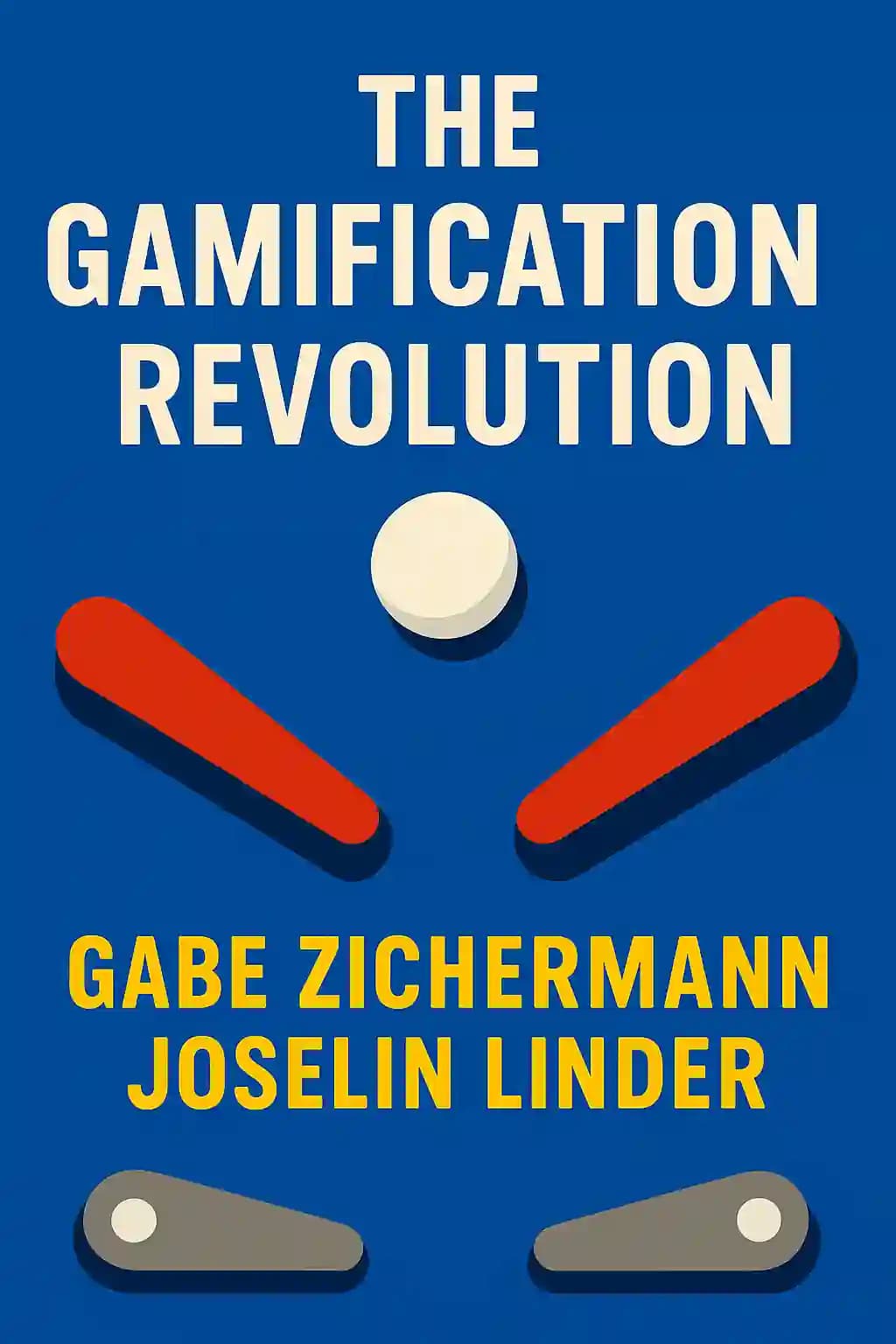
Remember when your parents or teachers told you to stop playing games and get to work? That age-old division between work and play is rapidly dissolving in today's business landscape. The Gamification Revolution presents a compelling case for how organizations are harnessing the power of games to drive unprecedented levels of engagement, innovation, and results. Author Gabe Zichermann, widely regarded as the world's foremost expert on gamification, reveals how this approach is transforming everything from employee performance to customer loyalty.
The book has become required reading in business schools and boardrooms alike, with companies like Google, Microsoft, and Nike implementing its strategies. What makes this text particularly relevant is its timing - published just as gamification was emerging as a recognized business strategy, it predicted the $3 billion annual industry we see today. Even more fascinating is how it's reshaping our understanding of motivation itself. As Elon Musk once noted, "If you're trying to create a company, it's like baking a cake. You have to have all the ingredients in the right proportion." Gamification might just be the ingredient many businesses have been missing.
第2章
The Revolution Will Be Gamified
When Napoleon's troops faced scurvy due to poor nutrition during the Egyptian campaign, he could have simply demanded solutions from experts. Instead, he created a game - offering 12,000 francs to whoever solved the food preservation problem. This grand challenge captivated France's scientific community, eventually leading confectioner Nicolas Appert to invent canning, revolutionizing food preservation worldwide.
This approach exemplifies gamification: using game thinking and mechanics to engage people and solve problems. The strategy delivered multiple benefits: discovering solutions from unexpected sources, evaluating numerous options at no incremental cost, and achieving cost arbitrage through status rewards. Throughout history, similar challenges have driven major advances, from determining longitude in 1714 to the first private spaceflight in 2004.
McDonald's famous Monopoly promotion demonstrates gamification's power to grow audience engagement. Since its 1987 launch, the game has driven customers to visit more frequently and order larger meals. In 2011 alone, the promotion generated a 5.5% same-store revenue increase - approximately $350 million in incremental revenue over just 60 days. The game taps into our desire for exploration and creates value from virtual currency, showing how gamification can dramatically boost customer spending.
As Kiva CEO Premal Shah astutely observed, his biggest competitor isn't other microfinance platforms - it's Zynga. Games are everyone's competition for attention in today's world. Studies show 96% of people play at home and 80% while commuting, with over 60% of westerners regularly playing video games. The engagement these games generate comes at the expense of attention to other activities and brands.
The gaming demographic has dramatically shifted - the average gamer is now a 43-year-old woman, not a teenage boy. Mobile analytics show women are 53% more likely than men to play games. This demographic expansion signals a fundamental behavioral shift. Meanwhile, younger generations aren't just playing games; they're living them, leading the trend toward gamification.
Consider twelve-year-old Remy, who successfully landed a simulated Boeing 737 at LAX with minimal instruction, demonstrating how today's youth intuitively understand complex interfaces through gaming experience. Research shows 70% of parents allow toddlers to use mobile devices, with 38% of children under eight having used smartphones or tablets. This generation is developing enhanced coordination, multitasking abilities, and expectations for engaging experiences.
In today's distraction-filled environment, the strategic challenge isn't to be louder than competitors but to create focused engagement. Gamification provides this focus, cutting through the noise by capturing attention in meaningful ways. Rather than competing directly with game companies, businesses should integrate game elements with their brand strengths - not making games, but making games work for them.
第3章
Gamification as Corporate Strategy: Driving Engagement Through Play
Research from major automakers reveals a shocking trend: today's youth are increasingly disinterested in driving. According to Frontier Group and U.S. PIRG, miles driven by teens fell over 23 percent from 2001 to 2010, while the percentage of young adults without driver's licenses increased by 20 percent. The primary reason? Driving isn't fun enough anymore. While driving once facilitated social connections, today's digital alternatives provide more immediate positive reinforcement.
Smartphones buzz with notifications while driving prohibits multitasking for safety reasons, creating a conflict between driving and social engagement. Automakers are responding with gamification - Ford's hybrid vehicles feature virtual plants that grow with eco-friendly driving choices, while Nissan Leaf enables drivers to compete for being the safest and greenest through social comparisons.
Smart companies across industries are developing comprehensive gamification strategies to adapt to changing consumer behaviors. These strategic implementations follow recurring patterns that drive success, including user-centered design, dedicated engagement leadership, and prioritizing user needs over corporate objectives.
eBay's remarkable turnaround from its 2008 slump to record earnings in 2012 was significantly driven by reorienting around user-centric design. Under Matt Maclaurin's EPIC design lab, eBay borrowed from game companies like Rockstar, creating flexible teams that bring together designers, engineers, and business leaders to solve problems quickly. This approach was natural for eBay, whose auction format and feedback scoring system were already fundamentally gamified experiences designed to build trust between buyers and sellers at unprecedented scale.
Forward-thinking organizations are creating dedicated leadership positions for gamification, often titled Chief Engagement Officer (CNO). Companies like Spigit, Cynergy Systems, Nike, Vivid, Yahoo!, SAP, NBC/Universal and EMC have brought gamification experts in-house to champion engagement initiatives. Successful CNOs possess deep understanding of human behavior and motivation, serving as organizational watchdogs for evolving trends while creating guidelines for consistent engagement strategies.
Grammy-winning artist Chamillionaire exemplifies effective gamification through his "Chamillitary" fan community. His philosophy-"Give customers what they want...as long as they do something for me"-drives a points-based system where fans compete to be his biggest supporter. By completing challenges and promoting content, users earn points redeemable for special events, merchandise, and unique experiences like personalized voicemail messages or signed memorabilia. This system creates measurable engagement, helps new fans through a special onboarding process, and gives Chamillionaire control over music discovery and distribution without relying on major labels.
Nextjump exemplifies making engagement a priority, building an employee incentive provider with an enviable corporate culture over 15 years. By gamifying everything from training to bonuses, they've achieved low turnover and high satisfaction. Similarly, the U.S. Army's "America's Army" game let potential recruits experience military life rather than just fill out questionnaires.
Sometimes the gamified experience becomes more valuable than the core business itself. U.S. airlines like United and American lost billions on flying while their frequent-flier programs remained profitable. By 2009, American Airlines' AAdvantage program issued 175 billion miles, with two-thirds going to third-party partners who paid for every mile. This created such interdependence that during airline bankruptcies, banks provided bailouts to protect their card businesses.
Even conservative enterprises like SAP are embracing gamification. Since 2008, SAP has used these techniques across various functions, particularly in its community network connecting corporate clients. With 30,000 regular users earning points and badges for knowledge sharing, the initiative expanded internally to include "Innovation Days" competitions that bring gamified design to core software modules.
第4章
Reimagining Strategic Processes Through Game Mechanics
In 1994, three pioneers in game theory-John Nash, Richard Selton, and John Harsanyl-received the Nobel Prize for their groundbreaking work on noncooperative interactions. Their research using chess, checkers, and poker as foundations opened floodgates for game theory in strategic decision-making, with seven more Nobel winners in the following decade. Game theory, while powerful, has limitations in its emphasis on rational decision-making when humans often act emotionally or instinctively. The promise of gamifying strategy lies in combining mathematical models with emotional understanding to build stronger strategic processes.
Executives are drawn to gamification in strategy because, like games, business is played to win-though winning means different things in different contexts. Unlike most games that reach a finite end, organizations typically plan as though there were no end. The key is finding a strategically gamified approach with the right time horizon.
The alternate reality game "World Without Oil" exemplifies this approach. Created in 2007 by Ken Eklund and Jane McGonigal for PBS, it asked 1,800 participants to imagine themselves in various roles during a 32-day oil crisis simulation. Rather than reaching definitive conclusions, it generated rich insights about human reactions to such a crisis. This type of gamified approach provides valuable perspective on the human side of strategic challenges, complementing statistical modeling to create a clearer picture of potential futures.
Scenario planning, developed in the 1950s at RAND Corporation, has become a mainstay of corporate strategy. By the 1980s, over 50% of Fortune 500 companies were using it, with Royal Dutch Shell among its chief proponents. Business-is-war (BIW) games represent the most familiar gamified scenario tools, with negotiation-based simulations being particularly popular-so much so that every U.S. Army officer since 2007 undergoes such training.
Companies like WikiStrat-the "world's first massively multiplayer online consultancy"-demonstrate the tangible value of gamified planning. Their model treats projects as competitions where global analysts create scenarios in response to client questions, with the best scenarios winning prizes. According to cofounder Daniel Green, the company delivers more scalable and cost-effective analysis than competitors, with contributors reporting their "side job" is more fun than their day job.
Engagement predicts superior outcomes, as Futures Strategy Group notes: "Games bring the competitive landscape to life." Adobe demonstrated this when they gathered 40 team members for strategy planning in 2011. Despite workplace distractions threatening participation, gamification techniques like gamestorming kept over 90% of participants fully engaged throughout the session.
Gamestorming-a combination of games and brainstorming with roots in ancient practices like Native American talking sticks-replaces standard business meetings with gamified approaches that compel people to see ideas through from beginning to end. What distinguishes gamestorming is its narrative structure: sessions establish clear rules at the start and close with meaningful resolution, allowing participants to suspend disbelief and focus entirely on the activity.
Organizations can actively increase team intelligence-particularly emotional intelligence (EI/EQ) and fluid intelligence (Gf)-both crucial for strategic planning. EI helps team members challenge each other constructively with appropriate emotional responses and empathy, while Gf enables novel problem-solving without relying on existing knowledge.
第5章
Supercharging Employee Performance Through Engagement
Today's workforce faces a crisis of disengagement, with over 50% of U.S. workers dissatisfied with their jobs. This trend has accelerated since the 2008 financial crisis, affecting everything from wages to stress levels. Despite rising productivity, employee satisfaction matters more than ever as skilled workers remain scarce in high-growth sectors. Companies like Apple spend up to $125,000 when skilled employees leave, often losing 65% of productivity during transitions.
The millennial generation presents unique management challenges, shaped by technology and different expectations. Their desire for quick advancement, personal development, and frequent feedback isn't about being spoiled-they simply want clear pathways to achievement with discernible victories at every step. Companies that understand this thrive, as millennials bring extraordinary problem-solving abilities, self-direction, and adaptability.
Nike transformed a simple one-hour orientation into a nine-day immersive camp where "Ekins" (Nike spelled backward) live the company's history-running on founders' tracks and handling original waffle soles. This storytelling approach, enhanced with games fostering camaraderie, creates such powerful brand alignment that many participants choose to get Nike swoosh tattoos. While storytelling alone isn't gamification, combining them creates powerful brand advocates.
Target revolutionized checkout efficiency by implementing a simple game mechanic showing cashiers letters on their screens: "G" (green) for fast enough scans and "R" (red) for too slow, with a percentage score appearing after transactions. With 82% as the target score, cashiers unexpectedly reported increased job satisfaction despite the monitoring. The game mechanics gave employees a sense of agency and control over repetitive work, transforming monotony into a personal challenge without elaborate prizes.
Omnicare's IT help desk faced 30% call abandonment rates with 20+ minute wait times. Their initial attempt to improve performance through accountability metrics and gift card incentives backfired, creating resistance among professional staff who viewed it as demeaning. The company pivoted to "OmniQuest," a gamified system with challenges, badges, and achievement-based goals rather than call-by-call metrics. This redesign reduced hold and dropoff rates by 80% while improving morale.
Rypple (acquired by Salesforce.com for $65 million and rebranded as Work.com) reimagined employee reviews through gamification. Their system replaced traditional annual reviews with mobile, social, 360-degree feedback featuring badges, leaderboards and point systems in a Facebook-style interface. Companies like LivingSocial saw remarkable adoption-98% of employees received peer reviews and 93% completed self-summaries in an entirely opt-in system.
For gamified performance systems to succeed, they must be optional rather than mandatory. While frontline service workers may accept structured feedback systems with clear KPIs, knowledge workers, managers, and executives require more inclusive, voluntary approaches. Forced gamification risks falling into the same trap as other imposed IT systems-creating suspicion and resistance rather than engagement.
第6章
Igniting Innovation Through Collaborative Play
When considering employee-driven innovation, the UK Department for Work and Pensions (DWP) stands out with its gamified economic marketplace called Idea Street. In this system, employees propose innovations, which are then traded like stocks in a virtual market. Without any cash rewards, Idea Street delivered 10 million in savings within just 9 months through 60 implemented ideas. Civil servants reported increased job satisfaction while customers experienced improved service quality.
Marketplace designs for innovation like Idea Street and its predecessor Innovation Market succeed through accelerated feedback loops that provide immediate, transparent responses to ideas. While Innovation Market at Lloyds TSB generated impressive results with over 1,200 ideas monthly, its real-currency rewards led to market manipulation and hyperinflation. In contrast, DWP's Idea Street thrived with virtual rewards, proving more sustainable.
Microsoft's Windows Language Quality Game similarly leveraged gamification, engaging 4,600 employees to review over 500,000 screens and find 7,000 defects in Windows 7's localization. By organizing employees into "tribal" language teams competing on leaderboards, Microsoft tapped into meaningful motivation that benefited both the company and users worldwide.
The stark contrast between immediate feedback in gamified systems and traditional delayed corporate bonuses reveals why shorter feedback loops succeed. Citibank recognized this when hiring Susan Andrews from Apple to lead innovation in 2010. Her first project, the Global Ideas Challenge, engaged 20% of employees across 97 countries, generating 2,300 ideas with "ideators" creating concepts, "collaborators" refining them, and "connectors" recruiting participants.
The Obama administration's Race to the Top (R2T) program demonstrates how gamification drives innovation in regulated environments. This $4.35 billion contest spurred educational reform by awarding points to states implementing accountability measures and curriculum standards. The competitive framework created remarkable results-Hawaii rose from low scores to top performance in just one year, while California implemented teacher-student performance tracking.
When marketplace approaches prove inadequate for driving innovation, simulation-oriented designs excel, particularly for complex scenarios. NTT Data, Japan's largest IT services company, developed "Go Leadership" to address the challenge of consultants who "go native" after years embedded with clients. The simulation uses a virtual world to test consultants with scenarios like difficult employees and client relationship issues. Performance in Go directly connects to real-world advancement opportunities and bonuses.
Despite seeming antithetical to work, play proves remarkably effective for driving innovation. Research shows elements of chance and skill in games enhance creativity and work success. Google's 70/20/10 model (70% core tasks, 20% core projects, 10% unrelated activities) has produced innovations like Gmail and AdSense. Their campuses feature games like volleyball and pool, making "recess" the new "smoke break." Through playful competition and team activities, companies foster innovation that's cheap, easy and fun-proving that play helps people excel.
第7章
Revolutionizing Recruitment and Training Through Game Design
In the 1980s, despite economic prosperity, the American military struggled with recruitment as young people pursued other opportunities. Colonel Casey Wardynski revolutionized this with "America's Army" in 2002, a video game providing virtual Army experience. At $33 million over ten years (a fraction of the $700 million annual recruitment budget), it became their most cost-effective recruitment tool ever. MIT research found it gave 30% of young Americans a more favorable view of the Army and impacted recruits more than all other advertising combined.
In 2004, Google placed a billboard in Silicon Valley with a mathematical puzzle: "{first 10-digit prime found in consecutive digits e}.com." Solving it led to another puzzle and ultimately to Google Labs with the message: "We're looking for the best engineers in the world. And here you are." This targeted recruitment approach attracted precisely the problem-solvers Google wanted. Similarly, Quixey created the "Quixey Challenge" offering $100 to programmers who could solve algorithm bugs in under a minute. From 38 winners, they found 5 serious candidates at a cost of just $3,800, compared to traditional recruiting costs exceeding $100,000.
Brandstorm is L'Oreal's annual international competition where teams of three compete to design and market new product lines for one of the company's 23 brands. In 2012, teams from 40 countries developed products for the Body Shop, incorporating digital technology in their marketing strategies. Beyond recruitment, Brandstorm delivers dozens of vetted product ideas with complete marketing plans, helping L'Oreal understand how younger consumers communicate and shop.
Companies seeking less-skilled labor also employ gamified recruitment strategies. Domino's Pizza Hero app challenges players to virtually prepare pizzas that other players evaluate, with high-scorers receiving job opportunities. The app generated over $1 million in pizza sales in its first 28 days, quickly rising to $1 million weekly. Meanwhile, Marriott International, facing 50,000 non-U.S. job openings, created My Marriott Hotel to attract younger workers in emerging markets where western hospitality concepts were unfamiliar.
Traditional training methods are expensive and often ineffective for distracted employees, particularly younger generations disinterested in conventional information delivery. Games provide engaging alternatives with measurable results. Dr. James Rosser's research showed game-playing surgeons made 47 percent fewer errors and were 31 percent faster on laparoscopic skills tests. In healthcare, GE's Patient Shuffle game helps medical professionals understand hospital efficiency by simulating emergency room operations from admission to discharge.
Research from the University of Denver Business School found organizations using video games for training have employees with 11% more factual knowledge, 14% more skill-based knowledge, and 9% higher retention rates. Sun Microsystems developed "Rise of the Shadow Specters" and "Dawn of the Shadow Specters" to address three challenges: remote workforce isolation, engaging training needs, and attracting younger talent to an aging workforce.
Dr. Sivasailam "Thiagi" Thiagarajan's Four-Doors Approach to e-Learning offers users choice in how they engage with training material. The system includes: the library (containing all information resources), the playground (fast-paced games at varying difficulty levels), the cafe (social comparison with peers and experts), and the evaluation torture chamber (actual testing components). This approach gives learners agency to progress at their own pace and learning style, transforming mandatory training into self-directed learning.
第8章
Enhancing Health and Wellness Through Gamified Experiences
Research suggests higher status can actually improve health, with studies showing the perks of elevated positions statistically add years to life. The Whitehall Study, begun in 1985 by British scientists, examined health patterns among over 10,000 British Civil Service workers. Results revealed lower-ranking employees had higher mortality rates primarily due to heart disease, with risk factors including obesity, smoking, high blood pressure, and long work hours. The follow-up Whitehall II study found workplace factors like rank and status were even stronger predictors of health than fitness, smoking, and eating habits.
Eustress, or "good stress," creates positive sensations like the excitement of a roller coaster or passionate kiss. Common during gameplay, eustress occurs when players explore potential gains in a state of play. Unlike harmful stress, eustress actually benefits the body, returning it quickly to stasis after a burst of excitement. It motivates learning, growth, and achievement, while regular stress causes breakdown and anxiety. Studies show eustress happens whenever people operate in systems where achievement is possible.
Every day, 11 million people play World of Warcraft, assuming roles as healers or "tanks" battling for common goals. A 2009 Queensland University study of 200 balanced WoW players found that working together in "guilds" provided a sense of belonging that decreased anxiety, depression, and stress. While most workplaces have hierarchical leveling systems, it's impractical to promote everyone to manager to reduce stress. Instead, offering opportunities to "level up" through gamified experiences can create similar feelings of self-satisfaction and self-worth.
Nextjump CEO Charlie Kim transformed employee exercise into a game when expensive in-office gyms proved ineffective for his sedentary workforce of engineers and developers. The company divided employees into mixed teams of gym users and non-users, establishing leaderboards ranking teams by workout frequency. Initially achieving 50% participation twice weekly, they enhanced engagement by rewarding a team that reached 100% participation with a bonus and public recognition.
Nextjump's health initiative yielded more than just reduced healthcare costs. Kim views health as a pyramid with physical health (exercise, diet, sleep) at the bottom and mental health at the top-with exercise connecting both. The results have been remarkable: 80% of employees work out regularly (compared to just 33% utilization at paid gyms), teams perform faster and better on projects, and employee turnover is well below industry average.
While threatening employees might yield short-term results, positive rewards for fitness prove more effective long-term. Adam Bosworth, Google Health founder and CEO of gamified wellness company Keas, found that point systems are surprisingly powerful motivators. Keas creates team-based health challenges where employees earn points, rewards and recognition by completing wellness tasks. With over 90% of users recommending the service and 70% actively engaged, the program demonstrates how social networks and gamification can create positive feedback loops for employee health.
第9章
Transforming Customer Engagement in a Distracted World
Around 2000, a location-based app called Dodgeball launched with a simple purpose: connect friends while they're out by allowing users to "check in" at locations via SMS. The app quickly became popular among hipsters, showing users a list of friends nearby and enabling serendipitous encounters. The concept seemed brilliant enough that Google acquired it for $2.5 million in 2005. However, founders Dennis Crowley and Naveen Selvadurai soon discovered a fundamental problem: once the novelty wore off, people stopped checking in.
The Dodgeball founders learned that without gamification, users lost interest in checking in. When they launched Foursquare in 2009, they revolutionized location services by adding game elements-badges for behaviors like the "Player Please" for checking in with three members of the opposite sex, "School Night" for 3am weekday check-ins, and status benefits like becoming "mayor" of establishments. This gamification created friendly competition, with users battling over mayorship of everything from coffee shops to coworkers' offices.
Foursquare's success came partly from its unpredictable badge system-unlike Boy Scout badges with clear paths, Foursquare users couldn't see badges coming, creating exciting "squee" moments when they unexpectedly earned one. This surprise and delight encouraged users to share achievements on social media, exposing their contacts to the service and driving viral growth.
By 2006, Nike had lost significant market share in the running shoe category to "hardcore" brands like Asics and New Balance. Their response was Nike+, a gamified hardware-software solution that tracked runs, calories burned, and routes. The platform transformed running into a social, competitive experience where users could race friends across different cities, respond to challenges, and earn rewards like congratulatory videos from celebrity athletes.
Fun sells-even for luxury brands. Apple brilliantly uses subtle gamification in their product launches, embedding clues in media invitations that tech enthusiasts eagerly decode. Their iPhone 4S invitation contained hints about Siri voice recognition and other features, generating massive pre-launch speculation. These cryptic invitations have generated over 4 million blog posts and web mentions-free promotion worth hundreds of millions in revenue.
Element Bars, a custom-made whole food bar company, transformed customer referrals through gamification. Rather than using ineffective "refer-a-friend" forms, founder Jonathan Miller created a pull-based strategy that generated massive social visibility. The company offered free cases of bars through Facebook sweepstakes where users simply had to like their page. Within the first hour, the page received eight times more likes than ever before, reaching 5,000 by day's end.
The most effective social gamification makes social sharing integral to progression, not an afterthought. The TurboTax "Gaming for Good" campaign demonstrated this power through their simple memory card game where matching tax-deductible items triggered donations to Toys for Tots. A key to its success was showing players the direct effect of their actions through a visible donation counter, allowing them to see their collaborative impact in real-time.
第10章
The Future of Gamification: Where We're Headed
Despite challenging economic conditions, companies struggle to find qualified workers across industries. Gamification transforms recruitment by quickly identifying top candidates, extending pre-employment testing, and making the process more social. Employee retention has also declined significantly-CareerBuilder reports 76% of employees would leave for the right opportunity, while MetLife found loyalty rates at seven-year lows. Notably, 8 of the 10 "Happiest Companies in the World" openly use gamified practices with their workforce, demonstrating how engagement drives happiness and retention.
Today's customers give businesses less than 60 seconds to prove themselves, while simultaneously using multiple screens during activities like watching television. Gamification offers a unique opportunity to cut through this noise by leveraging game mechanics like surprise and delight. By meeting users where they are and owning the distraction rather than fighting it, companies can create unprecedented connection. The most successful implementations use social connection, progression to mastery, and viral loops to maintain engagement, while minimizing tangible rewards in favor of status, access, and power.
By 2015, Gartner Group predicts 70 percent of the world's largest companies will use gamification, alongside countless startups, nonprofits, and government organizations. Gamification produces unprecedented results for three key reasons: it's the language of the new generation, its benefits apply equally to older stakeholders, and it delivers affordable, measurable, scalable behavior change. Organizations need clear engagement strategies to help adapt to a future where fun, engagement, and reward are requirements, not options.
Whether manufacturing widgets or delivering services, with employees young or old, gamification can transform organizations. The key is seizing the moment while the market offers opportunity. Forward-thinking organizations across sectors are changing the world by leveraging the intersection of games, loyalty programs, and behavioral economics, united by their belief that human behavior can be changed through good, engaging design.
Despite being labeled "oversensitive," "lazy," and "entitled," millennials are actually teaching us a crucial lesson: our traditional methods of motivation are outdated. We're moving rapidly toward a future where "fun" becomes the new "work"-and the new buying, selling, attention-grabbing, and health achieving. In an age where personal satisfaction trumps monetary wealth, ensuring happiness and enjoyment is becoming essential rather than optional. Gamification leads this transformation by making engagement more fun and effective across industries.
As the author concludes with an anecdote about a child placing a smartphone in a bronze businessman's briefcase: "Bronze is pretty good. But as any achiever will tell you, gold is the only color that matters."