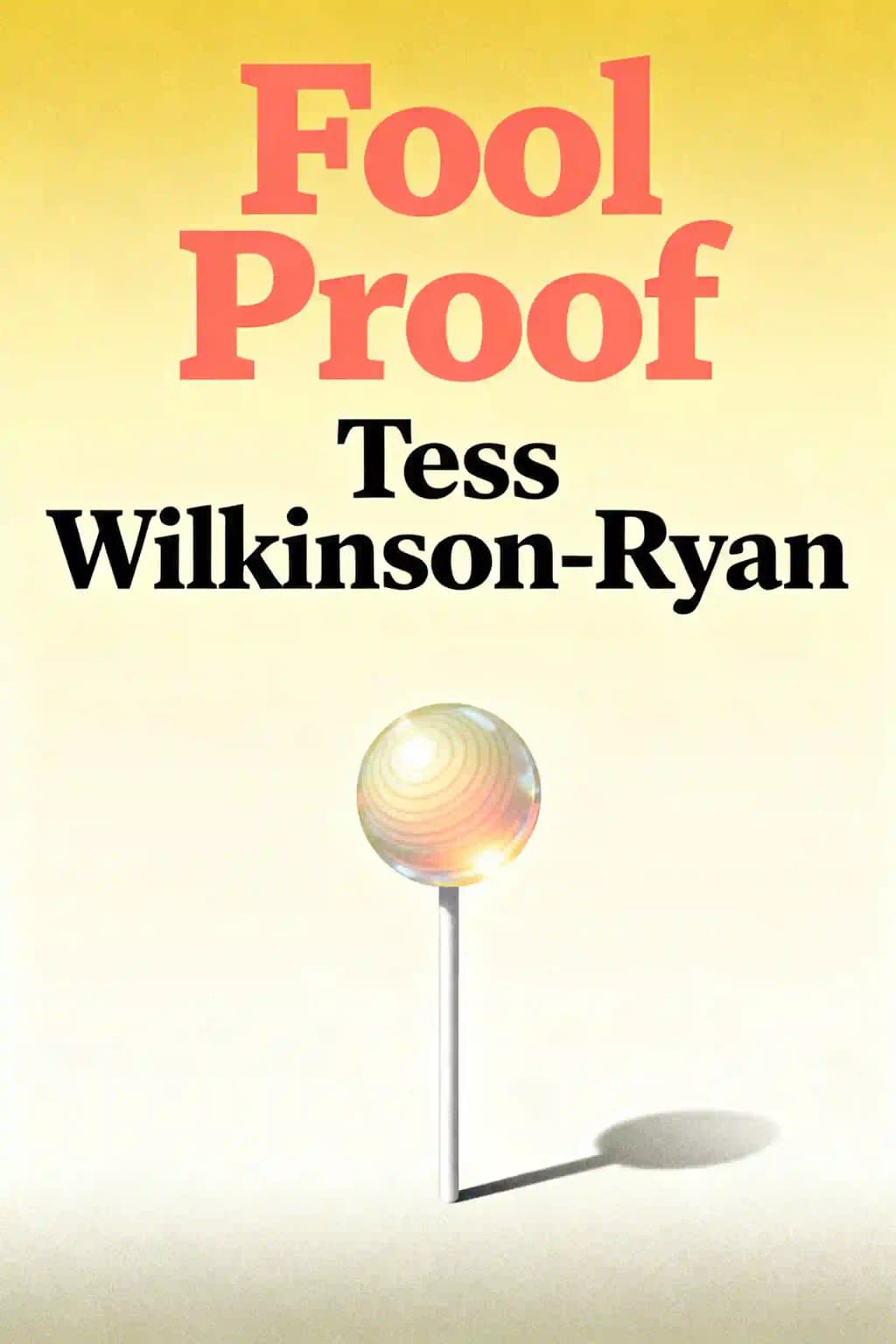
Discover why our fear of being a "sucker" secretly controls our decisions. In "Fool Proof," behavioral scientist Tess Wilkinson-Ryan reveals how this overlooked bias shapes everything from personal finances to societal structures - and offers practical strategies to break free from its grip.
Tess Wilkinson-Ryan is a law professor and behavioral psychologist at the University of Pennsylvania Carey Law School, and the author of Fool Proof: How Fear of Playing the Sucker Shapes Ourselves and the Social Order—and What We Can Do About It. A Harvard College graduate with a J.D. and Ph.D. in psychology from Penn, she specializes in the moral psychology of legal decision-making, particularly in contracts and consumer behavior. Her debut nonfiction work explores how societal fear of being duped influences choices—from personal finances to political rhetoric—blending psychology, sociology, and economics.
Wilkinson-Ryan’s research has been featured in The Atlantic, and she regularly contributes to platforms like TIME and McKinsey Insights, discussing decision-making biases and ethical leadership. As a tenured professor, she teaches courses on contracts, consumer law, and psychology’s intersection with legal systems.
Fool Proof draws on her 15-year academic career, offering actionable frameworks to navigate distrust in hierarchies and everyday interactions. The book has been recognized for its timely analysis of power dynamics and was highlighted in major outlets for its insights into post-pandemic social challenges.
Fool Proof examines how the fear of being scammed shapes human behavior, social hierarchies, and moral decision-making. Blending psychology, law, and real-world examples—from grocery shopping to #MeToo—it argues that this fear perpetuates inequity but can be reframed to foster trust and integrity. The book challenges readers to rethink risk-taking and cooperation in a world obsessed with avoiding exploitation.
This book is ideal for readers interested in behavioral psychology, social justice, or decision-making strategies. Professionals in law, business, or policy-making will appreciate its insights into how fear of exploitation influences contracts, negotiations, and institutional dynamics. It also appeals to anyone seeking to navigate personal relationships or societal challenges with greater moral clarity.
Yes—Fool Proof offers a fresh lens on everyday interactions, revealing how systemic biases and personal anxieties intertwine. Endorsed by scholars like Dorothy Roberts and Cass Sunstein, it combines rigorous research with relatable anecdotes, making complex concepts accessible. Its actionable advice on balancing skepticism with empathy makes it a timely read for our distrust-driven era.
The "sucker construct" refers to the societal narrative that stigmatizes vulnerability and frames cooperation as weakness. Wilkinson-Ryan shows how this mindset reinforces racial, gender, and economic hierarchies by labeling marginalized groups as gullible. For example, distrust in international trade deals often reflects deeper stereotypes rather than rational risk assessment.
The book analyzes cognitive pitfalls like overconfidence and coherence-seeking, citing dual-process theory (System 1 vs. System 2 thinking). Wilkinson-Ryan advocates for metacognition—questioning emotional reactions and engaging deliberate reasoning—to reduce errors. Case studies illustrate how reframing "sucker" fears can improve choices in finance, relationships, and ethics.
These lines underscore the book’s focus on systemic bias and reclaiming agency.
The book encourages readers to:
Both books explore decision-making psychology, but Fool Proof focuses more on societal power dynamics than individual choice architecture. While Nudge offers policy solutions, Fool Proof critiques how fear of exploitation itself becomes a tool of oppression. Sunstein praises Wilkinson-Ryan’s originality in linking scams to social order.
Some may find its interdisciplinary approach overly broad, merging law, psychology, and sociology. However, its blend of academic rigor and accessibility counters this. Notably, it avoids prescriptive solutions, focusing instead on reframing cultural narratives—a deliberate choice to spark dialogue.
Amid rising online scams and institutional distrust, the book’s analysis of fear-driven behavior remains urgent. It equips readers to navigate AI-driven misinformation, workplace dynamics, and polarized politics with empathy rather than paranoia.
Wilkinson-Ryan, a law professor and moral psychologist, specializes in contracts and decision-making. While Fool Proof is her most prominent book, her academic papers explore topics like divorce negotiations and ethical dilemmas, aligning with the book’s themes of trust and equity.
The book argues that integrity involves balancing self-protection with communal responsibility. Instead of avoiding “sucker” labels, it advocates for ethical risk-taking—like trusting others despite potential exploitation—to foster social progress and personal growth.
著者の声を通じて本を感じる
知識を魅力的で例が豊富な洞察に変換
キーアイデアを瞬時にキャプチャして素早く学習
楽しく魅力的な方法で本を楽しむ
Being conned feels deeply painful and shameful.
Don't let that be you.
You can't be a sucker without your own cooperation.
Not hungry, just suspicious.
You have no idea how much you alienate me!
『Fool Proof』の核心的なアイデアを分かりやすいポイントに分解し、革新的なチームがどのように創造、協力、成長するかを理解します。
『Fool Proof』を素早い記憶のヒントに凝縮し、率直さ、チームワーク、創造的な回復力の主要原則を強調します。

鮮やかなストーリーテリングを通じて『Fool Proof』を体験し、イノベーションのレッスンを記憶に残り、応用できる瞬間に変えます。
何でも質問し、声を選び、本当にあなたに響く洞察を一緒に作り出しましょう。

"Instead of endless scrolling, I just hit play on BeFreed. It saves me so much time."
"I never knew where to start with nonfiction—BeFreed’s book lists turned into podcasts gave me a clear path."
"Perfect balance between learning and entertainment. Finished ‘Thinking, Fast and Slow’ on my commute this week."
"Crazy how much I learned while walking the dog. BeFreed = small habits → big gains."
"Reading used to feel like a chore. Now it’s just part of my lifestyle."
"Feels effortless compared to reading. I’ve finished 6 books this month already."
"BeFreed turned my guilty doomscrolling into something that feels productive and inspiring."
"BeFreed turned my commute into learning time. 20-min podcasts are perfect for finishing books I never had time for."
"BeFreed replaced my podcast queue. Imagine Spotify for books — that’s it. 🙌"
"It is great for me to learn something from the book without reading it."
"The themed book list podcasts help me connect ideas across authors—like a guided audio journey."
"Makes me feel smarter every time before going to work"

Fool Proofの要約をPDFまたはEPUBで無料でダウンロード。印刷やオフラインでいつでもお読みいただけます。
Have you ever felt that unique, burning shame when you realize you've been duped? That moment when the charity you donated to turns out to be fraudulent, or when someone you trusted betrays your confidence? This isn't just disappointment-it's a special kind of psychological wound that cuts deeper than most injuries. The fear of being played for a fool occupies a unique place in our psychological landscape, shaping everything from our personal relationships to our political choices. Consider two scenarios with identical financial outcomes: In one, hackers randomly charge $20.50 to your credit card. In another, you willingly give that same amount to what appears to be a legitimate children's charity that turns out to be fraudulent. Though you get your money back in both cases, the emotional impact differs dramatically. The random hack feels like a minor annoyance; being conned feels deeply painful and shameful. Why? Being suckered isn't just about losing resources-it's about losing status and security. The accusation that you've played the fool suggests you've cooperated in your own social demotion. You can't be a sucker without your own cooperation, making it a unique form of victimhood filled with self-loathing. When hacked, we blame the criminal; when scammed, we blame ourselves, as if we taped the "Kick Me" sign to our own backs.