第4章
From Stability to Crisis: How the Great Moderation Bred Financial Catastrophe
Paul Volcker's crisis management established patterns that would shape financial regulation for decades. His interventions during Mexico's debt crisis and Continental Illinois's collapse created precedents for handling systemic threats, while subsequent innovations like Brady bonds and securitization moved risk off bank balance sheets and into capital markets.
By the 2000s, the financial landscape had transformed dramatically. Banks' share of American credit provision fell from 46 percent in 1979 to just 20 percent by 2007, with shadow banks and capital markets filling the gap. Securitization allowed banks to package mortgages and other loans into securities sold to investors worldwide. Regulators viewed this positively-since previous crises centered on banks, a banking sector that had transferred risk to capital markets seemed safer.
Each crisis taught lessons that shaped subsequent reforms: the 1987 stock market crash led to circuit breakers and higher capital requirements for dealers; the 1998 LTCM collapse prompted closer monitoring of hedge fund leverage; Mexico's 1994 crisis pushed it toward floating exchange rates and local currency borrowing. Financial firms also adapted, shifting from unsecured commercial paper to secured repo loans backed by collateral.
These adaptations, alongside Volcker and Greenspan's success in taming inflation, created "the Great Moderation"-a period of reduced economic volatility after 1984. Financial innovation enabled consumers to keep spending even when their income plunged. Deregulation of interest rates meant credit was no longer turned off when the Fed tightened, while innovations in lending allowed households to make big purchases when previously they would have tightened their belts.
Despite increasing income volatility for individual households, economists remained sanguine about rising debt levels for two reasons: financial innovation helped buffer income shocks, and the Fed could respond quickly to financial panics. As Berkeley economist Brad DeLong later explained, Depression-era restrictions seemed less urgent given the Fed's proven ability to build firewalls between financial distress and aggregate demand.
Yet Paul Volcker remained concerned. In a 2005 Stanford speech, he warned of "disturbing trends" and "huge imbalances" despite the placid surface, predicting that "a financial crisis eventually rather than policy foresight" would force necessary changes. The irony was that this very sense of safety was itself the greatest risk.
第5章
The Anatomy of Panic: Why Safe Assets Suddenly Become Toxic
Just as financial systems can experience sudden panics, food safety incidents demonstrate how quickly perceived safety can transform into widespread fear. The 2006 E. coli outbreak in spinach shows striking parallels to financial crises-both involve complex systems generally assumed safe until a shock undermines that premise, triggering dramatic overreactions.
When an elderly Nebraska woman died from E. coli in spinach, the FDA issued its most far-reaching advisory ever. Consumers abandoned all spinach products, sales plunged 74%, and farmers destroyed crops. Though investigators eventually traced the contamination to just 1,002 pounds from a specific California processor, the initial uncertainty led to wholesale rejection of an entire food category.
Similar dynamics played out in the 1989 Alar scare, when a 60 Minutes broadcast about this apple pesticide's cancer risk led schools to ban apple products and consumers to discard applesauce. Though the actual risk was minimal-a child would need to consume 4,000 gallons of apple juice daily for life to match the cancer-causing doses in lab rats-the public reaction was swift and devastating.
What seems like irrational panic actually follows a certain logic: when safety is the default expectation, even a small probability of harm becomes unacceptable. For individual consumers with ready alternatives, rejecting all potentially affected products represents minimal inconvenience to avoid uncertain risk.
This pattern helps explain financial panics. Gary Gorton, a Yale economist who spent his career studying bank panics, identified that financial systems exist primarily to supply "safe assets"-those so reliable they're "information insensitive" like cash. Financial innovation creates new types of safe assets when demand exceeds supply, and panics occur when previously trusted safe assets suddenly appear risky.
By the late 20th century, foreign investors' massive demand for U.S. government debt created another safe asset shortage. While safe assets remained consistently around 33% of total assets from 1952-2010, their composition shifted dramatically-bank deposits declined from 80% to just 27% by 2007, replaced by money market funds, asset-backed securities, and commercial paper. Unlike genuinely safe bank deposits, these engineered "safe" assets proved vulnerable during crisis.
When the Reserve Primary Fund "broke the buck" after Lehman Brothers failed, it triggered a $349 billion exodus from money market funds within a week. Though investors ultimately lost just under 1 cent per dollar, the illusion of safety had been irrevocably shattered. This pattern of disenchantment would repeat with European government debt and nearly with U.S. Treasury debt-revealing how financial systems create both fact and illusion of safety, with panic resulting when they fail.
第6章
The Peltzman Effect: Why Safety Features Make Us Take More Risks
The fundamental challenge of safety innovations is that they often change our behavior in ways that counteract their benefits. Whether in sports, driving, or finance, reducing risk increases our appetite for the activity, potentially nullifying safety gains.
Football's evolution illustrates this paradox perfectly. Early leather caps evolved into plastic helmets with face masks by 1940, reducing obvious injuries like broken noses and knocked-out teeth. But coaches soon weaponized helmets, teaching "spearing" techniques. While deaths decreased slightly between the early 1960s and 1970s, permanent quadriplegias tripled and broken necks quadrupled as players used helmets as battering rams.
This safety paradox became central to a broader debate about regulation. After Ralph Nader's "Unsafe at Any Speed" triggered automobile safety legislation in 1966, economist Sam Peltzman challenged the effectiveness of these measures. In his landmark 1975 paper, Peltzman found that while driver deaths decreased, pedestrian injuries and property damage increased proportionally.
Peltzman, a contrarian Brooklyn-raised economist, argued this was elementary economics: safety devices reduce the "price" of risky driving, encouraging more of it. Psychologist Gerald Wilde took this further, proposing each person has a "risk thermostat" that adjusts behavior to maintain preferred risk levels.
Antilock braking systems (ABS) provided a perfect test case. On test tracks, ABS dramatically reduced stopping distances and improved steering control during braking. Yet real-world studies proved deflating. A Munich taxi company found ABS-equipped vehicles had just as many collisions as conventional ones. Other research showed ABS cars had fewer frontal but more rear-end collisions, or increased run-off-road incidents and rollovers. The explanation? Drivers with ABS drove faster and braked harder, taking more risks precisely because they felt safer.
This revealed why the Peltzman effect manifested strongly with antilock brakes but not seat belts. As Adrian Lund from the Insurance Institute explained: "People often forget they are wearing seat belts... But if you give people studded snow tires, they will drive faster on snow... because it's feeding back into the driving task." Safety features that directly enhance perceived control encourage greater risk-taking.
Thirty years later, Peltzman acknowledges his original study was partially wrong-drivers don't completely offset safety benefits, but they do reduce them. Traffic fatalities have steadily declined at about 3.5% annually both before and after Nader's 1965 book, suggesting factors beyond regulation drive safety improvements.
This pattern appears in financial markets too. When new safety measures like deposit insurance or central bank backstops are introduced, market participants often respond by taking greater risks, sometimes nullifying the intended safety benefits.
第7章
The Euro's Fatal Flaw: When Safety Creates Systemic Risk
Germany's cultural attitudes about money reveal much about international finance: their word for debt, schuld, is the same as guilt. This frugality manifested during the European debt crisis when Germany resisted bailing out struggling nations like Greece, whose citizens were scolded by German tabloids to "Sell your islands, you bankrupt Greeks!"
While saving is universally praised-from Aesop's fables to biblical wisdom-economists recognize an elementary truth: for someone to borrow, someone else must save. Europe's crisis resulted as much from German saving as from Mediterranean borrowing. Throughout history, savers' pursuit of safety has often triggered international crises, though they rarely see their culpability due to the opacity between savers and borrowers.
The euro represented Europe's attempt to eliminate exchange rate crises after decades of instability. When Britain, Spain, France, and Italy maintained artificially high exchange rates in 1992, speculators like George Soros sold billions of their currencies. Countries defended by spending deutsche marks and hiking interest rates, but one by one, the weakest surrendered. On "Black Wednesday," Britain stopped defending the pound, which immediately plunged 7 percent.
While Britain abandoned fixed exchange rates after the 1992 crisis, the rest of Europe drew the opposite lesson: only a single currency could end such crises. Even Soros agreed, warning that Europe would disintegrate without one because "currency markets are notoriously unstable."
Yet initially, the euro produced the opposite effect from what economists expected. Interest rates in peripheral economies plummeted, with the GIIPS (Greece, Ireland, Italy, Portugal, and Spain) seeing their borrowing costs converge with Germany's. Northern European banks enthusiastically increased lending to southern customers-German banks' loans to GIIPS countries doubled from 12% to 25% between 1997 and 2008.
This lending surge reflected confidence that traditional risks had diminished. Lenders no longer feared being repaid in devalued currencies, and euro membership was seen as a seal of approval. With borrowing costs matching Germany's, there was no market pressure to reform.
The influx of northern savings fueled housing booms in Spain and Ireland that far exceeded America's. Meanwhile, southern economies' competitiveness eroded as wages and prices rose faster than in Germany, widening trade deficits. German savers, placing money in banks that lent to the south, enabled these imbalances to grow far larger than would have been possible before the euro.
These risks remained invisible until 2009, when a new Greek government revealed its predecessor had lied about budget deficits. In 2010, the euro zone and IMF arranged a massive bailout, but German Chancellor Angela Merkel insisted private investors take "haircuts" on government bonds. This "Deauville Declaration" became Europe's "Lehman moment," shattering assumptions about sovereign debt safety. Northern investors fled southern bonds and banks, reversing all the financial integration the euro had achieved.
Unlike previous fixed exchange systems where devaluation could correct imbalances, the euro offered no such safety valve. Southern countries had to slash spending and wages to regain competitiveness against Germany-a painful internal devaluation. The euro crisis left Germany with the world's largest trade surplus, making it harder for other countries to correct their deficits.
第8章
The Levee Effect: How Flood Protection Creates Flood Vulnerability
The Mississippi River has been the setting for an endless battle between engineers and ecologists. Since the 1700s, settlers built levees to contain flooding, but these were regularly overwhelmed. Starting in the 1850s, the Army Corps of Engineers took responsibility for river management, eventually adopting a levees-only approach despite competing recommendations for more comprehensive solutions.
After the devastating 1927 floods that killed over 200 people and displaced 700,000, Congress made flood control a federal responsibility, introducing cost-benefit analysis to justify new projects. This had an unintended consequence that geographer Gilbert White identified in 1942 as the "levee effect"-the tendency of people to feel protected by levees and build more property in their shadows.
White documented numerous examples of flood protections being overwhelmed, creating a self-reinforcing cycle: flood protection devices encourage development, which raises exposure to future disasters. In Chesterfield, a suburb of St. Louis, strengthened levees in the 1970s and 80s qualified the area for federal grants and removed flood insurance requirements, leading to extensive development. When record floods breached the levee in 1993, the airport was submerged and 500 businesses flooded. The town's response? Rebuild the levee to an even higher standard, doubling development in the following decade.
The levee effect appears worldwide. Japan built extensive seawalls along its eastern coast after World War II, giving citizens and businesses confidence to live and build near the water. This included the Fukushima nuclear plants, designed to withstand a 10-foot tsunami based on 1960 records. But when the 2011 Tohoku earthquake struck, the 33-foot wave overwhelmed these protections.
The Netherlands represents an even more extreme case, with 60% of the country either below sea level or at risk of regular flooding. After a devastating 1953 flood killed 1,800 people, the Dutch embarked on massive "delta works" while strengthening dikes. The protected land between Amsterdam and Rotterdam became heavily industrialized and now produces most of the country's economic output. If the dikes failed, half of Holland would be submerged, requiring the country to be completely rebuilt.
The pure market solution would force people in harm's way to bear the full cost through appropriate insurance rates. However, numerous government policies perversely encourage risky settlement patterns.
The mayor of Pass Christian explains why people rebuild in disaster zones: "Water sells. Water attracts more people than it will ever scare off." This illustrates the powerful economic logic driving settlement in vulnerable areas. Despite fading navigation imperatives, the compulsion to live near water remains strong. The World Bank estimates that between 2000 and 2050, the population in large cities exposed to natural disasters will more than double to 680 million people.
第9章
Balancing Risk and Safety: Toward a Foolproof Future
This chapter examines how to strike the right balance between safety and disaster. Entrepreneurs typically display more overconfidence than managers-a trait that helps them overcome uncertainty and persuade stakeholders to join ventures. While this overconfidence can be problematic in many contexts, it's essential for entrepreneurship. Most new businesses fail, but economies grow because the survivors succeed so spectacularly they compensate for the losers.
The distinction between routine failure and systemic crisis is crucial-the ideal financial system nurtures good risks and occasional failures without allowing risk-taking to threaten the entire economy. Aaron Tornell's research comparing India's tightly regulated economy with Thailand's liberalized one reveals a paradox: despite Thailand suffering a financial crisis, its GDP per capita grew 162% compared to India's 114%. This suggests policies good for growth may also lead to financial excesses and crises.
Aviation has institutionalized safety through unique systems like blameless incident reporting. Unlike other industries reluctant to admit mistakes, airlines cooperate through voluntary reporting because they all suffer when accidents scare the public. The Aviation Safety Reporting System (ASRS) has been difficult to replicate in other fields like healthcare, where errors are harder to classify and often lead to litigation rather than improvement.
Memory and experience can drive safety improvements. Exxon Mobil transformed its safety culture after the Exxon Valdez disaster through its Operations Integrity Management System (OIMS), which governs every aspect of operations from work permits to clothing. Accidents face relentless analysis, and employees are encouraged to report near misses. When drilling the deepest well in the Gulf of Mexico in 2005, Exxon Mobil abandoned the $187 million project after encountering dangerous pressure conditions-a decision that seemed overly cautious until the Deepwater Horizon disaster.
One consistently effective safety measure is space. Aviation is safer at altitude where aircraft have ample separation. Highways are dangerous because cars pass within feet at high speeds. In flood management, Jadwin's plan after the 1927 Mississippi floods created floodways to give rivers room rather than building ever-higher levees. The Dutch similarly adopted a "Room for the River" approach after devastating floods.
In finance, capital serves as protective space-a cushion to absorb losses regardless of their cause. J.P. Morgan survived a $6.2 billion trading loss because it had sufficient capital. While more capital reduces bank profitability, it's become regulators' central tool for preventing financial crises.
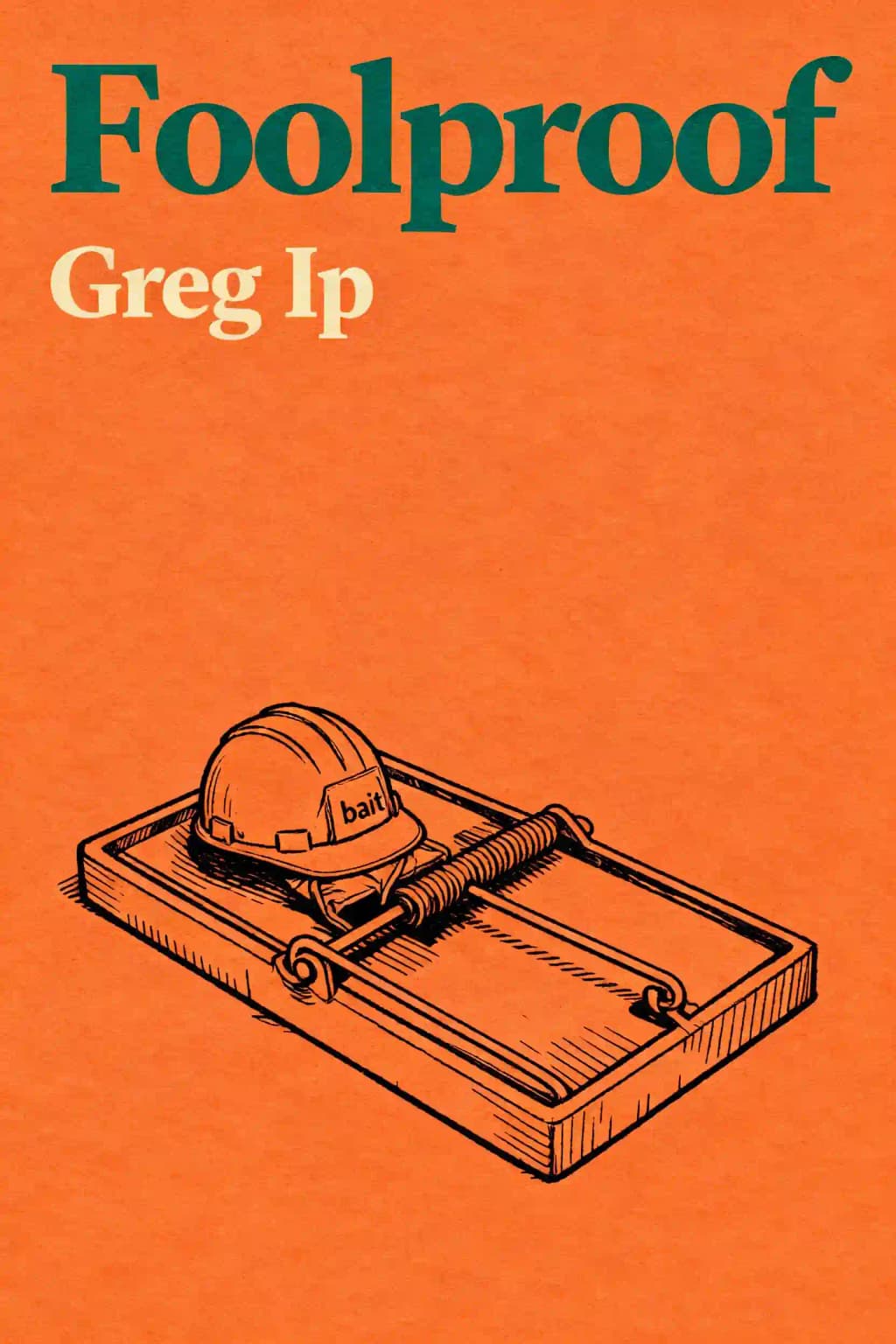
The book concludes that foolproof safety is a moving target with competing prescriptions from engineers and ecologists. Engineers satisfy our desire for control and certainty, making cars safer and crises less severe. But we shouldn't expect too much-periodic crises and disasters are inevitable in systems that encourage risk and adaptation. The right approach balances risk and stability to maximize innovation per unit of instability, accepting smaller risks to prevent catastrophic ones.
We must recognize that our pursuit of absolute safety often creates new vulnerabilities. By understanding this paradox, we can design systems that harness the benefits of risk while preventing truly devastating outcomes. The goal isn't a world without failure-it's a world where failures remain manageable rather than catastrophic.