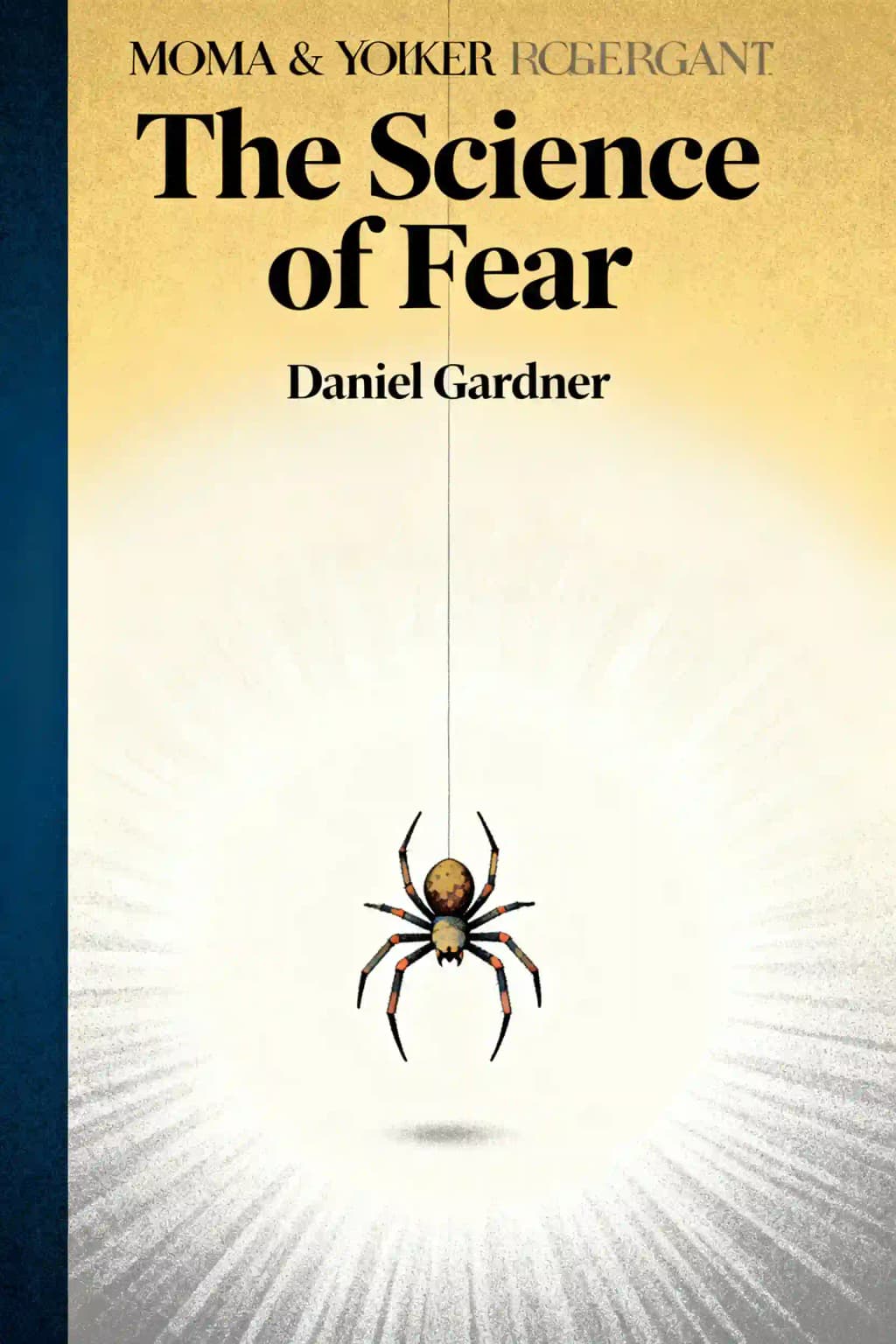
The Science of Fear book cover

The Science of Fear

Daniel Gardner
3.96 (5720 Reviews)

『The Science of Fear』の概要

Why do we fear shark attacks but not cars? "The Science of Fear" reveals how our brain's "Gut" system overrides rational "Head" thinking, explaining why media and politicians exploit our anxieties while we ignore greater dangers hiding in plain sight.

『The Science of Fear』の主要テーマ

  • risk perception
  • evolutionary psychology
  • cognitive biases
  • availability heuristic
  • statistical illiteracy

『The Science of Fear』の名言

  • These deaths were stolen by fear itself.

  • We are essentially cavemen with smartphones.

  • Gut makes unconscious, lightning-fast judgments.

  • The Example Rule means we judge frequency based on how easily examples come to mind.

『The Science of Fear』の登場人物

  • Daniel GardnerAuthor and journalist exploring risk perception
  • Franklin Delano RooseveltUS President who addressed the nature of fear
  • Amos TverskyPsychologist who studied scenario probability
  • Robert ZajoncPsychologist who documented the exposure effect

著者について

『The Science of Fear』の著者について

Daniel Gardner, New York Times bestselling author of The Science of Fear, is a leading expert in psychology, risk perception, and decision-making.

A former award-winning investigative journalist and columnist, Gardner combines his legal training (Osgoode Hall Law School) and background in modern history to dissect how fear influences public discourse and individual choices. His work, including Superforecasting (co-authored with Philip Tetlock) and Future Babble, explores cognitive biases and data-driven forecasting, themes central to The Science of Fear’s analysis of societal anxiety.

Gardner’s insights are informed by his role as an honorary senior fellow at the University of Ottawa’s Graduate School of Public Policy and his Substack newsletter, PastPresentFuture, where he examines historical patterns in risk communication. His books, published in over 20 languages, have been endorsed by figures like Steven Pinker and cited in major media outlets. The Science of Fear has been translated into 19 languages and used by policymakers, including consultations with the Prime Minister of Canada, to improve evidence-based decision-making in high-stakes environments.

The Science of Fearの要約をダウンロード

The Science of Fearの要約をPDFまたはEPUBで無料でダウンロード。印刷やオフラインでいつでもお読みいただけます。

この本に関するよくある質問

The Science of Fear explores why humans often fear unlikely risks while ignoring real dangers, using psychology and real-world examples. Dan Gardner explains how our primal "Gut" instincts clash with rational "Head" thinking, leading to irrational decisions like avoiding flights post-9/11 (which increased road deaths). The book highlights media sensationalism and cognitive biases that distort risk perception.

This book is ideal for readers interested in psychology, decision-making, or media influence. Policymakers, educators, and anyone seeking to navigate modern fear-driven narratives will benefit. Gardner’s blend of academic research (with risk-science pioneer Paul Slovic) and accessible storytelling makes it valuable for both experts and general audiences.

Yes—it combines rigorous research with engaging examples to debunk irrational fears. Gardner’s analysis of post-9/11 behavior, health scares, and media-driven panic provides timeless insights into risk perception. Critics praise its relevance to current issues like misinformation and crisis response.

Gardner divides risk assessment into two systems:

  • Gut: Fast, emotion-driven reactions (e.g., fearing plane crashes after seeing 9/11 footage).
  • Head: Slow, analytical thinking that corrects biases (e.g., recognizing flying’s statistical safety).

The book argues that modern media amplifies "Gut" responses, often overriding logic.

Media prioritizes dramatic stories (e.g., terror attacks) over mundane risks (e.g., heart disease), skewing public perception. Gardner notes this sensationalism fuels misplaced anxiety, such as vaccine hesitancy or overestimating crime rates. He ties this to policy failures and personal decision-making pitfalls.

This rule states emotions heavily shape risk judgments: people downplay risks of enjoyable activities (e.g., smoking) while exaggerating fears linked to disliked things (e.g., nuclear power). Gardner ties this to cultural narratives and cognitive biases that distort rational analysis.

  • Post-9/11 driving surge causing 1,500+ extra road deaths.
  • Overestimating stranger-danger crimes despite declining rates.
  • Panic over shark attacks, which kill fewer people than falling vending machines.

These cases show how fear overrides data, often with deadly consequences.

Gardner explains that people seek information confirming existing fears (e.g., anti-vaccine groups ignoring scientific consensus). This bias reinforces misconceptions, making it harder to correct false beliefs about risks like climate change or pandemics.

Some argue Gardner oversimplifies complex emotions or underestimates systemic risks (e.g., long-term climate impacts). Others note his focus on individual biases may downplay structural issues (e.g., corporate lobbying shaping risk narratives).

Both explore dual-thinking systems, but Gardner focuses specifically on risk perception and media, while Kahneman’s work covers broader cognitive biases. The Science of Fear offers more real-world case studies, making it accessible for non-academics.

Its insights apply to modern issues like AI anxiety, pandemic recovery, and misinformation. Gardner’s framework helps readers critically assess fear-driven narratives in news and politics.

  • Question emotional reactions: Use data to evaluate risks.
  • Limit fear-based media consumption: Sensationalism distorts reality.
  • Educate yourself: Understanding cognitive biases (e.g., confirmation bias) improves decision-making.

あなたに合った学び方を探す

『The Science of Fear』は単なる本ではありません—Psychologyのマスタークラスです。あなたに最適な方法でレッスンを吸収できるよう、5つのユニークな学習モードを用意しています。深く考える人も、素早く学ぶ人も、物語が好きな人も、あなたのスタイルに合ったモードがあります。

クイックサマリーモード

『The Science of Fear』の要約を9分で読む・聴く

『The Science of Fear』の核心的なアイデアを分かりやすいポイントに分解し、革新的なチームがどのように創造、協力、成長するかを理解します。

play
00:00
00:00

エンタメモード

『The Science of Fear』のレッスンを19分のストーリーで

鮮やかなストーリーテリングを通じて『The Science of Fear』を体験し、イノベーションのレッスンを記憶に残り、応用できる瞬間に変えます。

play
00:00
00:00

パーソナライズモード

The Science of Fearを自分の学習スタイルで体験

何でも質問し、学習スタイルを選び、自分に本当に響くインサイトを一緒に作れます。

Personalize Mode

コロンビア大学卒業生がサンフランシスコで開発

BeFreedは1,000,000の好奇心旺盛な仲間が集うグローバルコミュニティ

"Instead of endless scrolling, I just hit play on BeFreed. It saves me so much time."

@Moemenn
platform
star
star
star
star
star

"I never knew where to start with nonfiction—BeFreed’s book lists turned into podcasts gave me a clear path."

@Chloe, Solo founder, LA
platform
comments
12
likes
117

"Perfect balance between learning and entertainment. Finished ‘Thinking, Fast and Slow’ on my commute this week."

@Raaaaaachelw
platform
star
star
star
star
star

"Crazy how much I learned while walking the dog. BeFreed = small habits → big gains."

@Matt, YC alum
platform
comments
12
likes
108

"Reading used to feel like a chore. Now it’s just part of my lifestyle."

@Erin, Investment Banking Associate , NYC
platform
comments
254
likes
17

"Feels effortless compared to reading. I’ve finished 6 books this month already."

@djmikemoore
platform
star
star
star
star
star

"BeFreed turned my guilty doomscrolling into something that feels productive and inspiring."

@Pitiful
platform
comments
96
likes
4.5K

"BeFreed turned my commute into learning time. 20-min podcasts are perfect for finishing books I never had time for."

@SofiaP
platform
star
star
star
star
star

"BeFreed replaced my podcast queue. Imagine Spotify for books — that’s it. 🙌"

@Jaded_Falcon
platform
comments
201
thumbsUp
16

"It is great for me to learn something from the book without reading it."

@OojasSalunke
platform
star
star
star
star
star

"The themed book list podcasts help me connect ideas across authors—like a guided audio journey."

@Leo, Law Student, UPenn
platform
comments
37
likes
483

"Makes me feel smarter every time before going to work"

@Cashflowbubu
platform
star
star
star
star
star

"Instead of endless scrolling, I just hit play on BeFreed. It saves me so much time."

@Moemenn
platform
star
star
star
star
star

"I never knew where to start with nonfiction—BeFreed’s book lists turned into podcasts gave me a clear path."

@Chloe, Solo founder, LA
platform
comments
12
likes
117

"Perfect balance between learning and entertainment. Finished ‘Thinking, Fast and Slow’ on my commute this week."

@Raaaaaachelw
platform
star
star
star
star
star

"Crazy how much I learned while walking the dog. BeFreed = small habits → big gains."

@Matt, YC alum
platform
comments
12
likes
108

"Reading used to feel like a chore. Now it’s just part of my lifestyle."

@Erin, Investment Banking Associate , NYC
platform
comments
254
likes
17

"Feels effortless compared to reading. I’ve finished 6 books this month already."

@djmikemoore
platform
star
star
star
star
star

"BeFreed turned my guilty doomscrolling into something that feels productive and inspiring."

@Pitiful
platform
comments
96
likes
4.5K

"BeFreed turned my commute into learning time. 20-min podcasts are perfect for finishing books I never had time for."

@SofiaP
platform
star
star
star
star
star

"BeFreed replaced my podcast queue. Imagine Spotify for books — that’s it. 🙌"

@Jaded_Falcon
platform
comments
201
thumbsUp
16

"It is great for me to learn something from the book without reading it."

@OojasSalunke
platform
star
star
star
star
star

"The themed book list podcasts help me connect ideas across authors—like a guided audio journey."

@Leo, Law Student, UPenn
platform
comments
37
likes
483

"Makes me feel smarter every time before going to work"

@Cashflowbubu
platform
star
star
star
star
star

"Instead of endless scrolling, I just hit play on BeFreed. It saves me so much time."

@Moemenn
platform
star
star
star
star
star

"I never knew where to start with nonfiction—BeFreed’s book lists turned into podcasts gave me a clear path."

@Chloe, Solo founder, LA
platform
comments
12
likes
117

"Perfect balance between learning and entertainment. Finished ‘Thinking, Fast and Slow’ on my commute this week."

@Raaaaaachelw
platform
star
star
star
star
star

"Crazy how much I learned while walking the dog. BeFreed = small habits → big gains."

@Matt, YC alum
platform
comments
12
likes
108

"Reading used to feel like a chore. Now it’s just part of my lifestyle."

@Erin, Investment Banking Associate , NYC
platform
comments
254
likes
17

"Feels effortless compared to reading. I’ve finished 6 books this month already."

@djmikemoore
platform
star
star
star
star
star

"BeFreed turned my guilty doomscrolling into something that feels productive and inspiring."

@Pitiful
platform
comments
96
likes
4.5K

"BeFreed turned my commute into learning time. 20-min podcasts are perfect for finishing books I never had time for."

@SofiaP
platform
star
star
star
star
star

"BeFreed replaced my podcast queue. Imagine Spotify for books — that’s it. 🙌"

@Jaded_Falcon
platform
comments
201
thumbsUp
16

"It is great for me to learn something from the book without reading it."

@OojasSalunke
platform
star
star
star
star
star

"The themed book list podcasts help me connect ideas across authors—like a guided audio journey."

@Leo, Law Student, UPenn
platform
comments
37
likes
483

"Makes me feel smarter every time before going to work"

@Cashflowbubu
platform
star
star
star
star
star

もっとストーリーを見る

BeFreedがウェブ上でどのように話題になっているか
1.5K Ratings4.7
今すぐ学習の旅を始めよう