The Hidden Life of Trees: What They Feel, How They Communicate—Discoveries from A Secret World by Peter Wohlleben Summary

Overview of The Hidden Life of Trees
Discover how trees communicate, nurture their young, and form communities in this groundbreaking bestseller that changed how we see forests. Endorsed by The New Yorker as "heavily dusted with wonderment," Wohlleben's revelations will make you pause at every tree you pass.
- Trees communicate through a "wood-wide web" of fungal networks and root systems
- Mother trees nourish young saplings through interconnected underground sugar exchange
- Forest networks redistribute water during droughts to sustain vulnerable member trees
- Trees count warm days and daylight hours to time growth cycles accurately
- Ancient tree stumps stay alive for centuries via communal nutrient sharing
- Tree friendships involve shared resources and non-competitive branch growth patterns
- Slow growth strategies make trees resilient to storms and disease outbreaks
- Trees release distress chemicals to warn neighbors of pest invasions
- Old-growth forests maintain microclimates 3°C cooler than managed woodlands
- Human-managed forests lack natural communication networks, reducing ecosystem stability
- Thirsty trees emit ultrasonic vibrations detectable by scientific equipment
- Trees demonstrate sentient-like behaviors through mutual care and threat responses
About the Author of The Hidden Life of Trees
Peter Wohlleben, bestselling author of The Hidden Life of Trees: What They Feel, How They Communicate, is a German forester and pioneering advocate for understanding forest ecosystems. Born in Bonn in 1964, he spent over two decades as a government forest ranger before rejecting industrial forestry practices to promote sustainable, community-based approaches.
His groundbreaking work blends scientific insights with accessible storytelling, revealing trees’ social networks, communication methods, and familial bonds—themes rooted in his hands-on management of Hümmel’s ancient beech forest and his Forest Academy educational programs.
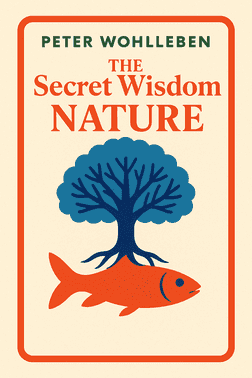
Wohlleben’s expertise extends to animal behavior and natural systems in acclaimed works like The Inner Life of Animals and The Secret Wisdom of Nature, along with children’s books such as Can You Hear the Trees Talking?. A frequent media commentator and TEDx speaker, his ideas have reached global audiences through translations in 50+ languages.
The Hidden Life of Trees alone has sold over 3 million copies and inspired a 2024 graphic novel adaptation. Honored with the Bavarian Nature Conservation Medal, Wohlleben reshapes how humanity perceives ecological interconnectedness.
FAQs About The Hidden Life of Trees
What is The Hidden Life of Trees by Peter Wohlleben about?
The Hidden Life of Trees explores how trees communicate, form social networks, and support each other through underground fungal systems. Peter Wohlleben, a German forester, blends scientific research with observational storytelling to reveal trees’ familial bonds, nutrient-sharing behaviors, and survival strategies—comparing forests to human communities.
Who should read The Hidden Life of Trees?
Nature enthusiasts, ecology students, and casual readers curious about forest ecosystems will find value in Wohlleben’s accessible prose. The book appeals to those seeking a deeper understanding of plant intelligence and the interconnectedness of natural systems.
Is The Hidden Life of Trees worth reading?
Yes—it’s a New York Times bestseller praised for transforming readers’ perspectives on forests. While some scientists critique its anthropomorphic language, Wohlleben’s vivid storytelling and insights into tree communication make it a compelling read for non-experts.
How do trees communicate in The Hidden Life of Trees?
Trees communicate via underground fungal networks (mycorrhiza), exchanging nutrients and chemical signals. They warn neighbors of threats like insect attacks and adjust growth patterns to support weaker trees, resembling a cooperative “wood-wide web”.
Does Peter Wohlleben suggest trees feel pain?
Wohlleben controversially argues trees experience sensations analogous to pain, citing stress responses like releasing distress chemicals. However, he clarifies plants lack nervous systems, framing their reactions as complex survival mechanisms rather than conscious suffering.
What scientific evidence supports The Hidden Life of Trees?
The book references studies on mycorrhizal networks, tree root systems, and acoustic signaling in plants. Wohlleben collaborates with researchers like Suzanne Simard, whose work on forest interdependence lends credibility to his claims.
What are key quotes from The Hidden Life of Trees?
- “Trees are social beings”: Highlights their communal support systems.
- “A tree is not a forest”: Emphasizes ecological interdependence.
- “The forest is a giant pumping station”: Describes water distribution networks.
How does The Hidden Life of Trees compare to The Overstory by Richard Powers?
While both celebrate tree intelligence, Wohlleben’s work is nonfiction focused on observable science, whereas The Overstory uses fiction to explore human-nature relationships. They complement each other for readers seeking factual and narrative perspectives.
What criticisms exist about The Hidden Life of Trees?
Some scientists argue Wohlleben exaggerates tree “sentience” and anthropomorphizes plant behavior. Critics contend his poetic language risks misleading readers about the rigor of botanical science, though others praise his public engagement.
Why is The Hidden Life of Trees relevant today?
As deforestation and climate change accelerate, the book underscores forests’ ecological importance. Its themes align with modern interests in sustainability, biodiversity, and redefining humanity’s relationship with nature.
How does Peter Wohlleben’s forestry background influence the book?
As a former government forester, Wohlleben critiques industrial logging practices and advocates for sustainable forestry. His firsthand experience informs examples of tree resilience and the harms of human intervention.
What books are similar to The Hidden Life of Trees?
- The Secret Wisdom of Nature (Wohlleben’s follow-up)
- Finding the Mother Tree by Suzanne Simard
- Braiding Sweetgrass by Robin Wall Kimmerer
These titles explore ecology, plant intelligence, and humanity’s role in natural systems.
Feel the book through the author's voice
Turn knowledge into engaging, example-rich insights
Capture key ideas in a flash for fast learning
Enjoy the book in a fun and engaging way
Key Themes in The Hidden Life of Trees
Quotes from The Hidden Life of Trees
When you know that trees experience pain and have memories and that tree parents live together with their children, then you can no longer just chop them down and disrupt their lives with larger machines.
A tree can be only as strong as the forest that surrounds it.
Trees are not the silent, solitary beings we thought - they're gossiping, nurturing, and scheming beneath our feet.
Characters in The Hidden Life of Trees
Quick Summary Mode - Read or listen to The Hidden Life of Trees Summary in 8 Minutes

Break down key ideas from The Hidden Life of Trees into bite-sized takeaways to understand how innovative teams create, collaborate, and grow.

Flash Card Mode - Top 11 Insights from The Hidden Life of Trees in a Nutshell

Distill The Hidden Life of Trees into rapid-fire memory cues that highlight key principles of candor, teamwork, and creative resilience.

Fun Mode - The Hidden Life of Trees Lessons Told Through 22-Min Stories

Experience The Hidden Life of Trees through vivid storytelling that turns innovation lessons into moments you'll remember and apply.
Personalize Mode - Read or listen to The Hidden Life of Trees Summary in 0 Minutes

Ask anything, pick the voice, and co-create insights that truly resonate with you.

From Columbia University alumni built in San Francisco
"Instead of endless scrolling, I just hit play on BeFreed. It saves me so much time."


"I never knew where to start with nonfiction—BeFreed’s book lists turned into podcasts gave me a clear path."


"Perfect balance between learning and entertainment. Finished ‘Thinking, Fast and Slow’ on my commute this week."
"Crazy how much I learned while walking the dog. BeFreed = small habits → big gains."
"Reading used to feel like a chore. Now it’s just part of my lifestyle."

"Feels effortless compared to reading. I’ve finished 6 books this month already."
"BeFreed turned my guilty doomscrolling into something that feels productive and inspiring."

"BeFreed turned my commute into learning time. 20-min podcasts are perfect for finishing books I never had time for."
"BeFreed replaced my podcast queue. Imagine Spotify for books — that’s it. 🙌"

"It is great for me to learn something from the book without reading it."
"The themed book list podcasts help me connect ideas across authors—like a guided audio journey."
"Makes me feel smarter every time before going to work"
From Columbia University alumni built in San Francisco
"Instead of endless scrolling, I just hit play on BeFreed. It saves me so much time."
"I never knew where to start with nonfiction—BeFreed’s book lists turned into podcasts gave me a clear path."
"Perfect balance between learning and entertainment. Finished ‘Thinking, Fast and Slow’ on my commute this week."
"Crazy how much I learned while walking the dog. BeFreed = small habits → big gains."
"Reading used to feel like a chore. Now it’s just part of my lifestyle."
"Feels effortless compared to reading. I’ve finished 6 books this month already."
"BeFreed turned my guilty doomscrolling into something that feels productive and inspiring."
"BeFreed turned my commute into learning time. 20-min podcasts are perfect for finishing books I never had time for."
"BeFreed replaced my podcast queue. Imagine Spotify for books — that’s it. 🙌"
"It is great for me to learn something from the book without reading it."
"The themed book list podcasts help me connect ideas across authors—like a guided audio journey."
"Makes me feel smarter every time before going to work"
"Instead of endless scrolling, I just hit play on BeFreed. It saves me so much time."
"I never knew where to start with nonfiction—BeFreed’s book lists turned into podcasts gave me a clear path."
"Perfect balance between learning and entertainment. Finished ‘Thinking, Fast and Slow’ on my commute this week."
"Crazy how much I learned while walking the dog. BeFreed = small habits → big gains."
"Reading used to feel like a chore. Now it’s just part of my lifestyle."
"Feels effortless compared to reading. I’ve finished 6 books this month already."
"BeFreed turned my guilty doomscrolling into something that feels productive and inspiring."
"BeFreed turned my commute into learning time. 20-min podcasts are perfect for finishing books I never had time for."
"BeFreed replaced my podcast queue. Imagine Spotify for books — that’s it. 🙌"
"It is great for me to learn something from the book without reading it."
"The themed book list podcasts help me connect ideas across authors—like a guided audio journey."
"Makes me feel smarter every time before going to work"
"Instead of endless scrolling, I just hit play on BeFreed. It saves me so much time."
"I never knew where to start with nonfiction—BeFreed’s book lists turned into podcasts gave me a clear path."
"Perfect balance between learning and entertainment. Finished ‘Thinking, Fast and Slow’ on my commute this week."
"Crazy how much I learned while walking the dog. BeFreed = small habits → big gains."
"Reading used to feel like a chore. Now it’s just part of my lifestyle."
"Feels effortless compared to reading. I’ve finished 6 books this month already."
"BeFreed turned my guilty doomscrolling into something that feels productive and inspiring."
"BeFreed turned my commute into learning time. 20-min podcasts are perfect for finishing books I never had time for."
"BeFreed replaced my podcast queue. Imagine Spotify for books — that’s it. 🙌"
"It is great for me to learn something from the book without reading it."
"The themed book list podcasts help me connect ideas across authors—like a guided audio journey."
"Makes me feel smarter every time before going to work"

Get the The Hidden Life of Trees summary as a free PDF or EPUB. Print it or read offline anytime.