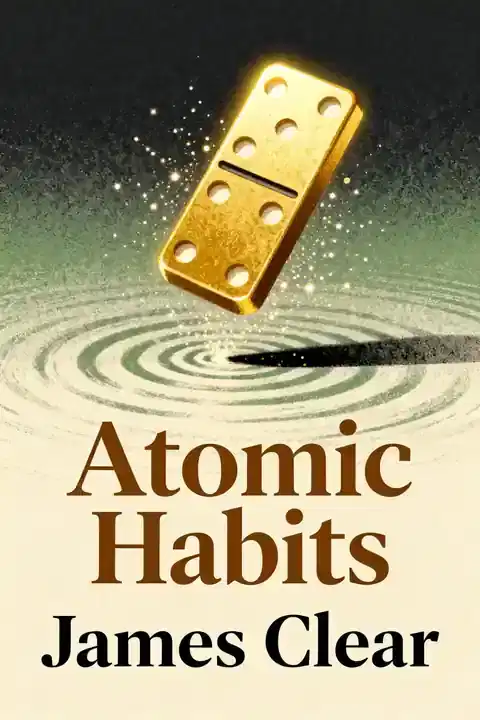
Overview of Atomic Habits
Transform your life one tiny change at a time with "Atomic Habits" - the 20-million-copy phenomenon reshaping how CEOs and athletes achieve excellence. James Clear's 1% improvement philosophy proves small shifts create extraordinary results. What invisible habit is sabotaging your success right now?
- 1% daily improvements compound into transformative long-term results through consistent habit stacking.
- Systems surpass goals: design processes that make success inevitable by focusing on daily routines.
- Identity shapes habits: act as the person you aspire to become to drive lasting behavioral shifts.
- Habit formation follows four laws: make cues obvious, cravings attractive, actions easy, and rewards satisfying.
- Environment design outperforms willpower: optimize spaces to prompt desired behaviors automatically.
- Two-minute rule: start small to overcome inertia and build momentum for complex habits.
- Habit tracking reinforces consistency by transforming abstract goals into visible progress markers.
- Identity over outcomes: every action is a vote for the person you wish to be.
- Plateau of latent potential: breakthroughs follow persistent small gains, not single efforts.
- Habit stacking builds routines by anchoring new behaviors to existing ones.
- Satisfying habits repeat: immediate rewards solidify long-term behavior changes.
- Atomic habits leverage tiny changes that create mismatched outcomes over time.
About the Author of Atomic Habits
James Clear is the #1 New York Times bestselling author of Atomic Habits and a leading expert on habit formation, decision-making, and continuous improvement.
A writer and speaker with a biomechanics degree from Denison University, Clear blends scientific research with practical strategies to help individuals and organizations master small, sustainable behavior changes. His work is rooted in personal experience, having rebuilt his own habits after a severe baseball injury ended his athletic career.
Clear’s insights are featured in major publications like Time, The New York Times, and Forbes, and he regularly advises Fortune 500 companies. His widely acclaimed "3-2-1" newsletter reaches over 1 million subscribers weekly, cementing his status as a trusted voice in personal development. Atomic Habits, a cornerstone of modern self-help literature, has sold over 7 million copies worldwide and been translated into more than 50 languages, establishing Clear as a transformative figure in the science of human behavior.
FAQs About Atomic Habits
What is Atomic Habits by James Clear about?
Atomic Habits by James Clear (2018) is a practical guide to building good habits and breaking bad ones through small, incremental changes. It introduces the Four Laws of Behavior Change (Make It Obvious, Attractive, Easy, Satisfying) and emphasizes systems over goals, identity shifts, and environmental design. The book argues that improving by 1% daily leads to transformative long-term results.
Who should read Atomic Habits?
The book targets anyone seeking lasting habit change, particularly goal-oriented individuals aiming for peak performance. It’s ideal for those struggling with consistency, professionals managing workplace habits, or readers interested in evidence-based self-improvement strategies. Clear’s system appeals to both habit novices and those familiar with behavior science.
Is Atomic Habits worth reading?
Yes – Atomic Habits blends actionable advice with scientific insights, making it a top-rated self-help book (over 1 million copies sold). Its strength lies in Clear’s framework for habit formation, real-world examples, and focus on sustainable systems rather than quick fixes. Critics note it’s best suited for readers already committed to self-improvement.
What are the Four Laws of Behavior Change?
James Clear’s core framework:
- Make It Obvious: Design visible cues for good habits
- Make It Attractive: Pair habits with enjoyment
- Make It Easy: Reduce friction through environment design
- Make It Satisfying: Use immediate rewards and tracking
These laws help automate positive behaviors while breaking detrimental ones.
What is the 1% rule in Atomic Habits?
The 1% Rule states that tiny daily improvements compound exponentially: getting 1% better daily leads to 37x growth yearly. Clear argues focusing on marginal gains through atomic (small but fundamental) habits creates transformative change more effectively than drastic overhauls.
How does environment affect habits according to James Clear?
Clear emphasizes environment as the “invisible hand” shaping behavior. Practical strategies include:
- Making healthy food visible vs hiding junk food
- Using habit stacking (“After X, I’ll do Y”)
- Designing workspaces for focused productivity
Environment design reduces reliance on willpower by making good habits inevitable.
What does “You don’t rise to your goals, you fall to your systems” mean?
This key quote underscores Clear’s argument that goals alone fail without systems. For example, aiming to write a book (goal) requires a daily writing system (atomic habits). Systems ensure progress regardless of motivation fluctuations, making outcomes inevitable.
How to build identity-based habits?
Clear advises starting with self-perception: “Every action is a vote for who you want to become.” Instead of “I want to run,” think “I’m a runner.” Small wins reinforce this identity until habits become automatic. This contrasts with outcome-focused approaches.
Atomic Habits vs Tiny Habits: What’s the difference?
While both focus on small changes, Atomic Habits targets performance-driven readers through systems and identity shifts, whereas BJ Fogg’s Tiny Habits emphasizes emotional rewards and simplicity for habit beginners. Clear’s approach is more comprehensive for long-term behavior overhaul.
How to apply Atomic Habits in the workplace?
Key strategies include:
- Habit stacking meeting preparation after coffee breaks
- Using the Two-Minute Rule to start daunting tasks
- Designing workspaces to minimize distractions
- Implementing habit contracts for accountability
These methods help teams build consistent productivity habits.
What are the main criticisms of Atomic Habits?
Some critique its focus on individualism over systemic barriers to habit change. Others note the 1% Rule oversimplifies nonlinear progress, and the systems approach may frustrate readers needing concrete timelines. It’s less effective for trauma-related habits requiring professional intervention.
Feel the book through the author's voice
Turn knowledge into engaging, example-rich insights
Capture key ideas in a flash for fast learning
Enjoy the book in a fun and engaging way
Key Themes in Atomic Habits
Quotes from Atomic Habits
Habits are the compound interest of self-improvement.
You do not rise to the level of your goals. You fall to the level of your systems.
An atomic habit is a little habit that is part of a larger system. Just as atoms are the building blocks of molecules, atomic habits are the building blocks of remarkable results.
The most effective form of motivation is progress.
Characters in Atomic Habits
Quick Summary Mode - Read or listen to Atomic Habits Summary in 8 Minutes

Break down key ideas from Atomic Habits into bite-sized takeaways to understand how innovative teams create, collaborate, and grow.

Flash Card Mode - Top 10 Insights from Atomic Habits in a Nutshell

Distill Atomic Habits into rapid-fire memory cues that highlight key principles of candor, teamwork, and creative resilience.

Fun Mode - Atomic Habits Lessons Told Through 19-Min Stories

Experience Atomic Habits through vivid storytelling that turns innovation lessons into moments you'll remember and apply.
Personalize Mode - Read or listen to Atomic Habits Summary in 0 Minutes

Ask anything, pick the voice, and co-create insights that truly resonate with you.

From Columbia University alumni built in San Francisco
"Instead of endless scrolling, I just hit play on BeFreed. It saves me so much time."


"I never knew where to start with nonfiction—BeFreed’s book lists turned into podcasts gave me a clear path."


"Perfect balance between learning and entertainment. Finished ‘Thinking, Fast and Slow’ on my commute this week."
"Crazy how much I learned while walking the dog. BeFreed = small habits → big gains."
"Reading used to feel like a chore. Now it’s just part of my lifestyle."

"Feels effortless compared to reading. I’ve finished 6 books this month already."
"BeFreed turned my guilty doomscrolling into something that feels productive and inspiring."

"BeFreed turned my commute into learning time. 20-min podcasts are perfect for finishing books I never had time for."
"BeFreed replaced my podcast queue. Imagine Spotify for books — that’s it. 🙌"

"It is great for me to learn something from the book without reading it."
"The themed book list podcasts help me connect ideas across authors—like a guided audio journey."
"Makes me feel smarter every time before going to work"
From Columbia University alumni built in San Francisco
"Instead of endless scrolling, I just hit play on BeFreed. It saves me so much time."
"I never knew where to start with nonfiction—BeFreed’s book lists turned into podcasts gave me a clear path."
"Perfect balance between learning and entertainment. Finished ‘Thinking, Fast and Slow’ on my commute this week."
"Crazy how much I learned while walking the dog. BeFreed = small habits → big gains."
"Reading used to feel like a chore. Now it’s just part of my lifestyle."
"Feels effortless compared to reading. I’ve finished 6 books this month already."
"BeFreed turned my guilty doomscrolling into something that feels productive and inspiring."
"BeFreed turned my commute into learning time. 20-min podcasts are perfect for finishing books I never had time for."
"BeFreed replaced my podcast queue. Imagine Spotify for books — that’s it. 🙌"
"It is great for me to learn something from the book without reading it."
"The themed book list podcasts help me connect ideas across authors—like a guided audio journey."
"Makes me feel smarter every time before going to work"
"Instead of endless scrolling, I just hit play on BeFreed. It saves me so much time."
"I never knew where to start with nonfiction—BeFreed’s book lists turned into podcasts gave me a clear path."
"Perfect balance between learning and entertainment. Finished ‘Thinking, Fast and Slow’ on my commute this week."
"Crazy how much I learned while walking the dog. BeFreed = small habits → big gains."
"Reading used to feel like a chore. Now it’s just part of my lifestyle."
"Feels effortless compared to reading. I’ve finished 6 books this month already."
"BeFreed turned my guilty doomscrolling into something that feels productive and inspiring."
"BeFreed turned my commute into learning time. 20-min podcasts are perfect for finishing books I never had time for."
"BeFreed replaced my podcast queue. Imagine Spotify for books — that’s it. 🙌"
"It is great for me to learn something from the book without reading it."
"The themed book list podcasts help me connect ideas across authors—like a guided audio journey."
"Makes me feel smarter every time before going to work"
"Instead of endless scrolling, I just hit play on BeFreed. It saves me so much time."
"I never knew where to start with nonfiction—BeFreed’s book lists turned into podcasts gave me a clear path."
"Perfect balance between learning and entertainment. Finished ‘Thinking, Fast and Slow’ on my commute this week."
"Crazy how much I learned while walking the dog. BeFreed = small habits → big gains."
"Reading used to feel like a chore. Now it’s just part of my lifestyle."
"Feels effortless compared to reading. I’ve finished 6 books this month already."
"BeFreed turned my guilty doomscrolling into something that feels productive and inspiring."
"BeFreed turned my commute into learning time. 20-min podcasts are perfect for finishing books I never had time for."
"BeFreed replaced my podcast queue. Imagine Spotify for books — that’s it. 🙌"
"It is great for me to learn something from the book without reading it."
"The themed book list podcasts help me connect ideas across authors—like a guided audio journey."
"Makes me feel smarter every time before going to work"

Get the Atomic Habits summary as a free PDF or EPUB. Print it or read offline anytime.