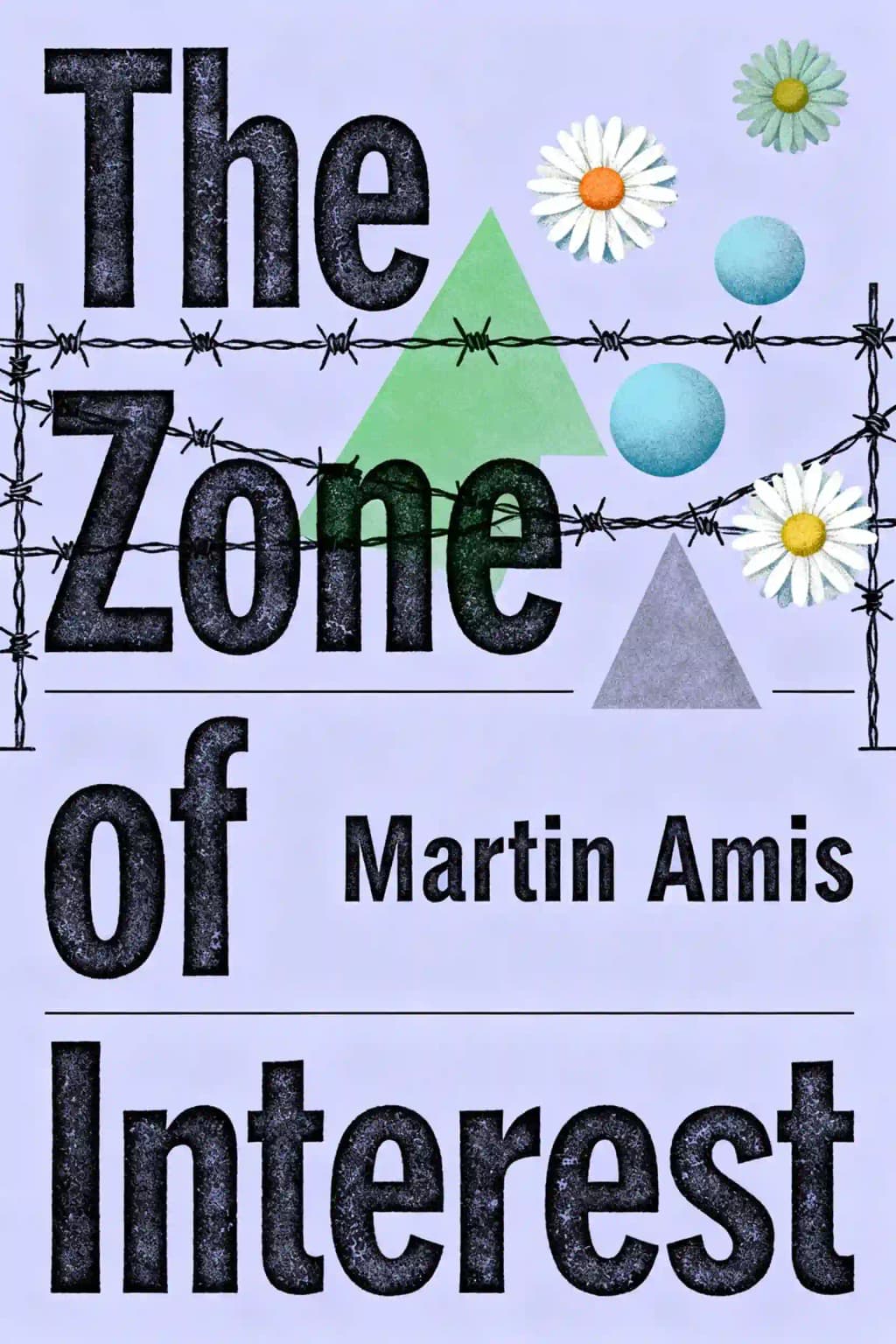
Martin Amis's "The Zone of Interest" plunges readers into Auschwitz through multiple perspectives, exploring humanity's darkest chapter with unflinching honesty. Recently adapted into a critically acclaimed film, this haunting narrative asks: How does evil become ordinary when genocide becomes bureaucracy?
Sir Martin Louis Amis (1949–2023) was the acclaimed author of The Zone of Interest and a towering figure in contemporary British satire. He wove dark humor and incisive social critique into his exploration of morality in modern society.
A two-time Booker Prize nominee (Time’s Arrow, Yellow Dog) and son of novelist Kingsley Amis, he crafted iconic works like Money and London Fields that dissect capitalism’s excesses with grotesque wit.
His tenure as a creative writing professor at the University of Manchester and essays in The New York Times cemented his authority on literary and cultural discourse. Amis’s novels, including The Rachel Papers and Experience (winner of the James Tait Black Memorial Prize), blend philosophical depth with unflinching examinations of human relationships.
The Zone of Interest, later adapted into an award-winning film, extends his legacy of probing humanity’s darker corners. Recognized by The Times as one of Britain’s 50 greatest postwar writers, his works have been translated into over 30 languages and continue to influence generations of novelists.
The Zone of Interest (2014) is a Holocaust novel set in Auschwitz, told through three narrators: Angelus Thomsen, a Nazi officer; Paul Doll, the camp commandant; and Szmul, a Jewish Sonderkommando. It explores the moral depravity of the Holocaust, blending a forbidden love story with unflinching depictions of systemic genocide. The novel critiques the normalization of evil and the psychological mechanisms enabling atrocities.
This book is suited for readers of historical fiction, Holocaust literature, or those interested in narratives dissecting human morality under extreme conditions. Its unflinching portrayal of Nazi bureaucracy and moral decay appeals to fans of works like The Kindly Ones or Schindler’s List. Note: Graphic content makes it unsuitable for sensitive audiences.
Yes, for its bold narrative structure and psychological depth. Martin Amis’s use of dark satire and multi-perspective storytelling offers a chilling examination of complicity. Critics praise its unflinching portrayal of Auschwitz’s horrors, though some find its thematic heaviness challenging.
The novel depicts Auschwitz as a grotesque ecosystem where Nazis live adjacent to gas chambers, normalized to horror. Scenes like the “Spring Meadow” burial pits—where earth hisses from decomposing bodies—highlight the banality of evil through visceral, surreal imagery.
Szmul, a Jewish Sonderkommando prisoner, narrates his role in disposing of corpses. His chapters reveal the psychological toll of survival guilt and dehumanization, offering a stark contrast to the Nazis’ detached perspectives.
The “Zone” refers to Auschwitz’s administrative perimeter, symbolizing the Nazis’ compartmentalization of genocide. It underscores the moral void where love, bureaucracy, and mass murder coexist.
Amis uses fragmented narratives, dark irony, and visceral prose to unsettle readers. His satirical tone critiques Nazi logic, such as Paul Doll’s absurd justifications for mass murder, amplifying the novel’s moral urgency.
Some critics argue Amis’s satirical approach risks trivializing Holocaust suffering. Others find the love subplot underdeveloped compared to the historical themes. However, most praise its ambition in confronting humanity’s capacity for evil.
Unlike Amis’s satirical novels (Money), this book adopts a darker, historical lens. It shares Time’s Arrow’s focus on morality but intensifies its critique through specific Holocaust atrocities.
The novel’s exploration of propaganda, systemic dehumanization, and moral complacency resonates in modern contexts of authoritarianism and societal indifference to injustice.
Senti il libro attraverso la voce dell'autore
Trasforma la conoscenza in spunti coinvolgenti e ricchi di esempi
Cattura le idee chiave in un lampo per un apprendimento veloce
Goditi il libro in modo divertente e coinvolgente
He speaks of "Special Train 105" rather than trainloads of victims.
He repeatedly describes himself as "a normal man with normal needs".
Doll embodies what Hannah Arendt famously called "the banality of evil".
Szmul introduces himself as "the saddest man in the Lager".
Scomponi le idee chiave di The Zone of Interest in punti facili da capire per comprendere come i team innovativi creano, collaborano e crescono.
Distilla The Zone of Interest in rapidi promemoria che evidenziano i principi chiave di franchezza, lavoro di squadra e resilienza creativa.

Vivi The Zone of Interest attraverso narrazioni vivide che trasformano le lezioni di innovazione in momenti che ricorderai e applicherai.
Chiedi qualsiasi cosa, scegli la voce e co-crea spunti che risuonino davvero con te.

Creato da alumni della Columbia University a San Francisco
"Instead of endless scrolling, I just hit play on BeFreed. It saves me so much time."
"I never knew where to start with nonfiction—BeFreed’s book lists turned into podcasts gave me a clear path."
"Perfect balance between learning and entertainment. Finished ‘Thinking, Fast and Slow’ on my commute this week."
"Crazy how much I learned while walking the dog. BeFreed = small habits → big gains."
"Reading used to feel like a chore. Now it’s just part of my lifestyle."
"Feels effortless compared to reading. I’ve finished 6 books this month already."
"BeFreed turned my guilty doomscrolling into something that feels productive and inspiring."
"BeFreed turned my commute into learning time. 20-min podcasts are perfect for finishing books I never had time for."
"BeFreed replaced my podcast queue. Imagine Spotify for books — that’s it. 🙌"
"It is great for me to learn something from the book without reading it."
"The themed book list podcasts help me connect ideas across authors—like a guided audio journey."
"Makes me feel smarter every time before going to work"
Creato da alumni della Columbia University a San Francisco

Ottieni il riassunto di The Zone of Interest in formato PDF o EPUB gratuito. Stampalo o leggilo offline quando vuoi.
In the administrative area of Auschwitz, just yards away from the machinery of death, Nazi officers and their families lived in relative comfort. Children played in gardens while smoke billowed from nearby crematoria. Officers' wives exchanged recipes and gossip as trainloads of victims arrived. This is the disturbing reality Martin Amis explores in "The Zone of Interest" - how the extraordinary evil of the Holocaust existed alongside the utterly ordinary rhythms of domestic life. The "zone of interest" itself - the Nazi term for the area surrounding the camp - becomes a powerful metaphor for the moral abyss at the heart of human nature. Through three distinct narrators, we witness how easily people can compartmentalize horror, how bureaucracy can sanitize genocide, and how love can flourish in the most unimaginable circumstances. The novel forces us to confront uncomfortable truths: the Holocaust wasn't carried out by monsters but by ordinary people who somehow maintained their self-image as decent human beings while participating in industrial-scale murder. What makes this reality so disturbing isn't just the scale of atrocity but how familiar these mechanisms of self-deception feel. How many of us look away from injustice when confronting it might cost us something? How easily do we accept euphemisms that mask uncomfortable truths?