Capitolo 1
The Science Behind Extraordinary Workplaces
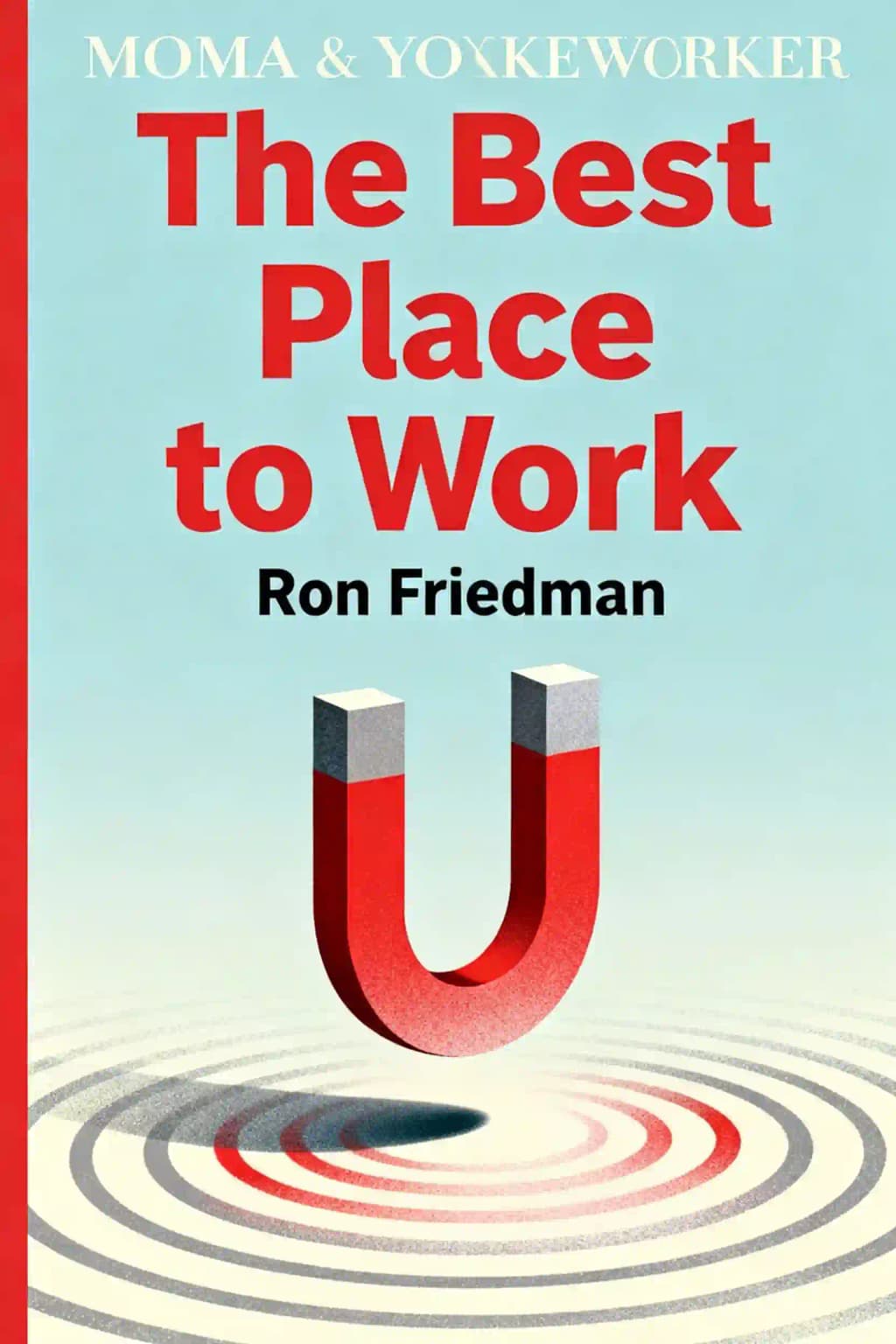
What makes some workplaces magnets for talent while others struggle with disengagement and turnover? Near Silicon Valley sits Baadal, an enchanting Indian restaurant run by Chef Irfan Dama that became an instant success despite being his first venture. It's part of Google's campus, where eating is serious business-with over 200 artisan dishes available daily and microkitchens ensuring no employee is ever more than three minutes from food. This isn't just extravagance; it's strategic. Companies on Fortune's "Best Companies to Work For" list outperform the market by 2-to-1, with specialized mutual funds of such companies recording 9.63% annualized returns compared to the S&P's 5.58%. Ron Friedman's groundbreaking work bridges psychological science and workplace practice, revealing how advances in brain science and behavioral research can transform ordinary offices into extraordinary environments where people thrive. The book has become a contemporary classic in management literature, with Seth Godin noting how it helps us "become more human, more alive and more effective" in our professional lives.
Capitolo 2
Why Great Workplaces Reward Failure
When Babe Ruth stepped up to the plate on May 26, 1935, he made history-but not in the way most remember. That day, 29-year-old pitcher Silas Johnson struck out the legendary Ruth three times, making Johnson something of a celebrity. What's often forgotten is that this same game marked Ruth entering the record books for the most strikeouts in baseball history. Yet no one cared about Ruth's failures-just a day earlier, he'd hit his 714th home run, cementing his legendary status.
This paradox reveals something profound about success: our greatest achievements often follow numerous failures. Take Albert Ellis, who later became an influential psychotherapist. At nineteen, Ellis was terrified of approaching women due to childhood illness and parental neglect. To overcome his fear, he devised a bold experiment: for thirty days, he would speak to every solitary woman he encountered in the New York Botanical Garden. Of 130 women approached, 130 rejections followed-yet this "failure" transformed his life by teaching him that rejection wasn't catastrophic. Ellis discovered that when your attempt rate is high, each individual failure becomes less significant.
Creative geniuses throughout history share this pattern. Dean Keith Simonton's research reveals they maintain broader interests, receive moderate formal education, and most importantly, produce more work overall. Shakespeare, Picasso, and Mozart all created far more than their contemporaries, though not every piece was a masterpiece. Thomas Edison's lightbulb came after hundreds of failures, and Steve Jobs had numerous product failures before his revolutionary successes. In sports, record-holders for strikeouts include home run kings Babe Ruth and Reggie Jackson, while Kobe Bryant missed more shots than any player in history.
Sara Blakely, founder of Spanx, credits her success mindset to her father, who would ask his children nightly: "What did you fail at today?" When they had nothing to report, he expressed disappointment. "Instead of failure being the outcome," Blakely explained, "failure became not trying." This reframing taught her that failure provides feedback on what to work on next.
Our educational system often teaches fear of failure, but some educators like Edward Burger are challenging this by actually rewarding students for failing. For over a decade, this Williams College math professor has allocated 5% of students' grades to their "quality of failure." The key isn't failure itself but mining mistakes for insights that improve future attempts.
In the mid-1990s, Amy Edmondson's Harvard research revealed a counterintuitive finding: nurses with better workplace relationships reported more errors, not fewer. The explanation wasn't that collaborative teams made more mistakes-they simply reported more of them. In psychologically safe environments, employees freely acknowledge errors as part of learning, while fearful teams hide mistakes to avoid consequences.
Leading organizations now reward failure to encourage innovation. Grey Advertising awards a quarterly "Heroic Failure" prize for bold risks, pharmaceutical giants Merck offers stock options to scientists who acknowledge unsuccessful research, and Eli Lilly hosts "failure parties" to redirect resources more efficiently. SurePayroll gives annual cash prizes for "Best New Mistake," and HCL Technologies requires leadership candidates to submit a "Failure CV" detailing their biggest blunders and lessons learned.
When organizations communicate that failure isn't acceptable, they trigger psychological reactions that restrict thinking, reward dishonesty, and ultimately fuel more mistakes. The most dangerous situation is when pressure to avoid failure is so intense that no one examines root causes, turning a potential culture of innovation into one focused solely on avoiding blame.
Capitolo 3
The Power of Place
Our physical environment profoundly shapes our thinking in ways we rarely recognize. When Herman Miller's Robert Propst set out to reinvent office furniture in the late 1950s, he observed that the typical bullpen-style workplace with rows of identical desks "saps vitality, blocks talent, frustrates accomplishment." His initial Action Office featured multiple work surfaces, ergonomic chairs, standing desks, and customizable privacy units. Though critically acclaimed, it flopped commercially for being too expensive. His revised Action Office 2-what we now know as the cubicle-became a massive commercial success but ultimately enabled companies to pack more employees into smaller spaces.
Evolutionary psychology offers surprising insights into effective office design. Our ancestors' survival needs still shape our unconscious preferences: we're naturally drawn to spaces offering "prospect and refuge"-sheltered locations overlooking expansive areas. We dislike sitting with our backs exposed, explaining why restaurant booths fill faster than open tables. Proximity to nature is essential-studies show surgery patients require fewer painkillers when rooms overlook trees, while office workers near windows sleep 46 minutes longer nightly and generate $3,000 more productivity annually.
A company's office space functions as its "organizational body language," communicating authenticity to employees and clients. When workplace design reinforces an organization's message, employees more easily integrate and relay that vision externally. Smart companies create "touchpoint maps" similar to retailers like Apple, whose stores embody simplicity through clean design and direct product access.
Telecommuters often outperform office workers for several reasons: they avoid lengthy commutes, enjoy distraction-free environments (avoiding the 20-minute recovery time needed after interruptions), escape pressure to multitask, and can personalize their surroundings (studies show customized workspaces boost performance by 32%). The real lesson isn't whether employees should work from home or office, but rather that something is fundamentally wrong when employees must physically leave a workplace to feel productive.
Progressive tech companies like Google, Cisco and eBay are adopting college campus-inspired workplace designs that foster self-direction and provide environmental variety. This approach gives employees access to personal desks, quiet focus areas, and collaborative spaces, allowing them to match their setting to their task rather than forcing adaptation to a single environment. By offering both "caves" (quiet, restorative spaces) and "campfires" (interactive group settings), companies accommodate different personality types while recognizing everyone needs access to both environments. The ideal workplace offers spaces specifically designed for generating big ideas (rooms with plants, tall ceilings, expansive views), focused editing (small soundproof rooms), and collaborative work (open-plan areas with amenities).
Capitolo 4
Why You Should Be Paid to Play
On a critical April evening in 2011, President Obama faced a momentous decision in the White House Situation Room: whether to send Navy SEALs or deploy bombers to a mysterious Pakistani compound housing a tall, unidentified figure nicknamed "The Pacer." After hearing his divided advisors' recommendations, Obama surprised everyone by postponing his decision to "sleep on it."
This counterintuitive approach aligns with Dutch research showing that distraction can lead to better outcomes than conscious deliberation for complex decisions. Our conscious minds have limited processing capacity, causing us to oversimplify complex decisions by focusing on minor details. The unconscious, however, excels at processing large amounts of information simultaneously. Brain imaging confirms that even during distraction tasks, decision-making regions remain active-our unconscious continues working while our conscious mind is elsewhere.
Excessive focus on difficult problems narrows our thinking and prevents innovative solutions. Our best insights often emerge during mental breaks-while walking, commuting, or watching an in-flight movie. Organizations like Google and 3M recognize this by deliberately incorporating play into workdays. Play accesses our childlike mindset, bypassing the self-censorship that limits creative thinking and opening us to alternative perspectives. Studies show that simply imagining oneself as a child significantly boosts creativity measures.
Exercise doesn't just improve mood-it fundamentally enhances learning, memory, and creativity. When we exercise, we produce brain-derived neurotrophic factor (BDNF), which promotes neuron growth in memory regions-just two three-minute sprints can boost memorization by 20%. Studies show thirty minutes of treadmill exercise improves creative performance for two hours afterward. Better approaches include wireless headsets for walking during calls, extended lunch breaks for gym visits, and company bikes for midday rides.
Creative thinking requires diverse mental stimulation. Progressive companies like Google, Yahoo, and Facebook address this by allowing employees to devote portion of their workweek to self-directed projects that might benefit the company. Google's success with this approach is evident in products like Gmail, Google News, Google Earth, and AdSense-which generates $10 billion annually-all developed during 20% time.
Napping offers a productivity boost superior to caffeine without negative side effects. Twenty-to-thirty-minute naps improve alertness, reflexes, accuracy, decision-making, creativity, memory, and mood while reducing stress. Progressive companies like Huffington Post, P&G, and Cisco have invested in napping facilities, while others like Yahoo and Time Warner offer spa access for employee rest.
Constant connectivity damages productivity over time. Research shows employees who don't psychologically detach during off-hours experience higher emotional exhaustion within a year. Sports psychologist Jim Loehr found elite athletes excel not through superior technique but through better recovery between points-a principle equally applicable to knowledge work. Some companies now protect employees from overwork: Volkswagen turns off email servers after shifts end, Daimler deletes vacation emails, and Boston Consulting Group flags employees who haven't taken breaks.
When President Obama authorized the Navy SEAL raid that killed Osama bin Laden, his decision came after stepping back to see the bigger picture. The president's choice to sleep on such a momentous decision wasn't a substitute for careful analysis, but demonstrates how rest can complement intensive intellectual work when making high-stakes decisions.
Capitolo 5
What Happy Workplaces Can Learn from a Casino
Casinos masterfully manipulate psychology to increase risk tolerance among gamblers. They replace real currency with chips, design slot machines with multiple winning combinations that often pay less than the original bet, and create sensory overload with lights, sounds, and free drinks. While workplaces don't need to encourage gambling, they can apply similar psychological principles to foster happiness.
Humans are naturally poor at maintaining happiness-positive emotions inevitably fade as we adapt to new circumstances. This adaptation process works both ways: lottery winners return to their happiness baseline within a year, and remarkably, so do accident victims who've lost the use of their limbs. This psychological mechanism serves an evolutionary purpose, preventing us from becoming either too complacent or too despondent.
Research shows small, frequent positive experiences sustain happiness longer than large, infrequent ones. A ten-dollar bouquet weekly creates more happiness than a single forty-dollar arrangement, and weekend getaways throughout the year provide more lasting joy than one two-week vacation. Organizations can apply this by dividing annual bonuses into quarterly payments and hosting several modest seasonal gatherings instead of one lavish holiday party. Office perks like espresso machines or stocked refrigerators provide daily happiness boosts and signal that the company cares.
Our brains quickly habituate to predictable environments, causing us to tune out even positive experiences. Introducing variation prevents adaptation and keeps us emotionally engaged. Companies successfully implement this through seasonal events-Plante Moran offers ice cream in summer and apple cider in fall; Hitachi Data Systems hosts an annual Dog Day; Qualcomm runs a weekly farmers' market in summer.
Surprises command our attention and create stronger emotional impacts. When unexpected events occur, our brains devote more mental energy to processing them, giving them greater emotional weight. This explains why new romantic relationships feel exciting (constant discoveries about your partner) and why new jobs initially feel engaging. By leveraging positive surprises-like spontaneous movie outings, office massage days, or birthday surprises-organizations can create more impactful experiences.
Research on "smarter spending" reveals that purchasing experiences (hot-air balloon rides, wine-tasting classes, vacations) provides greater happiness than comparable spending on material objects (TVs, suits, purses). For organizations, this suggests investing in employee experiences-conferences, group outings, weekend getaways-yields greater happiness returns than new furniture or equipment.
Our environment unconsciously influences our moods and behaviors. Pleasant scents-used strategically by casinos and retailers through "aroma marketing"-make us happier, more helpful, and more generous without our awareness. Similarly, music affects our heart rates and behaviors-slow music makes shoppers linger and purchase more, while fast music increases drinking pace in bars.
Gratitude journaling has been shown to promote mental health and prevent depression, but implementing this practice organizationally can feel forced. A better approach is setting aside time for employees to share accomplishments as a group. Unlike traditional staff meetings focused on uncompleted tasks, progress-focused meetings shift attention from what's missing to what's been achieved. Research by Teresa Amabile shows that experiencing progress is the single most important component of a satisfying workday.
Excessive focus on happiness can be counterproductive. Negative emotions like anger, embarrassment and shame serve important functions-they direct our attention to problems requiring solutions and help us adapt behaviors. Research shows extremely happy people can be more prone to mistakes through overconfidence, while slightly dissatisfied individuals often achieve higher income and education levels. Happiness benefits certain work activities but hinders others-it enhances creativity and connection but can interfere with detail-oriented tasks requiring vigilance.
Capitolo 6
How to Turn a Group of Strangers into a Community
Donald Clifton's controversial Q12 survey question "Do you have a best friend at work?" has proven to be one of the strongest predictors of workplace productivity. Research shows employees with best friends at work are more focused, passionate, and loyal, while experiencing fewer health issues and lower turnover rates. Unlike acquaintances who prefer working alone and resist seeking help, friends outperform on both collaborative thinking and manual labor tasks because they communicate better, offer encouragement, provide critical feedback, and feel greater responsibility not to let each other down.
Far from being mere workplace distractions, meaningful connections are vital to our psychological and physical wellbeing. Loneliness weakens immune systems, stiffens arteries, raises blood pressure, increases stress, disrupts sleep, and can lead to cognitive decline. A 2011 study found that lonely employees perform worse individually, communicate less effectively, and contribute less to their teams. They waste valuable mental resources hiding their loneliness, leaving less cognitive capacity for actual work.
Three fundamental building blocks create successful friendships. First, physical proximity-as demonstrated by police cadets who bonded with alphabetically-adjacent classmates. Second, familiarity-the "mere exposure effect" shows we unconsciously like people more the more we see them, even without interaction. Third and strongest is similarity-sharing interests, backgrounds or even birthdays creates an affirming connection, as C.S. Lewis noted: "Friendship is born at the moment when one person says to another, 'What! You too? I thought I was the only one.'"
In 1997, relationship expert Art Aron designed an experiment to recreate friendship formation in a laboratory setting. He paired strangers and gave them conversation prompts, dividing them into two groups. The "Small Talk" group exchanged factual information with questions like "How did you celebrate last Halloween?" while the second group received questions designed to encourage emotional self-disclosure. Aron discovered that meaningful connection requires reciprocal sharing of increasingly intimate information.
Is emotional self-disclosure appropriate in competitive work environments? Research by Patricia Sias suggests it's essential for forming workplace friendships. Sias identified three key transitions in workplace relationships: from acquaintance to friend (occurring naturally after working together about a year), from friend to close friend, and from close friend to best friend. While proximity and collaboration catalyze the first transition, the deeper connections require sharing personal problems from home and work life.
Most organizations fail at onboarding by either neglecting it entirely or overwhelming new hires with back-to-back introductions. Effective onboarding addresses two critical concerns of new hires: demonstrating competence and connecting with colleagues. Successful strategies include starting onboarding before the first day, stretching out the process over weeks, introducing new hires with personal details beyond professional backgrounds, and assigning collaborative first projects that foster early wins.
After onboarding ends, maintaining workplace friendships requires creating conditions that foster proximity, familiarity, similarity, and self-disclosure. After-work activities represent a powerful approach, with top companies offering seed money for everything from yoga to wine-tasting classes. These shared experiences catalyze connections by bringing together employees who rarely meet while highlighting similarities and prompting self-disclosure in relaxed settings. Physical activities like sports provide additional benefits through increased physiological arousal, which research shows makes us like our companions more.
Superordinate goals can defuse tension and prevent conflict by creating a sense of shared purpose. Organizations can abolish the "they" mentality through programs like Genesis Fertility Centre's "Day of Osmosis" where new employees shadow other departments, or by creating company-wide incentives like Hilcorp Energy's $100,000 bonus for doubling production.
Sheldon Cohen's groundbreaking research revealed that people with diverse social networks are actually less susceptible to illness, even after direct exposure to viruses. When we feel supported by colleagues, we experience less stress and make better decisions during crises. Organizations can foster this support network by encouraging celebration of important milestones and acknowledging setbacks (with permission), which can transform superficial relationships into meaningful friendships.
Rather than trying to eliminate workplace gossip, leaders should understand its evolutionary function. Gossip provides valuable information about social norms and keeps people accountable. Studies show people are less likely to cheat when they fear others will gossip about their actions. However, excessive gossip often indicates employees feel powerless or insecure. Strong leaders respond by listening to gossip as a symptom of organizational issues, then encouraging and modeling open communication. Those who gossip most are often viewed as least powerful and trustworthy, damaging their own standing while thinking they're building connections.
Capitolo 7
The Leadership Paradox
Warren Buffett's unorthodox management approach at Berkshire Hathaway demonstrates the power of autonomy. When Buffett purchased Johns Manville for $2.3 billion in 2000, CEO Charles Henry planned to retire immediately. Yet after meeting Buffett, Henry postponed retirement by four-and-a-half years. What changed his mind was Buffett's leadership style-giving managers complete autonomy while making himself available for consultation. Rather than micromanaging, Buffett finds "obsessed perfectionists" and largely leaves them alone, asking clarifying questions that help managers find their own insights.
In stark contrast stands Frederick Winslow Taylor, the father of scientific management, who believed employees were inherently unmotivated and needed standardized processes with strict oversight. Taylor's mechanistic view of workers as machines needing drivers revolutionized factory efficiency but fostered resentment. His approach spread widely after World War I, applying assembly-line thinking to restaurants, hospitals, and schools.
Taylor was ahead of his time, working as a lone experimenter when human behavior wasn't considered a science. His methods improved productivity in factory settings, but they faltered when the knowledge economy arrived and jobs grew more complex. Dan Ariely's research in India challenged Taylor's assumption that higher pay leads to better performance. When participants were offered bonuses ranging from one day's pay to five months' salary for memory and concentration tasks, those offered the highest rewards performed worst. The high stakes triggered fight-or-flight responses that interfered with clear thinking.
Taylor viewed motivation purely in terms of quantity-employees were either highly motivated or not-and believed managers must energize workers through rewards and threats. Modern motivational experts recognize that motivation varies not just in quantity but in type. Intrinsic motivation (enjoying the work itself) leads to greater creativity, engagement and sustained effort compared to extrinsic motivation (working for money or status). Paradoxically, emphasizing rewards can reduce intrinsic motivation through the "crowding out" effect-people begin viewing work as merely a means to an end.
When managers limit employee autonomy, they trigger a psychological response called "reactance"-the tendency to resist when freedom is threatened. A University of Colorado study demonstrated this with the "Romeo and Juliet effect": the more parents disapproved of their children's romantic partners, the more in love the couples reported feeling. This defiant response appears in many contexts-therapists who talk more and offer more advice have lower success rates, and smokers shown graphic warnings become more determined to continue smoking. In workplaces, micromanagement can lead to subtle acts of defiance, slower customer service, conveniently "dead" cell phones when managers call, and ultimately, higher turnover.
Even when choice seems limited, managers can foster autonomy in several ways. First, provide meaningful rationales that show how tasks create value for employees or people they care about-understanding "why" helps people invest more effort. Second, define outcomes rather than processes, allowing employees to chart their own approach. Third, use open-ended questions that begin with "how," "what," or "why" to demonstrate respect for employees' thinking, rather than close-ended questions that can feel controlling or accusatory. Finally, acknowledge negative feelings when employees express frustration, as this validates their experience while maintaining necessary workplace boundaries.
Top-down leadership rarely sustains intrinsic motivation. Real excellence emerges when managers create environments where employees lead themselves. Yet paradoxically, many organizations still enforce outdated fixed schedules designed for factory efficiency, not human productivity. This ignores fundamental biological realities: we have different personality types and our cognitive abilities fluctuate throughout the day. Research from Stanford shows that telecommuting actually increases productivity by 12.5 percent, with employees taking fewer breaks, experiencing less sick time, and enjoying quieter work environments. These remote workers also reported greater job satisfaction and were 50 percent less likely to quit.
Capitolo 8
Better Than Money
Video games like Dance Dance Revolution reveal profound truths about human motivation. When immersed in games, people voluntarily engage in repetitive behaviors they'd normally avoid-sorting cards, rearranging tiles, defeating cartoon villains-often at considerable personal cost, skipping meals and sacrificing sleep. This raises an intriguing question: could the secret to workplace engagement be found in video games?
Despite our intuition that higher salary would be our top workplace wish, research challenges this assumption. Timothy Judge's comprehensive meta-analysis of 86 studies covering 15,000 employees found that "level of pay had little relation to either job or pay satisfaction." This counterintuitive finding can be explained by our rapid adaptation to income increases-the initial elation from a raise quickly fades as our new salary becomes our reference point. Research suggests that above roughly $75,000 annually, salary increases have minimal impact on happiness.
Instead, studies show that status and respect from peers are far stronger predictors of happiness than income-a finding demonstrated in Cameron Anderson's research with MBA students whose happiness correlated with peer respect rather than salary. Recognition satisfies our evolutionary need for belonging and security. Unlike money, we never fully adapt to feeling respected-Oscar winners live about four years longer than nominees, with similar patterns observed among Nobel Prize winners and Baseball Hall of Famers. Recognition reduces stress, improves sleep quality, and speeds recovery from illness.
Many organizations fail at recognition because managers are uncomfortable giving praise, fear it will lead to salary demands, or are so accustomed to receiving respect themselves they forget others need it. Annual performance reviews are particularly problematic-they provide valuable feedback but at harmfully long intervals. Equally ineffective is excessive, undeserved praise which deprives employees of useful data for improvement and demoralizes high performers.
Effective recognition follows five key principles: First, feedback should be immediate, as delayed praise is less motivating and instructive. Second, recognition must be specific-"Good job" is far less powerful than detailed acknowledgment of particular efforts. Third, praise the behavior rather than the person, as complimenting inherent traits can lead people to view abilities as fixed and become risk-averse. Fourth, public recognition carries more weight than private feedback. Finally, adding positive rewards is more motivating than removing negative conditions.
For time-constrained managers, "outsourcing praise" through peer-to-peer recognition offers a powerful solution. Managers should model recognition behavior by publicly acknowledging employees during meetings and encouraging team members to express appreciation to each other. Social media platforms like Yammer and Chatter are making workplace appreciation easier through features similar to Facebook's Like button.
When we lose sight of our work's value, motivation suffers. Finding meaning helps us persevere through setbacks by broadening our perspective beyond day-to-day activities to see long-term benefits, especially those helping others. Adam Grant's research with university telemarketers demonstrated this powerfully-after just a ten-minute meeting with scholarship recipients who benefited from their work, callers doubled their calls per hour and generated 171% more weekly revenue.
Flow-that state of complete absorption where action feels effortless-requires progressive difficulty, not the simplification most workplaces prioritize. To create flow opportunities, managers should deliberately challenge employees with projects slightly beyond their current abilities, ask them to set quarterly stretch goals, and make on-the-job learning a requirement. Acquiring new information increases dopamine production, improving mood and interest. When employees stop growing, enthusiasm sinks; when work becomes predictable, critical thinking stops.
Peer-to-peer coaching satisfies employees' needs for competence, autonomy, and connection simultaneously. Unlike traditional coaching that implies ineptitude, this approach involves asking open-ended questions rather than giving advice, focusing on topics selected by the coachee, and maintaining objectivity. The coach helps the coachee generate solutions through questions like "What would success look like?" and "What steps are you considering?"
Video games offer profound lessons for workplace engagement. Flow experiences happen not because of who we are, but because of task characteristics-clear objectives that show us what to do next. The same elements that make games addictive-goal clarity, consistent feedback, good narratives, and progressive difficulty-can make work absorbing too. When these psychological needs are fulfilled, any activity can become passionate.
Capitolo 9
Three Keys to Creating an Extraordinary Workplace
Despite a decade of awareness about employee disengagement (70% of American workers and 84% internationally), little progress has been made in improving workplace satisfaction. This isn't due to lack of awareness or economic conditions, but rather organizations pursuing the wrong strategies, relying on short-term boosts like salaries and titles rather than addressing fundamental needs.
Engagement thrives when employees experience autonomy, competence, and relatedness daily. Autonomy grows through providing choices, rationales for tasks, and flexibility in how and where work happens. Competence develops through immediate feedback, meaningful recognition, growth opportunities, and permission to occasionally fail. Relatedness, often underappreciated in business, requires designing interactions that leverage proximity, familiarity, similarity and self-disclosure through extended onboarding, non-work activities, and communal spaces that foster natural bonds.
Human concentration naturally fluctuates, with afternoon dips and vulnerability to interruptions. Rather than expecting employees to power through low-energy periods, successful organizations design workspaces that conserve mental resources and offer opportunities to replenish them. This means creating varied environments ("caves and campfires"), allowing for exercise, play and occasional naps, providing access to natural light, personalized workspaces, healthy snacks, and restorative experiences. Unlike factory work, modern productivity isn't tied to desk time-some of our best contributions come when we're away from our desks, allowing disparate ideas to connect.
The concept of "work-life balance" is largely a myth in today's workplace. With the advent of email and smartphones, home is rarely off-limits from work demands, with employees expected to remain connected during evenings and weekends. The reality is that standout employees are mentally working around the clock-plotting ideas while showering, driving, or falling asleep.
Rather than pretending work and personal time are separate, organizations benefit from actively blending these worlds. Including employees' significant others in work activities deepens workplace friendships. Using the workplace to connect employees with community nonprofits creates meaning. Expressing appreciation directly to an employee's family builds company pride.
When organizations trust employees to manage their time responsibly-allowing them to attend a child's soccer game during work hours-they create loyalty that saves money long-term. The future of great workplaces lies in helping employees fuse their personal and professional lives in ways that position them to deliver their best work.
If we were building a workplace from scratch today, without the factory model as our template, would we still insist employees "clock in" simultaneously, maintain eight-hour shifts, or take orders from managers? Yet these outdated practices persist, making it unsurprising that over 80 percent of employees worldwide are disengaged.
Fortunately, evidence-based techniques exist for creating better workplaces. When organizations fulfill employees' psychological needs for autonomy, competence, and relatedness; when they allow employees to leverage their full mental capacity; and when they provide flexibility to succeed in both personal and professional lives, they create more than just extraordinary workplaces-they build organizations that perform at their very best.