Capitolo 1
The Future of Work Is Flexible: Reimagining How We Collaborate
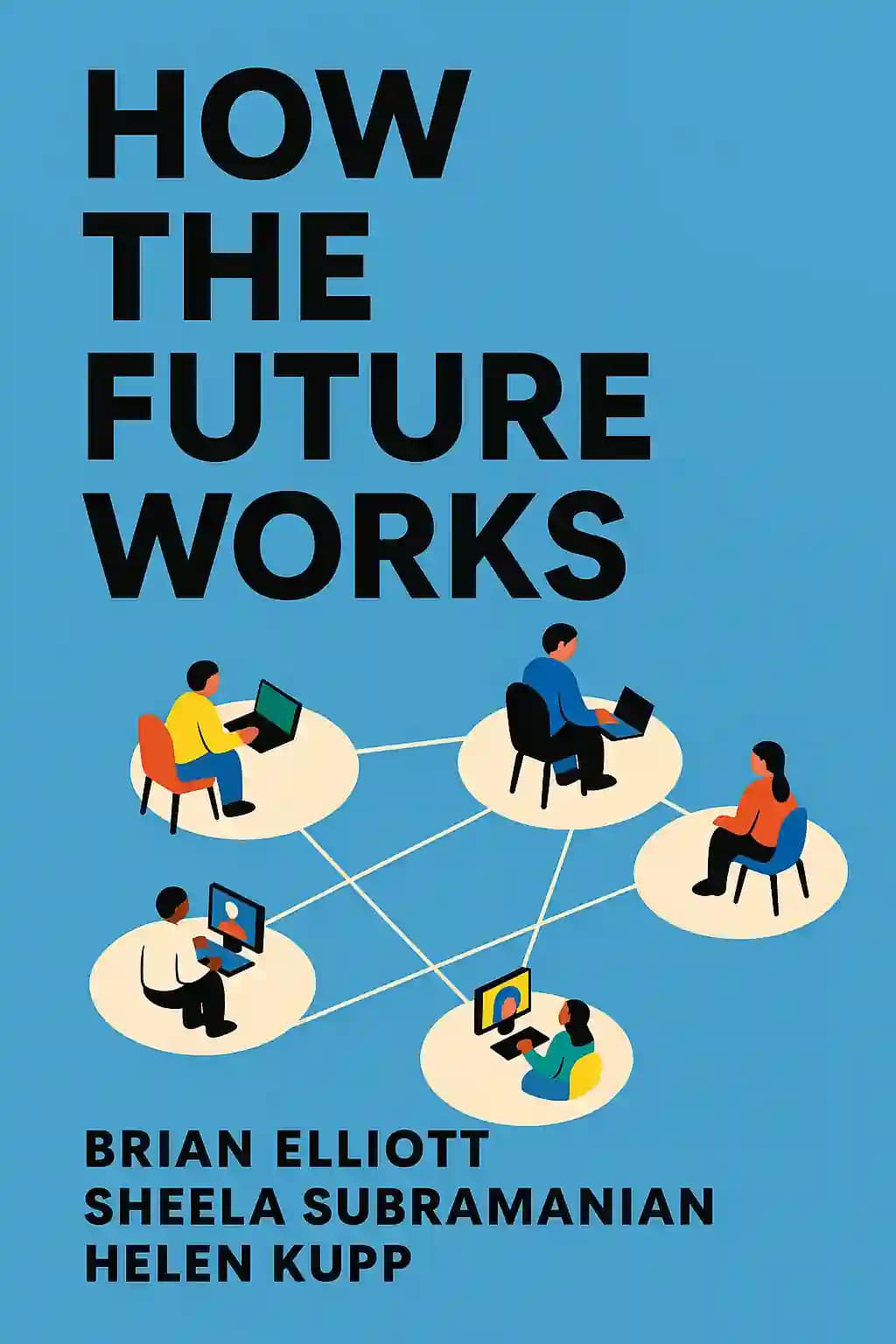
In 2020, a global experiment in remote work forced companies worldwide to rethink decades of workplace assumptions. While many executives initially feared productivity would plummet, something unexpected happened-work continued effectively, and in many cases, improved. This revelation forms the foundation of "How the Future Works," a groundbreaking guide by Brian Elliott, Sheela Subramanian, and Helen Kupp, leaders of Slack's Future Forum consortium. The book has garnered praise from business luminaries like Indra Nooyi, who calls it "a blueprint to deeply consider the future of work," and Marc Benioff, who describes it as "an essential guidebook for transforming the way people work." Drawing from extensive research and real-world examples from companies like IBM, Dropbox, and Levi Strauss, the authors present a compelling case that flexible work isn't just a pandemic-era accommodation-it's a competitive advantage that smart companies are embracing to attract talent, boost productivity, and build more inclusive workplaces.
Capitolo 2
Breaking Free from Industrial-Era Work Models
Our traditional 9-to-5 work model is a relic of the past, shaped by forces that no longer apply to modern knowledge work. This rigid approach to work evolved from Benjamin Franklin's "time is money" philosophy through the agricultural era (where work was seasonal and daylight-dependent) to the Industrial Revolution's factory schedules. Henry Ford notably standardized the eight-hour workday and five-day workweek in the 1920s after observing diminished productivity from overwork, and the Fair Labor Standards Act of 1938 finally established legal protections limiting working hours.
Despite technological advances that have freed knowledge work from specific locations and times, outdated industrial-era practices like presenteeism and clock-watching persist in our workplaces. We've remained tethered to these antiquated norms even though they no longer serve our needs. The pandemic forced a reevaluation of these assumptions, revealing that work can happen effectively anywhere.
Flexible work isn't simply about working from home-it's a fundamental mindset shift. While 76% of knowledge workers want location flexibility, an even more significant 93% desire schedule flexibility. This desire crosses all demographics including age, gender, race, and geography. True flexibility isn't just about avoiding the office with a calendar full of back-to-back Zoom meetings-it's about giving people autonomy to coordinate their schedules with family needs, take breaks, and work when they're most productive.
The most successful approach is what the authors call "Digital-First"-not simply office-centric work with remote options, not just location flexibility, and not eliminating in-person work entirely. Rather, Digital-First flips the traditional paradigm: instead of digital tools supplementing in-person work, in-person interactions supplement a primarily digital workflow.
Capitolo 3
The Competitive Edge of Flexible Work
Flexible work arrangements provide organizations with three fundamental competitive advantages that significantly impact business performance and market position. First, it dramatically enhances talent acquisition capabilities - consistently rated as the top strategic concern among CEOs worldwide. By eliminating geographical boundaries, companies can access a vastly expanded talent pool across different time zones and regions. Dropbox's experience proves this conclusively - after implementing their "Virtual First" flexible model, they saw applications triple and notably improved candidate quality. Similarly, GitLab reports accessing talent in over 65 countries, giving them unprecedented access to specialized skills.
Second, flexible work has emerged as a powerful retention tool, with workplace flexibility now ranking second only to compensation in driving job satisfaction. This is particularly crucial for the estimated three-quarters of workers who have caregiving responsibilities. Companies like Microsoft have reported 87% employee satisfaction rates with flexible arrangements, translating to a 15% reduction in turnover. The impact is especially pronounced among millennials and Gen Z workers, with 80% indicating they would change jobs for more flexible options.
Third, flexible work drives superior business results through multiple channels, despite initial leadership skepticism about productivity. Research consistently demonstrates that flexible work enhances productivity - particularly schedule flexibility, which yields an average 30% productivity boost. The US Patent and Trademark Office's experience is telling: they saw a 4.4% productivity increase post-flexibility implementation, with maintained quality standards and significantly improved employee engagement scores. Similarly, American Express reported a 43% increase in productivity among their flexible teams.
Customer engagement metrics show equally impressive gains. Slack's analysis revealed that remote connections enabled sales teams to conduct 20% more client meetings per day. Salesforce documented 25% higher C-level executive attendance in virtual meetings compared to in-person ones, while their sales teams reclaimed approximately two weeks of selling time annually by eliminating travel. Dell saved $12 million annually in real estate costs while maintaining customer satisfaction scores.
The diversity benefits of flexible work translate directly to financial performance. Companies with above-average leadership diversity consistently outperform their peers, achieving EBIT margins 9 percentage points higher and innovation revenue 19 percentage points higher than less diverse companies. Organizations like Unilever have leveraged flexible work to increase women in management positions by 40%, directly correlating with improved market performance.
Despite this compelling evidence, many organizations continue to resist adoption due to status quo bias - the tendency to default to familiar practices even when acknowledging their inefficiencies. As Slack CEO Stewart Butterfield observed, executives readily acknowledge problems like meeting inefficiencies but "literally do nothing" to improve them, caught between recognizing the need for change and resistance to implementing new systems. This resistance persists even as companies like Twitter, Square, and Shopify report sustained success with flexible models, suggesting that overcoming this institutional inertia represents a significant competitive opportunity.
Capitolo 4
Implementing Flexible Work: Principles and Guardrails
Successfully implementing flexibility requires alignment around a clear purpose-the WHY behind flexible work. Purpose-driven organizations perform better, with higher growth rates and stronger innovation capabilities. At Slack, leadership defined their purpose through key questions: Do we want access to the best, most diverse talent? Will employees continue to demand flexibility? Do we want the agility that comes with being Digital-First?
Once the purpose is established, organizations need principles-not tactical instructions but mindsets required for transformation. Rather than imposing one-size-fits-all solutions, principles act as a North Star, allowing teams flexibility in execution while maintaining alignment. When the Royal Bank of Canada (RBC) shifted its 86,000 global employees toward flexible work, they created five "enterprise principles" to guide implementation across diverse work requirements. Their principle "Proximity still matters" established boundaries while maintaining flexibility, ensuring teams could occasionally gather in person while allowing employees to determine their own commuting tolerance.
Flexible work arrangements historically come with career penalties despite proven effectiveness. Without intentional guardrails, companies risk creating greater opportunity divides between those who choose flexibility and those who don't. Research from Stanford's Nicholas Bloom showed that remote workers had 50% lower promotion rates despite equal or better productivity.
Effective guardrails ensure flexible work is respected and actually unlocks talent rather than suppressing it. For example, when executives say one thing but do another-like gathering in the boardroom while everyone else dials in-they undermine the entire strategy. At Atlassian, executives follow "stricter rules," limiting office visits to once weekly and in-person executive meetings to quarterly. Slack implemented "executive speed limits" where leaders commit to three or fewer days in the office.
Capitolo 5
Team-Level Agreements: The Framework for Success
When companies like Apple and Google announced rigid return-to-office policies requiring employees to work in-office specific days each week, they faced immediate backlash. These approaches fail because they offer "faux flexibility" that appears flexible without providing what employees truly want-autonomy and choice-and they communicate a fundamental lack of trust in teams to determine their own optimal working arrangements.
Team-Level Agreements (TLAs) translate organization-wide principles and guardrails into practical, everyday actions. They establish expectations for how team members will work together, addressing critical questions about maintaining equity when everyone works in different places and schedules. TLAs provide the structure within flexibility that most workers desire-nearly two-thirds of knowledge workers want a balance between flexibility and a predictable framework rather than rigid schedules or complete lack of structure.
When creating TLAs, teams should start with values rather than rules that limit flexibility. Instead of debating requirements like minimum office days, begin by asking what team members value in their working environment. Teams should establish "core collaboration hours"-typically a 3-4 hour timespan when members are available for meetings and feedback. This approach supports "bursty" communication (alternating between high activity and silence), which research shows characterizes successful teams, while allowing individuals flexibility around their preferred work times and focus periods.
Better meeting hygiene is essential for flexible work success. Teams should rethink their meeting culture using frameworks like Dropbox's "Three D" model: debate, discuss, decide (plus development). If a meeting doesn't accomplish at least one of these purposes, communication should happen another way. Teams should consider video fatigue and establish norms like "no video for one-on-ones or afternoon meetings" to create equity for those without ideal home office setups.
Capitolo 6
Experimenting Your Way to Better Work
Implementing flexible work requires systematic experimentation and continuous learning, as demonstrated by several leading organizations' experiences. Genentech's journey offers particularly valuable insights. Their initial 2018 program focused too narrowly on location flexibility rather than schedule flexibility, limiting its appeal. Despite having robust data showing employee preference for flexibility and documented team successes, adoption remained limited to about 300 people on their 10,000-person campus. This resistance came primarily from the "frozen middle" - mid-level leaders who couldn't envision success beyond traditional workplace structures. The forced experiment of the pandemic generated compelling evidence that convinced even the most skeptical research scientists when they witnessed measurable positive effects on both productivity and engagement metrics.
Building momentum for flexible work requires questioning established workplace norms rather than relying on top-down mandates. IBM's "Work From Home Pledge" exemplifies this approach, emerging organically from employee conversations about work-life integration, not as an executive directive. The pledge included specific commitments like "I will be family sensitive" and "I will support flexibility for personal wellbeing." When IBM's CEO publicly embraced the employee-created pledge, he signaled both practical support and alignment with cultural values, demonstrating how bottom-up initiatives can drive organizational change.
Since there's no universal blueprint for flexible work, organizations must create cultures of experimentation and knowledge sharing. Design Thinking provides a structured framework for this process through five key phases:
• Empathize: Understand challenges through comprehensive surveys, listening sessions, and employee feedback forums
• Define: Create specific problem statements from people's perspectives, identifying pain points and opportunities
• Ideate: Generate multiple potential solutions through collaborative workshops and cross-functional teams
• Prototype: Test methodologies with pilot teams, gathering real-time feedback and adjusting approaches
• Test: Execute small-scale changes and measure results using both quantitative and qualitative metrics
These phases form a continuous learning loop rather than a linear process, allowing organizations to iterate and improve their approach based on evidence and experience.
Leaders should embrace transparency rather than sequestering ideas and decisions, as information vacuums breed distrust and resistance. Regular communication about both successes and challenges helps build credibility and engagement. Managers play a crucial role in successful change implementation and need to understand both business imperatives and personal motivations for flexible work. Engaging managers through thought-provoking questions rather than directives creates stronger buy-in for new ways of working. Examples include asking "What would make flexible work successful in your team?" and "How might we measure productivity differently in a hybrid environment?"
Organizations should also establish clear metrics for success, including both traditional business measures and newer indicators like employee wellbeing and work-life satisfaction. Regular pulse surveys, productivity data, and engagement metrics can help track progress and identify areas for improvement. Creating forums for sharing best practices and lessons learned across teams accelerates the learning process and helps scale successful approaches.
Capitolo 7
Creating Connection in a Digital-First World
When MURAL secured $118 million in Series B funding during COVID lockdown, they faced the challenge of celebrating virtually. Instead of traditional gatherings, they created an immersive "2020 MURAL World Tour"-a virtual journey with themed Zoom backgrounds, physical props sent to employees' homes, and interactive activities at each "destination." The event successfully connected their global team through intentional design rather than physical proximity.
Despite research showing flexible work improves connection, many still cling to the belief that office spaces are essential for building relationships. This perspective typically comes from those who have already succeeded in traditional office culture and resist questioning whether it was truly effective for everyone. Companies have invested heavily in office real estate-nearly $500 billion annually in the US alone-with elaborate perks and amenities to make offices attractive.
Flexible work requires reconceptualizing the "workplace" as a network of equally important forums rather than just a physical building. Digital space should become the new headquarters-the primary place where people access information, opportunity, and each other regardless of location or time. This requires intentional selection of digital tools beyond just video conferencing: collaborative platforms for brainstorming, document co-creation tools, and dedicated social channels. Companies that are early technology adopters see twice the sense of belonging among employees compared to technology laggards.
Physical offices aren't disappearing, but their purpose is evolving. Traditional offices filled with assigned desks that often sit empty need redesigning to support experiences people actually want. With four times as many people preferring office space for team interactions rather than quiet work, organizations should shift their space allocation. As Joseph White from MillerKnoll notes, many offices are evolving from "80% assigned individual workstations and 20% unassigned team collaboration spaces" to "20% unassigned spaces for individual focus and 80% assigned spaces for team collaboration."
Capitolo 8
Developing Leaders for the Flexible Future
The early 2020s marked a profound shift in people management, revealing deep fractures in traditional leadership approaches. Middle managers were 46% less satisfied than senior managers, struggled twice as much with belonging, and felt more stressed and less productive. This disruption exposed an existing problem: managers lacked the skills to lead complex teams of knowledge workers in increasingly distributed environments. Research from Gallup showed that 70% of the variance in team engagement was tied directly to manager effectiveness, highlighting the critical importance of leadership adaptation.
The conventional view of managers as clock-watchers and task-masters has become obsolete in today's knowledge economy. Instead of Henri Fayol's 1916 "Five Functions of Management" (planning, organizing, commanding, coordinating, and controlling), today's managers must embrace a more nuanced approach: inspire trust through transparency about purpose and expectations; create clarity on responsibilities through direct feedback; and unlock potential through equitable practices. Companies like Microsoft and Salesforce have redesigned their management training programs to emphasize these modern leadership competencies.
Leaders must communicate effectively even when they don't have all the answers, as saying nothing leaves room for employees to create their own narratives - often more negative than reality. During periods of uncertainty, successful managers increase communication frequency by 40%, even if just to acknowledge uncertainty. Empathy has emerged as another critical skill - IBM trained 30,000 managers on it during the pandemic, resulting in a 22% increase in team performance scores. Managers should facilitate regular team discussions about flexible work challenges, sharing their own experiences to model vulnerability and create psychological safety.
A valuable tool gaining traction is the "personal operating manual" (POM) - detailed documents explaining someone's communication style, preferences, and work habits. POMs complement Team-Level Agreements by explicitly communicating how individuals work best in flexible environments. These documents typically cover preferred communication channels, optimal meeting times, decision-making approaches, and stress response patterns. Companies like Gitlab and Buffer have made POMs standard practice, with managers leading by sharing their POMs first to demonstrate vulnerability and set expectations.
Managers must also create a culture that accepts mistakes as learning opportunities, striking a balance between addressing issues and avoiding blame. As Stanford professor David Kelley notes, making new mistakes means learning new things. Progressive organizations implement "blameless post-mortems" after project failures, focusing on systemic improvements rather than individual fault. Companies like Google and Amazon have formalized this approach, requiring managers to celebrate "intelligent failures" that advance organizational learning.
The most successful modern managers act more as coaches than controllers, spending 60% more time on development activities than their peers. They create environments where distributed teams can thrive by establishing clear expectations while providing autonomy, regular feedback, and growth opportunities. This shift requires ongoing investment in management development, with leading organizations spending 30% more on leadership training than industry averages.
Capitolo 9
Measuring What Matters: Outcomes Over Activity
The shift to flexible work demands new approaches to measuring performance. When executives ask, "How will we know if people are really working?", the counterquestion should be: "How did you know they were working when they were in the office?" This fundamental challenge reveals how many traditional management practices were based on assumptions rather than evidence.
Traditional productivity measures like office attendance, "managing by walking around," and monitoring desk time have always been flawed, especially for knowledge work. An employee could appear productive by attending meetings, responding to emails, and being visible at their desk, while accomplishing little of real value. Flexible work simply makes these outdated approaches impossible. The reality is that physical presence never guaranteed productivity-employees could always appear busy while shopping online, messaging friends, or browsing news. Some studies even suggest that in-office workers spend an average of 2.8 hours per day on non-work activities.
Flexible work often triggers trust issues, with leaders questioning whether remote workers are actually working. This anxiety has led to a surge in monitoring tools and surveillance software, but these solutions create more problems than they solve. Monitoring tools fail because employees can find workarounds (like using mouse jigglers or running multiple screens) and monitoring only tracks activity, not effectiveness. The "Doom Loop" emerges when monitoring leads to meaningless metrics, which leads to box-checking behaviors or avoidance, causing talent attrition and loss of trust, which triggers more monitoring. Companies like IBM and Yahoo previously tried forcing remote workers back to offices, only to face increased turnover and decreased morale.
Modern work demands shifting from activity-based measures (hours worked, keystrokes logged) to outcomes-based evaluation (results delivered), focusing on quality of work rather than quantity of hours. This means setting clear objectives and key results (OKRs), establishing project milestones, and measuring actual impact on business goals. The "Boom Loop" builds trust through clear shared goals and giving people support and space to meet them. Companies like Microsoft and GitLab have successfully implemented outcome-based frameworks that focus on deliverables rather than desk time.
Success in business requires measuring both financial outcomes and people metrics. While Fortune 500 and Inc. 5000 lists track revenues and growth, they reveal nothing about how companies achieved these results or the sustainability of their practices. In a flexible environment, success must encompass both business outcomes (revenue, profitability, market share) and drivers of long-term performance (employee engagement, customer satisfaction, innovation metrics, team collaboration effectiveness). Leading companies like Salesforce and Atlassian now include metrics like employee well-being, team psychological safety, and knowledge sharing in their performance dashboards.
Organizations that successfully transition to flexible work typically implement a balanced scorecard approach, measuring not just what gets done, but how it gets done. This includes tracking project completion rates, customer feedback, peer reviews, skill development, and contribution to team goals. The most effective systems combine quantitative metrics with qualitative assessments to create a more complete picture of performance and value creation.
Capitolo 10
Transforming Lives Through Flexible Work
Flexible work represents the future for compelling business reasons that extend far beyond simple convenience. Organizations are discovering that employees not only demand this flexibility but thrive within it. Companies gain significant competitive advantages by expanding their talent pools beyond traditional geographic boundaries, accessing skilled professionals who might otherwise be unavailable. This geographical freedom has proven especially valuable in specialized fields where local talent may be scarce.
The inclusivity benefits are particularly noteworthy. Flexible work creates a more level playing field by accommodating diverse needs and circumstances. Parents can better balance childcare responsibilities, individuals with disabilities can work from accessible environments, and those with caregiving duties can maintain professional careers while meeting family obligations. This flexibility has revolutionized how teams learn and collaborate, with many organizations reporting that virtual training sessions and digital collaboration tools have actually increased participation and engagement compared to traditional in-person formats.
Companies implementing flexible work policies are seeing measurable improvements in key metrics. Organizations report reduced turnover rates, higher employee satisfaction scores, and improved productivity. For example, studies show that companies offering flexible work options experience up to 25% lower attrition rates and 20% higher engagement levels compared to those maintaining rigid traditional structures.
The personal impact of flexible work extends far beyond professional outcomes. Brian's story exemplifies how flexibility can transform work-life balance after years of struggling with long commutes and missed family dinners. His ability to coach his daughter's soccer team while maintaining executive-level responsibilities would have been impossible under traditional work arrangements. Sheela's experience highlights how flexible work provides an alternative to the unsustainable "always-on" corporate culture that drives many talented professionals from their careers. By allowing her to structure work around her peak productivity hours, she maintained her leadership role while preserving her well-being.
Helen's story particularly resonates with modern parents. The flexibility to share childcare responsibilities equally with her spouse challenged traditional parenting roles where one partner typically becomes the primary caregiver by default. This arrangement allowed both parents to maintain their career trajectories while being present for their child's early years.
These personal narratives illuminate how flexible work acknowledges the full humanity of employees. The pandemic-forced experiment in remote work revealed that trusting people with autonomy over their work arrangements often leads to better outcomes for both individuals and organizations. Rather than viewing the future of work through the lens of returning to pre-pandemic norms, progressive organizations are seizing this opportunity to build more sustainable and human-centric work models. This involves creating thoughtful frameworks that balance flexibility with accountability, ensuring that teams remain connected and aligned while working in ways that best suit their individual circumstances.
The transformation extends to organizational culture as well, with companies developing new approaches to maintaining connection and community in hybrid environments. This includes reimagining everything from onboarding processes to team building activities, ensuring that flexibility doesn't come at the cost of organizational cohesion.