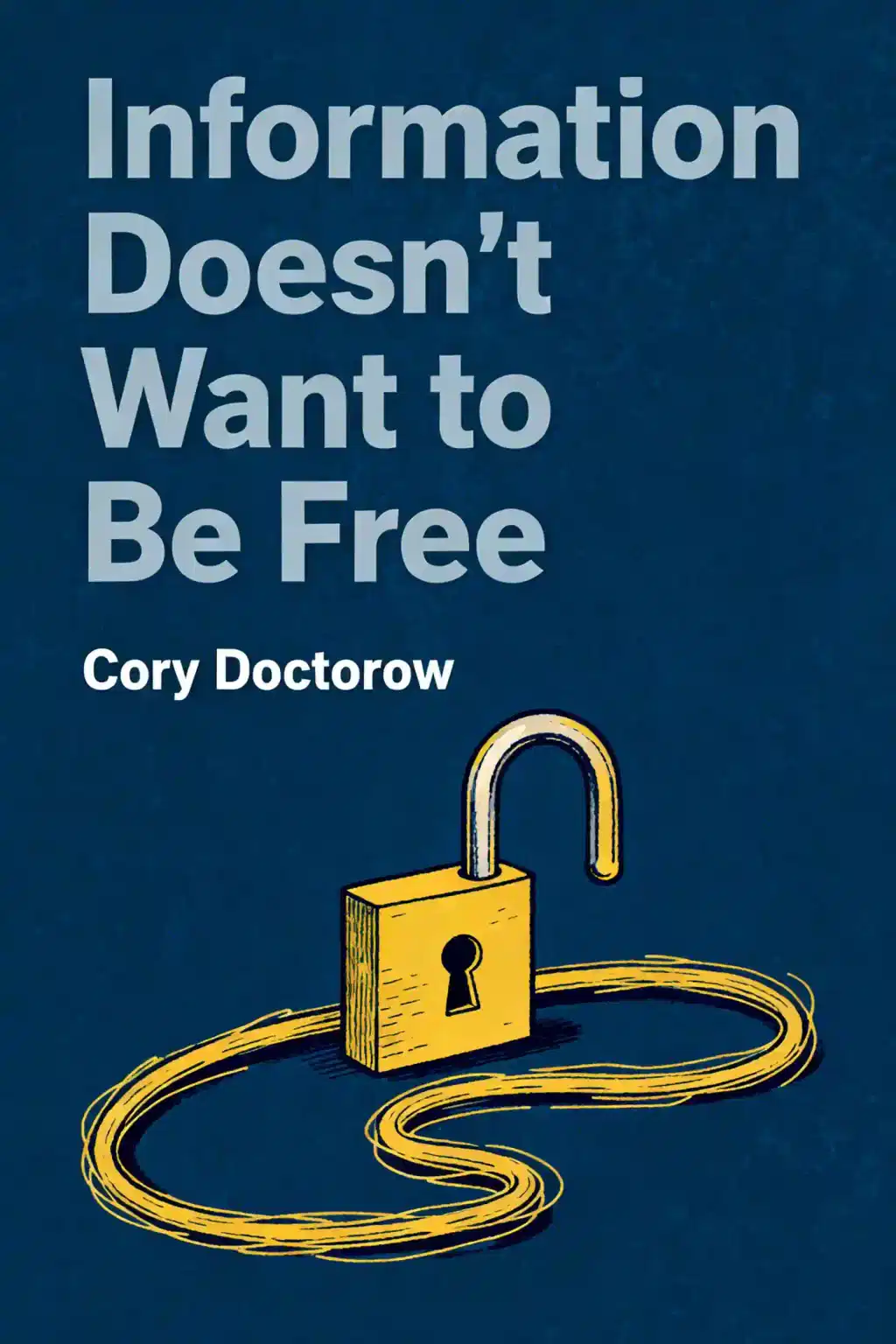
In "Information Doesn't Want to Be Free," Cory Doctorow challenges digital copyright laws that stifle creativity. McKenzie Wark praised this manifesto for creators' rights, while Sam Ferree celebrated its radical vision. What if trusting your audience - not restricting them - actually makes you more successful?
Senti il libro attraverso la voce dell'autore
Trasforma la conoscenza in spunti coinvolgenti e ricchi di esempi
Cattura le idee chiave in un lampo per un apprendimento veloce
Goditi il libro in modo divertente e coinvolgente
Picture buying a book that stops working if you switch reading devices, or a movie that refuses to play because you moved to a different country. Sounds absurd, right? Yet this is precisely the world we've built with digital content. When you purchase an e-book or streaming movie today, you're not really buying anything-you're renting temporary access under conditions someone else controls. This isn't about protecting artists or preventing piracy. It's about power, and who gets to control the relationship between creators and their audiences. Digital locks work through encryption, scrambling content so it only plays on approved devices. Publishers and studios claim this protects against copying, but here's the uncomfortable truth: these locks don't actually stop piracy. Anyone determined to copy content can crack these protections within hours. What digital locks really do is trap legitimate customers inside corporate ecosystems while giving platforms unprecedented control over creators' work. Consider what happened when publisher Hachette disagreed with Amazon's terms in 2014. Because Hachette's books were locked into Amazon's proprietary format, they had no way to help customers move their purchases elsewhere. The books were hostages. Microsoft pioneered this strategy in the 1990s-encouraging software developers to use Windows-exclusive "protection," then systematically undercutting those same partners once they became dependent. As Internet Archive founder Brewster Kahle puts it, these platforms create "roach motels" where content checks in but can't check out. The music industry eventually learned this lesson. When Apple's iTunes gained monopolistic power through its FairPlay DRM system, record labels fought back by offering DRM-free MP3s through Amazon. This competitive pressure eventually forced Apple to abandon music DRM entirely. Book publishers, unfortunately, missed the memo and eagerly locked their entire catalogs into Amazon's Kindle format, surrendering the very control they claimed to be protecting. Beyond market manipulation, digital locks create serious security vulnerabilities. To function, they must hide their operations from device owners-essentially acting as sophisticated spyware on your own equipment. Sony's infamous 2005 CD rootkit secretly installed software that made certain files invisible to your operating system. When malware authors discovered this backdoor, they exploited it to hide their own viruses. The fundamental problem is inescapable: computers that deliberately hide their operations from their owners cannot be secure. As we increasingly live in a world made of computers-from cars to medical devices to pacemakers-this approach threatens not just our digital rights but our physical safety.
Scomponi le idee chiave di Information Doesn’t Want to Be Free in punti facili da capire per comprendere come i team innovativi creano, collaborano e crescono.
Distilla Information Doesn’t Want to Be Free in rapidi promemoria che evidenziano i principi chiave di franchezza, lavoro di squadra e resilienza creativa.

Vivi Information Doesn’t Want to Be Free attraverso narrazioni vivide che trasformano le lezioni di innovazione in momenti che ricorderai e applicherai.
Chiedi qualsiasi cosa, scegli la voce e co-crea spunti che risuonino davvero con te.

Creato da alumni della Columbia University a San Francisco
"Instead of endless scrolling, I just hit play on BeFreed. It saves me so much time."
"I never knew where to start with nonfiction—BeFreed’s book lists turned into podcasts gave me a clear path."
"Perfect balance between learning and entertainment. Finished ‘Thinking, Fast and Slow’ on my commute this week."
"Crazy how much I learned while walking the dog. BeFreed = small habits → big gains."
"Reading used to feel like a chore. Now it’s just part of my lifestyle."
"Feels effortless compared to reading. I’ve finished 6 books this month already."
"BeFreed turned my guilty doomscrolling into something that feels productive and inspiring."
"BeFreed turned my commute into learning time. 20-min podcasts are perfect for finishing books I never had time for."
"BeFreed replaced my podcast queue. Imagine Spotify for books — that’s it. 🙌"
"It is great for me to learn something from the book without reading it."
"The themed book list podcasts help me connect ideas across authors—like a guided audio journey."
"Makes me feel smarter every time before going to work"
Creato da alumni della Columbia University a San Francisco

Ottieni il riassunto di Information Doesn’t Want to Be Free in formato PDF o EPUB gratuito. Stampalo o leggilo offline quando vuoi.