Capitolo 1
Creativity's Double Edge: How Capitalism Weaponized Our Greatest Human Power
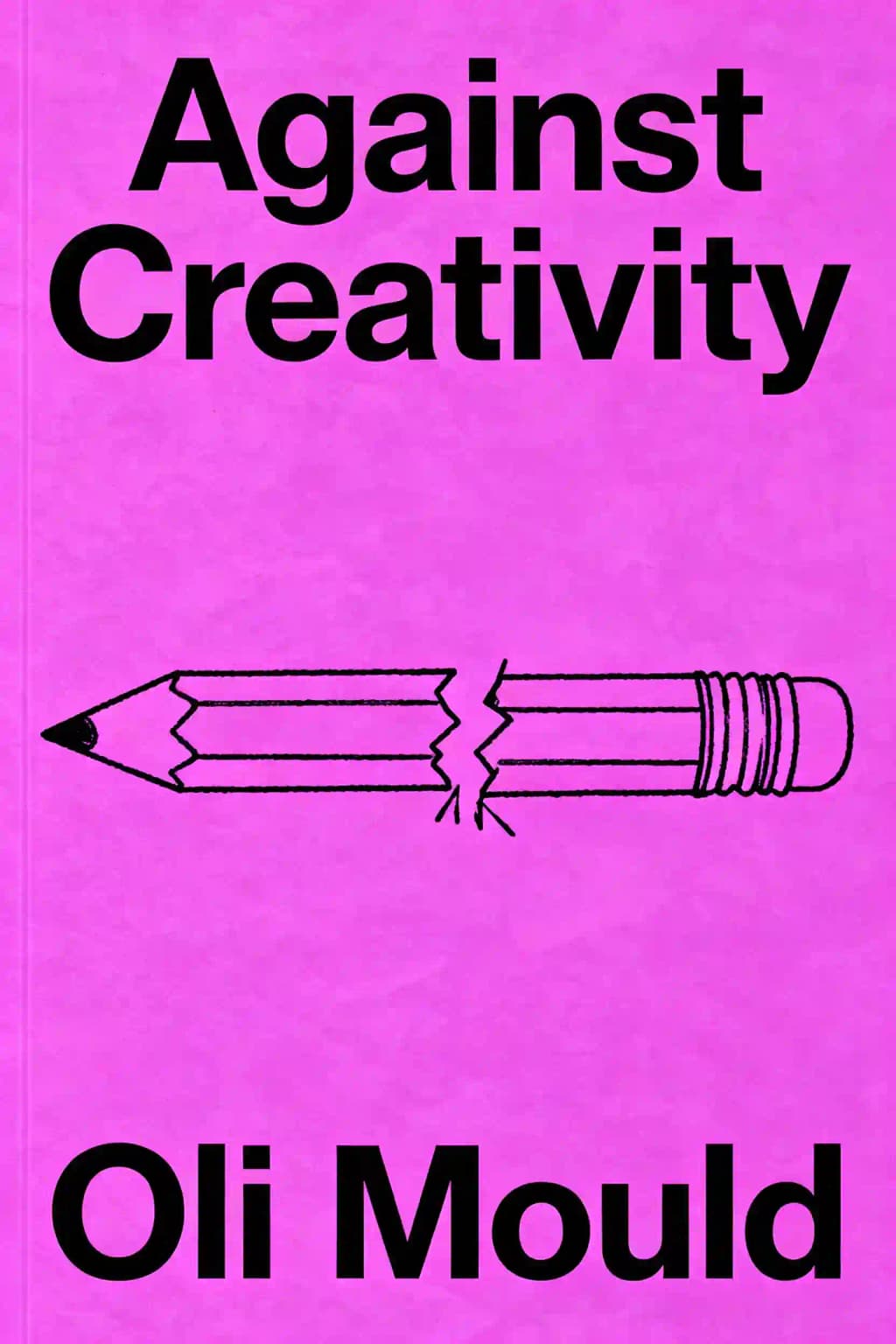
In a cold February night in New York, a homeless man with an extraordinary singing voice performs for spare change. His talent is undeniable, but is he truly being creative, or merely using his gifts to survive within an unjust system? This encounter, described by author Oli Mould, crystallizes the central tension explored in "Against Creativity" - how capitalism has hijacked our most powerful human faculty, transforming it from a force for genuine social change into a tool that merely produces more of the status quo. While creativity was once revered as divine power to create something from nothing, today it has been reduced to a marketable skill, weaponized to serve economic growth rather than human flourishing. As "creative industries" generate billions in revenue globally, we must ask: has the revolutionary potential of creativity been neutralized by the very system it once sought to challenge?
Capitolo 2
The Hijacking of Creative Power
Creativity is fundamentally the power to create something from nothing-not merely an ability but a transformative force that combines knowledge, agency, and desire to bring forth what doesn't yet exist. In ancient societies across cultures, from Greek mythology to Indigenous traditions, this creative power belonged exclusively to divine beings and creation deities. The Enlightenment marked a pivotal shift, transferring this power from God to humanity as Western civilization began looking inward for creative sources. Influential thinkers like Hobbes, Locke, and Rousseau elevated human imagination as the primary path to progress, celebrating craftspeople, philosophers, and scientists as truly creative beings capable of reshaping the world through reason and innovation.
Artistic creativity was once deeply woven through everyday life as part of the cultural commons-Shakespeare was considered a skilled craftsman writing for public entertainment, not an isolated genius. His Globe Theatre was a communal space where people of all classes gathered. Alternative movements like the Diggers and early guilds championed collaborative creativity over individual self-interest, viewing artistic expression as a collective heritage rather than private property. However, as European powers grew wealthier through colonization and trade, the wealthy aristocracy began commissioning and privatizing art, individualizing creativity and birthing the "creative genius" concept. The Industrial Revolution further deepened this divide, creating stark distinctions between high culture for elites and popular art for the masses.
By 1997, when Tony Blair embraced "Cool Britannia" as a national branding strategy, creativity had become a fully tradable characteristic with measurable economic value. Blair's New Labour government catalyzed two major shifts: relating to citizens through popular culture while systematically transforming the economy toward knowledge work and creative industries. In 1998, they created the Department for Culture, Media and Sport, strategically reformulating traditional cultural industries into profitable "creative industries" using Silicon Valley and Hollywood as templates. This proved an remarkable economic success, with creative industries contributing 84.1 billion pounds to the UK economy by 2016 and employing over 2 million people across sectors like advertising, design, film, and digital media.
The dominant narrative of creativity today serves capitalism's relentless drive for growth and centralization. As Marx presciently argued, capitalism sees limits only as barriers to be overcome, relentlessly exploiting resources and generating wealth for elites while creating new markets. Its only true creativity lies in destroying alternatives to create fertile ground for further expansion. Sociologists Boltanski and Chiapello argue that post-1968 capitalism became increasingly predatory, using sophisticated advertising and branding strategies to co-opt opposition movements. It stabilizes potentially anti-capitalist forces by offering fame and fortune, preparing them for eventual commercialization. Countercultural movements from hippies to punk to hip-hop have repeatedly fallen to capitalism's monetary lure, with this co-option process accelerating dramatically in the digital age through social media and influencer culture.
The 2017 Pepsi protest advertisement featuring Kendall Jenner perfectly exemplifies this process-sanitizing genuine political resistance by appropriating Black Lives Matter protest aesthetics to sell soft drinks. This controversial campaign demonstrates how capitalism's "creative" edge doesn't truly create but rather appropriates and commodifies, offering financial incentives to potentially destabilizing cultural forces before harvesting them for corporate profit. Similar patterns can be seen in how corporations have co-opted everything from environmentalism to LGBTQ+ pride celebrations, transforming social movements into marketing opportunities.
Capitolo 3
The Creative Worker's Paradox
In 2012, I visited the newly opened BBC studios at MediaCityUK in Salford, where I was struck by vast open-plan offices with colorful "breakout areas," abundant screens, and likely a foosball table. My guide justified this Google-like workspace with a surprising analogy: creative workers are like male peacocks during mating season-they need to constantly show off to succeed. This perfectly encapsulates how creative work is conceptualized today: individualized despite collaboration rhetoric, negating the need for physical workspaces, and demanding constant flexibility and productivity.
Richard Florida's 2002 bestseller "The Rise of the Creative Class" radically changed business concepts of creativity. Florida argued everyone is creative, but only some can monetize it-the "creative class." These innovators rejected bureaucracy, preferred flexibility, worked from coffee shops, craved autonomy, and weren't primarily motivated by money. Florida's creative class (about a third of the workforce) were highly educated, earned nearly twice as much as others, and proved remarkably resilient to economic recessions. While claiming to be more egalitarian (52% female), the creative class was 80% white-higher than the national average.
Despite early creative industry policy emphasizing collaborative work through "flattened" organizational structures like "agile" or "scrum" meetings, this collaboration is largely superficial. The contradiction at the heart of creative work becomes clear: while extolling collaborative practices, capitalism only rewards individualized work. Success stories like Apple, Facebook, and Tesla are portrayed as the genius of individuals (Jobs, Zuckerberg, Musk) rather than acknowledging the collective labor and public funding that made them possible.
Modern creative workspaces reflect this contradiction-open-plan co-working spaces with hipster aesthetics create the illusion of collectivity while masking increasing individualization and precariousness. These spaces deliberately blur boundaries between work, rest, and play, allowing employers to extract more value while reducing their responsibilities.
Freelance workers endure extreme precarity, often working on short notice for inadequate pay. One comedian I know performs to empty rooms just to maintain relationships with paying companies, works from coffee shops, and has been told their work "wasn't funny enough" to warrant payment. While comedy rarely offers stable income, this precariousness now pervades numerous sectors. Freelancers across industries-from artists to locum doctors-spend their days hunting for work, pitching, and battling corporations just to get paid.
The creativity rhetoric has even invaded healthcare, with devastating consequences. The 2013 Francis Report exposed horrific failings at Mid-Staffordshire Hospitals Trust, where management prioritized profits over patient welfare. Now NHS workers are being directed to "innovate" and provide "creative solutions"-directives that merely justify further "efficiency savings" from an already underfunded system. This approach commoditizes patients as customers and destroys the socialized labor of healthcare.
Capitolo 4
Marginalized Voices and True Innovation
Creativity emerges from the collision of disparate ideas but is profoundly shaped by identity, power dynamics, and social structures. The compelling story of Lizzie Magie, who created "The Landlord's Game" as the precursor to Monopoly, serves as a stark illustration. Her game was designed to promote Henry George's progressive taxation ideas and critique wealth inequality, only to have her innovative concept appropriated by Charles Darrow, who modified it slightly and sold it to Parker Brothers. While Darrow amassed considerable wealth, Magie received merely $500 for her patent, exemplifying how creative ideas are frequently appropriated from marginalized voices for corporate profit.
Arthur Koestler's concept of "bisociation" - the collision of previously incompatible frames of reference - provides a theoretical framework for understanding creativity as the breakthrough moment when disciplined reasoning and social norms are transcended. However, these supposedly rigid "frames" are actually fluid, socially constructed boundaries maintained through political and economic power structures. The revolutionary aspect of creativity lies not merely in connecting separate domains but in destabilizing the power structures that artificially maintain their perceived separation and rigidity.
Disability studies offers two competing paradigms that illuminate this dynamic: the biological model, which views disability as a bodily deficiency requiring medical intervention and correction, and the social model, which argues that disability results primarily from society's failure to accommodate different ways of being. The remarkable experiences of blind architect Chris Downey powerfully demonstrate how "diffability" (different ability rather than disability) creates entirely new ways of experiencing and interpreting the world. His blindness heightened his sensory experience of urban spaces through smell, sound, and touch, revealing design possibilities and problems invisible to sighted architects. His work on projects like the LightHouse for the Blind and Visually Impaired in San Francisco showcases how different sensory experiences can enhance rather than limit architectural innovation.
Similarly, Deaf culture (with a capital D) represents not a deficiency but a rich alternative sensory and social world with its own unique spaces, sign languages, and even neurological adaptations. Research has shown that deaf individuals often develop enhanced peripheral vision and visual processing abilities that create distinct advantages in certain contexts. Synaesthetes like artist Jack Coulter, who experiences music as vivid colors, and Neil Harbisson, who had an antenna implanted in his skull to hear color frequencies despite being completely colorblind, experience realities that challenge our understanding of "normal" perception. These diffabled experiences represent true creativity - not just novel products or ideas, but entirely new ways of being in the world that fundamentally challenge capitalist normalization of bodies and experiences.
The biological model of disability, deeply embedded in modern medical and corporate structures, seeks to bring all bodies in line with a standardized notion of normality, making them efficient for capitalist labor without requiring expensive workplace accommodations or systemic changes. While medical interventions like cochlear implants can be transformative for individuals who choose them, they often serve a system that rewards conformity to "normal" bodies while marginalizing and devaluing different ways of being. This normalization process systematically negates radically different subjectivities and ways of knowing that exist beyond capitalist "normality," limiting our collective creative potential and understanding of human experience.
Capitolo 5
Politics as Performance in the Age of Austerity
The political class has thoroughly embraced reality TV's creative formats, fundamentally transforming how political power is wielded and presented to the public. US presidential debates, which have evolved dramatically since the first televised Kennedy-Nixon encounter in 1960, now mirror reality TV with theatrical staging, dramatic lighting, carefully choreographed camera angles, and increasingly performative behavior. Donald Trump, leveraging his fifteen years of experience on The Apprentice, seamlessly transitioned to political debates by employing reality TV techniques: sloganized sound bites ("Make America Great Again"), simplified messaging, dramatic gestures, and physical stage dominance. Like reality TV, these debates have increasingly lost connection to political realities with their inherent contradictions and complexities, becoming highly packaged productions where style and performance consistently trump substance and policy detail.
This phenomenon extends globally, with televised debates featuring elaborate "spin rooms" where surrogates immediately reshape narratives, and post-debate analysis segments that treat politics like episodic drama rather than serious governance. Networks employ split screens to capture reaction shots, and sound bite moments are instantly clipped for social media circulation. As Lacanian psychoanalysis suggests, this constructed reality deliberately obscures the Real, hiding actual politics behind a carefully managed performance. Meanwhile, political dramas like House of Cards and Veep not only satirize but sometimes pre-empt real political behavior, becoming part of the political landscape itself, with politicians even quoting these shows in speeches and interviews.
After the 2008 financial crisis, which itself resulted from "financial innovation" - the creative practices of complex derivatives and subprime mortgage bundling in the financial sector - governments led massive bailouts that enabled austerity to be wielded without significant political opposition. Despite the banking industry's acknowledgment of weak regulations and risky practices, Kareem Serageldin remains notably the only banker jailed for the crash, receiving a 30-month sentence. Rather than holding individuals accountable, the system was broadly blamed for "straightjacketing creativity" in the financial markets.
Richard Florida exemplifies this thinking by condemning "squelchers" - institutions and regulations that allegedly impede the creative class's economic capacity. He criticizes cities for building sports stadiums with public money that benefits billionaire NFL owners while simultaneously promoting cities' aggressive bids for Amazon's HQ2, which would similarly transfer massive public subsidies to a billionaire-owned corporation. This glaring contradiction reveals how "creativity" has been narrowly defined solely by economic generation potential rather than broader social value or community benefit.
Post-2008, the economic-growth-stimulating creativity prized in the creative class was widely prescribed as the recovery solution - every job had to be "creatified," from baristas to factory workers. The dismissal of political practices not foregrounding "creativity" has been accepted across the political spectrum because creativity has been carefully molded into a seemingly non-political characteristic, despite its deeply ideological implications.
Resistance to austerity has emerged through genuinely creative alternatives: Greek "urban solidarity spaces" establishing time banks for refugees and locals to exchange services; local currencies like the Brixton Pound fostering community exchange and local economic resilience; Democracy In Practice in Bolivia experimenting with lottery-based governance to broaden participation; and UK Uncut using creative protest tactics against Atos (which successfully ended their government contract) and tax-dodging corporations through flash mobs and theatrical demonstrations. These initiatives demonstrate how authentic creativity can serve democratic and social purposes rather than purely economic ones.
Capitolo 6
Algorithmic Control and the Death of Serendipity
Machine learning extends Hayekian corporate autonomy deeper into our social lives, fundamentally reshaping how we navigate the modern world. From personalized news feeds to job recommendation systems, algorithms now mediate virtually every aspect of our daily experience. Tech workers, once celebrated as creative class paragons who would revolutionize economies, have become the template for a global workforce transformation, with tech campuses and startup cultures replicated from Beijing to Berlin. Meanwhile, the proliferation of apps and wearable technology has turned our lives into continuous streams of data, measuring everything from our sleep patterns to our social interactions, creating an unprecedented level of surveillance capitalism.
These technologies systematically erode collective sociality by creating increasingly sophisticated personal filter bubbles. Google's search algorithms don't just deliver results; they construct individualized reality tunnels based on past behavior, location, and demographic data. Social media platforms like Facebook and Twitter employ complex recommendation systems that analyze thousands of data points to curate content, creating echo chambers that reinforce existing beliefs and minimize exposure to challenging viewpoints. Even political activism has been commodified, with platforms suggesting causes based on previous engagement patterns, turning civic participation into another form of algorithmic consumption.
The reach of algorithmic creativity extends beyond digital spaces into physical production. 3D printing technology, guided by sophisticated design algorithms, represents a potential revolution in manufacturing. While this technology could democratize production - enabling communities to create needed infrastructure or medical supplies locally - its transformative potential is largely constrained by corporate interests. Patent laws, proprietary designs, and controlled access to materials maintain traditional power structures, limiting what could be a tool for economic democracy.
Uber serves as the quintessential example of platform capitalism's exploitative nature. Despite achieving a market valuation larger than traditional automotive giants, the company's business model relies on systematically undermining labor protections. By classifying drivers as independent contractors, Uber avoids providing basic benefits while maintaining algorithmic control over workers through surge pricing, acceptance rates, and rating systems. Similar patterns emerge across the gig economy, from food delivery to freelance work platforms.
The sharing economy's promise of a "weightless" digital future obscures its massive material footprint. Behind every cloud service and mobile app lies an extensive physical infrastructure: vast data centers consuming enormous amounts of energy, undersea cables spanning continents, and billions of electronic devices requiring rare earth minerals. Companies like Airbnb and TaskRabbit create digital marketplaces that monetize previously non-commercial aspects of life while shifting risks onto individual participants.
These platforms systematically eliminate the social fabric that traditionally accompanied economic exchanges. Local markets, neighborhood sharing networks, and community trading systems once fostered social connections alongside material exchanges. Today's algorithmic platforms reduce these interactions to purely transactional relationships, encouraging users to view every possession and skill as a potential revenue stream. This commodification extends to intimate spaces - spare rooms, personal vehicles, and even leisure time become assets to be optimized, fundamentally altering how we relate to our possessions and each other.
Capitolo 7
Creative Cities and the Art of Gentrification
In July 2017, London Mayor Sadiq Khan launched the "London Borough of Culture" competition, offering 1 million in arts funding to the borough that could best "celebrate its creativity." This initiative exemplifies how creativity has been mobilized within urban development-transforming cultural funding into a competitive spectacle. By forcing boroughs to compete for arts money that would previously have been direct government financing, it implements what is essentially an austerity program disguised as a reality TV-style contest.
The "creative city" script has become a byword for the economization of culture. Wynwood, Miami exemplifies this approach-a once industrial area with a Puerto Rican community transformed into an "outdoor street art gallery" by Goldman Properties. The company purchased warehouses and invited international artists to paint murals, deliberately "curating" space to attract investment while disregarding local histories.
The creative city policy emerged in the late 1990s as a supposed solution to urban decline in post-industrial areas. It manifests through flagship cultural projects (like the Guggenheim in Bilbao), aggressive cultural branding, beautification of public spaces, creative industry zoning, and "placemaking" initiatives. These strategies all serve to attract the "creative class" while inevitably leading to gentrification.
More recently, creative city developers have sought a veneer of "edginess" through street art and cosmopolitan nightlife, which mobilize traditionally resistive aesthetics for profit. This "post-race" approach uses ethnic diversity to promote cosmopolitanism rather than addressing inequalities.
"Artwashing" has become a key gentrification tool. In London, council estates like Cressingham Gardens face "regeneration" (a euphemism for demolition) to make way for luxury housing. Councils employ obfuscation, questionable surveys, and meeting bans to push through redevelopment plans against resident resistance.
Balfron Tower exemplifies sophisticated artwashing-Poplar Harca housing association gradually removed social tenants while commissioning artistic residencies, performances, and exhibitions that fetishized the brutalist architecture. Through Shakespeare performances, "carnival events," and artist residencies in vacant flats, the tower gained cultural cachet while social housing residents were permanently displaced, their homes rebranded for the creative class.
If artists are complicit in gentrification through artwashing, how can they reclaim their critical ethics? Effective resistance requires both playful ruptures and pragmatic official channels. Groups like Space Hijackers exemplify creative direct action-their "Foxtons Hunt" had activists dressed in fox-hunting attire chasing Foxtons estate agents (symbols of aggressive gentrification) on bikes while sounding hunting horns, creating a comedic critique of "gentri-fication."
London's Long Live Southbank campaign demonstrates successful creative resistance. When the South Bank Centre announced plans to convert the iconic "undercroft" skate spot into retail space, skateboarders mobilized through official channels (filing the largest planning objection in UK history), clandestine activities (undercover filming of private meetings), and creative practices (films, art, performances). In 2015, the South Bank Centre canceled their plans-proving that subcultural communities can defeat gentrification through collective action.
Capitolo 8
Reclaiming Creativity's Revolutionary Potential
Creativity fundamentally involves believing in the impossible-imagining worlds beyond our current reality. Yet capitalism has hijacked creativity, selling us a limited vision that's individualized, profitable and autonomous. This capitalist version tempts us to replicate existing inequalities rather than imagining true alternatives. From Silicon Valley startups to creative industry hubs, the message is clear: creativity must generate profit to be valued.
The celebrated "originals" like Jobs and Zuckerberg built on others' work from positions of privilege, unburdened by fighting everyday injustices. Their stories, while inspiring, mask the countless innovations from marginalized communities that never received recognition or resources. For instance, many groundbreaking technologies emerged from government research labs and academic institutions, not lone geniuses in garages. Context matters, and particular identity politics typically privilege white, male, middle-class, able-bodied Westerners, while overlooking contributions from diverse perspectives and experiences.
Neoliberal ideology demands individualization, telling us to focus on personal interests at the expense of others, while hiding the social connections that contribute to privilege. Creative success stories emphasize individual genius while downplaying collective effort, institutional support, and inherited advantages. Within this narrative, creativity has become a straightjacket-everyone is creative, but only the privileged profit from it, creating more ways to maintain division. The "gig economy" exemplifies this dynamic, where creative workers compete for increasingly precarious opportunities.
Resisting this division requires building bridges through empathy with each other and diffabled people, negating this negative creativity. By sharing experiences across boundaries of class, race, and ability, we can journey into unknown worlds where impossibility doesn't exist. Collaborative art projects, community organizing, and mutual aid networks demonstrate alternative models of creative expression and problem-solving.
We must demand more from our politics-radically altering how politicians behave and creating entirely new forms of government. Alternatives like sortition (random selection of citizens for political roles), local currencies, and direct action offer radical democracy and political engagement. Examples include participatory budgeting initiatives, worker cooperatives, and community land trusts. As Western political regimes polarize, people are taking it upon themselves to create new political institutions through grassroots movements and experimental governance models.
Throughout this book, I've shown how capitalism's doctrine of creativity disarms critics by offering excitement, stardom and financial rewards that rarely materialize. This isn't creativity - it's a form of control masquerading as freedom. A radical, revolutionary creativity shows there are alternatives if we know where to look, from indigenous knowledge systems to collective organizing methods. Capitalism's greatest lie is convincing us that the ground it profits from is barren. True creativity is about searching for, giving space to, and trying to realize the impossible - not through individual genius, but through collective imagination and action that challenges existing power structures and envisions new ways of living together.