Capitolo 1
The Digital Panopticon: How Privacy Became Power's Battlefield
They are watching us. Right now. As you read these words, countless entities are tracking your location, analyzing your behavior, and predicting your next move. The device you're using to read this has likely already shared dozens of data points about you with companies you've never heard of. This isn't paranoia-it's our new reality.
Privacy Is Power by Carissa Veliz has become a rallying cry for the digital resistance since its publication, praised by Edward Snowden as "essential reading" and featured on Barack Obama's recommended reading list. The book arrives at a critical inflection point in our relationship with technology, when many are beginning to question whether the convenience of our digital lives is worth the profound loss of privacy. Through meticulous research and compelling arguments, Veliz makes the case that privacy isn't merely a personal preference but the foundation of democracy itself.
Capitolo 2
The Surveillance Economy: How We Lost Our Privacy
The day begins with your phone's alarm. Before you've even brushed your teeth, dozens of apps have already updated your location over 14,000 times, creating a minute-by-minute map of your movements. Weather apps, social media platforms, and even seemingly innocent games continuously ping your location to remote servers. Your morning commute is tracked by an intricate web of surveillance - traffic cameras equipped with facial recognition capabilities capture your image, while IMSI-catchers (fake cell towers) near government buildings and commercial centers silently capture your phone's identifying information. At work, your digital footprint expands as your employer's monitoring systems track your emails, website visits, keystrokes, attendance patterns, and even analyze your social media activity for potential PR risks. The commercial emails flooding your inbox contain invisible tracking pixels that can identify you across multiple devices and reveal not just when you open them, but your physical location and the device you're using.
Physical retail spaces have become sophisticated surveillance environments. Stores employ multiple tracking technologies - WiFi sensors detect your phone's unique identifier to recognize you as a returning customer, while AI-powered cameras create heat maps of customer movement patterns. These systems analyze your shopping path, dwell time at specific displays, and even interpret your emotional responses through facial expression analysis. Some retailers have implemented "smart" shopping carts and shelf sensors that track every item you consider purchasing. When you visit healthcare providers, your sensitive medical information enters vast data-sharing networks. Major health systems, including the NHS, have shared millions of patient records with tech companies like Google's DeepMind for AI development, often without explicit patient consent or proper privacy safeguards.
The privacy implications extend beyond individual choices. When your family member takes a genetic test, they're effectively sharing your DNA profile too - creating potential discrimination risks in insurance and employment. Research shows these tests have concerning accuracy issues, with false positive rates reaching 40% for certain conditions. Meanwhile, our homes have become data collection hubs - smart speakers, security cameras, connected appliances, and even robot vacuums create detailed maps and activity logs of our domestic lives.
The promise of anonymization offers little protection. Computer scientist Latanya Sweeney demonstrated that 87% of Americans could be uniquely identified using just three data points: birth date, gender, and zip code. Modern research reveals even more striking vulnerabilities - just four location data points can uniquely identify 95% of individuals in a dataset, while credit card records need only four transaction timestamps to identify 90% of people. These findings have profound implications for data privacy claims.
The data broker industry has weaponized this surveillance capability, creating detailed personal profiles that go far beyond basic demographics. These companies maintain lists categorizing individuals by sensitive attributes - income brackets, pregnancy status, divorce history, medical conditions, and even victims of sexual assault. Some brokers have been caught selling lists of rape victims, AIDS patients, and people with gambling addictions. This information feeds into sophisticated targeting systems used by marketers, employers, insurers, and others to make consequential decisions about our lives, often without our knowledge or consent.
Capitolo 3
The Birth of Surveillance Capitalism
How did we arrive at this dystopian reality? The story begins with Google's transformation from a search company to an advertising behemoth. In the early days of the internet, data exhaust-the byproduct of our digital interactions-wasn't commercially exploited. Google's founders Larry Page and Sergey Brin were initially adamant about maintaining search purity, writing in their 1998 Stanford paper that "advertising funded search engines will be inherently biased towards the advertisers and away from the needs of consumers." They envisioned Google as an academic-style search engine, free from commercial influence.
Financial pressure from investors eventually forced them to monetize their search engine, particularly after the dot-com crash of 2000 when venture capital became scarce. The turning point came with AdWords, which revolutionized digital advertising by allowing advertisers to bid for keyword-based placement with payment based on actual clicks rather than mere impressions. This pay-per-click model proved incredibly lucrative: Google's revenue skyrocketed from $19 million in 2000 to $3.2 billion by 2004-a staggering 3,590% increase in just four years. The company went public in 2004, cementing its transformation into a profit-driven entity.
This success fundamentally altered Google's business model: users ceased being clients and became products, with advertisers as the real customers. Through our searches, Google built increasingly sophisticated profiles of our minds, collecting our most private thoughts, concerns, and intentions. The company methodically expanded its surveillance reach with AdSense, which extended advertising to third-party websites, and the strategic $3.1 billion acquisition of DoubleClick in 2007, allowing it to track users across the entire web through cookies and behavioral targeting.
Most users remained unaware they were surrendering their personal data, especially as digital platforms became indispensable for work, education, and social connection. The narrative about users consciously exchanging data for services was retroactively constructed only after tech companies had already secured our information and made opting out practically impossible. Features like Gmail's free storage and Google Maps' navigation were presented as innovations rather than data collection mechanisms.
By the late 1990s, regulatory bodies were growing increasingly concerned about cookies and online privacy. The Federal Trade Commission initially encouraged industry self-regulation through voluntary privacy policies and opt-out mechanisms. When companies failed to meaningfully comply, they proposed comprehensive legislation in 2000 that would have required websites to clearly inform users about data collection practices and provide meaningful choices about data usage.
This regulatory momentum was completely derailed by the September 11, 2001 terrorist attacks. The Bush administration's "never again" mandate shifted all focus to national security, indefinitely shelving privacy regulation. Intelligence agencies eagerly seized the opportunity to expand surveillance powers by accessing the vast troves of personal data corporations were collecting. The hastily passed Patriot Act and subsequent measures instituted unprecedented warrantless surveillance programs, many operating in secret through National Security Letters and FISA court orders. This marriage of corporate and government surveillance created a comprehensive system for monitoring citizens' digital lives, with little transparency or oversight.
Capitolo 4
Power and Knowledge in the Digital Age
Privacy functions as a master key to our most intimate selves. It grants access to our vulnerabilities, secrets, fears, and personal histories. When shared with loved ones, this access enables closeness and trust. But when our personal data falls into the wrong hands, it becomes a weapon that gives others power over us.
Those who claim they have "nothing to hide" are mistaken. Everyone has information they'd prefer to keep private-from passwords to personal failures. And those who believe they're too insignificant to be targeted are underestimating their value. Your attention, money, body, identity, connections, voice, and vote all represent forms of power that various entities actively seek to capture and exploit.
Knowledge and power are inextricably linked-knowledge serves as an instrument of power while power determines what counts as knowledge. When Google classifies you based on your data, that classification becomes "knowledge" about you, regardless of accuracy or relevance. The more someone knows about you, the better they can anticipate and influence your behavior.
The defining power of our era is the ability to forecast and influence behavior through personal data. Modern governments possess far more information about citizens than historical surveillance states like East Germany's Stasi. Tech companies derive power from exclusive control of our data and their ability to predict our behavior-power they sell to advertisers and governments.
This power operates in two forms: hard power forces compliance through coercion, while soft power motivates people to think or act differently than they otherwise would through persuasion, algorithms, and manipulative design. Tech companies frequently employ hard power by taking data against users' explicit wishes. Kashmir Hill discovered her Sift consumer score file contained 400 pages of personal data including Yelp orders, Airbnb messages, and device details-yet Sift provided no explanation of how this data affected her life.
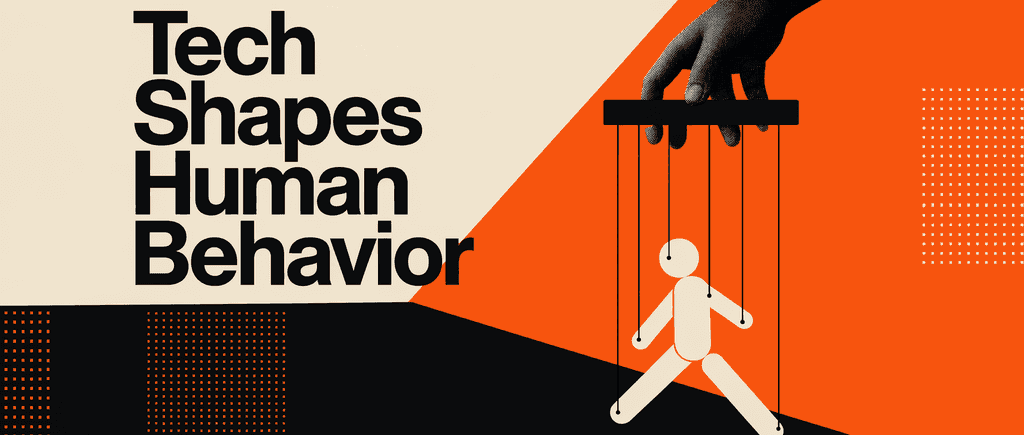
Soft power, while less forceful than hard power, can be equally effective and often more insidious because it makes us complicit in our own manipulation. It recruits our will against ourselves, making us engage in behaviors that undermine our interests. The infinite scroll on social media platforms exploits our fear of missing out, making us waste time despite the resulting headaches. Tech companies seduce us into habits we wouldn't otherwise form-from getting lost in YouTube rabbit holes to checking phones hundreds of times daily.
Capitolo 5
Digital Voodoo Dolls: How We Became Pawns
You are a pawn in the games data scientists play on their screens, in what they clinically term "artificial society." Data analysts gather comprehensive information about you-from social media connections and posts to voting records, purchasing history, car ownership, mortgage information, browsing history, and health inferences-then run sophisticated models to manipulate your behavior. This data collection extends to seemingly innocuous activities: the time you spend reading articles, the speed at which you scroll through content, the ads you linger on, and even the physical locations you frequent.
Even as a "nobody," you're a valuable target because society is fundamentally made up of nobodies. Data scientists create detailed digital clones of us in their computers, experimenting with these virtual avatars like voodoo dolls to learn what makes us tick, click, buy, troll, and vote. These models predict with disturbing accuracy how you'll respond to different stimuli - whether it's a carefully timed promotion, an emotionally charged news article, or a strategically placed political message.
Cambridge Analytica became the poster child for this approach, harvesting data from 270,000 Facebook users and their 87 million friends to build sophisticated psychological warfare tools. These tools influenced elections worldwide through micro-targeted manipulation, strategically distributed fake news, and polarizing content disguised as authentic grassroots movements. Their methods included identifying vulnerable voters, creating personalized fear-based messaging, and exploiting psychological weaknesses through precisely timed content delivery.
This manipulation directly threatens autonomy-the fundamental ability and right to govern yourself, to decide your values and act accordingly. Without autonomy, you lack genuine freedom because others effectively control your life through predictive algorithms and targeted interventions. Privacy and autonomy are inextricably intertwined because privacy violations enable others to interfere with your decision-making processes. Constant surveillance disrupts the peace of mind needed for autonomous decisions, as clearly demonstrated by the "chilling effect"-after Snowden's revelations about government surveillance, terrorism-related Wikipedia searches dropped nearly 30 percent, showing how awareness of monitoring alters behavior.
Even more concerning is the collective nature of privacy in our interconnected world. When you expose your privacy, you inadvertently compromise everyone in your network. Consider DNA testing: when you submit your saliva to companies like Ancestry or 23andMe, you're giving away rights not just to your genetic information but also to data shared with extended family members. While your DNA makes you unique, only about 0.1% of your genes are specific to you alone - the rest is shared with relatives who never consented to this exposure.
With just 1.3 million people in a genetic database, researchers can narrow identities to fewer than twenty individuals-even for those who never submitted DNA samples themselves. Our interconnectedness extends far beyond genetics-sharing your location data inadvertently reveals your neighbors' patterns, sharing phone access exposes your entire contact network, and sharing psychological data helps companies profile others with similar traits and behaviors. Every piece of personal information we surrender becomes a thread in a vast tapestry of surveillance and prediction that affects not just us, but everyone connected to us.
Capitolo 6
The Toxic Asset: Why Personal Data Is Dangerous
Personal data is the asbestos of the tech society-cheap to mine, highly useful, yet fundamentally toxic. Like asbestos, it can poison individual lives, institutions, and societies. Security expert Bruce Schneier argues that data is a toxic asset, vulnerable to hackers who consistently break into networks to steal information for fraud, shaming, extortion, or coercion.
When personal data falls into the wrong hands, it can destroy lives irreversibly. The 2015 Ashley Madison data breach exposed 30 million users' personal information, resulting in anxiety, job loss, blackmail, public humiliation, broken families, and suicides. Even mundane personal information can be dangerous, as with Ramona Maria Faghiura, whose stolen identity led to wrongful arrests, legal battles, and anxiety medication.
Data vulnerability endangers the institutions storing it as well. Any breach can damage a company's profits, image, market share, stock price, and result in lawsuits or criminal charges. While some companies like Ashley Madison and Facebook have survived data disasters, others haven't: Cambridge Analytica collapsed two months after its voter profiling revelations, and Google shut down Google+ following a data exposure.
On a societal level, personal data mismanagement threatens national security, corrupts democracy, undermines liberal societies, and endangers individual safety. The 2017 Equifax breach exposed 147 million Americans' personal data to Chinese military hackers who could use it to identify financial vulnerabilities or blackmail opportunities for recruiting spies. Even legal data acquisition poses risks-the New York Times demonstrated how easily purchased location data could track military officials, law enforcement officers, and even President Trump through a Secret Service agent's smartphone.
Privacy violations enable democratic manipulation through psychological profiling and targeted propaganda. Cambridge Analytica's whistleblower believes Brexit wouldn't have succeeded without their interference. Trump won the 2016 election by just 70,000 votes across three swing states, while Brexit passed by less than 4%. The Trump campaign categorized 3.5 million black Americans for voter suppression, spending $44 million on nearly 6 million different Facebook ads.
The most chilling historical example of data misuse comes from World War II. In the Netherlands, where Jacobus Lentz implemented comprehensive ID cards and used IBM's Hollerith machines to track citizens, 73% of Jews were killed. By contrast, in France, where census data didn't record religion and Rene Carmille (secretly working for the resistance) sabotaged data collection by never tabulating information about Jews, only 25% of Jews perished.
Capitolo 7
Reclaiming Privacy: Solutions for a Surveillance-Free Future
The surveillance economy has gone too far, abusing personal data in ways that threaten free, equal, and democratic societies. Though dismantling the data economy might seem unrealistic, similar radical changes have occurred before-like establishing workers' rights or banning ozone-depleting chemicals. The solution begins with addressing several key areas:
First, we must stop personalized advertising, which started the whole problem. Microtargeted ads based on identity and behavior aren't worth their negative consequences. Despite promises of showing users relevant products and helping advertisers save money, personalized advertising has normalized surveillance, spread fake news, fractured the public sphere, and compromised democracy. Research shows targeted ads only increase revenue by about 4% (just $0.00008 per ad) yet advertisers pay 50 times more for them than non-targeted ads.
Second, we must stop the trade in personal data. Personal data should never be bought, sold, or shared for profit. The potential for abuse is too great, especially with sensitive information. Data brokers are digital scavengers who profit from our data trails with little regard for people's security. They've enabled stalking, fraud, and identity theft.
Third, we must stop default personal data collection. Big tech companies built their empires by plundering our data without permission, following Facebook's motto: "Move fast and break things." Their strategy involves pushing boundaries until meeting resistance, then gradually normalizing invasive practices. Instead, the default should be no data collection, with users actively opting in rather than opting out.
Fourth, organizations that handle personal data should be bound by fiduciary duties-obligations of loyalty and care similar to those of doctors, lawyers, and financial advisors. These duties exist to protect vulnerable individuals against professionals with conflicting interests. When stockholders' interests conflict with users' privacy rights, fiduciary duties to users must take priority, with penalties large enough to ensure compliance.
Fifth, we must improve cybersecurity standards. Companies lack motivation to invest in cybersecurity-it's expensive, invisible to users, and difficult to compare between products. When breaches occur, customers bear most consequences while companies face minimal penalties. Government regulation is necessary, just as it improved safety standards for buildings, cars, and food.
Finally, some surveillance technologies are so dangerous and prone to abuse that they should be banned entirely. Facial recognition, gait and heartbeat recognition, and other anonymity-destroying technologies are ideal tools for oppression. IMSI-catchers and smartphone-hacking software should be illegal.
Capitolo 8
Taking Action: Personal Steps for Privacy Protection
While systemic change is essential, individual actions can make a difference. Here are practical steps you can take to protect your privacy:
Think twice before sharing. Social media platforms feel like our living rooms, but countless corporations and governments are listening. Before posting, consider how your information might be used against you.
Respect others' privacy. Always ask for consent before posting photos of others. Warn guests about smart devices in your home. Children deserve privacy too-don't share photos or videos of other people's children without permission.
Create privacy spaces. Our privacy spaces have shrunk dramatically. We must consciously create zones where creativity and freedom can flourish unimpeded. Leave your phone in another room during family time.
Say 'no' to unnecessary data collection. Our social nature predisposes us to say "yes" to minor requests, including online consent notices. But privacy losses accumulate like ecological damage-no single act causes disaster, but the sum might.
Choose privacy-friendly alternatives whenever possible. Use "dumb" devices over "smart" ones, secure messaging apps like Signal, privacy-focused search engines like DuckDuckGo, and browsers with strong privacy features like Firefox or Brave.
Use privacy extensions and tools. Ad blockers provide both peace and faster browsing while sending a message that invasive advertising isn't acceptable. Privacy Badger blocks tracking and spying ads, while HTTPS Everywhere encrypts communications with major websites.
Change your settings. Assume all default settings prioritize data collection over privacy. Block cookies in your browsers and review privacy settings annually as companies frequently change their terms.
Don't cyberhoard. Regularly purge unnecessary data to reduce privacy risks. Consider downloading your online data to an encrypted hard drive before deleting it from platforms.
Go analog when possible. Paper records under lock and key are safer than digital ones. Pay with cash when possible, read paper books bought at physical stores, and leave your smartphone at home when unnecessary.
Demand privacy from companies and governments. Challenge data brokers by requesting your data. Question every professional who requests your data, especially healthcare providers. Contact elected representatives about privacy concerns.
Capitolo 9
The Future of Privacy
Two possible futures await us: an extreme surveillance society or a world where privacy thrives. In the surveillance society, every action is recorded and analyzed, with under-the-skin surveillance tracking not just what you do but what you think and feel. Biometric sensors monitor heart rates and facial expressions, algorithms predict behavior, and AI systems make decisions about employment, healthcare, and social opportunities. Your digital footprint becomes an inescapable shadow, determining everything from insurance rates to dating prospects, while sophisticated emotion-recognition software attempts to read your innermost thoughts.
The alternative is a world where your data remains yours. Your conversations stay private, mistakes don't define your future, and you can explore ideas freely. In this scenario, technology serves as a tool for empowerment rather than control. Encryption protects personal communications, decentralized systems prevent data monopolies, and privacy-preserving technologies allow services to function without collecting excessive personal information. Users have genuine choice over what they share and with whom.
Privacy isn't dead-it's making a comeback. The theft of personal data has proven unsustainable and dangerous, with major breaches affecting billions of users and costing companies billions in damages. After scandals like Cambridge Analytica, which harvested 87 million Facebook profiles to manipulate elections, people understand privacy's value again. Though the pandemic created new challenges through contact tracing and remote monitoring, we now have better regulations like GDPR in Europe and CCPA in California, alongside growing public awareness and demand for privacy-respecting alternatives.
Privacy matters because it blinds systems to treat us fairly, empowers citizens, and creates space for free thought. Without privacy, discrimination becomes automated and institutionalized, while conformity pressure stifles innovation and dissent. The data economy's mass rights violations must end. Despite pushback from data brokers, surveillance-hungry governments, and tech enthusiasts who claim "privacy is dead," we can and will take back control of our personal data through regulation, technology, and collective action.
As Aristotle argued, moral indignation-not resignation-is the appropriate response to rights violations. Companies like Microsoft closely monitor public sentiment because the digital economy depends on our cooperation and trust. The Universal Declaration of Human Rights, born from war and genocide, warns against crossing certain red lines that threaten human dignity and freedom. Privacy is not just about hiding-it's about human autonomy, dignity, and the right to develop one's personality without constant surveillance. The time to defend this fundamental right is now, before the infrastructure of total surveillance becomes irreversible.