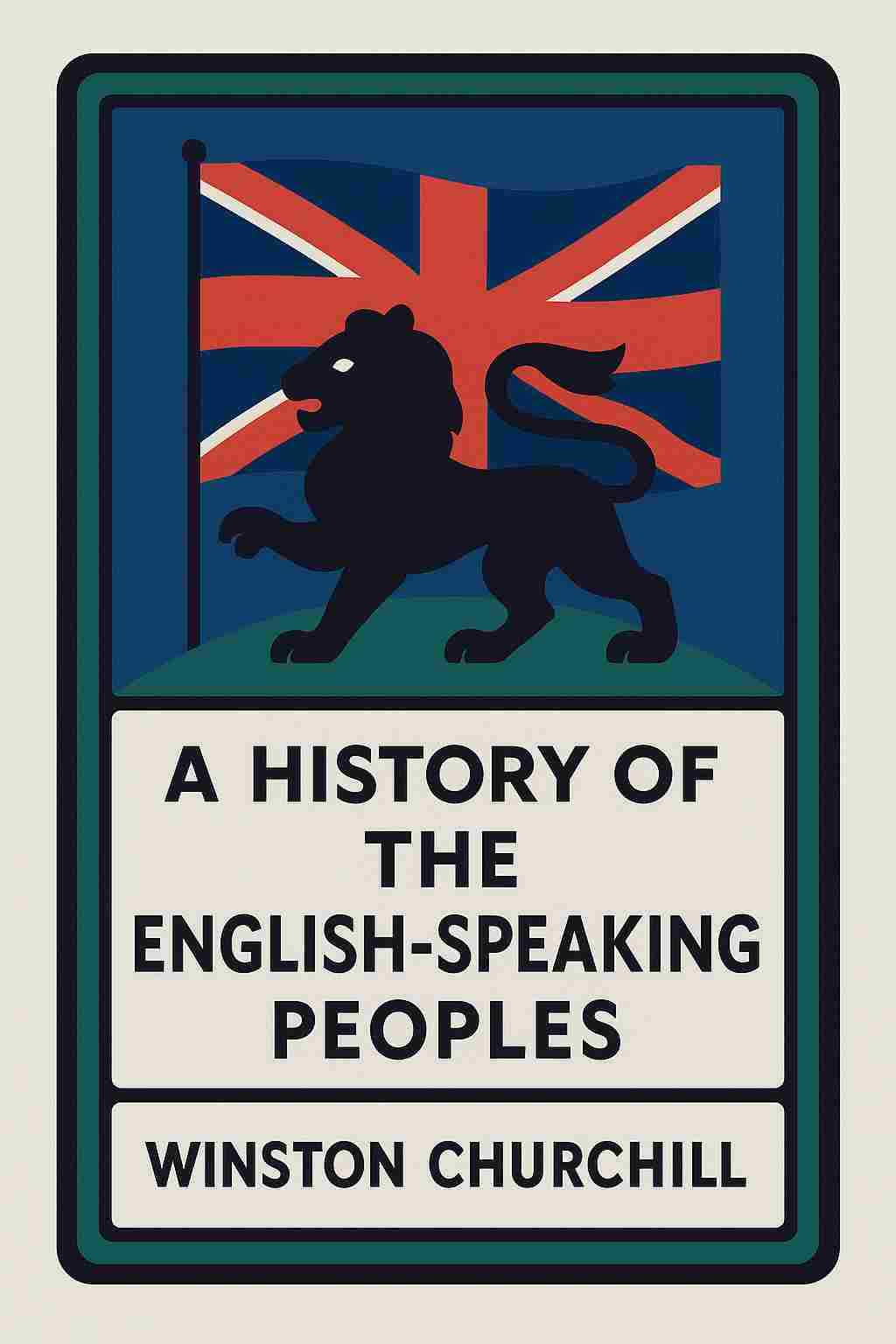
A History of the English Speaking Peoples by Winston Churchill Summary

Overview of A History of the English Speaking Peoples
Churchill's monumental four-volume masterpiece chronicles the epic saga of English-speaking civilization from ancient Britain to 1901. Begun during his "wilderness years" and delayed by WWII, this sweeping narrative reveals how shared democratic values shaped our modern world. What secrets of power lie within?
- Winston Churchill traces English-speaking peoples from Roman Britain to modern democracies.
- The four-volume work emphasizes political evolution and military conflicts over social history.
- Churchill's narrative champions Anglo-Saxon exceptionalism and the special Anglo-American relationship.
- Key themes include growth of individual rights and subordination of state to moral law.
- The Magna Carta and parliamentary foundations shaped English-speaking legal traditions globally.
- Military events like the Norman Conquest and Wars of Roses defined national development.
- Churchill argues English-speaking peoples became trustees of freedom through historical struggle.
- The work's patriotic tone reflects Churchill's belief in Western civilization's superiority.
- Volume structure moves from Britain's birth through colonization to democratic revolutions.
- Churchill portrays great leaders like Alfred the Great as architects of national identity.
- The Hundred Years' War and American Revolution feature as pivotal democratic milestones.
- Critics note the history overlooks economic forces while celebrating political evolution.
About the Author of A History of the English Speaking Peoples
Winston Churchill, the Nobel Prize-winning author of A History of the English-Speaking Peoples, served as Prime Minister of the United Kingdom during pivotal moments of the 20th century. This multi-volume historical work reflects his deep engagement with Britain's political legacy and the shared cultural trajectory of Anglophone nations, themes shaped by his firsthand leadership during World War II and decades of statesmanship.
Churchill authored over 40 books, including the acclaimed six-volume memoir The Second World War and the biography Marlborough: His Life and Times, establishing himself as a master of historical narrative. Beyond politics, his literary contributions earned the 1953 Nobel Prize in Literature for "mastery of historical and biographical description."
A History of the English-Speaking Peoples remains a seminal exploration of democratic evolution, written during his retirement and informed by his unique vantage point as a wartime leader. The book has endured as a cornerstone of historical literature, translated globally and continually reprinted since its 1956 debut.
FAQs About A History of the English Speaking Peoples
What is A History of the English-Speaking Peoples about?
A History of the English-Speaking Peoples is Winston Churchill's four-volume historical work tracing the political and military evolution of Britain and its former colonies from Julius Caesar's invasion of Britain (55 BC) to the end of the Second Boer War (1902). It emphasizes pivotal events like the Norman Conquest, Magna Carta, and the rise of parliamentary democracy, while highlighting key figures such as Alfred the Great and Queen Victoria. Churchill frames this narrative as a celebration of Anglo-Saxon cultural identity and democratic ideals.
Who should read A History of the English-Speaking Peoples?
This book suits history enthusiasts, students of political philosophy, and readers interested in Britain’s imperial legacy. Churchill’s accessible prose and focus on statecraft appeal to those exploring themes like nation-building and leadership. However, its patriotic tone and limited socioeconomic analysis may frustrate scholars seeking nuanced historiography.
Is A History of the English-Speaking Peoples worth reading?
Yes, for its sweeping narrative and Churchill’s compelling voice. While criticized for overlooking social history and romanticizing British imperialism, the work offers valuable insights into the mindset of a pivotal statesman. Its exploration of "English-speaking" solidarity (e.g., Britain/U.S. ties) remains relevant to geopolitical discourse.
What is the main theme of Churchill’s A History of the English-Speaking Peoples?
The central theme is the resilience and global influence of Anglo-Saxon institutions, particularly parliamentary democracy and individual liberty. Churchill argues that English-speaking societies uniquely championed these ideals, framing their spread as a civilizing force. The narrative underscores continuity from medieval England to modern democracies like the U.S.
What time periods does A History of the English-Speaking Peoples cover?
The four volumes span:
- Volume 1: Roman Britain to the Wars of the Roses (55 BC–1485)
- Volume 2: Tudor England to the Glorious Revolution (1485–1688)
- Volume 3: The Age of Revolution (1688–1815)
- Volume 4: The Victorian Era to the Boer War (1815–1902)
How does Churchill portray the "English-speaking peoples"?
Churchill idealizes them as guardians of freedom, asserting their shared Protestant heritage and democratic traditions created a "special relationship" between nations like Britain and America. He viewed this kinship as a bulwark against tyranny—a perspective critics label Anglo-centric and exclusionary.
What are the major criticisms of Churchill’s A History of the English-Speaking Peoples?
Critics highlight three flaws:
- Omission of social/economic history, focusing narrowly on elites and wars.
- Uncritical patriotism, ignoring colonialism’s negative impacts.
- Reliance on outdated sources, leading to factual inaccuracies.
How does Churchill’s History compare to modern historical works?
Unlike contemporary historians (e.g., Andrew Roberts’ 1900–present sequel), Churchill’s work lacks multidisciplinary analysis. His top-down approach contrasts with modern emphasis on cultural/economic forces. Roberts’ continuation also challenges Churchill’s optimism about Anglo-Saxon supremacy.
What famous quotes appear in A History of the English-Speaking Peoples?
Key quotes include:
"The flame of freedom and equality for the individual... grew and was spread over the earth by the English-speaking peoples."
"This book presents a personal view on how English-speaking peoples achieved their distinctive position."
Why is A History of the English-Speaking Peoples still relevant today?
It offers a foundational perspective on Western democracy’s evolution, especially U.K./U.S. relations. Debates about "Anglosphere" identity (e.g., Brexit, trade partnerships) echo Churchill’s themes. However, its Eurocentric lens sparks discussions about inclusive historiography.
What role do figures like Alfred the Great play in Churchill’s narrative?
Alfred symbolizes visionary leadership—Churchill lauds his unification of England against Viking invasions and promotion of education. Such figures embody "character-building" traits Churchill admired: resilience, pragmatism, and devotion to nation.
How does Churchill characterize the British Empire?
He depicts it as a benevolent force spreading progress, downplaying exploitation. The Boer War, for instance, is framed as necessary for stability, ignoring its atrocities. This reflects Churchill’s imperialist worldview and contextualizes 20th-century decolonization debates.
Feel the book through the author's voice
Turn knowledge into engaging, example-rich insights
Capture key ideas in a flash for fast learning
Enjoy the book in a fun and engaging way
Key Themes in A History of the English Speaking Peoples
Quotes from A History of the English Speaking Peoples
To build may have to be the slow and laborious task of years. To destroy can be the thoughtless act of a single day.
The inherent vice of capitalism is the unequal sharing of blessings; the inherent virtue of socialism is the equal sharing of miseries.
The story of Britain begins not with a whisper but with a clash of steel.
Mass migration from North Germany had begun, and darkness closed over Britain.
Characters in A History of the English Speaking Peoples
Quick Summary Mode - Read or listen to A History of the English Speaking Peoples Summary in 8 Minutes

Break down key ideas from A History of the English Speaking Peoples into bite-sized takeaways to understand how innovative teams create, collaborate, and grow.

Flash Card Mode - Top 10 Insights from A History of the English Speaking Peoples in a Nutshell

Distill A History of the English Speaking Peoples into rapid-fire memory cues that highlight key principles of candor, teamwork, and creative resilience.

Fun Mode - A History of the English Speaking Peoples Lessons Told Through 20-Min Stories

Experience A History of the English Speaking Peoples through vivid storytelling that turns innovation lessons into moments you'll remember and apply.
Personalize Mode - Read or listen to A History of the English Speaking Peoples Summary in 0 Minutes

Ask anything, pick the voice, and co-create insights that truly resonate with you.

From Columbia University alumni built in San Francisco
"Instead of endless scrolling, I just hit play on BeFreed. It saves me so much time."


"I never knew where to start with nonfiction—BeFreed’s book lists turned into podcasts gave me a clear path."


"Perfect balance between learning and entertainment. Finished ‘Thinking, Fast and Slow’ on my commute this week."
"Crazy how much I learned while walking the dog. BeFreed = small habits → big gains."
"Reading used to feel like a chore. Now it’s just part of my lifestyle."

"Feels effortless compared to reading. I’ve finished 6 books this month already."
"BeFreed turned my guilty doomscrolling into something that feels productive and inspiring."

"BeFreed turned my commute into learning time. 20-min podcasts are perfect for finishing books I never had time for."
"BeFreed replaced my podcast queue. Imagine Spotify for books — that’s it. 🙌"

"It is great for me to learn something from the book without reading it."
"The themed book list podcasts help me connect ideas across authors—like a guided audio journey."
"Makes me feel smarter every time before going to work"
From Columbia University alumni built in San Francisco
"Instead of endless scrolling, I just hit play on BeFreed. It saves me so much time."
"I never knew where to start with nonfiction—BeFreed’s book lists turned into podcasts gave me a clear path."
"Perfect balance between learning and entertainment. Finished ‘Thinking, Fast and Slow’ on my commute this week."
"Crazy how much I learned while walking the dog. BeFreed = small habits → big gains."
"Reading used to feel like a chore. Now it’s just part of my lifestyle."
"Feels effortless compared to reading. I’ve finished 6 books this month already."
"BeFreed turned my guilty doomscrolling into something that feels productive and inspiring."
"BeFreed turned my commute into learning time. 20-min podcasts are perfect for finishing books I never had time for."
"BeFreed replaced my podcast queue. Imagine Spotify for books — that’s it. 🙌"
"It is great for me to learn something from the book without reading it."
"The themed book list podcasts help me connect ideas across authors—like a guided audio journey."
"Makes me feel smarter every time before going to work"
"Instead of endless scrolling, I just hit play on BeFreed. It saves me so much time."
"I never knew where to start with nonfiction—BeFreed’s book lists turned into podcasts gave me a clear path."
"Perfect balance between learning and entertainment. Finished ‘Thinking, Fast and Slow’ on my commute this week."
"Crazy how much I learned while walking the dog. BeFreed = small habits → big gains."
"Reading used to feel like a chore. Now it’s just part of my lifestyle."
"Feels effortless compared to reading. I’ve finished 6 books this month already."
"BeFreed turned my guilty doomscrolling into something that feels productive and inspiring."
"BeFreed turned my commute into learning time. 20-min podcasts are perfect for finishing books I never had time for."
"BeFreed replaced my podcast queue. Imagine Spotify for books — that’s it. 🙌"
"It is great for me to learn something from the book without reading it."
"The themed book list podcasts help me connect ideas across authors—like a guided audio journey."
"Makes me feel smarter every time before going to work"
"Instead of endless scrolling, I just hit play on BeFreed. It saves me so much time."
"I never knew where to start with nonfiction—BeFreed’s book lists turned into podcasts gave me a clear path."
"Perfect balance between learning and entertainment. Finished ‘Thinking, Fast and Slow’ on my commute this week."
"Crazy how much I learned while walking the dog. BeFreed = small habits → big gains."
"Reading used to feel like a chore. Now it’s just part of my lifestyle."
"Feels effortless compared to reading. I’ve finished 6 books this month already."
"BeFreed turned my guilty doomscrolling into something that feels productive and inspiring."
"BeFreed turned my commute into learning time. 20-min podcasts are perfect for finishing books I never had time for."
"BeFreed replaced my podcast queue. Imagine Spotify for books — that’s it. 🙌"
"It is great for me to learn something from the book without reading it."
"The themed book list podcasts help me connect ideas across authors—like a guided audio journey."
"Makes me feel smarter every time before going to work"

Get the A History of the English Speaking Peoples summary as a free PDF or EPUB. Print it or read offline anytime.