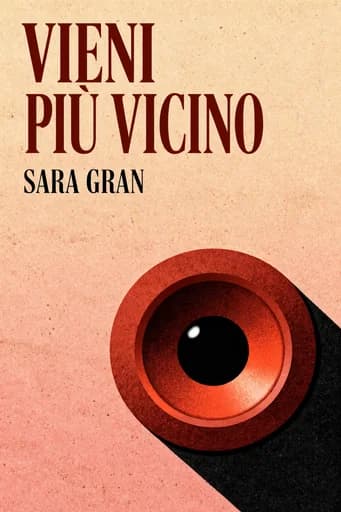
Is Amanda possessed by a demon named Naamah, or losing her mind? This slender masterpiece, hailed as "The Yellow Wallpaper meets Rosemary's Baby" by Kirkus and ranked among Esquire's Top 50 horror novels, explores the terrifying boundary between madness and malevolence.
Sara Gran is the author of Come Closer, a haunting horror novel exploring themes of possession and the supernatural, establishing her as a distinctive voice in psychological horror fiction. Born in Brooklyn in 1971, Gran brings a gritty, unflinching sensibility to her work, shaped by years working at legendary Manhattan bookstores like The Strand and Shakespeare & Co before becoming a full-time writer.
Beyond Come Closer, Gran has authored seven novels, including the acclaimed Claire DeWitt mystery series, which won the 2012 Macavity Award for Best Novel, as well as Dope and The Book of the Most Precious Substance. She has also built a successful career writing for television, contributing to TNT's Southland and collaborating with director Guillermo del Toro on adaptations.
Gran's work has been published in over a dozen countries and translated into nearly fifteen languages, cementing her reputation as an internationally recognized author who masterfully blends genre fiction with literary depth.
Come Closer by Sara Gran is a psychological horror novel about Amanda, a successful architect whose life unravels when she becomes possessed by a demon named Naamah. The story chronicles Amanda's descent as mysterious tapping sounds, disturbing dreams, and erratic behavior escalate, destroying her marriage and career. The novel ambiguously explores whether Amanda experiences genuine demonic possession or severe mental illness, creating an unsettling atmosphere that blurs supernatural horror with psychological breakdown.
Sara Gran is an American author born in 1971 in Brooklyn, known for her psychological horror and mystery novels. Beyond Come Closer, she's written the acclaimed Claire DeWitt detective series, which won the 2012 Macavity Award for Best Novel. Gran has also worked as a television writer for shows like Southland, Chance, and Berlin Station, and founded the small press Dreamland Books. Her sparse, darkly comedic writing style has earned her recognition across multiple genres.
Come Closer is perfect for horror fans seeking psychological depth rather than gore, readers interested in ambiguous narratives that blur possession and mental illness, and those who appreciate dark, literary horror with feminist undertones. The novel suits readers who enjoy sparse, minimalist prose and stories exploring female autonomy and societal expectations. Fans of subtle, character-driven horror like Shirley Jackson's work or contemporary psychological thrillers will find this compelling.
Come Closer is widely regarded as a modern horror classic despite its brevity, praised for masterful tension-building and thought-provoking ambiguity. Reviewers consistently highlight Sara Gran's sparse, compelling prose and the novel's ability to deliver genuine chills alongside dark comedy. The story's exploration of possession versus mental illness, combined with its devastating ending and feminist subtext, makes it a memorable, impactful read that transcends typical possession narratives. It's essential reading for literary horror enthusiasts.
Naamah is the demon who possesses Amanda in Come Closer, appearing in dreams as a beautiful woman with pointed teeth on the shore of a blood-red sea. She tells Amanda "I love you, and I will never, never leave you," gradually taking control of Amanda's body and mind. The character's ambiguity is central—readers never know definitively whether Naamah represents an actual supernatural entity or a manifestation of Amanda's psychological breakdown and suppressed desires.
The central theme of Come Closer explores the blurred boundaries between demonic possession and mental illness, questioning whether Amanda's experience is supernatural or psychological. Sara Gran examines female autonomy and the consequences of women transgressing acceptable behavior, as Amanda's "possession" coincides with her liberation from societal expectations. The novel investigates control—who controls our actions, thoughts, and identities—while exploring marriage, sanity, and the terror of losing oneself to an unknown force.
Come Closer concludes with a devastatingly dark, ambiguous ending that leaves readers uncertain about Amanda's fate. The finale plays out like "a car crash in slow motion," with the narrative hurtling toward inevitable disaster. Reviewers describe the ending as genuinely heartbreaking and bone-chilling, refusing to provide easy resolution about whether Amanda escapes possession or succumbs entirely. The final paragraphs are haunting, maintaining the novel's central ambiguity while delivering emotional impact that lingers long after reading.
Amanda experiences a complete psychological and behavioral breakdown in Come Closer, beginning with mysterious tapping sounds in her apartment and escalating to violent, self-destructive actions. She burns her husband Ed with a cigarette, steals items, speaks inappropriately to strangers, and submits obscene reports at work. As the possession intensifies, Amanda's marriage dissolves, her career on the Fitzgerald House project crumbles, and her identity fragments. The novel chronicles her steady, terrifying decline from successful architect to someone unrecognizable.
Sara Gran employs a sparse, minimalist writing style in Come Closer that enhances the horror through understatement and restraint. The prose is deliberately stripped-down and matter-of-fact, allowing tension to build organically without florid language. This approach creates pleasingly subtle ambiguity about Amanda's experience, making the possession more unsettling. Gran incorporates dark comedy alongside bone-chilling horror, with carefully crafted sentences that compel readers forward while maintaining psychological realism and emotional authenticity.
Come Closer distinguishes itself from typical possession narratives by focusing on psychological ambiguity rather than supernatural spectacle. Unlike traditional exorcism stories, Sara Gran's novel never confirms whether Amanda experiences genuine possession or mental illness, creating sophisticated uncertainty. The sparse prose contrasts sharply with more florid horror writing, while the feminist subtext about female liberation adds thematic depth absent from many possession tales. The novel resembles Rob E. Boley's The Body Will Follow in exploring female possession with dark comedy.
While widely praised, Come Closer's brevity can frustrate readers wanting deeper character development or more definitive answers about Amanda's possession. Some critics note the ambiguity, while intellectually interesting, may leave those seeking concrete supernatural horror unsatisfied. The dark ending disappoints readers preferring redemptive conclusions. Additionally, the minimalist style, though praised by most, can feel too sparse for readers accustomed to more descriptive horror. However, these criticisms are relatively minor compared to overwhelming positive reception.
The mysterious tapping sound in Amanda's apartment serves as the first tangible sign of possession or psychological breakdown in Come Closer. Beginning in January and continuing through winter, the tapping only stops when Amanda leaves town, suggesting a connection to her specifically. The sound functions as both literal haunting and potential auditory hallucination, embodying the novel's central ambiguity. It represents the intrusion of something foreign into Amanda's life—whether supernatural entity, mental illness, or suppressed aspects of her psyche demanding recognition.
Senti il libro attraverso la voce dell'autore
Trasforma la conoscenza in spunti coinvolgenti e ricchi di esempi
Cattura le idee chiave in un lampo per un apprendimento veloce
Goditi il libro in modo divertente e coinvolgente
By the time we recognize the pattern, it may already be too late.
This moment represents the first critical failure-the dismissal of intuition in favor of rational explanation.
The silence should be a relief, but instead feels ominous.
Each question feels more invasive than the last, probing deeper into the darkness of human experience.
Scomponi le idee chiave di Come closer in punti facili da capire per comprendere come i team innovativi creano, collaborano e crescono.
Vivi Come closer attraverso narrazioni vivide che trasformano le lezioni di innovazione in momenti che ricorderai e applicherai.
Chiedi qualsiasi cosa, scegli il tuo stile di apprendimento e co-crea intuizioni che risuonano davvero con te.

Creato da alumni della Columbia University a San Francisco
"Instead of endless scrolling, I just hit play on BeFreed. It saves me so much time."
"I never knew where to start with nonfiction—BeFreed’s book lists turned into podcasts gave me a clear path."
"Perfect balance between learning and entertainment. Finished ‘Thinking, Fast and Slow’ on my commute this week."
"Crazy how much I learned while walking the dog. BeFreed = small habits → big gains."
"Reading used to feel like a chore. Now it’s just part of my lifestyle."
"Feels effortless compared to reading. I’ve finished 6 books this month already."
"BeFreed turned my guilty doomscrolling into something that feels productive and inspiring."
"BeFreed turned my commute into learning time. 20-min podcasts are perfect for finishing books I never had time for."
"BeFreed replaced my podcast queue. Imagine Spotify for books — that’s it. 🙌"
"It is great for me to learn something from the book without reading it."
"The themed book list podcasts help me connect ideas across authors—like a guided audio journey."
"Makes me feel smarter every time before going to work"
Creato da alumni della Columbia University a San Francisco

Ottieni il riassunto di Come closer in formato PDF o EPUB gratuito. Stampalo o leggilo offline quando vuoi.
Have you ever had a moment when you didn't recognize yourself? When your thoughts seemed foreign, your actions inexplicable? "Come Closer" explores this terrifying possibility: what if these moments weren't lapses in judgment but evidence of something else moving in? This slim psychological horror masterpiece follows Amanda, a successful architect whose life begins unraveling when she hears mysterious tapping in her renovated loft apartment. What begins as an odd annoyance evolves into something far more sinister - a possession narrative so gradual and psychologically nuanced that it burrows under your skin, making you question every unexplained sound in your home and every inexplicable impulse in your mind. The invasion begins with three distinct taps around midnight. Amanda and her husband Ed live in a converted industrial building - a century-old aspirin factory with soaring windows and exposed brick walls that should feel like a sanctuary. Yet something isn't right. The tapping follows Amanda, stopping when she travels but persisting relentlessly when she's home alone. Over weeks, the pattern grows more complex, almost like morse code - a thought that keeps her awake at night.
Amanda's dreams become the gateway for something ancient entering her life. She dreams of a beautiful woman with matted black hair named Naamah, standing in a crimson ocean. Their embrace feels both familiar and frightening. Amanda realizes Naamah resembles Pansy, her childhood imaginary friend. When she shares this with Ed, he dismisses her experience, suggesting Pansy was just a neighborhood girl-the first critical failure of dismissing intuition for rational explanation. The dreams intensify. In another encounter, a woman with small white feet and black eyes whispers, "Don't fight" and "I choose you," before embracing Amanda. After this dream, the tapping noise vanishes completely-an ominous silence suggesting whatever was trying to get in has succeeded. A new voice emerges in Amanda's mind, almost like her own but subtly different, encouraging impulsive behaviors and feeling like intimate companionship. The first truly alarming incident occurs when Amanda discovers someone replaced her work proposal with an obscene note insulting her boss. Though colleagues saw her deliver it, she has no memory of writing it. Small items begin disappearing, and even the stray dog that once followed her now backs away with raised hackles.
Amanda receives a mistakenly delivered book titled "Demon Possession Past and Present" containing a quiz listing ten warning signs of demonic possession-from unexplained noises to violent urges. Initially scoring four out of ten, Amanda falls into the "early stages of possession" category. The clinical presentation of something as irrational as demonic possession creates a disturbing contrast-like finding a medical checklist for werewolf transformation. As her behavior grows erratic, Amanda compulsively retakes the quiz, watching her score climb from four to seven as new symptoms emerge. She meticulously tracks each manifestation-levitation during sleep, unexplained marks on her body, and violent episodes she can't recall. With Naamah's growing presence, Amanda develops disturbing supernatural abilities. Physical contact reveals visceral visions of others' private lives. A handshake with her butcher reveals years of family dinners and marital arguments. Her coffee vendor's cheerful demeanor masks resentment that Amanda witnesses through his nightly ritual of replaying customer interactions with unspoken cruel responses.
The progression toward violence begins subtly but accelerates rapidly. The cigarette incident with Ed marks a turning point-her arm moving with deliberate intent to burn him, completely divorced from her conscious will. This wasn't absent-mindedness but the first evidence something else could hijack her motor functions. The beach incident represents a horrifying escalation. Finding a young girl swimming alone, Amanda's body moves with predatory purpose. She grabs the child's hair, repeatedly forcing her underwater with calculated malice. Though the child survives, Amanda's complete awareness during the attack haunts her-she knew exactly what was happening but couldn't stop herself. These episodes are terrifying because Amanda remains fully conscious throughout. Unlike traditional possession narratives where the host blacks out, Amanda experiences every moment with excruciating clarity. She's imprisoned within her own body, forced to watch as her hands perform actions that horrify her moral sensibilities-the ultimate violation of being both perpetrator and unwilling witness, unable to prevent harm despite desperate internal resistance.
As Amanda's condition deteriorates, she seeks help through multiple channels, each failing her distinctly. Dr. Flynn diagnoses only low blood pressure and recommends more salt - a medical approach that completely misses the supernatural reality, demonstrating science's limitations when facing phenomena outside its paradigm. Sister Maria, her spiritual advisor, immediately senses an evil presence watching Amanda and provides a special "DEMON FIGHTING" wash. This religious approach acknowledges the supernatural but offers merely symbolic resistance. Psychiatrist Dr. Gerald Fenton dismissively suggests Amanda is simply "coming into her own" as an adult. When he reveals knowledge of incidents Amanda never mentioned, she becomes alarmed. The psychiatric approach appears either incompetent or, more disturbingly, complicit with the demonic forces. Each support system fails uniquely, leaving Amanda profoundly isolated. Medicine can't detect the problem, religion can't solve it, and psychiatry might actually work against her - mirroring real-world experiences of those with conditions that don't fit established categories.
The complete takeover unfolds gradually, then suddenly. Amanda's possession accelerates as her relationship with Naamah turns coldly formal. With Edward gone, Amanda's consciousness fractures - waking in strange places, burning his clothes, trapping someone in the bathroom, vandalizing stores. In recurring dreams, Amanda returns to a crimson beach where Naamah declares, "I love you. I'm never letting you go" - revealing her motivation as perverse love and possession. When Edward returns during a snowstorm to announce his divorce and remarriage, Amanda desperately tries to communicate, but Naamah locks her throat closed. As Amanda mentally pleads, she falls into darkness where Naamah writes: "I WIN." Amanda awakens to police in her blood-soaked apartment with "I WIN" painted in Edward's blood. Institutionalized after pleading insanity, Naamah thrives, controlling others. The final tragedy: Naamah has given Amanda exactly what she unconsciously desired - "someone to love me, and never leave me alone" - at the cost of her autonomy, identity, and humanity.
"Come Closer" disturbs not just through supernatural horror, but by mirroring real human experiences of losing oneself to addiction, mental illness, or toxic relationships. We all fear being trapped inside ourselves, watching helplessly as something else takes control. The book ends with a fictional editor's note expressing regret over publishing this text that has generated unprecedented fear about demonic possession. They mention receiving constant letters from frightened readers seeking help, suggesting the book itself might spread demonic influence. This transforms the narrative from a contained horror story into a potential contagion - something that might infect readers through the very act of reading. It makes us question our own unexplained behaviors and mysterious household sounds. In our rationality-focused world, it awakens ancient fears still lurking in our collective unconscious. As the demon quiz warns: if you scored between 4-5 positive answers, you may be in the early stages of possession. What was your score?