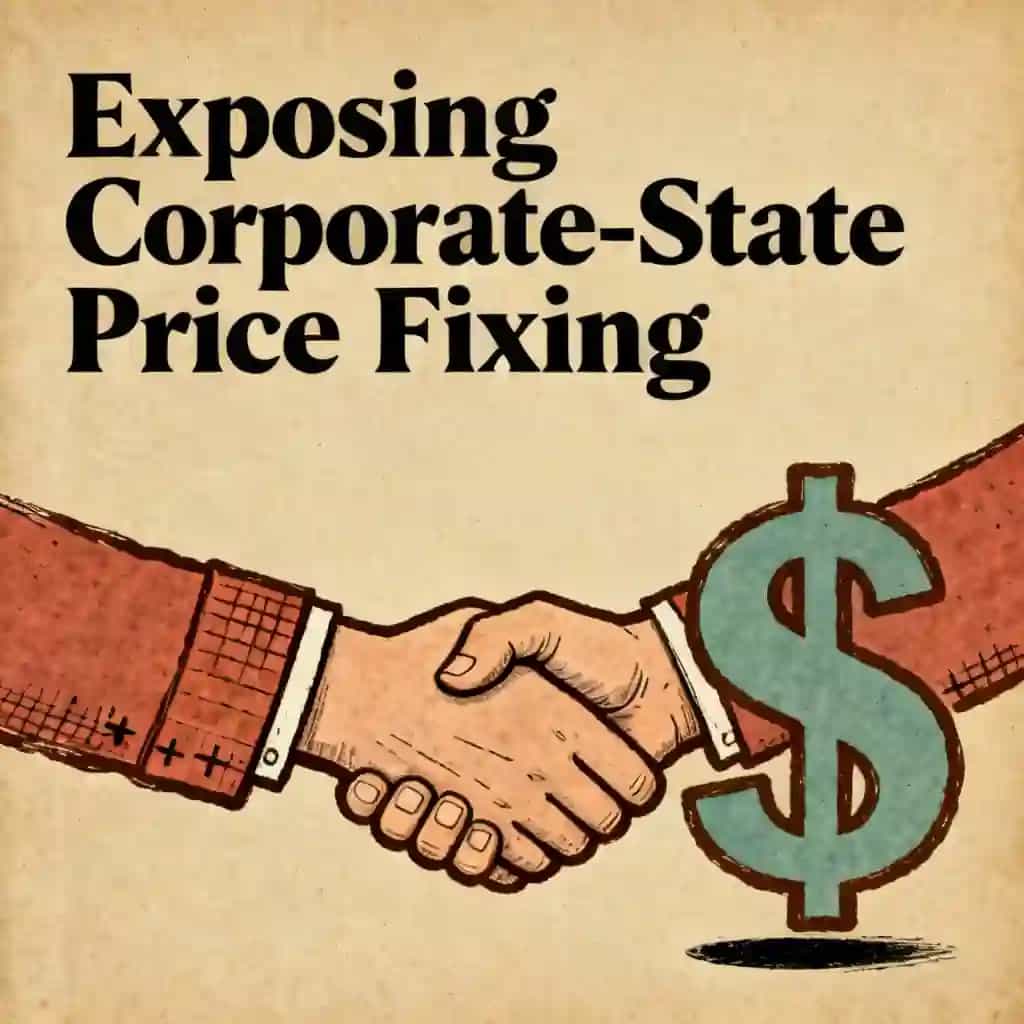
Overview of Goliath
Monopolies aren't accidents - they're designed. Stoller's explosive history reveals how corporations hijacked American democracy. Praised by Yelp's CEO as "an engaging call to arms," this book exposes the hidden war that's emptying your wallet while concentrating power at the top.
- Monopoly power corrupts democracy by enabling corporate control over political institutions.
- Teddy Roosevelt framed antitrust battles as a third crisis of American liberty.
- New Deal Democrats abandoned antitrust enforcement to empower monopolistic financiers.
- Andrew Mellon manipulated tax codes to favor big business over small competitors.
- Concentrated financial power created today’s populist backlash and authoritarian political shifts.
- Corporate monopolies drive price gouging inflation and reduce economic innovation.
- The 1950s anti-monopoly movement collapsed due to Wall Street lobbying.
- Modern monopolies control critical sectors from dialysis to military contracts.
- Reviving Brandeis-style antitrust laws is key to dismantling corporate autocracy.
- Matt Stoller traces Democratic Party’s pro-monopoly shift to 1970s economic policy failures.
- Monopolists exploit regulatory capture to rewrite rules against public interest.
- Historical anti-monopoly movements show grassroots power can counter corporate titans.
About the Author of Goliath
Matt Stoller, author of Goliath: The 100-Year War Between Monopoly Power and Democracy, is a leading anti-monopoly scholar and director of research at the American Economic Liberties Project. His groundbreaking historical analysis traces America’s century-long struggle against corporate monopolies, blending rigorous policy insight with a passion for economic democracy—themes rooted in his experience as a Senate Budget Committee advisor and architect of financial reforms during the 2008 crisis.
A prolific commentator, Stoller writes the Big newsletter (85,000+ subscribers), dissecting monopolistic practices across tech, finance, and media. His work has been featured in The New York Times, The Washington Post, and The Atlantic, and he has advised policymakers like Senator Elizabeth Warren. Stoller’s 2019 book became the defining text of the New Brandeisian antitrust movement, praised by Business Insider as “one of the year’s best books on rethinking capitalism.”
He co-hosts the Organized Money podcast and previously produced MSNBC’s The Dylan Ratigan Show. Stoller’s blend of historical depth and policy activism continues to shape debates on rebuilding competitive, equitable markets.
FAQs About Goliath
What is Goliath: The 100-Year War Between Monopoly Power and Democracy about?
Goliath traces America’s century-long struggle against corporate monopolies and their threat to democracy, blending historical analysis with modern political commentary. Matt Stoller argues that concentrated financial power—from early 20th-century trusts to today’s tech giants—corrupts democratic institutions and fueled crises like the 2008 crash and 2016 election turmoil. The book revives lessons from antitrust victories like the New Deal to advocate for renewed anti-monopoly reforms.
Who should read Goliath: The 100-Year War Between Monopoly Power and Democracy?
This book suits readers interested in economic history, antitrust policy, or democratic reform. Policymakers, activists, and students will find value in its analysis of monopolies’ role in political instability. Stoller’s accessible narrative also appeals to general audiences concerned about corporate power’s impact on inequality and governance.
What are the main arguments in Goliath by Matt Stoller?
Stoller contends that monopolies erode democracy by centralizing economic and political power, as seen in the 2008 crisis and tech giants’ influence. He highlights historical efforts to combat trusts, like Franklin Roosevelt’s New Deal, and warns that abandoning anti-monopoly principles enabled modern authoritarianism. The book calls for reviving antitrust enforcement to dismantle corporate dominance.
How does Goliath connect monopolies to authoritarianism?
The book links corporate consolidation to autocratic governance, showing how monopolies like 1920s banks or today’s Big Tech suppress competition, manipulate markets, and undermine civic institutions. Stoller argues concentrated economic power fosters political extremism by destabilizing middle-class prosperity—a pattern evident in the Great Depression and 2016 election.
What historical examples does Matt Stoller use in Goliath?
Stoller examines trust-busting campaigns against Standard Oil, the populist backlash to 1920s banking monopolies, and FDR’s New Deal reforms. He contrasts these with post-1980s deregulation, which allowed corporate consolidation in sectors like finance and tech, leading to crises like the 2008 collapse.
Does Goliath discuss modern tech companies like Google and Facebook?
Yes. Stoller critiques Google and Facebook as “information monopolies” that centralize control over data and media, paralleling early 20th-century trusts. He argues their dominance distorts public discourse and democracy, advocating for antitrust action to break up these platforms.
What is the “anti-monopoly tradition” mentioned in Goliath?
This tradition refers to America’s historical consensus—championed by figures like Louis Brandeis—that concentrated corporate power threatens liberty. Stoller traces its decline after the 1970s and argues reviving it through policies like breaking up monopolies and strengthening labor rights is essential to restoring democracy.
How does Goliath analyze the 2008 financial crisis?
Stoller frames the crisis as a result of banking monopolies and deregulation, which enabled reckless speculation. He critiques bailouts that preserved Wall Street’s power while neglecting accountability, echoing New Deal-era failures to constrain financial giants.
What criticisms has Goliath received?
Some reviewers argue Stoller oversimplifies complex economic systems or underplays globalization’s role in monopolies. Conservatives critique his regulatory prescriptions as overreach, while others note limited solutions for modern digital monopolies.
How does Goliath relate to current political trends?
The book ties rising populism and partisan strife to economic inequality fueled by monopolies. Stoller suggests reforms like antitrust enforcement and corporate breakup could reduce polarization by decentralizing power—a lesson from the Progressive and New Deal eras.
Is Goliath: The 100-Year War Between Monopoly Power and Democracy worth reading?
Yes. Stoller’s blend of historical insight and urgent policy critique makes Goliath a vital read for understanding modern economic and political challenges. Its analysis of tech monopolies and democratic erosion remains particularly relevant, earning praise from scholars and policymakers.
How does Goliath compare to other books on corporate power?
Unlike narrower tech critiques (e.g., The Age of Surveillance Capitalism), Goliath offers a century-spanning narrative that contextualizes monopolies within democratic theory. It complements works like Zephyr Teachout’s Break ’Em Up but stands out for its historical depth.
Feel the book through the author's voice
Turn knowledge into engaging, example-rich insights
Capture key ideas in a flash for fast learning
Enjoy the book in a fun and engaging way
Key Themes in Goliath
Quotes from Goliath
The business of America is business.
Characters in Goliath
Quick Summary Mode - Read or listen to Goliath Summary in 9 Minutes

Break down key ideas from Goliath into bite-sized takeaways to understand how innovative teams create, collaborate, and grow.

Flash Card Mode - Top 8 Insights from Goliath in a Nutshell

Distill Goliath into rapid-fire memory cues that highlight key principles of candor, teamwork, and creative resilience.

Fun Mode - Goliath Lessons Told Through 25-Min Stories

Experience Goliath through vivid storytelling that turns innovation lessons into moments you'll remember and apply.
Personalize Mode - Read or listen to Goliath Summary in 0 Minutes

Ask anything, pick the voice, and co-create insights that truly resonate with you.

From Columbia University alumni built in San Francisco
"Instead of endless scrolling, I just hit play on BeFreed. It saves me so much time."


"I never knew where to start with nonfiction—BeFreed’s book lists turned into podcasts gave me a clear path."


"Perfect balance between learning and entertainment. Finished ‘Thinking, Fast and Slow’ on my commute this week."
"Crazy how much I learned while walking the dog. BeFreed = small habits → big gains."
"Reading used to feel like a chore. Now it’s just part of my lifestyle."

"Feels effortless compared to reading. I’ve finished 6 books this month already."
"BeFreed turned my guilty doomscrolling into something that feels productive and inspiring."

"BeFreed turned my commute into learning time. 20-min podcasts are perfect for finishing books I never had time for."
"BeFreed replaced my podcast queue. Imagine Spotify for books — that’s it. 🙌"

"It is great for me to learn something from the book without reading it."
"The themed book list podcasts help me connect ideas across authors—like a guided audio journey."
"Makes me feel smarter every time before going to work"
From Columbia University alumni built in San Francisco
"Instead of endless scrolling, I just hit play on BeFreed. It saves me so much time."
"I never knew where to start with nonfiction—BeFreed’s book lists turned into podcasts gave me a clear path."
"Perfect balance between learning and entertainment. Finished ‘Thinking, Fast and Slow’ on my commute this week."
"Crazy how much I learned while walking the dog. BeFreed = small habits → big gains."
"Reading used to feel like a chore. Now it’s just part of my lifestyle."
"Feels effortless compared to reading. I’ve finished 6 books this month already."
"BeFreed turned my guilty doomscrolling into something that feels productive and inspiring."
"BeFreed turned my commute into learning time. 20-min podcasts are perfect for finishing books I never had time for."
"BeFreed replaced my podcast queue. Imagine Spotify for books — that’s it. 🙌"
"It is great for me to learn something from the book without reading it."
"The themed book list podcasts help me connect ideas across authors—like a guided audio journey."
"Makes me feel smarter every time before going to work"
"Instead of endless scrolling, I just hit play on BeFreed. It saves me so much time."
"I never knew where to start with nonfiction—BeFreed’s book lists turned into podcasts gave me a clear path."
"Perfect balance between learning and entertainment. Finished ‘Thinking, Fast and Slow’ on my commute this week."
"Crazy how much I learned while walking the dog. BeFreed = small habits → big gains."
"Reading used to feel like a chore. Now it’s just part of my lifestyle."
"Feels effortless compared to reading. I’ve finished 6 books this month already."
"BeFreed turned my guilty doomscrolling into something that feels productive and inspiring."
"BeFreed turned my commute into learning time. 20-min podcasts are perfect for finishing books I never had time for."
"BeFreed replaced my podcast queue. Imagine Spotify for books — that’s it. 🙌"
"It is great for me to learn something from the book without reading it."
"The themed book list podcasts help me connect ideas across authors—like a guided audio journey."
"Makes me feel smarter every time before going to work"
"Instead of endless scrolling, I just hit play on BeFreed. It saves me so much time."
"I never knew where to start with nonfiction—BeFreed’s book lists turned into podcasts gave me a clear path."
"Perfect balance between learning and entertainment. Finished ‘Thinking, Fast and Slow’ on my commute this week."
"Crazy how much I learned while walking the dog. BeFreed = small habits → big gains."
"Reading used to feel like a chore. Now it’s just part of my lifestyle."
"Feels effortless compared to reading. I’ve finished 6 books this month already."
"BeFreed turned my guilty doomscrolling into something that feels productive and inspiring."
"BeFreed turned my commute into learning time. 20-min podcasts are perfect for finishing books I never had time for."
"BeFreed replaced my podcast queue. Imagine Spotify for books — that’s it. 🙌"
"It is great for me to learn something from the book without reading it."
"The themed book list podcasts help me connect ideas across authors—like a guided audio journey."
"Makes me feel smarter every time before going to work"

Get the Goliath summary as a free PDF or EPUB. Print it or read offline anytime.