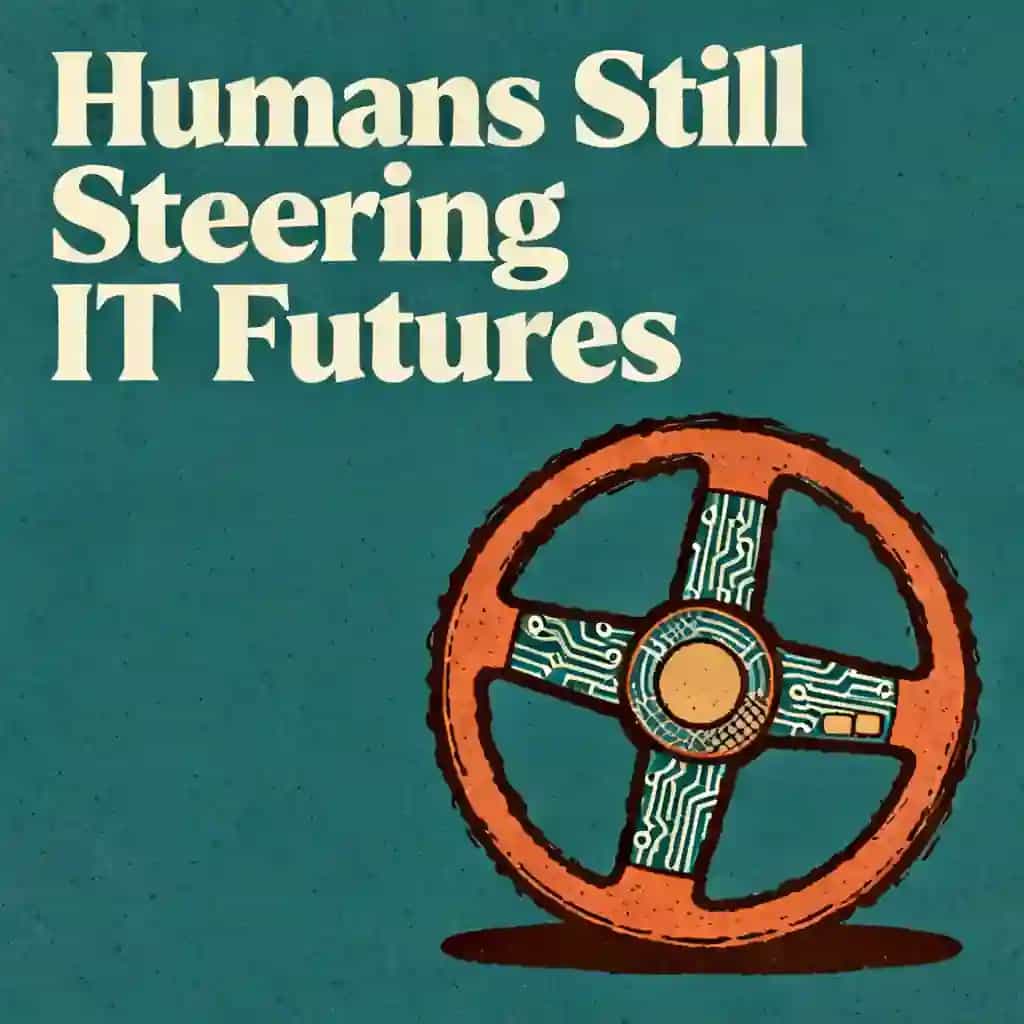
Humanity Works: Merging Technologies and People for the Workforce of the Future by Alexandra Levit Summary

Overview of Humanity Works
In "Humanity Works," workplace futurist Alexandra Levit reveals how companies like Deloitte and Pepsi blend human creativity with AI. This award-winning guide asks: Will your skills survive 2030? Executives call it the roadmap for maintaining competitive advantage in our tech-driven future.
- Automation amplifies human creativity rather than replacing emotional intelligence
- Future-proof careers require mastering judgement calls AI can't replicate
- Workplace success hinges on "human edge" traits like interpersonal sensitivity
- Hybrid talent ecosystems blend AI efficiency with human problem-solving skills
- Agile organizations prioritize continuous learning over fixed job descriptions
- Emotional AI tools enhance empathy but can't replace authentic connection
- Career resilience means developing portable skills across industries and technologies
- Effective managers orchestrate human-machine collaboration through psychological safety
- Workplace innovation thrives when diversity initiatives include neurodiverse thinkers
- AI ethics require human oversight in hiring algorithms and HR systems
- Hybrid work models succeed when prioritizing human-centric digital experiences
- Future leaders must champion human dignity in automation implementation strategies
About the Author of Humanity Works
Alexandra Levit, author of Humanity Works: Merging People and Technologies for the Workforce of the Future, is a bestselling business strategist and futurist renowned for her expertise in workplace innovation.
A former Wall Street Journal columnist and frequent contributor to the New York Times and Forbes, Levit combines decades of corporate consulting with research on leadership, technology adoption, and generational dynamics. Her groundbreaking insights stem from roles like managing partner at PeopleResults and founder of Inspiration at Work, where she advises Fortune 500 companies on navigating the evolving labor landscape.
Known for actionable frameworks that bridge human potential and AI, Levit’s other works include They Don’t Teach Corporate in College and Deep Talent: How to Transform Your Organization and Empower Your Employees Through AI.
A recipient of Northwestern University’s Emerging Leader Award and named to Thinkers50’s Radar list of global thought leaders, her ideas have shaped policies for the U.S. Department of Labor and been featured on NPR, CNN, and ABC News. Humanity Works has been cited as essential reading for HR executives and organizational leaders worldwide.
FAQs About Humanity Works
What is Humanity Works by Alexandra Levit about?
Humanity Works explores how organizations can integrate AI and automation while leveraging uniquely human skills like creativity, judgment, and interpersonal sensitivity. Alexandra Levit provides actionable strategies for building agile, innovation-focused workplaces through real-world case studies (e.g., Nestlé, Pepsi) and tools to navigate workforce disruption.
Who should read Humanity Works?
This book is ideal for business leaders, HR professionals, and employees preparing for AI-driven workplace changes. It offers insights for fostering collaboration between humans and technology, making it valuable for anyone invested in future-proofing careers or organizational structures.
Is Humanity Works worth reading?
Yes, particularly for its practical frameworks like "Activity Plans" to address automation challenges. Levit balances academic research with examples from companies like Deloitte and The Washington Post, providing actionable steps to maintain a competitive edge in evolving industries.
What human traits does Humanity Works emphasize in the age of AI?
The book highlights creativity, problem-solving, emotional intelligence, and ethical judgment as irreplaceable human strengths. Levit argues these traits must be prioritized alongside AI adoption to drive innovation and maintain workforce relevance.
How does Humanity Works suggest organizations prepare for AI disruption?
Key recommendations include:
- Redesigning roles to complement AI capabilities
- Investing in upskilling programs for adaptability
- Creating flatter organizational hierarchies to accelerate decision-making
What case studies are featured in Humanity Works?
Notable examples include Nestlé’s agile workforce strategies, The Washington Post’s AI-enhanced journalism, and Pepsi’s innovation labs. These illustrate how diverse industries successfully merge human and technological strengths.
How does Humanity Works differ from other books about AI and work?
Unlike purely technical analyses, Levit focuses on human-centric adaptation. The book stands out for its practical exercises and emphasis on leadership development, rather than just predicting job displacement.
What is the "human edge" discussed in Humanity Works?
This concept refers to cultivating skills AI cannot replicate, such as building trust, navigating ambiguity, and fostering creativity. Levit provides frameworks to identify and amplify these traits in teams.
Does Humanity Works address ethical concerns about workplace AI?
While highlighting AI’s benefits, it briefly acknowledges risks like bias in algorithms. However, the primary focus remains on adaptation strategies rather than deep ethical critique.
How relevant is Humanity Works to remote/hybrid work environments?
Though published pre-pandemic, its principles apply to modern flexibility challenges. The emphasis on communication, trust-building, and results-oriented metrics aligns with 2025 hybrid work trends.
Can Humanity Works help with career transitions?
Yes, particularly chapters on identifying transferable skills and leveraging AI tools for personal branding. Levit’s "future-proofing" exercises help readers align their strengths with emerging roles.
How does Humanity Works compare to Levit’s other books like Deep Talent?
While Deep Talent focuses narrowly on AI in HR, Humanity Works offers a broader organizational strategy perspective. Both emphasize human-machine collaboration but target different leadership levels.
Feel the book through the author's voice
Turn knowledge into engaging, example-rich insights
Capture key ideas in a flash for fast learning
Enjoy the book in a fun and engaging way
Key Themes in Humanity Works
Quotes from Humanity Works
This isn't just another book about robots taking our jobs.
Migration policies often obstruct talent access.
Online platforms have replaced provincial job listings.
We'll become hybrids.
The machines in our professional lives won't be 'others'—they will be us, and we will be them.
Characters in Humanity Works
Quick Summary Mode - Read or listen to Humanity Works Summary in 9 Minutes

Break down key ideas from Humanity Works into bite-sized takeaways to understand how innovative teams create, collaborate, and grow.

Flash Card Mode - Top 9 Insights from Humanity Works in a Nutshell

Distill Humanity Works into rapid-fire memory cues that highlight key principles of candor, teamwork, and creative resilience.

Fun Mode - Humanity Works Lessons Told Through 26-Min Stories

Experience Humanity Works through vivid storytelling that turns innovation lessons into moments you'll remember and apply.
Personalize Mode - Read or listen to Humanity Works Summary in 0 Minutes

Ask anything, pick the voice, and co-create insights that truly resonate with you.

From Columbia University alumni built in San Francisco
"Instead of endless scrolling, I just hit play on BeFreed. It saves me so much time."


"I never knew where to start with nonfiction—BeFreed’s book lists turned into podcasts gave me a clear path."


"Perfect balance between learning and entertainment. Finished ‘Thinking, Fast and Slow’ on my commute this week."
"Crazy how much I learned while walking the dog. BeFreed = small habits → big gains."
"Reading used to feel like a chore. Now it’s just part of my lifestyle."

"Feels effortless compared to reading. I’ve finished 6 books this month already."
"BeFreed turned my guilty doomscrolling into something that feels productive and inspiring."

"BeFreed turned my commute into learning time. 20-min podcasts are perfect for finishing books I never had time for."
"BeFreed replaced my podcast queue. Imagine Spotify for books — that’s it. 🙌"

"It is great for me to learn something from the book without reading it."
"The themed book list podcasts help me connect ideas across authors—like a guided audio journey."
"Makes me feel smarter every time before going to work"
From Columbia University alumni built in San Francisco
"Instead of endless scrolling, I just hit play on BeFreed. It saves me so much time."
"I never knew where to start with nonfiction—BeFreed’s book lists turned into podcasts gave me a clear path."
"Perfect balance between learning and entertainment. Finished ‘Thinking, Fast and Slow’ on my commute this week."
"Crazy how much I learned while walking the dog. BeFreed = small habits → big gains."
"Reading used to feel like a chore. Now it’s just part of my lifestyle."
"Feels effortless compared to reading. I’ve finished 6 books this month already."
"BeFreed turned my guilty doomscrolling into something that feels productive and inspiring."
"BeFreed turned my commute into learning time. 20-min podcasts are perfect for finishing books I never had time for."
"BeFreed replaced my podcast queue. Imagine Spotify for books — that’s it. 🙌"
"It is great for me to learn something from the book without reading it."
"The themed book list podcasts help me connect ideas across authors—like a guided audio journey."
"Makes me feel smarter every time before going to work"
"Instead of endless scrolling, I just hit play on BeFreed. It saves me so much time."
"I never knew where to start with nonfiction—BeFreed’s book lists turned into podcasts gave me a clear path."
"Perfect balance between learning and entertainment. Finished ‘Thinking, Fast and Slow’ on my commute this week."
"Crazy how much I learned while walking the dog. BeFreed = small habits → big gains."
"Reading used to feel like a chore. Now it’s just part of my lifestyle."
"Feels effortless compared to reading. I’ve finished 6 books this month already."
"BeFreed turned my guilty doomscrolling into something that feels productive and inspiring."
"BeFreed turned my commute into learning time. 20-min podcasts are perfect for finishing books I never had time for."
"BeFreed replaced my podcast queue. Imagine Spotify for books — that’s it. 🙌"
"It is great for me to learn something from the book without reading it."
"The themed book list podcasts help me connect ideas across authors—like a guided audio journey."
"Makes me feel smarter every time before going to work"
"Instead of endless scrolling, I just hit play on BeFreed. It saves me so much time."
"I never knew where to start with nonfiction—BeFreed’s book lists turned into podcasts gave me a clear path."
"Perfect balance between learning and entertainment. Finished ‘Thinking, Fast and Slow’ on my commute this week."
"Crazy how much I learned while walking the dog. BeFreed = small habits → big gains."
"Reading used to feel like a chore. Now it’s just part of my lifestyle."
"Feels effortless compared to reading. I’ve finished 6 books this month already."
"BeFreed turned my guilty doomscrolling into something that feels productive and inspiring."
"BeFreed turned my commute into learning time. 20-min podcasts are perfect for finishing books I never had time for."
"BeFreed replaced my podcast queue. Imagine Spotify for books — that’s it. 🙌"
"It is great for me to learn something from the book without reading it."
"The themed book list podcasts help me connect ideas across authors—like a guided audio journey."
"Makes me feel smarter every time before going to work"

Get the Humanity Works summary as a free PDF or EPUB. Print it or read offline anytime.