The Power of Showing Up: How Parental Presence Shapes Who Your Kids Become and How Their Brains Get Wired

Overview of The Power of Showing Up
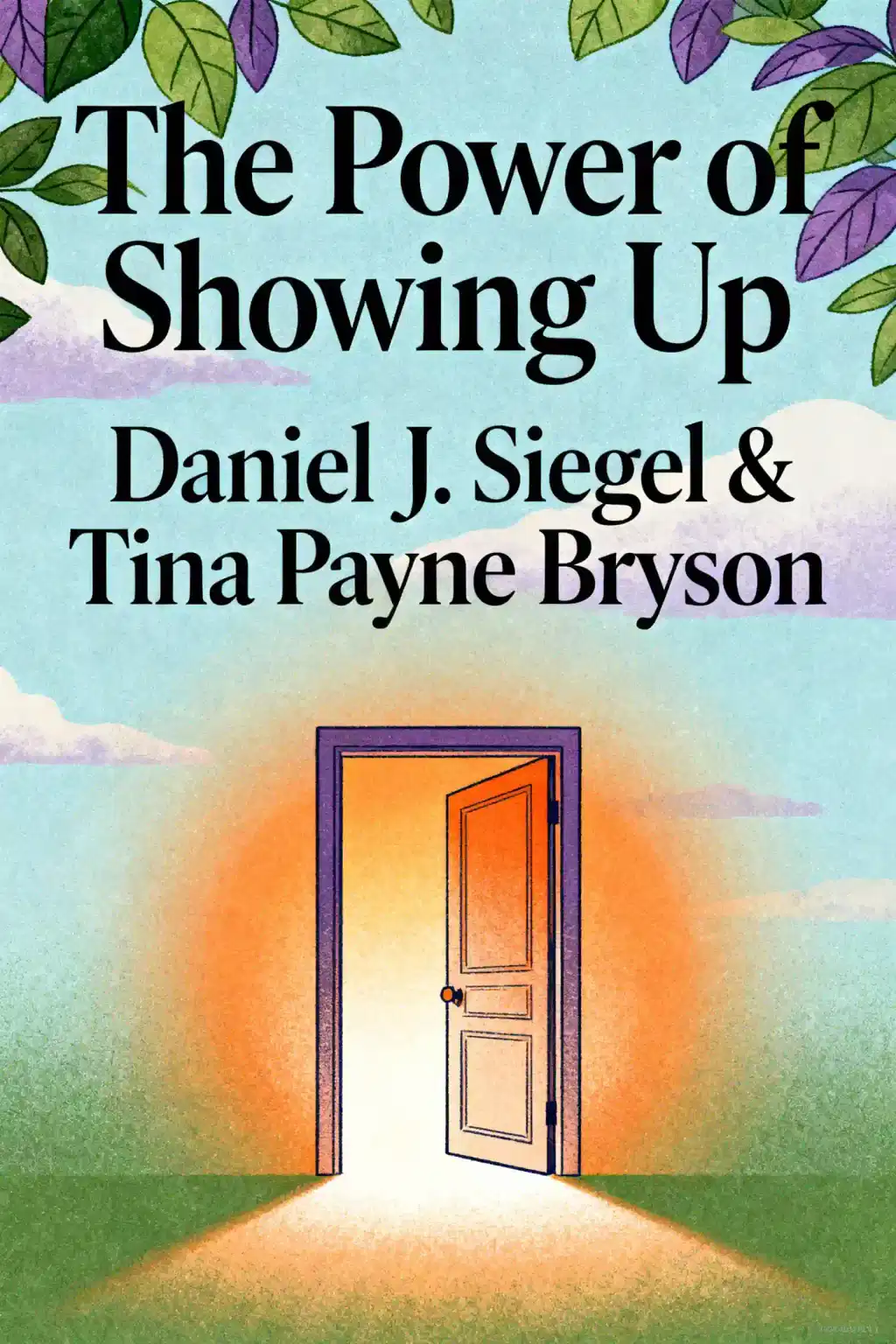
In "The Power of Showing Up," renowned neuropsychiatrist Daniel Siegel reveals how parental presence rewires children's brains. What if your mere presence - not perfect parenting - is the key? Endorsed by child development experts as "the ultimate guide to family reconnection" in our device-dominated era.
- Secure attachment trumps parenting hacks for lifelong mental health outcomes.
- Siegel’s 4 S’s framework replaces perfect parenting with consistent presence.
- Parental attunement rewires brains via neuroplasticity for emotional resilience.
- Adverse Childhood Experiences study proves safe parenting breaks generational trauma.
- Relationship repair matters more than parenting perfection for secure bonds.
- "Free attachment" lets adults transcend childhood patterns through self-understanding.
- Parental presence builds secure attachment wiring in children’s brains.
- Safety means supporting challenges rather than eliminating obstacles for kids.
- Seeing behavior motives beats punishing actions for emotional development.
- Security emerges when children feel safe, seen, and soothed simultaneously.
- Parental self-awareness creates agency to override outdated upbringing patterns.
- The 4 S’s transform discipline into connection-building opportunities.
About the Author of The Power of Showing Up
Daniel J. Siegel, MD, and Tina Payne Bryson, PhD, are New York Times bestselling authors of The Power of Showing Up and leading experts in child development and neuroscience-based parenting. Siegel, a clinical professor of psychiatry at UCLA and founder of the Mindsight Institute, merges decades of research in interpersonal neurobiology with practical parenting strategies.
Bryson, a psychotherapist and founder of The Center for Connection, specializes in helping families build resilience through relational safety. Together, they explore how parental presence forms the foundation for children’s emotional security, brain integration, and lifelong mental health in this pivotal parenting guide.
The duo previously co-authored the groundbreaking parenting books The Whole-Brain Child and No-Drama Discipline, which have collectively sold over 3 million copies worldwide. Siegel’s work on mindsight—the ability to perceive and shape mental processes—and Bryson’s clinical focus on attachment science inform their actionable frameworks for caregivers. Their books have been translated into more than 30 languages and are widely used by educators, therapists, and parenting communities globally.
FAQs About The Power of Showing Up
What is The Power of Showing Up about?
The Power of Showing Up by Daniel J. Siegel and Tina Payne Bryson explores how parental presence shapes children’s emotional development and brain wiring through secure attachment. It introduces the “Four S’s” framework—helping kids feel Safe, Seen, Soothed, and Secure—and ties parenting strategies to neuroscience and attachment theory. The book emphasizes repairing relational missteps and overcoming generational parenting patterns.
Who should read The Power of Showing Up?
Parents, caregivers, educators, and therapists seeking actionable strategies for fostering secure child-parent relationships will benefit. It’s ideal for those interested in attachment science, trauma-informed parenting, or breaking cycles of ineffective caregiving. The concepts apply to both neurotypical children and those with behavioral challenges.
Is The Power of Showing Up worth reading?
Yes—it distills complex neuroscience into practical advice, making it a foundational guide for relational parenting. While some find its academic tone dense, the Four S’s framework and emphasis on repair offer timeless tools. Readers call it “necessary” for raising resilient, emotionally balanced kids.
What are the Four S’s in The Power of Showing Up?
The Four S’s are:
- Safe: Protecting children from harm.
- Seen: Attuning to their emotional needs.
- Soothed: Comforting during distress.
- Secure: Building trust for lifelong resilience.
These pillars help parents create a secure base for healthy development.
How does The Power of Showing Up address Adverse Childhood Experiences (ACEs)?
The book links ACEs research to parenting, showing how unresolved childhood trauma can affect caregiving. Siegel and Bryson encourage parents to reflect on their upbringing to break negative cycles, fostering “agency” to choose healthier relational patterns.
What is “free attachment” in The Power of Showing Up?
“Free attachment” refers to adults who’ve developed secure relationships despite childhood challenges. It highlights the brain’s adaptability and the power of intentional parenting to foster emotional security in kids.
How does The Power of Showing Up compare to Siegel’s The Whole-Brain Child?
While The Whole-Brain Child focuses on brain-based parenting tactics, The Power of Showing Up emphasizes foundational relational skills. The latter serves as a precursor, teaching parents to build secure bonds before applying specific behavioral strategies.
What critiques exist about The Power of Showing Up?
Some readers find the neuroscience explanations overly academic, making the text feel lengthy. However, most praise its actionable advice and real-life examples, noting it’s more accessible than purely theoretical parenting guides.
Can The Power of Showing Up help parents who had difficult upbringings?
Yes. The book provides tools to reflect on one’s childhood, understand its impact on parenting, and develop “agency” to create healthier dynamics. Stories of repair and resilience offer hope for breaking generational cycles.
What role does interpersonal neurobiology play in the book?
Siegel’s expertise in interpersonal neurobiology underpins the science behind secure attachment. The book explains how relationships shape brain development, emphasizing integration of emotional and cognitive processes for balanced growth.
How does The Power of Showing Up advise repairing parent-child conflicts?
It stresses that repair is more impactful than perfection. Acknowledging mistakes, apologizing, and reconnecting teaches kids empathy and resilience. This practice strengthens trust and models healthy conflict resolution.
Why is “parental presence” emphasized in the book?
Consistent presence builds neural pathways for emotional regulation and self-worth. Siegel and Bryson argue that showing up—even imperfectly—helps kids internalize safety, fostering confidence to explore the world.
Feel the book through the author's voice
Turn knowledge into engaging, example-rich insights
Capture key ideas in a flash for fast learning
Enjoy the book in a fun and engaging way
Characters in The Power of Showing Up
- Daniel J. SiegelAuthor and expert in interpersonal neurobiology
- Tina Payne BrysonAuthor and expert in childhood development
Key Themes in The Power of Showing Up
- secure attachment
- interpersonal neurobiology
- coherent narrative
- emotional regulation
- parental presence
Quotes from The Power of Showing Up
Showing up is about offering a quality of presence.
History is not destiny-our past can be understood rather than dictating our present and future.
Safety is fundamentally the opposite of threat.
The greatest predictor of providing secure attachment isn't whether we received it ourselves, but whether we've reflected on our own experiences.
Explore Your Way of Learning
 Quick Summary Mode
Read or listen to The Power of Showing Up Summary in 9 Minutes
Break down key ideas from The Power of Showing Up into bite-sized takeaways to understand how innovative teams create, collaborate, and grow.

 Fun Mode
The Power of Showing Up Lessons Told Through 18-Min Stories
Experience The Power of Showing Up through vivid storytelling that turns innovation lessons into moments you'll remember and apply.
 Personalize Mode
Experience The Power of Showing Up in your own learning style
Ask anything, choose your learning style, and co-create insights that truly resonate with you.
From Columbia University alumni built in San Francisco
"Instead of endless scrolling, I just hit play on BeFreed. It saves me so much time."


"I never knew where to start with nonfiction—BeFreed’s book lists turned into podcasts gave me a clear path."


"Perfect balance between learning and entertainment. Finished ‘Thinking, Fast and Slow’ on my commute this week."
"Crazy how much I learned while walking the dog. BeFreed = small habits → big gains."
"Reading used to feel like a chore. Now it’s just part of my lifestyle."

"Feels effortless compared to reading. I’ve finished 6 books this month already."
"BeFreed turned my guilty doomscrolling into something that feels productive and inspiring."

"BeFreed turned my commute into learning time. 20-min podcasts are perfect for finishing books I never had time for."
"BeFreed replaced my podcast queue. Imagine Spotify for books — that’s it. 🙌"

"It is great for me to learn something from the book without reading it."
"The themed book list podcasts help me connect ideas across authors—like a guided audio journey."
"Makes me feel smarter every time before going to work"
From Columbia University alumni built in San Francisco
"Instead of endless scrolling, I just hit play on BeFreed. It saves me so much time."
"I never knew where to start with nonfiction—BeFreed’s book lists turned into podcasts gave me a clear path."
"Perfect balance between learning and entertainment. Finished ‘Thinking, Fast and Slow’ on my commute this week."
"Crazy how much I learned while walking the dog. BeFreed = small habits → big gains."
"Reading used to feel like a chore. Now it’s just part of my lifestyle."
"Feels effortless compared to reading. I’ve finished 6 books this month already."
"BeFreed turned my guilty doomscrolling into something that feels productive and inspiring."
"BeFreed turned my commute into learning time. 20-min podcasts are perfect for finishing books I never had time for."
"BeFreed replaced my podcast queue. Imagine Spotify for books — that’s it. 🙌"
"It is great for me to learn something from the book without reading it."
"The themed book list podcasts help me connect ideas across authors—like a guided audio journey."
"Makes me feel smarter every time before going to work"
"Instead of endless scrolling, I just hit play on BeFreed. It saves me so much time."
"I never knew where to start with nonfiction—BeFreed’s book lists turned into podcasts gave me a clear path."
"Perfect balance between learning and entertainment. Finished ‘Thinking, Fast and Slow’ on my commute this week."
"Crazy how much I learned while walking the dog. BeFreed = small habits → big gains."
"Reading used to feel like a chore. Now it’s just part of my lifestyle."
"Feels effortless compared to reading. I’ve finished 6 books this month already."
"BeFreed turned my guilty doomscrolling into something that feels productive and inspiring."
"BeFreed turned my commute into learning time. 20-min podcasts are perfect for finishing books I never had time for."
"BeFreed replaced my podcast queue. Imagine Spotify for books — that’s it. 🙌"
"It is great for me to learn something from the book without reading it."
"The themed book list podcasts help me connect ideas across authors—like a guided audio journey."
"Makes me feel smarter every time before going to work"
"Instead of endless scrolling, I just hit play on BeFreed. It saves me so much time."
"I never knew where to start with nonfiction—BeFreed’s book lists turned into podcasts gave me a clear path."
"Perfect balance between learning and entertainment. Finished ‘Thinking, Fast and Slow’ on my commute this week."
"Crazy how much I learned while walking the dog. BeFreed = small habits → big gains."
"Reading used to feel like a chore. Now it’s just part of my lifestyle."
"Feels effortless compared to reading. I’ve finished 6 books this month already."
"BeFreed turned my guilty doomscrolling into something that feels productive and inspiring."
"BeFreed turned my commute into learning time. 20-min podcasts are perfect for finishing books I never had time for."
"BeFreed replaced my podcast queue. Imagine Spotify for books — that’s it. 🙌"
"It is great for me to learn something from the book without reading it."
"The themed book list podcasts help me connect ideas across authors—like a guided audio journey."
"Makes me feel smarter every time before going to work"

Download Summary of The Power of Showing Up
Get the The Power of Showing Up summary as a free PDF or EPUB. Print it or read offline anytime.