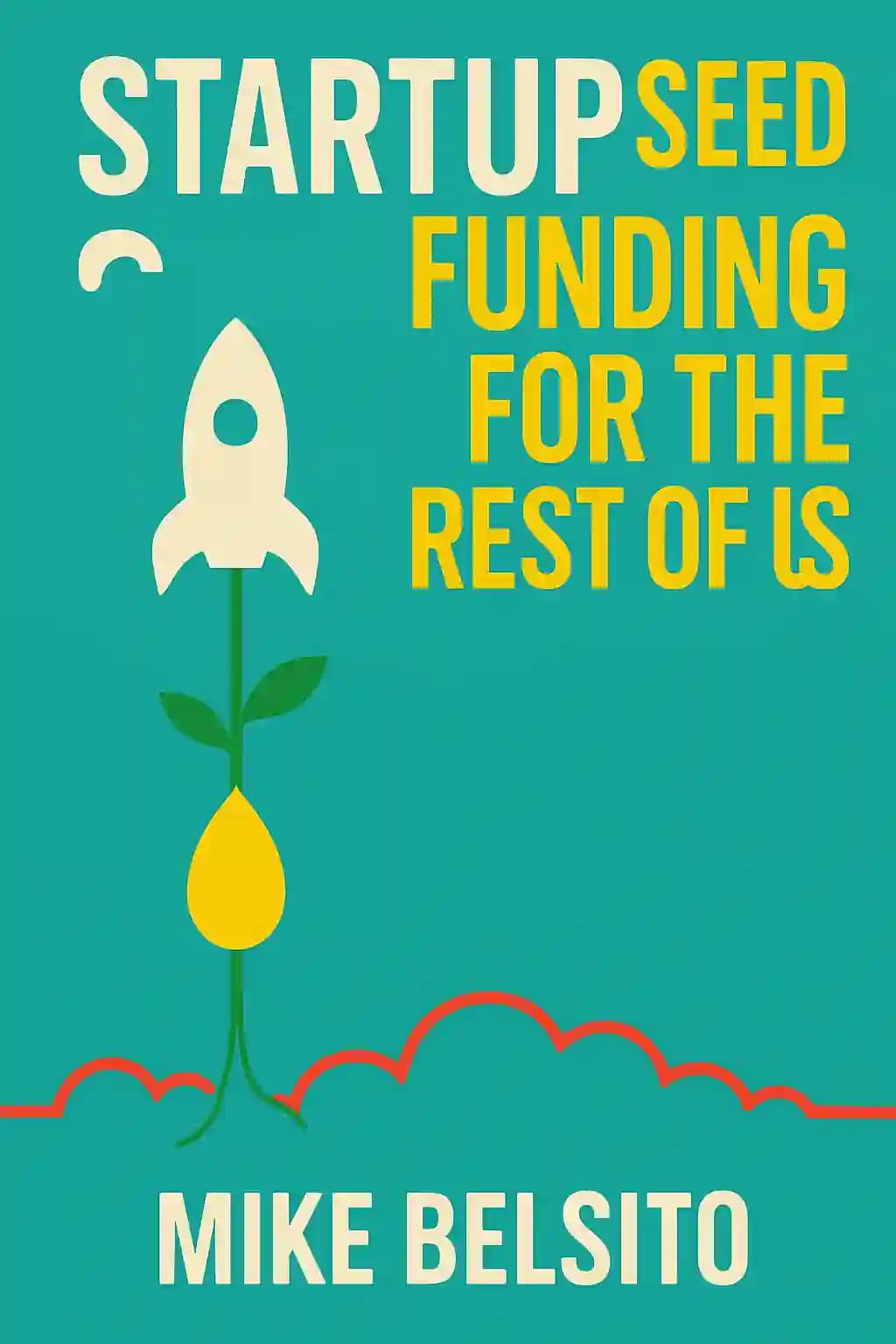
Startup Seed Funding for the Rest of Us
How to Raise $1 Million For Your Startup - Even Outside of Silicon Valley
Overview of Startup Seed Funding for the Rest of Us
Seeking startup funding outside Silicon Valley? Belsito's guide reveals investor strategies with memorable farmyard analogies - angels as chickens, VCs as cows. With 4.6/5 stars, it's the blueprint entrepreneurs everywhere use to secure capital without coastal connections.

Key Themes in Startup Seed Funding for the Rest of Us
- regional startup ecosystems
- early stage traction
- angel investor networking
- seed round strategy
- pitch deck development
Quotes from Startup Seed Funding for the Rest of Us
Investors want to back teams that can get stuff done.
Traction is what separates a good idea from an investable company.
Investors ultimately back people and businesses, not just ideas.
Don't let your location hold you back.
Characters in Startup Seed Funding for the Rest of Us
- Mike BelsitoAuthor and entrepreneur based in Cleveland, Ohio
About the Author
About the Author of Startup Seed Funding for the Rest of Us
Mike Belsito is the bestselling author of Startup Seed Funding for the Rest of Us and a leading expert in entrepreneurship and early-stage funding. He combines over a decade of startup experience with practical insights for founders outside traditional venture capital hubs.
As Co-Founder of Product Collective, organizers of INDUSTRY: The Product Conference, he has shaped global product management education, earning recognition as a Top 40 influencer in the field.
His book demystifies seed funding strategies, drawing from his roles as a startup executive, advisor, and Adjunct Professor at Case Western Reserve University’s Weatherhead School of Management. Belsito’s work has been featured in The New York Times, CNN, and NPR, reflecting his authority in bridging innovative ideas with real-world execution.
The book, a top-rated startup guide on Amazon, is praised for its actionable frameworks to attract investors and validate business models—essential reading for founders navigating non-traditional funding landscapes.
Download Summary of Startup Seed Funding for the Rest of Us
Get the Startup Seed Funding for the Rest of Us summary as a free PDF or EPUB. Print it or read offline anytime.
FAQs About This Book
Startup Seed Funding for the Rest of Us is a practical guide for entrepreneurs seeking early-stage capital, particularly those outside traditional tech hubs like Silicon Valley. It provides actionable strategies for identifying investors, crafting pitches, negotiating term sheets, and overcoming regional fundraising challenges. The book combines Mike Belsito’s experience raising $1 million in Cleveland with insights from 14 investors and founders, including Techstars’ David Cohen and Kleiner Perkins’ Randy Komisar.
This book is ideal for first-time founders, non-technical entrepreneurs, and startups based outside major innovation ecosystems. It’s especially valuable for those struggling to access investor networks or needing step-by-step guidance on seed fundraising. Belsito’s relatable examples and non-Valley perspective make it accessible to founders in emerging startup communities.
Yes, the book is praised for its actionable frameworks, real-world case studies, and focus on underrepresented regions. Inc Magazine calls it “well worth the investment,” while Huffington Post highlights its status among top startup books. Its blend of tactical advice (e.g., pitch templates) and investor psychology makes it a standout resource for early-stage fundraising.
Key concepts include:
- Investor targeting: Classifying backers as “chickens” (angel investors), “cows” (VCs), or “goats” (crowdfunders) based on risk appetites.
- Pitch optimization: Structuring decks around problem-solution fit, market validation, and founder credibility.
- Regional fundraising: Leveraging local networks while strategically engaging coastal investors.
Belsito emphasizes starting with a concise elevator pitch, followed by validating the problem size, demonstrating traction, and openly addressing risks. He recommends tailoring decks to investor personas—for example, highlighting scalability for VCs and community impact for regional angels.
The book categorizes investors into three groups:
- Angel investors (“chickens”): High-risk-tolerant individuals offering smaller checks and mentorship.
- Venture capitalists (“cows”): Institutional firms seeking scalable opportunities with clear exit potential.
- Crowdfunding platforms (“goats”): Community-driven backers suited for product-focused startups.
Yes, Belsito proves geographic constraints can be overcome by combining local resourcefulness with targeted outreach to coastal investors. The book outlines how his Cleveland-based startup attracted funding by emphasizing untapped markets and leveraging midwest cost advantages.
Belsito includes his $1 million Cleveland fundraising journey, alongside examples from Mattermark’s Danielle Morrill and Ambition’s Brian Trautschold. These cases illustrate how founders in cities like Chicago and Columbus built investor relationships through niche positioning and incremental milestones.
It advises founders to prioritize favorable valuation caps, pro-rata rights, and board composition clauses. Belsito warns against over-optimizing for valuation early on and stresses the importance of aligning with investors who offer strategic value beyond capital.
Top pitfalls include:
- Failing to research investor mandates beforehand.
- Overcomplicifying pitch decks with technical jargon.
- Neglecting to build relationships before asking for checks.
It provides templates for mapping local angel networks, collaborating with university incubators, and pitching remote investors. Belsito argues non-Valley startups should highlight operational efficiency and underserved markets to offset geographic biases.
With venture capital dispersing to emerging hubs post-pandemic, the book’s focus on decentralized fundraising aligns with 2025’s startup landscape. Its strategies help founders capitalize on remote pitch opportunities and growing interest in heartland tech innovation.