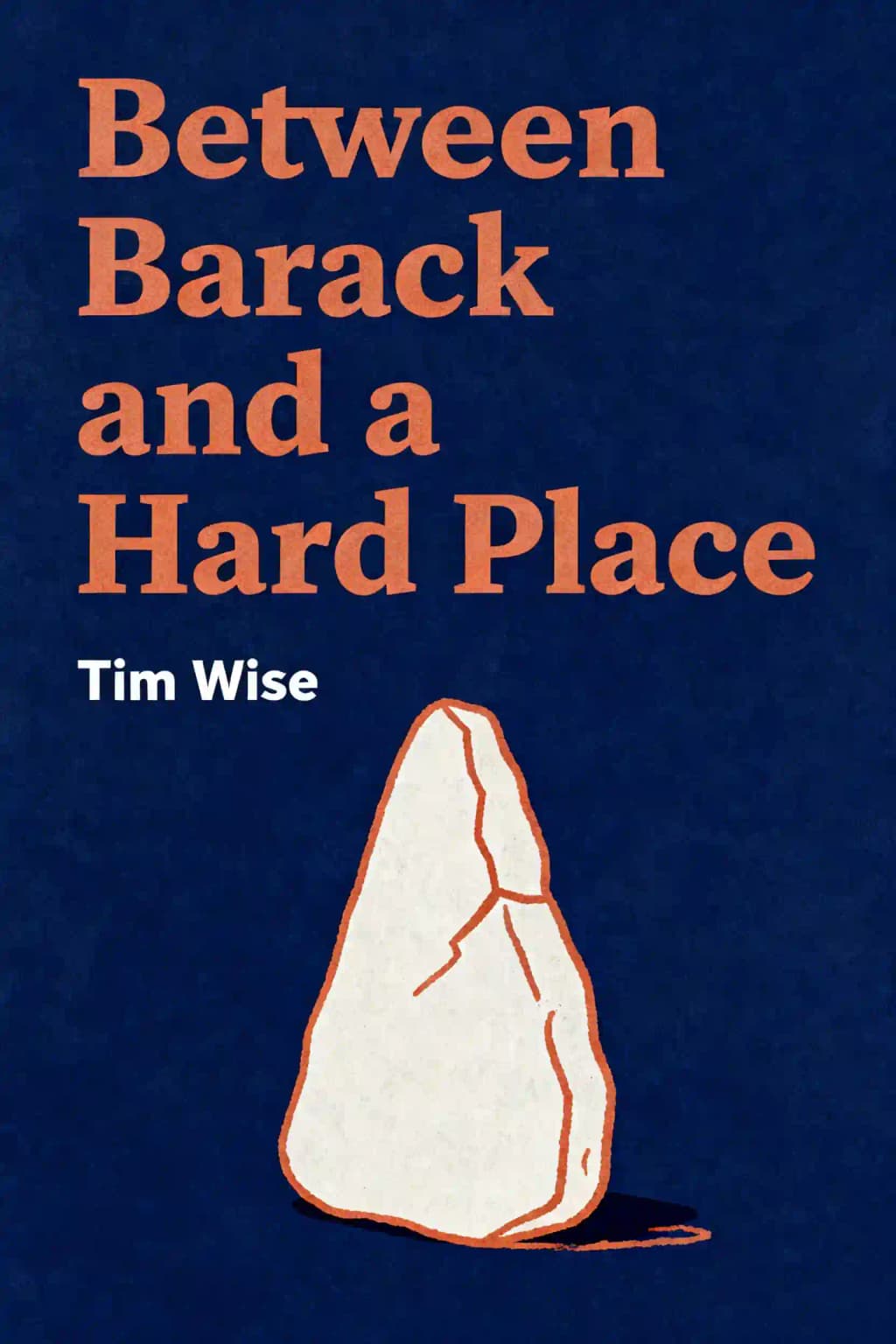
Between Barack and a Hard Place
Racism and White Denial in the Age of Obama
Overview of Between Barack and a Hard Place
Tim Wise's provocative analysis challenges post-Obama racial myths, introducing "Racism 2.0" - a subtle discrimination beneath surface progress. Hailed by Danny Glover as "extremely important" and compared to Thomas Paine's "Common Sense," it asks: Did Obama's election mask deeper racial realities?

Key Themes in Between Barack and a Hard Place
- post-racial myth
- systemic racial inequality
- white denial
- colorblind ideology
- institutionalized hiring discrimination
Quotes from Between Barack and a Hard Place
we have overcome.
Individual success stories have always existed alongside systemic oppression
opportunity hoarding
Housing discrimination remained one of America's most deeply rooted racial problems
we've moved beyond the whole idea of race and racial separation and unfairness.
Characters in Between Barack and a Hard Place
- Tim WiseAuthor and analyst of American racial dynamics
- Jeremiah WrightPastor whose controversy prompted a speech on race
- Madame C.J. WalkerHistorical figure used as a case study
About the Author
About the Author of Between Barack and a Hard Place
Timothy Jacob Wise, author of Between Barack and a Hard Place, is a prominent anti-racism educator and bestselling writer whose work examines systemic inequities through the lens of whiteness and privilege.
A Nashville native with a political science degree from Tulane University, Wise’s activism began in college during the 1980s anti-apartheid movement, later evolving into decades of anti-racist advocacy through lectures at over 1,000 institutions, corporate trainings, and media commentary. His analysis in Between Barack and a Hard Place critiques post-racial narratives amid Obama’s presidency, tying themes of structural bias to his earlier works like White Like Me and Affirmative Action: Racial Preference in Black and White.
Wise’s insights, featured on CNN, NPR, and PBS, stem from 25+ years consulting for educational, medical, and legal institutions. His Speak Out podcast and documentary White Like Me—cited in the National Museum of African American History and Culture—amplify his critiques of colorblind rhetoric. Recognized by Utne Reader as one of “25 Visionaries Changing the World,” Wise’s books are taught in universities nationwide, with his frameworks adopted by activists and educators addressing contemporary racial justice movements.
Download Summary of Between Barack and a Hard Place
Get the Between Barack and a Hard Place summary as a free PDF or EPUB. Print it or read offline anytime.
FAQs About This Book
Between Barack and a Hard Place analyzes post-Obama America’s racial paradox, arguing that Barack Obama’s presidency exposed enduring systemic racism despite claims of a "post-racial" society. Tim Wise critiques white denial of structural inequities and examines how symbolic racial progress masks persistent discrimination in housing, education, and criminal justice. The book challenges readers to confront unconscious biases perpetuating racial hierarchies.
This book is essential for educators, activists, and readers exploring modern racism, white privilege, and political narratives about racial progress. It’s particularly relevant for those studying intersectional social justice, anti-racism frameworks, or the legacy of Obama-era race relations. Wise’s blend of statistical analysis and cultural critique appeals to both academic and general audiences.
Yes – the book received acclaim for its unflinching analysis of "colorblind" racism and its impact on policy debates. Utne Reader named Wise a leading visionary for his ability to connect historical patterns to contemporary racial dynamics, making this a foundational text for understanding 21st-century race relations.
- Systemic Racism: Documents how housing redlining, mass incarceration, and wealth gaps disprove post-racial claims
- Symbolic vs. Substantive Change: Contrasts Obama’s symbolic significance with unchanged racial inequities
- White Denial: Analyzes psychological resistance to acknowledging white privilege
Wise argues Obama’s election intensified white America’s comfort with symbolic gestures over structural change. The book examines how conservatives weaponized "post-racial" rhetoric to undermine affirmative action and civil rights advocacy during his administration.
Some conservative critics dismiss Wise’s arguments as overly confrontational, while others note the book focuses more on diagnosis than policy solutions. However, scholars praise its rigorous documentation of institutional racism’s post-Obama persistence.
While White Like Me is a memoir exploring Wise’s personal journey confronting white privilege, Between Barack adopts a sociopolitical lens to deconstruct systemic racism in the Obama era. Both books emphasize intersectionality but differ in narrative approach.
Absolutely – its analysis of racial codewords in politics and media remains relevant for decoding modern debates about critical race theory, police reform, and voting rights restrictions. Wise’s framework helps contextualize 2020s racial reckonings.
Wise traces patterns from slavery and Jim Crow to modern predatory lending and school segregation, demonstrating how systemic racism evolves. He contrasts post-Civil Rights Era progress myths with data showing entrenched disparities.
It dissects how white Americans often misinterpret Obama’s success as proof of equal opportunity, ignoring accumulated advantages in generational wealth, education access, and employment networks. Wise provides statistical evidence of ongoing racialized outcomes.
- Recognize "colorblind" rhetoric as a barrier to equity
- Advocate for race-conscious policies in workplaces/schools
- Challenge media narratives framing racism as isolated incidents
Wise’s analysis foreshadowed BLM’s emergence by explaining why symbolic achievements don’t prevent racial violence or economic oppression. The book provides historical context for understanding systemic drivers of 21st-century protests.