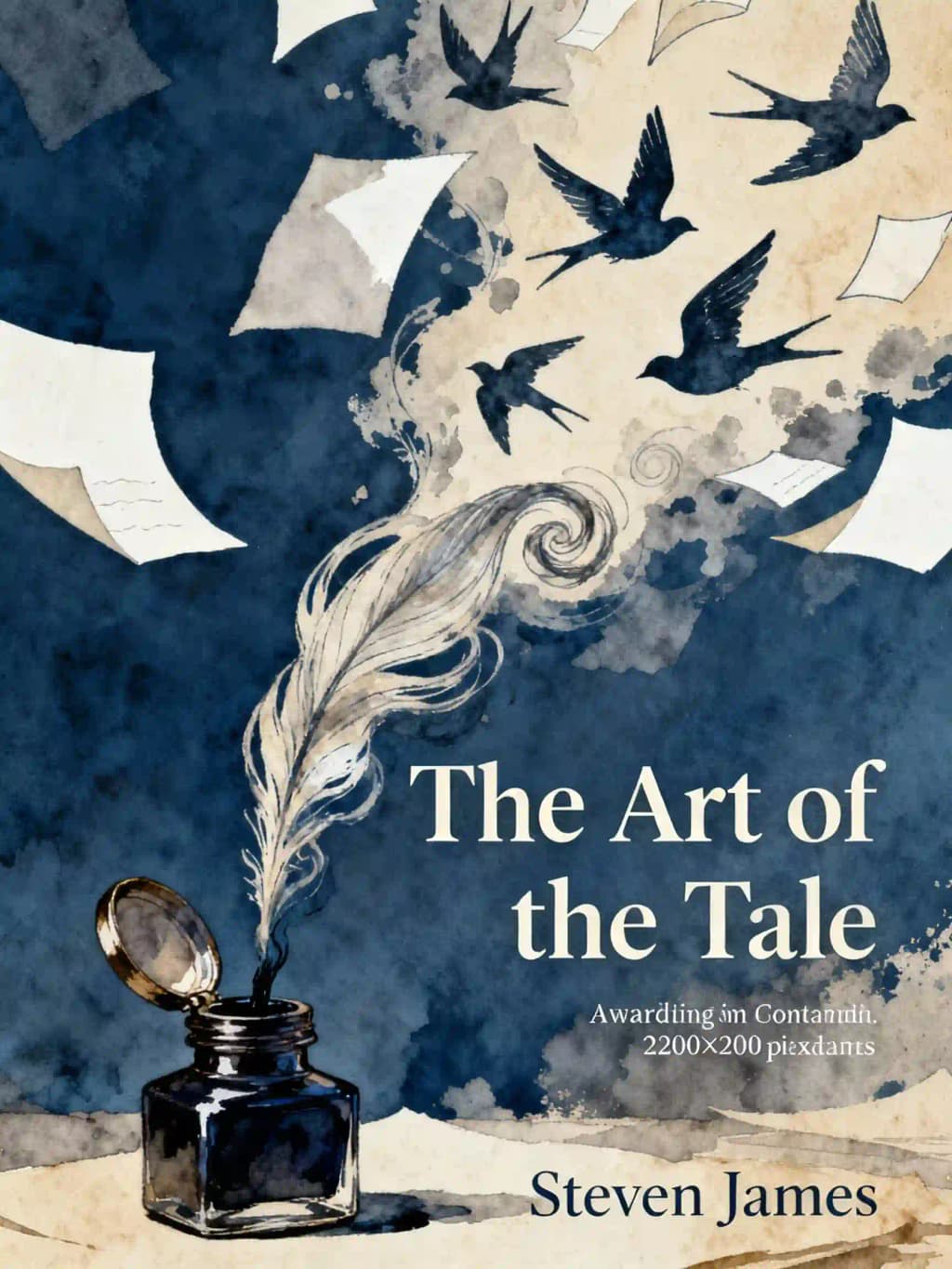
The art of the tale
an international anthology of short stories, 1945-1985
Overview of The art of the tale
In "The Art of the Tale," master storytellers James and Morrisey reveal the six elements that transform ordinary communication into unforgettable narratives. Winner of the 2023 Storytelling World Award, it's the book university speech teachers call "the most practical guide to storytelling" in decades.

Key Themes in The art of the tale
- narrative structure
- emotional resonance
- corporate storytelling
- persuasive communication
- experiential learning
Quotes from The art of the tale
Story is a yearning meeting an obstacle.
Listeners remember illustrations longer than outlines.
Information alone doesn't transform us.
Stories don't just touch heads-they change lives.
Characters in The art of the tale
- Steven JamesAuthor and expert on storytelling techniques
- Tom MorriseyCo-author of The Art of the Tale
- Robert Olen ButlerPulitzer Prize-winner who defines story elements
About the Author
About the Author of The art of the tale
Steven James, bestselling author of The Art of the Tale, is a master storyteller and award-winning novelist renowned for crafting gripping psychological thrillers. With a master’s degree in storytelling, James merges decades of narrative expertise with insights from his global speaking engagements and popular podcast The Story Blender, where he interviews leading writers. His work often explores themes of suspense, moral complexity, and human psychology, reflecting his background in teaching creative communication.
James’s critically acclaimed Patrick Bowers Files series, including The Queen and The Bishop—both Christy Award winners—has solidified his reputation in the thriller genre. His standalone novels like Synapse and Broker of Lies further showcase his innovative storytelling.
Inducted into the Christy Award Hall of Fame in 2020, James’s books have collectively sold over 1 million copies worldwide, blending meticulous research with page-turning pacing.
Download Summary of The art of the tale
Get the The art of the tale summary as a free PDF or EPUB. Print it or read offline anytime.
FAQs About This Book
The Art of the Tale teaches how storytelling transforms public speaking, offering techniques to engage audiences through tailored narratives. Co-authored by Steven James and Tom Morrisey, it emphasizes adapting stories to listeners, avoiding memorization, and embracing unique delivery styles. The book, a 2023 Storytelling World Award winner, blends practical advice with insights on crafting memorable messages for executives, educators, and leaders.
This book is ideal for professionals, speakers, educators, and leaders seeking to enhance communication through storytelling. It’s designed for anyone—from novices to seasoned presenters—who wants to connect deeply with audiences, refine their narrative skills, or inspire teams. Steven James and Tom Morrisey address diverse settings, including boardrooms, classrooms, and auditoriums.
Yes, particularly for its actionable strategies on audience engagement and confidence-building. The award-winning guide provides timeless storytelling principles, endorsed by experts as “the most practical book on speaking.” Its focus on authenticity over rote memorization makes it valuable for personal and professional growth.
Key principles include:
- Avoid memorizing stories; focus on organic delivery.
- Never repeat the same story identically.
- Adapt narratives to audience expectations.
- Embrace your unique storytelling voice.
The authors stress that storytelling is about influence, not just information transfer.
James and Morrisey advise tailoring stories by assessing listeners’ needs, cultural context, and goals. The book teaches techniques to modify pacing, tone, and examples—whether addressing executives, students, or large crowds—to ensure relevance and emotional resonance.
“Communication is not simply the transfer of information. It is influence.” This encapsulates the book’s core philosophy: storytelling’s power lies in shaping perspectives, not just conveying facts.
Absolutely. The book provides frameworks for transforming dry data into compelling narratives, ideal for pitches, reports, or team meetings. It emphasizes clarity, emotional connection, and structuring messages around audience takeaways—critical for corporate settings.
While praised for practicality, some may find its focus on live storytelling less applicable to digital formats like webinars. Additionally, the lack of industry-specific templates might require readers to adapt concepts to their niches.
Unlike formulaic guides, this book prioritizes storytelling over rigid structures. It’s often grouped with classics like Talk Like TED but stands out for its emphasis on narrative flexibility and psychological engagement.
Leaders learn to:
- Use stories to articulate vision and values.
- Foster trust through relatable anecdotes.
- Navigate organizational change with narrative empathy.
The authors argue that leadership success hinges on persuasive, story-driven communication.
In an era of information overload, its focus on human-centric storytelling remains vital. The principles apply to virtual presentations, AI-assisted content, and hybrid events, ensuring adaptability across evolving communication platforms.
The book encourages reframing nervousness as excitement and focusing on audience connection over perfection. Tips include rehearsing flexibly (not verbatim) and using personal anecdotes to build authenticity and confidence.