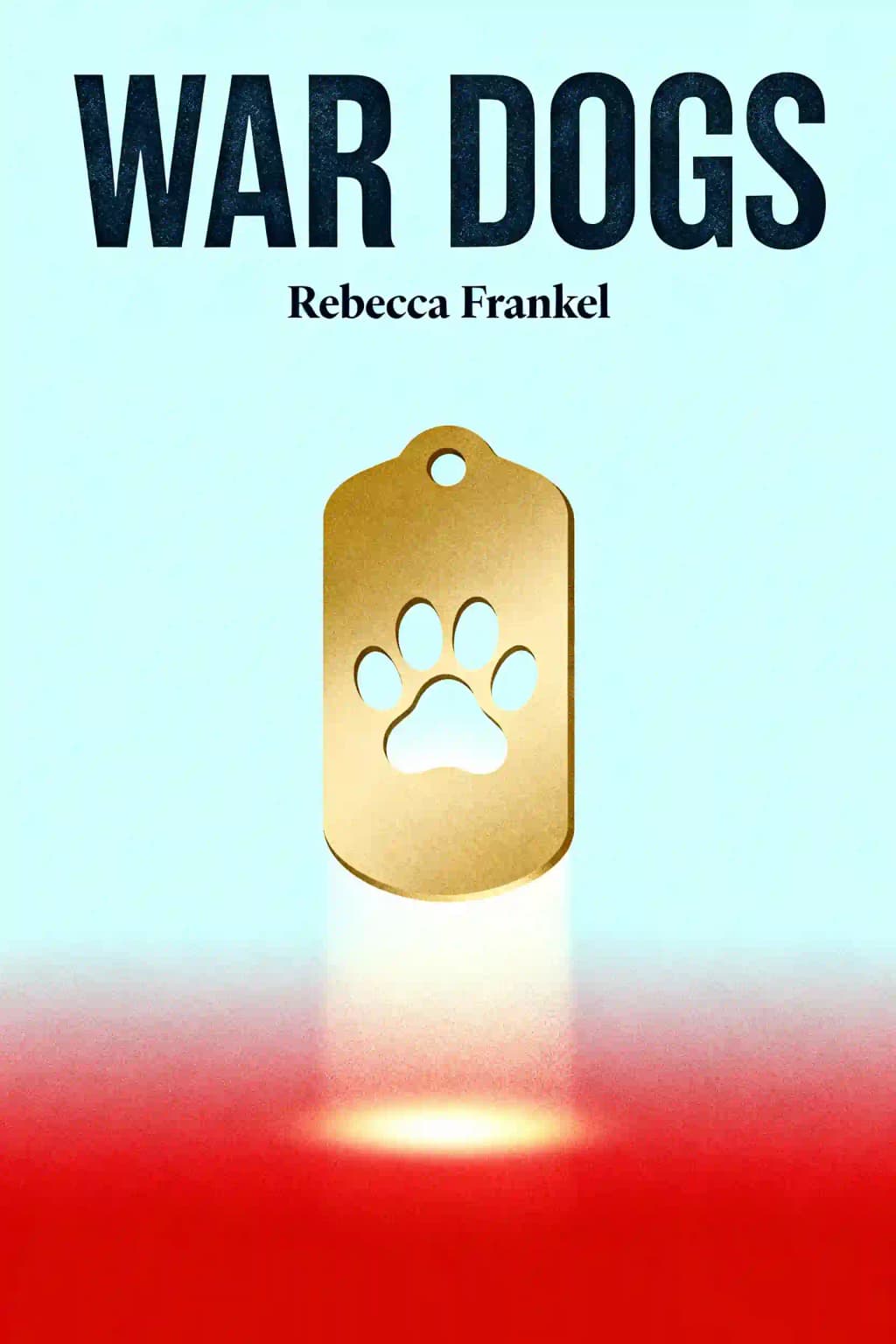
War dogs don't just serve - they save. Rebecca Frankel's bestseller reveals the unbreakable bonds between military handlers and canines who detect IEDs with uncanny precision. "A tremendous gift," says handler Mike Dowling, chronicling heroes who've transformed modern warfare and healed invisible wounds.
Rebecca Frankel is the New York Times bestselling author of War Dogs: Tales of Canine Heroism, History, and Love, a compelling exploration of military working dogs and their enduring bond with handlers.
A seasoned journalist and former executive editor of Foreign Policy, Frankel combines rigorous historical research with narrative flair to illuminate themes of loyalty, courage, and humanity in war. Her expertise in military canine stories emerged through years of reporting, including a viral blog series that sparked national interest in combat dogs.
She is also the author of Into the Forest: A Holocaust Story of Survival, Triumph, and Love, which chronicles her family’s wartime resilience.
Frankel’s work has been featured on C-SPAN and in major media outlets, cementing her reputation as a meticulous chronicler of untold historical narratives. War Dogs has been widely praised for its vivid storytelling and remains a cornerstone text in military history and animal-human connection discourse.
War Dogs explores the profound bond between military working dogs (MWDs) and their handlers, blending historical accounts of canine use in warfare with modern stories from conflicts in Iraq and Afghanistan. Rebecca Frankel highlights dogs’ roles in detecting explosives, saving lives, and providing emotional support, while examining the ethical complexities of their training and post-deployment separation.
This book is ideal for dog lovers, military history enthusiasts, and readers interested in human-animal relationships. It appeals to those seeking visceral narratives of loyalty in combat and insights into institutional military dog programs.
Yes. Frankel’s gripping storytelling balances historical research with emotional depth, offering a poignant tribute to MWDs’ bravery. While critiques note outdated dominance-based training methods, the book’s focus on the human-canine bond resonates powerfully.
Frankel reveals a contradiction: handlers often deny emotional attachment professionally but describe deep mutual trust and love. Dogs like Rex, a Belgian Malinois, exemplify unwavering loyalty, risking their lives to detect IEDs and protect units.
German Shepherds, Belgian Malinois, and Labrador Retrievers dominate MWD roles. Malinois are prized for agility in combat, while Labs excel in detection due to their keen sense of smell.
Yes. Frankel critiques the military’s practice of separating dogs from handlers after tours, a policy many soldiers describe as emotionally devastating. Some advocate for retirement reunions, but logistical hurdles persist.
The book traces war dogs from World War II scout roles to modern counterinsurgency missions. Frankel highlights how their value in detecting buried explosives revived their use post-9/11 after a mid-20th-century decline.
Frankel acknowledges critiques of force-based methods rooted in dominance theory, contrasting them with civilian practices like clicker training. However, she emphasizes the handlers’ dedication to their dogs’ well-being despite institutional constraints.
MWDs provide normalization and comfort in war zones, reducing PTSD symptoms. Handlers recount how dogs’ presence eased stress, with one soldier noting, “You can’t dwell on chaos when your dog needs you”.
Frankel details high-stakes operations, including a 2011 mission where a dog named Cairo helped SEAL Team Six locate Osama bin Laden. Other stories highlight dogs alerting troops to hidden explosives, saving entire platoons.
Unlike technical manuals, Frankel prioritizes narrative-driven accounts of individual dogs and handlers. It complements works like Cairo by focusing on the emotional rather than tactical dimensions of MWD service.
The book underscores universal themes of trust and communication in dog-human bonds. Frankel cites experts like Alexandra Horowitz to show how military and civilian training both rely on understanding canine behavior.
Siente el libro a través de la voz del autor
Convierte el conocimiento en ideas atractivas y llenas de ejemplos
Captura ideas clave en un instante para un aprendizaje rápido
Disfruta el libro de una manera divertida y atractiva
'The dog game must play its part in this thing.'
Dogs were superior bomb detectors, boldly claiming one dog could outperform ten body imaging machines.
The rest were euthanized or abandoned-a betrayal that haunts Vietnam handlers like Ron Aiello to this day.
The only weapon system [the military] ever devised to save lives.
This institutional amnesia forced the military to repeatedly relearn painful lessons about the value of war dogs.
Desglosa las ideas clave de War Dogs en puntos fáciles de entender para comprender cómo los equipos innovadores crean, colaboran y crecen.
Destila War Dogs en pistas de memoria rápidas que resaltan los principios clave de franqueza, trabajo en equipo y resiliencia creativa.

Experimenta War Dogs a través de narraciones vívidas que convierten las lecciones de innovación en momentos que recordarás y aplicarás.
Pregunta lo que quieras, elige la voz y co-crea ideas que realmente resuenen contigo.

Creado por exalumnos de la Universidad de Columbia en San Francisco
"Instead of endless scrolling, I just hit play on BeFreed. It saves me so much time."
"I never knew where to start with nonfiction—BeFreed’s book lists turned into podcasts gave me a clear path."
"Perfect balance between learning and entertainment. Finished ‘Thinking, Fast and Slow’ on my commute this week."
"Crazy how much I learned while walking the dog. BeFreed = small habits → big gains."
"Reading used to feel like a chore. Now it’s just part of my lifestyle."
"Feels effortless compared to reading. I’ve finished 6 books this month already."
"BeFreed turned my guilty doomscrolling into something that feels productive and inspiring."
"BeFreed turned my commute into learning time. 20-min podcasts are perfect for finishing books I never had time for."
"BeFreed replaced my podcast queue. Imagine Spotify for books — that’s it. 🙌"
"It is great for me to learn something from the book without reading it."
"The themed book list podcasts help me connect ideas across authors—like a guided audio journey."
"Makes me feel smarter every time before going to work"
Creado por exalumnos de la Universidad de Columbia en San Francisco

Obtén el resumen de War Dogs como PDF o EPUB gratis. Imprímelo o léelo sin conexión en cualquier momento.
When Navy SEAL Team Six raided Osama bin Laden's compound in 2011, they weren't alone. A Belgian Malinois named Cairo accompanied them, sparking public fascination with military working dogs. This wasn't the first time dogs served in combat - their history with American forces dates back to Pearl Harbor, when socialite Arlene Erlanger declared "The dog game must play its part in this thing," launching Dogs for Defense. Within hours of the attack, she convinced the initially reluctant War Department to incorporate canines into military operations. What began as a request for 200 sentry dogs expanded to 125,000 for various branches. In March 2004, Staff Sergeant Sean Lulofs deployed to Iraq with his Belgian Malinois Aaslan. On their first morning at Camp Baharia, Aaslan detected an IED disguised as a coffee can - immediately demonstrating their life-saving potential. By late 2003, IEDs had become insurgents' primary weapon, prompting General James Mattis to investigate using dogs to combat this threat. The Marine Corps deployed approximately 30 dog teams to Iraq - the first such deployment since Vietnam. This marked a profound shift in how military dogs were used. Christopher Columbus once brought dogs to the Americas as "the most fearsome weapon of all," unleashing them against indigenous populations. By contrast, modern military working dogs primarily save lives through detection work. In spring 2010, Staff Sergeant Justin Kitts and his dog Dyngo were ambushed in Afghanistan. Taking cover under enemy fire, Kitts sent Dyngo ahead to scout an escape route. The dog's behavior changed dramatically when he detected two massive IEDs - yellow jugs with 50 pounds of explosives each - strategically placed to trap the patrol. Dyngo's skills had saved the entire unit from a deadly Taliban ambush.