Year Without Pants
WordPress. com and the Future of Work
Resumen de Year Without Pants
Discover how WordPress.com revolutionized work culture in Scott Berkun's insider account of a company with no pants, no offices, and no email. Matt Mullenweg's remote-work experiment became the blueprint for today's distributed workforce. Could your team thrive without meetings?
Temas clave en Year Without Pants
- distributed work culture
- open source philosophy
- asynchronous communication
- radical transparency
- meritocratic management
Citas de Year Without Pants
Making everyone work in support forces all employees to take customers seriously.
Results trump traditions.
Transparency became paramount.
Respect and influence were earned through meaningful contributions.
Users primarily care about solving their immediate problems effectively.
Personajes en Year Without Pants
- Scott BerkunAuthor and team leader at Automattic
- Matt MullenwegFounder of WordPress and Automattic
- Mike LittleProgrammer and WordPress co-founder
- Hanni RossAutomattic trainer for the author
- Michel ValdrighiOriginal developer of Cafelog
Sobre el Autor
Sobre el autor de Year Without Pants
Scott Berkun, bestselling author of The Year Without Pants: WordPress.com and the Future of Work, is a renowned authority on leadership, innovation, and workplace culture. A former Microsoft program manager who contributed to Internet Explorer and Windows, Berkun later led a groundbreaking remote engineering team at WordPress.com—an experience that directly inspired this business management classic exploring modern work dynamics. His expertise spans UX design, creative thinking, and organizational psychology, honed through roles as a corporate evangelist, University of Washington instructor, and keynote speaker at global conferences.
Berkun’s other influential works include The Myths of Innovation (Jolt Award winner) and Confessions of a Public Speaker, both frequently featured in academic curricula and corporate training programs.
A Queens, New York native with degrees in computer science and philosophy from Carnegie Mellon University, his insights regularly appear in The New York Times, The Washington Post, and on NPR. Berkun maintains an active thought leadership platform through his popular blog and newsletter at scottberkun.com. The Year Without Pants has been translated into 12 languages and remains a staple in discussions about remote team management, cited by Fortune 500 companies and tech startups alike.
Descargar resumen de Year Without Pants
Obtén el resumen de Year Without Pants como PDF o EPUB gratis. Imprímelo o léelo sin conexión en cualquier momento.
Preguntas Frecuentes Sobre Este Libro
The Year Without Pants explores Scott Berkun’s 18-month experience leading a remote engineering team at WordPress.com, challenging traditional workplace norms. It examines themes like remote collaboration, eliminating rigid hierarchies, and redefining productivity in digital-first environments. The book blends memoir-style storytelling with insights on distributed workforces, minimal processes, and fostering creativity without physical offices.
Leaders, managers, and remote workers seeking strategies for decentralized teams will find this book valuable. It’s also relevant for entrepreneurs curious about unconventional workplace models or readers interested in tech-industry dynamics. Berkun’s candid style appeals to professionals exploring innovation in organizational design.
Yes—the book holds a 4.1/5 Goodreads rating, with praise for its humor, actionable leadership lessons, and insider view of Automattic’s culture. Critics highlight its honest take on remote work challenges and its relevance to modern distributed teams, though some note pacing issues in later chapters.
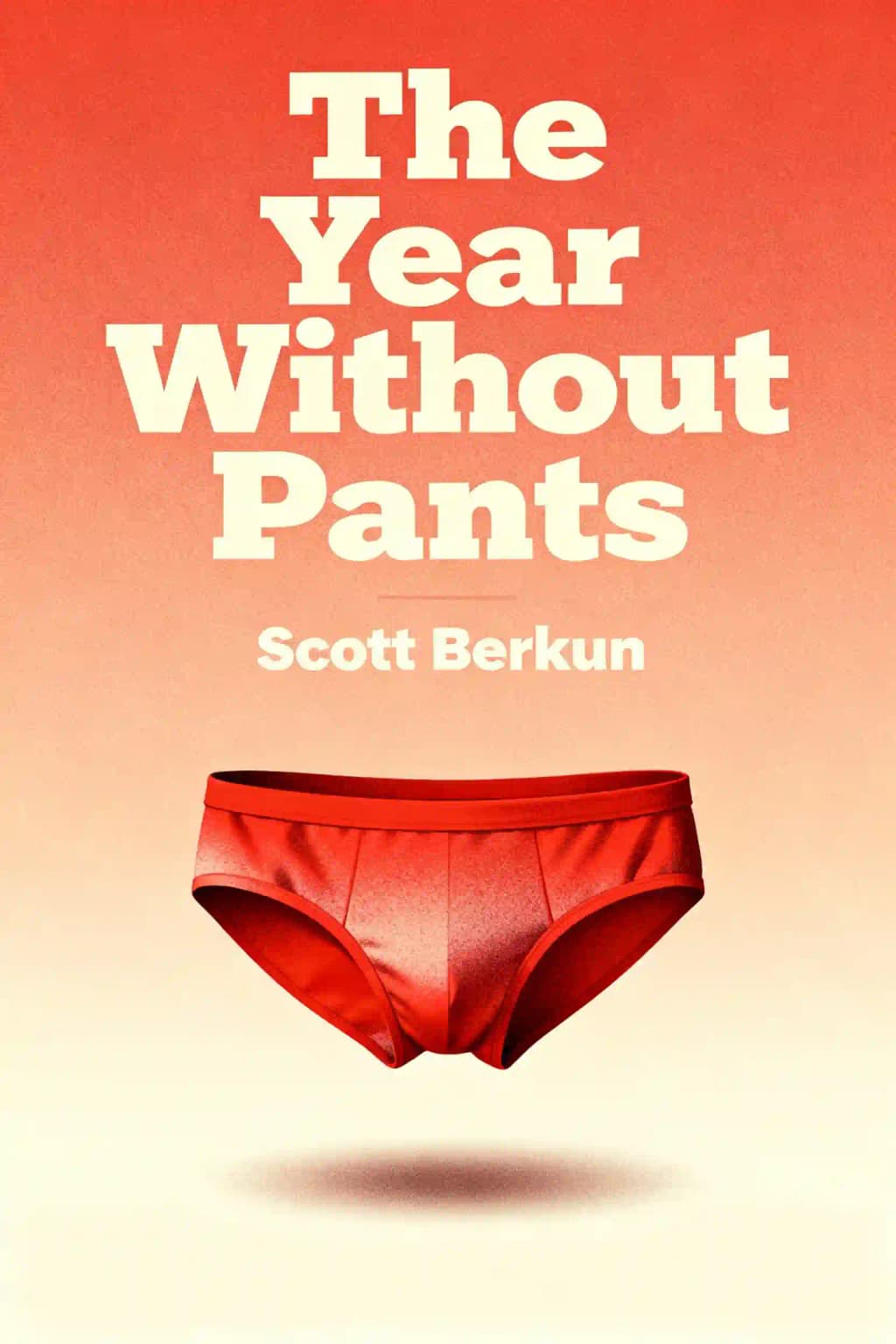
The title references WordPress.com’s remote-work culture, where employees often worked without formal attire. It’s also a metaphor for stripping away outdated workplace assumptions, like rigid schedules or dress codes, to focus on results over rituals.
- Remote work efficiency: Teams can thrive without physical offices through trust and clear communication.
- Minimal process: Automattic avoided excessive meetings and email, relying on asynchronous tools.
- Results over hours: Productivity was measured by output, not time spent.
Unlike theoretical management guides, Berkun provides a firsthand account of leading a remote team at scale. It contrasts with titles like Remote: Office Not Required by offering narrative-driven lessons rather than prescriptive advice.
Some reviewers found the second half overly descriptive of Automattic’s workflows, with less analysis than early chapters. Others noted the 2013 context feels dated for readers familiar with post-pandemic remote work norms.
- “Work isn’t a place you go—it’s a thing you do.”
- “The best teams argue about ideas, not hierarchies.”
- “Remote work amplifies competence and exposes incompetence.”
Berkun’s prior roles at Microsoft and as a management consultant ground his insights. His philosophy/CS education enables nuanced critiques of workplace traditions, while his humor balances technical depth with accessibility.
As hybrid work evolves, Berkun’s lessons on asynchronous collaboration, measuring output, and building remote trust remain vital. The book prefigured trends like results-oriented work environments (ROWE) and distributed team tools.
- Hiring for autonomy: Prioritize self-directed problem-solvers.
- Default to transparency: Use public internal blogs for updates.
- Prototype rapidly: Launch lightweight product tests instead of endless planning.
While The Myths of Innovation explores creativity theory, this book offers a practical case study. It’s more narrative-driven than Confessions of a Public Speaker, blending memoir with actionable management insights.