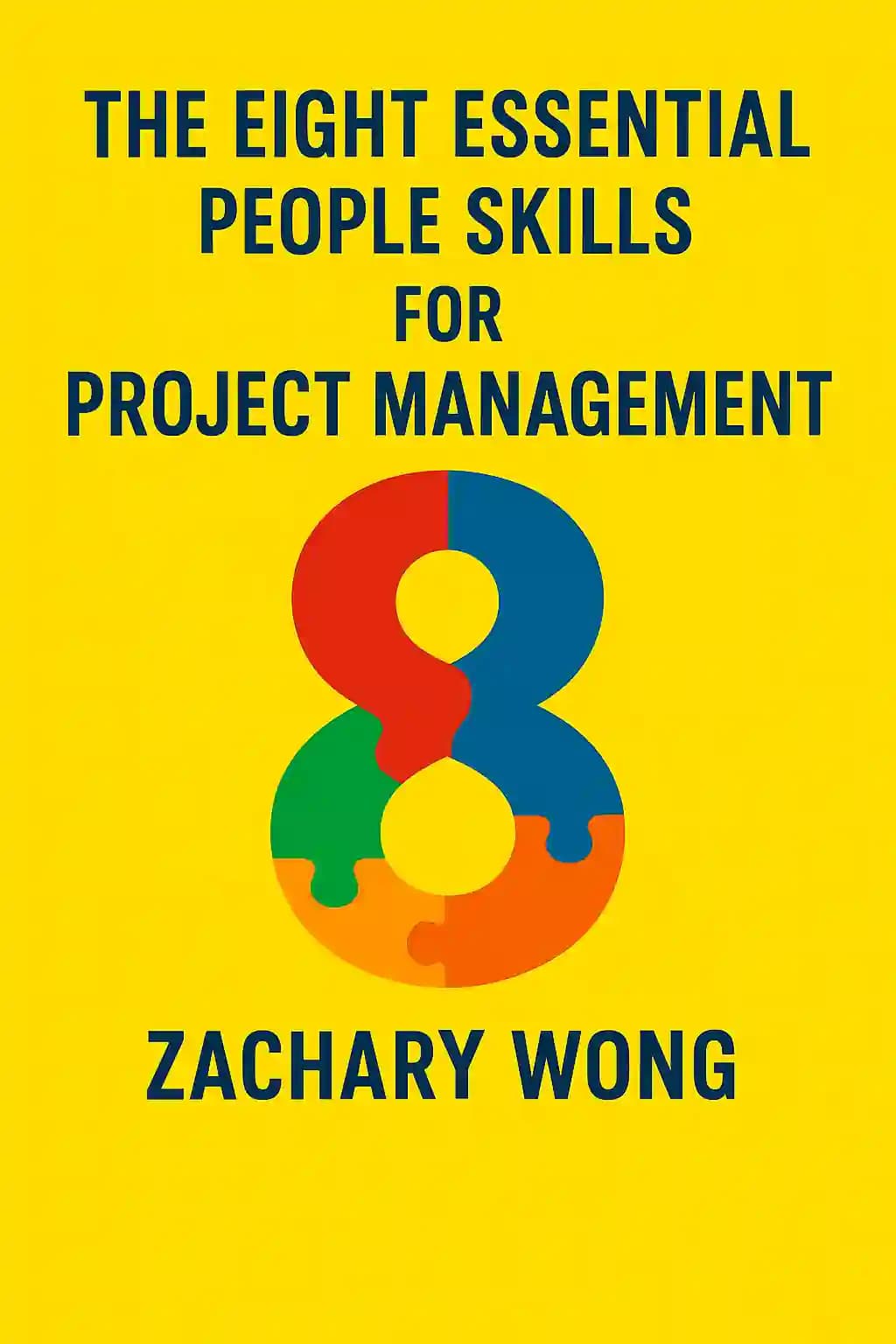
Struggling with project team dynamics? UC Berkeley professor Zachary Wong's groundbreaking guide reveals eight essential people skills that transformed modern workplace leadership. His revolutionary "Wedge" technique helps diagnose people problems instantly - a must-have for navigating today's educated, tech-savvy workforce.
Zachary Wong, author of The Eight Essential People Skills for Project Management, is a renowned project management expert, adjunct professor at UC Davis and UC Berkeley Extension, and Fortune 100 consultant with over 30 years of experience leading teams. Specializing in human behavior and organizational dynamics, his book distills practical strategies for resolving workplace conflicts, boosting team performance, and fostering leadership in project-driven environments.
Wong’s insights stem from his roles at Chevron Energy Technology Company, where he managed 200+ projects, and his academic work teaching human factors and team dynamics. He is also the acclaimed author of Human Factors in Project Management, a foundational text used in university courses and corporate training programs.
Wong’s problem-solving frameworks have been adopted by tech firms, healthcare organizations, and government agencies to improve collaboration and risk management. His books blend research-backed methodologies with real-world case studies from his consulting practice, emphasizing actionable tools over theoretical concepts. A sought-after speaker, Wong’s work has influenced project management curricula worldwide, with translations reaching professionals across 15 countries.
The Eight Essential People Skills for Project Management by Zachary Wong provides actionable strategies to address interpersonal challenges in project leadership. It focuses on diagnosing employee attitudes, resolving conflicts, motivating teams, and managing difficult stakeholders. The book emphasizes balancing authority with empathy, offering frameworks like the Three-Space Model to improve team performance and inclusion.
This book is ideal for project managers, team leaders, and professionals overseeing diverse teams. It’s especially valuable for those seeking solutions to common workplace issues like poor performance, resistance to change, or communication breakdowns. Consultants and HR professionals will also benefit from its practical, psychology-based approaches.
Yes, the book is praised for its hands-on, no-nonsense advice tailored to modern, non-hierarchical workplaces. It combines decades of real-world experience with tools to boost accountability, reduce risk aversion, and foster collaboration. Readers appreciate its direct applicability to daily management challenges.
The skills include diagnosing employee attitudes, resolving conflicts, reducing dissatisfaction, improving performance, motivating teams, managing difficult bosses, fostering harmony, and ensuring accountability. These are designed to help leaders navigate complex interpersonal dynamics while maintaining productivity.
Wong shifts focus from technical processes to human-centric strategies. Unlike traditional methods, his Three-Space Model integrates psychology, organizational behavior, and leadership to address "people problems" directly. This approach emphasizes adaptability over rigid hierarchies, aligning with modern workplace trends.
The Three-Space Model combines human psychology, organizational behaviors, and supervisory skills to create cohesive teams. It provides a framework for motivating diverse workforces, facilitating decisions, and resolving conflicts—prioritizing emotional intelligence alongside task execution.
Wong offers tactics like reframing negative behaviors, setting clear expectations, and using constructive feedback loops. For example, the principle "Be friendly, not friends, at work" helps maintain professionalism while building trust. Case studies illustrate turning around poor performers without damaging morale.
Yes, it includes strategies for aligning with supervisors’ priorities, communicating risks effectively, and navigating ambiguous directives. Techniques like proactive status updates and solution-oriented dialogue help reduce friction with demanding superiors.
The book draws from Wong’s 30+ years leading 250+ teams at Fortune 100 companies. Examples include resolving interdepartmental conflicts in energy projects, improving safety compliance through intrinsic motivation, and restructuring teams to overcome resistance to agile methodologies.
While both focus on interpersonal dynamics, Human Factors explores broader organizational systems, whereas Eight Essential Skills offers targeted techniques for day-to-day leadership. The latter is more tactical, with immediate steps for common scenarios like absenteeism or low engagement.
Some reviewers note the strategies assume a baseline of managerial authority, which may not align with flat organizational structures. However, most praise its practicality, with one calling it "required reading for project leaders".
The full book takes approximately 6–8 hours. For a concise overview, the Blinkist summary distills key insights into a 15-minute read, covering core concepts like conflict resolution frameworks and motivation techniques.
Siente el libro a través de la voz del autor
Convierte el conocimiento en ideas atractivas y llenas de ejemplos
Captura ideas clave en un instante para un aprendizaje rápido
Disfruta el libro de una manera divertida y atractiva
The C in CEO stands for culture.
Process is the most powerful lever here.
Hats are just costumes for roles; they cover your head, not your heart.
The toughest challenge for team leaders isn't mastering new responsibilities but maintaining authenticity.
Without ongoing effort, teams naturally default to a self-centered me > we state.
Desglosa las ideas clave de The Eight Essential People Skills for Project Management en puntos fáciles de entender para comprender cómo los equipos innovadores crean, colaboran y crecen.
Destila The Eight Essential People Skills for Project Management en pistas de memoria rápidas que resaltan los principios clave de franqueza, trabajo en equipo y resiliencia creativa.

Experimenta The Eight Essential People Skills for Project Management a través de narraciones vívidas que convierten las lecciones de innovación en momentos que recordarás y aplicarás.
Pregunta lo que quieras, elige la voz y co-crea ideas que realmente resuenen contigo.

Creado por exalumnos de la Universidad de Columbia en San Francisco
"Instead of endless scrolling, I just hit play on BeFreed. It saves me so much time."
"I never knew where to start with nonfiction—BeFreed’s book lists turned into podcasts gave me a clear path."
"Perfect balance between learning and entertainment. Finished ‘Thinking, Fast and Slow’ on my commute this week."
"Crazy how much I learned while walking the dog. BeFreed = small habits → big gains."
"Reading used to feel like a chore. Now it’s just part of my lifestyle."
"Feels effortless compared to reading. I’ve finished 6 books this month already."
"BeFreed turned my guilty doomscrolling into something that feels productive and inspiring."
"BeFreed turned my commute into learning time. 20-min podcasts are perfect for finishing books I never had time for."
"BeFreed replaced my podcast queue. Imagine Spotify for books — that’s it. 🙌"
"It is great for me to learn something from the book without reading it."
"The themed book list podcasts help me connect ideas across authors—like a guided audio journey."
"Makes me feel smarter every time before going to work"
Creado por exalumnos de la Universidad de Columbia en San Francisco

Obtén el resumen de The Eight Essential People Skills for Project Management como PDF o EPUB gratis. Imprímelo o léelo sin conexión en cualquier momento.
When Satya Nadella took over Microsoft in 2014, he didn't immediately focus on products or profits-he prioritized people. "The C in CEO stands for culture," he declared, transforming Microsoft's competitive environment into one of empathy and collaboration. This people-first approach tripled the company's market value within five years. In "The Eight Essential People Skills for Project Management," Zachary Wong argues that technical expertise alone won't make you successful-your ability to understand and influence human behavior will determine your ultimate impact. In today's flatter organizations with educated workers seeking autonomy and constant demands for innovation, people skills aren't optional extras-they're essential survival tools for modern project leaders. Drawing from decades of research and feedback from hundreds of team leaders across sectors, Wong offers a practical toolkit for navigating the most challenging aspect of project management: the human element.