Capítulo 1
The Paradox of Rest: Finding Peace in a Busy World
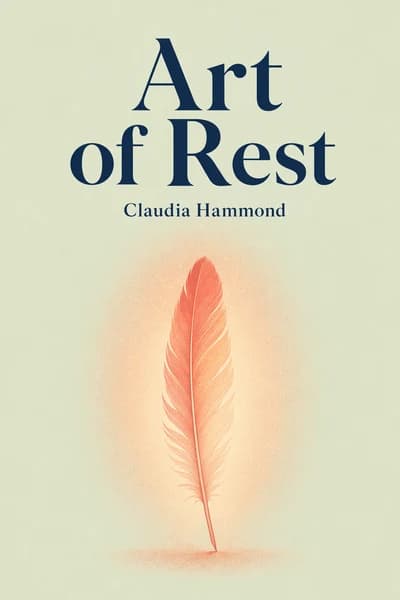
Have you ever felt guilty for taking a break? You're not alone. In a world that glorifies busyness as a badge of honor, rest has become a luxury many of us feel we can't afford. Yet our bodies and minds are screaming for it. When BBC Radio conducted "The Rest Test" with 18,000 participants across 135 countries, the results were striking: two-thirds of people worldwide want more rest, with women and caregivers getting the least. Even more surprising was what the study revealed about which activities truly restore us. Claudia Hammond's "The Art of Rest" emerged from this groundbreaking research, becoming a Sunday Times bestseller and transforming how we think about downtime. The book resonated deeply during the pandemic when many were forced to reconsider their relationship with rest, and has been embraced by wellness advocates like Arianna Huffington, who called it "essential reading for anyone who feels overwhelmed by the demands of modern life."
Capítulo 2
Reading: The Ultimate Mental Escape
When was the last time you lost yourself in a good book? That delicious sensation of being transported to another world, where time seems to stand still and your own problems temporarily vanish? Reading topped The Rest Test as the most restful activity, and for good reason. Unlike television, which moves at its own pace, reading offers complete control. We can pause, re-read, or skip ahead, adjusting our speed to savor beautiful passages or skim boring sections.
This control creates what psychologist Victor Nell calls "ludic reading" (from Latin "I play") - a trance-like state where we're so absorbed that we forget our surroundings. For chronic pain sufferers, the most challenging and thought-provoking literature proves most effective at distracting from discomfort. The more intriguing the story, the less they notice their pain. Nell identified two types of readers: those who read to escape their world completely, and those who use stories about others' lives to reflect more deeply on their own experiences.
Neuroscience reveals why reading feels so restful. It engages multiple brain areas, including the default mode network typically active during mind wandering. This explains "mindless reading" - when our eyes move across the page while our minds drift elsewhere. Rather than being problematic, this mental wandering may be part of reading's restful quality, offering what Virginia Woolf celebrated as an opportunity to "exercise our own creative powers."
Reading also offers a unique social paradox - it allows escape from people while simultaneously providing companionship that can be engaged with or ignored at will. This special relationship with fictional characters can protect against loneliness. As Steinbeck noted, stories connect us through shared human experience. Research with older adults found those who read regularly felt less lonely regardless of whether they read newspapers or books. One housebound 86-year-old woman explained her lack of loneliness by pointing to her books: "I'm not alone. I have the whole world right here with me."
Capítulo 3
Nature's Restorative Power
Imagine standing at the edge of a vast forest, breathing in the earthy scent of soil and pine, listening to birds calling overhead. Something inside you relaxes almost immediately. This isn't just poetic fancy - it's backed by science. Being in nature ranked second in the Rest Test, offering a unique form of rest for city dwellers seeking escape from everyday pressures.
Our emotional state influences which environments we find most appealing. Studies show people in low moods often prefer natural settings over residential spaces. Many instinctively turn to nature for emotional regulation, taking park detours after difficult days without conscious thought. In Japan, "forest bathing" is considered therapeutic, though science struggles to precisely identify which aspects of nature create its calming effects.
Even viewing nature indirectly offers benefits. Roger Ulrich's famous 1984 study found gallbladder surgery patients with window views of trees needed fewer painkillers and left hospital earlier than those facing brick walls. Though this small study had limitations, a better-designed follow-up demonstrated that even photographs of nature reduced anxiety and painkiller requirements in heart surgery patients compared to abstract art or blank walls. Research shows that even micro-breaks of just forty seconds viewing images of greenery can improve attention and concentration compared to viewing urban scenes.
Nature's restful quality stems from its ability to help us put our daily worries in perspective. When we consider ourselves within the context of the natural world, we realize we're just one of countless creatures carrying on regardless of our personal problems. Nature writer Kathleen Jamie describes being absorbed in rescuing a moth from a tiny pool, only to stand up and be struck by the vastness of the landscape around her - a powerful shift in perspective from the minuscule to the immense. Philosopher Massimo Pigliucci uses a therapeutic slideshow that zooms progressively outward from his home to the universe, reminding himself that his worries are insignificant in the grand scheme.
This perspective shift is deeply therapeutic, allowing us to experience deeper reflection and eudaimonic happiness rather than just momentary pleasure. Nature also reminds us of time's passage while offering hope through renewal, as seen in places like Mount St. Helens where new life emerges from devastation.
Capítulo 4
Solitude: The Paradoxical Pleasure
"I want to be alone." Greta Garbo's famous line captures a sentiment many of us feel yet struggle to express. Despite evolving as social beings whose survival depended on cooperation, the Rest Test revealed that people find solitary activities most restful. Even extroverts rated time alone as more restful than social time. This contradiction stems from our need for balance - we crave meaningful connections but also require periods of solitude to restore ourselves.
Though we spend about 29% of our waking time alone, much of it isn't quality "me time" but rather stressful isolation during commutes or work. Research shows cortisol levels are typically higher when we're alone, especially if feeling lonely. The difference between beneficial solitude and harmful loneliness depends on whether we maintain a sense of connection - remembering our meaningful relationships even when physically apart. Loneliness stems from a perceived mismatch between desired and actual close friendships. Interestingly, Iowa State research found that having either fewer or more friends than one's personal ideal can increase loneliness, suggesting the opposite of loneliness might be, as musician Sean O'Hagan put it, "wanting some time alone."
Solitude profoundly impacts our sense of self. In extreme cases like solitary confinement, what begins as welcome relief can deteriorate into identity dissolution. Professor Craig Haney found prisoners in extended isolation experience cognitive decline and identity damage so severe some cannot reconstruct themselves. Yet chosen, limited solitude offers benefits - freedom from others' expectations allows authentic self-reflection. Research shows young adults who spend time alone demonstrate greater creativity, as solitude enables the mind to wander productively, process emotions, and make clearer decisions.
The critical difference between restorative solitude and painful loneliness is control. Choosing when and how to be alone transforms isolation into rejuvenation. Finding the sweet spot between rejuvenating solitude and painful isolation is the age-old challenge. Not everyone finds solitude restful - some ruminate on problems when alone, making them feel worse. Research with Greek schoolchildren showed they increasingly recognize solitude's benefits - peace, reflection, freedom from criticism - as they age. Teenagers spend about 25% of their time alone, with studies suggesting a "Goldilocks zone" of 25-45% of non-class time spent alone correlates with better psychological adjustment. This matches the average adult pattern, suggesting we intuitively seek the right balance of solitude.
Capítulo 5
Music: The Universal Soother
Once a month in Peckham, a group of bearded middle-aged men gather for "Vinyl Club" - their musical equivalent of a book club with strict rules. When the chosen record plays, no one speaks until the A side finishes, ensuring they truly immerse themselves in the music's redemptive powers rather than drifting into nostalgic conversation. This ritual demonstrates how people of all ages use music for psychological restoration, with research showing it's one of the most common self-care strategies among young people.
The key to restful music is simple: choose what you like. Musical preferences vary dramatically - enough that classical music has been used to deter loitering youth from London Underground stations. While pianist James Rhodes describes classical music's transformative power in helping him survive trauma, the famous "Mozart effect" has been greatly exaggerated. The original 1993 study found students listening to Mozart performed better at spatial tasks for just fifteen minutes, and later research revealed pop music like Blur worked even better. A 2010 meta-analysis concluded that any engaging audio - even Stephen King passages - could produce similar effects through "cognitive arousal."
In a controversial 1976 psychology experiment by Vladimir Konecni, researchers deliberately provoked participants with insults before offering them music choices. When agitated, 79% chose simpler, quieter music, while a non-provoked control group showed no clear preference. Similarly, Adrian North and David Hargreaves found that after exercise, people preferred slow music to help them recover, though during activity they chose faster tracks. The research confirms our intuition: when stressed or tired, we naturally gravitate toward simpler, slower music in a major key with flowing rhythms and consonant harmony - though personal preference remains paramount.
People with depression sometimes create "happy boxes" containing mood-lifting items, including carefully selected music. Similarly, we might create "rest boxes" filled with relaxation aids. Research confirms that slow music in major keys with flowing rhythms produces tranquility. A Swedish study using experience sampling found that in 64% of instances when music was playing, students believed it affected their mood - with calmness being the most common emotion, especially when deliberately listening for relaxation. Evening listening proves most effective for mild stress relief, though motivation matters: listening to relax reduces cortisol levels, while using music merely as distraction from thoughts can increase stress.
Capítulo 6
The Art of Doing Nothing
"I would prefer not to." Herman Melville's character Bartleby, a legal clerk whose passive resistance formula makes him "the most radically lazy person in nineteenth-century literature," offers an extreme example of doing nothing. Unlike the bed-bound Oblomov from Goncharov's novel, Bartleby actually comes to the office but refuses all work, eventually staring at walls all day until his exasperated boss relocates the entire office to escape him.
This literary reference raises an important question: does complete inactivity constitute true rest? While "doing nothing in particular" ranked fifth in the Rest Test, 10% of respondents feel guilty about resting at all. Modern society makes it difficult to admit to deliberately doing nothing, as we feel compelled to at least be "pottering about" or watching television - anything to avoid the discomfort of true idleness.
We have a paradoxical relationship with inactivity - we crave it when busy but rarely embrace true idleness when given the opportunity. Retirement exemplifies this contradiction: working people dream of it yet dread its approach, fearing endless empty hours. However, retirees often find themselves surprisingly occupied with book clubs, exercise classes, and various activities that fill their days mysteriously quickly. Even those who claim to "do nothing" are usually engaged in "nothing much" or "nothing in particular" - reading papers, running errands, making meals - rather than true nothingness.
Society unfairly judges people with late chronotypes ("owls") as lazy compared to early risers ("larks"), who are perceived as more virtuous and energetic. Despite scientific evidence showing chronotypes have genetic bases and that forcing oneself into an unnatural sleep pattern doesn't work long-term, many feel defensive about late rising. Even when describing their refusal of breakfast meetings, people avoid simply stating they'll be resting, instead using vague excuses, revealing how deeply ingrained our societal bias against rest remains.
While most Westerners view rest as the opposite of work, this perspective isn't universal - 57% of Indian Rest Test respondents disagreed. Today, busyness has become a status symbol, reversing centuries of tradition where leisure signaled wealth. Research by Silvia Bellezza shows people rate "busy" individuals as having higher status and being more in demand. This explains the prevalence of "humblebrags" about overwork on social media. However, cultural differences exist - Americans associate hard work with higher status, while Italians assume leisure indicates success.
Despite knowing breaks are essential, we often view them as optional extras. Americans typically receive only 10-15 days of annual leave, and shockingly, 26% receive none at all. Studies suggest holidays may extend life expectancy - research following businessmen for forty years found those taking three or more weeks of vacation annually had lower mortality rates.
Capítulo 7
Walking: Motion as Medicine
Walking emerges as one of the most restful activities despite requiring physical exertion. This paradox reveals a profound truth about rest - it's not always about physical stillness but mental refreshment. The author recounts her transformation from walking skeptic to enthusiast through an unexpectedly arduous hike in Chile's Torres del Paine National Park. What her husband described as a "five-hour round trip" turned into a twelve-hour journey through valleys, scree fields, and boulder-strewn paths. Despite exhaustion, the experience produced an epiphany - an immense sense of satisfaction and inner peace that revealed walking's profound restorative power.
Walking solves two major impediments to rest: guilt and boredom. By physically removing ourselves from household tasks and work responsibilities, walking liberates us from the guilt of not being productive. As Thoreau observed, walking frees us from the "rust" accumulated by staying indoors, suggesting that sitting requires more stamina than walking. Walking also prevents boredom through ever-changing scenery and small discoveries, while its repetitive rhythm makes even monotony absorbing.
Walking fundamentally alters our perception of time, slowing it to a natural human rhythm. While modern transport compresses time and distance, walking expands it, creating deeper, more memorable experiences. The author recalls a four-day walking trip through the Czech Republic that remains vivid in memory, while the twenty-five-minute return bus journey feels forgettable and fleeting. This time-stretching quality makes walking inherently restful in our accelerated world.
Walking occupies both body and mind in perfect proportion, as Rebecca Solnit notes: "Walking allows us to be in our bodies and in the world without being made busy by them." Great thinkers throughout history - Beethoven, Dickens, Nietzsche, Wordsworth, Kant - all relied on walking to stimulate thought. Research confirms this intuition: Stanford University studies show walking significantly enhances creativity compared to sitting, with outdoor walking proving most effective for generating novel, appropriate ideas.
Walking serves as a vital counterbalance to our sedentary lives, where office workers spend up to 75% of their time sitting. Remarkably, research shows that micro-bouts of walking - five-minute intervals every hour - provide more sustained energy benefits than a single thirty-minute walk. People who took these brief walking breaks felt more energetic throughout the day, were in better moods, and even felt less hungry. Finnish research found that both fifteen-minute walks and relaxation exercises improved afternoon concentration, though through different mechanisms - relaxation works best when it disconnects you from work, while walking works best when you genuinely enjoy it.
Capítulo 8
The Therapeutic Bath
A bath represents rest in its purest form - the perfect sanctuary for mind wandering. Unlike Amou Haji, who hasn't bathed in sixty years believing "cleanliness brings on illness," most of us cherish baths as luxurious relaxation. The Rest Test confirms this, with respondents describing the experience as "warm," "restorative," "quiet," "healing," and "private." Baths offer guilt-free rest because while we're simply lying in steamy water, we're also accomplishing the necessary task of getting clean. The bathroom is perhaps the one place we don't bring phones or laptops, creating a rare technology-free zone.
In prehistoric times, Amou Haji's aversion to cleanliness would have been normal. Throughout history, bathing has featured in civilizations worldwide, though often as a public rather than private activity. The Romans elevated public bathing to an extraordinary scale - the Baths of Caracalla reportedly held up to 18,000 people daily, making bathing more like attending a sporting event than today's private experience. Roman citizens used an astonishing 1,400 liters of water daily. Initially places for soldiers to recuperate, Roman baths evolved into social spaces that eventually gained reputations for licentiousness, leading the Christian church to ban bathing after the empire's fall.
Science confirms Sylvia Plath's assertion in The Bell Jar that "there must be quite a few things a bath can't cure, but I don't know many of them." Research shows thermal bathing temporarily reduces cortisol levels, with one study finding spa baths more effective than body scan relaxation techniques. Lithuanian seamen who took geothermal baths showed lower blood pressure, less pain, improved mobility and better mood. Another study near Freiburg found thermal therapy reduced depression as effectively as twice-weekly exercise classes.
Counter-intuitively, evening baths help sleep by triggering our core temperature to fall - a prerequisite for quality sleep. The bath initially raises body temperature, causing blood to flow to extremities to cool down, accelerating the natural pre-sleep temperature drop. For optimal sleep benefits, baths should be taken 1-2 hours before bedtime, with afternoon baths proving even more effective for sleep quality.
Hot baths offer surprising health benefits beyond mere relaxation. Research shows an hour-long soak at forty degrees Celsius burns as many calories as a half-hour walk, increasing energy expenditure by 80 percent. While not a substitute for exercise, baths may benefit those with metabolic disorders. Studies of elderly Japanese bathers revealed better heart health among those taking five or more weekly baths. However, caution is warranted - excessively hot baths can prove fatal, as evidenced by thousands of bath-related deaths in Tokyo.
Capítulo 9
Mindfulness: The Disciplined Path to Rest
Mindfulness came in tenth place in the Rest Test, which might surprise those who've witnessed its meteoric rise in popularity. Though often demonstrated through exercises like examining a raisin through all five senses, mindfulness encompasses numerous practices from ancient Buddhist meditation to modern therapeutic programs. Jon Kabat-Zinn defines it as "the awareness of paying attention in a particular way: on purpose in the present moment, non-judgementally."
Though mindfulness requires initial effort and dedication - comparable to strengthening a muscle - its advocates insist the practice ultimately brings deep rest. Early attempts can feel challenging rather than restful, as beginners often struggle with discomfort and self-criticism. Yet like other eventually restful activities such as gardening, persistence leads to a state where the practice itself becomes immediately calming. Jon Kabat-Zinn's influential course demands significant commitment: weekly two-hour sessions for eight weeks plus 45 minutes of daily practice. The goal is reaching what he calls "elemental stillness" and "interior silence" - states worth rearranging one's life to experience.
Despite the paradox of requiring hard work initially, mindfulness offers unique restfulness through its strict discipline. It forces practitioners to fully stop and disconnect from modern distractions - no phones, laptops, TV, or background music. This complete pause alone provides rest. Additionally, mindfulness allows people to stop reliving past conversations or dreading future meetings, becoming less self-conscious about others' judgments. By acknowledging rather than fighting mental chatter, practitioners learn to observe thoughts without judgment and take breaks from their own emotions - creating a powerful form of mental rest.
While mindfulness has gained popularity in workplaces, schools and prisons, the evidence supporting it requires scrutiny. Many studies are small with self-selected participants, though some high-quality research shows promising results. Mindfulness-Based Cognitive Therapy has been proven to halve relapse risk for those with three or more depression episodes, particularly helping those prone to rumination. Neuroscience reveals that mindfulness reduces activity in the amygdala, with experienced meditators showing meditation-like brain patterns even at rest. Remarkably, brain changes appear after just two weeks of practice, though these benefits disappear without continued meditation.
The beauty of mindfulness lies in its easy integration into daily life - from walking mindfully to the bus stop to using "square breathing" techniques during moments of anxiety. When feeling panicked, finding a square or rectangle nearby and tracing its outline while breathing (inhale along the top, hold down the right side, exhale across the bottom, hold up the left side) creates calm. Even reframing frustrating waiting times as opportunities for mindfulness practice transforms wasted moments into welcome pauses.
Capítulo 10
Television: The Guilty Pleasure
Television offers a unique form of rest through complete mental escape. Viewers describe it as a "decompression chamber" that allows immersion in fantasy worlds, providing relief from everyday responsibilities. The experience creates a dissociative state where people forget about their families, work, and obligations - "I'm not there... I'm in the TV screen." This passive engagement leaves viewers feeling refreshed and rejuvenated without physical exertion, with some comparing the serenity to taking a tranquilizer.
Research shows TV viewing induces profound restfulness. Psychologist Mihaly Csikszentmihalyi found people reported watching television as more relaxing than sports, eating meals, or even idling. Viewers feel moderately cheerful yet pleasantly drowsy and passive, with "virtually nothing at stake" - the perfect rest state. Studies worldwide confirm we use "TV as a kind of Valium," particularly effective for those experiencing low moods or social anxiety who feel transported by viewing.
Television serves as "social grease," allowing people to share experiences without conversational demands. The "electronic hearth" creates restful companionship - people can watch together without pressure to maintain eye contact or conversation, yet still share emotional reactions. Research shows people actually enjoy TV more with company, with viewers talking about 20% of the viewing time. This shared viewing experience becomes particularly valuable during difficult life periods, as illustrated by a terminally ill man finding comfort watching "Strictly" with family during his final months - providing essential distraction and respite from his illness.
While binge-watching is criticized (unlike binge-reading), new research shows viewers actively engage with characters and form meaningful bonds. TV can improve empathy and serve as a coping mechanism for loneliness, though excessive viewing correlates with lower well-being, depression risk, and physical health problems. The key is moderation - a couple hours can help you relax, but five hours daily is likely too much.
Moderation is key to using TV for rest - a couple hours can be relaxing while five hours is likely excessive. Research shows TV can effectively improve mood when watched after a bad afternoon. Interestingly, studies comparing non-viewers with moderate viewers (two hours daily) found no differences in loneliness, shyness, self-esteem, depression or life satisfaction. The real problem may be guilt - the "guilty couch potato" phenomenon where feeling bad about watching TV reduces its refreshing benefits. We should reframe evening television as a deserved reward rather than a sign of laziness.
Capítulo 11
Daydreaming: The Mind's Natural State
I vividly recall January 11, 2016 - an ordinary Monday with remarkable detail. Despite being neither a special occasion nor a historically significant day, I remember countless mundane moments with extraordinary precision - not just events but my exact thoughts at each moment. This remarkable recall happened because I was participating in psychologist Russell Hurlburt's Descriptive Experience Sampling experiment, wearing a device that beeped randomly throughout my day, prompting me to record my precise thoughts at that instant.
Brain scanning offers another window into daydreaming without relying on subjective reports. While participants stare at a small white cross, supposedly thinking of nothing, their brains remain surprisingly active. Twenty years ago, researchers discovered that the "resting brain" isn't resting at all - it shows coordinated activity between different regions. This "default mode network" activates when we're not focused on specific tasks. Despite many Rest Test respondents claiming they find rest in "mental stillness" or "emptying the mind," neuroscientists like Mark Lauckner bluntly state: "The brain only really rests when you are dead." Mind wandering is our brain's natural state - not stillness.
While daydreaming can be beneficial, it's not always positive. Medieval monks viewed mind wandering as dangerous, particularly when thoughts led toward "fleshly lust." Today, we're more relaxed about it, often finding it restful - when we can choose the timing. However, daydreaming becomes problematic in two situations: when you need to concentrate but can't, and when it makes you miserable. Research shows people whose minds wander often feel unhappy. Jonathan Smallwood's research reveals it's not just context but content that matters - ruminating on past embarrassments or worrying about the future (perseverative thinking) can harm long-term health.
Bedtime is when many wish to quiet their thoughts, with 40 percent of adults reporting sleep difficulties due to racing minds. Various techniques can help: mindfulness focusing on breathing, body scans that systematically relax each body part, or mental math problems complex enough to require focus but not so difficult they stimulate the mind. Dutch psychologist Ad Kerkhof offers visualization techniques - imagining troubling thoughts locked in a box under the bed or floating away in a colorful cloud. Michael Scullin's research found that writing a to-do list before bed helps people fall asleep nine minutes faster on average, with busier people benefiting even more.
While techniques to quiet the mind are valuable, we shouldn't be overly concerned about daydreaming. Though science has yet to fully explain why mind wandering feels restful when the brain remains active, neuroscience suggests we're not simply switching off but shifting into a different form of mental activity - more like taking a walk than sitting in an armchair. The ability to daydream is just as crucial as staying on task. Daydreaming at its best is like a gentle ramble, enjoying whatever thoughts appear along the way.